Preskoči na glavni sadržaj
Prijava
Sign up for FREE
arrow_back
Biblioteka

S4w1 FC Electrostatics

star
star
star
star
star
Posljednje ažuriranje 9 months ago
21
1
1
1
1
1
1
1
1
1
1
1
1
1
1
1
1
1
1
1
Pitanje 1
1.

Read chapter 21, do you have any questions?

Pitanje 2
2.

Compare a Proton and an Electron

Pitanje 3
3.

You rub a plastic rod against your cat - what happens?

Pitanje 4
4.

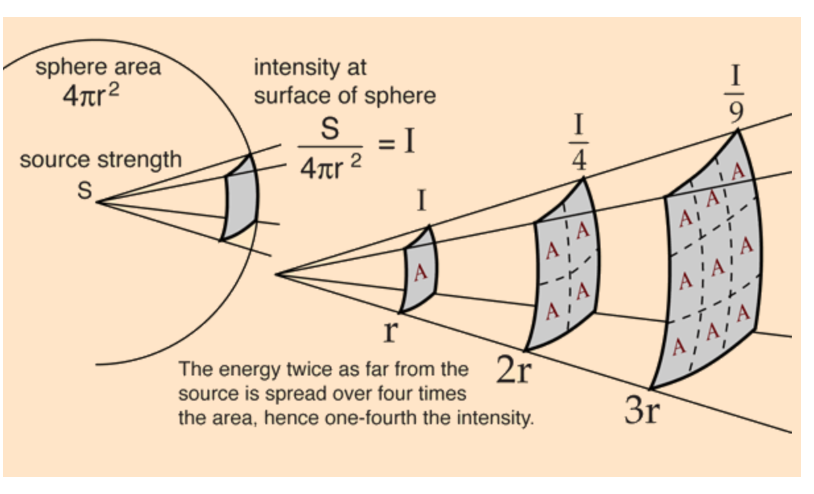
Newton's law of gravitation, Coulomb's law, and the intensity of a sound wave at a distance from the source have what thing in common

Pitanje 5
5.

Why does a charged capacitor have a net charge of zero?

Pitanje 6
6.

Why is a good conductor of electricity also a good conductor of heat?

Pitanje 7
7.

You are in a car that has been struck by lightning. What does the electric field inside the car look like, and why?

Pitanje 8
8.

I can rub a balloon against my hair and get a 1300-volt shock when I touch it. I can touch a car battery the wrong way and get a 12-volt shock. Why would the car battery hurt more, even though the voltage is so much lower?

Pitanje 9
9.

Coulombs law allows you to find the force. Is the force a vector or a scalar?

Pitanje 10
10.

How can you determine the direction of the force you find in Coulomb's law?

Question 11
00:32
keyboard_arrow_down
1
Pitanje 11
11.

The pieces of paper are not charged. Why are some attracted to the comb, and why do some pieces jump away?

Pitanje 12
12.

What does it mean to say an object is electrically polarized?

Question 13
00:23
keyboard_arrow_down
1
Pitanje 13
13.

How does this show that water and isopropanol are polar liquids while hexane is not?

For the next section you will need the following equations

Coulomb's law. F= force, k = 9x10^9 nm^2/c^2, q1,q2 charge of each object, r=distance between the charges

Electric field strength equation. E = electric field strength, F = Force on the object, q=the charge of the object

Inverse square law - that something is inversely proportional to the square of the distance from the source.
Pitanje 14
14.

Charge Q acts as a point charge to create an electric field. Its strength, measured a distance of 30 cm away, is 40 N/C. On Level - which of the three equations above would you use to calculate the Magnitude of the electrical field at any given point? Honors: What is the magnitude of the electric field strength that you would expect to be measured at a distance of 60 cm away?

Pitanje 15
15.

A charge of q = - 4.0 × 10^6 is placed in an electric field and experiences a force of 5.5 N. On level - which equation would I need to calculate the magnitude of the electric field? Honors: What is the magnitude of the electric field at the point where charge q is located?

Pitanje 16
16.

A physicist is measuring the electric field strength created by the presence of one highly charged particle. Is the field equally strong everywhere in the field? how do you know?

Pitanje 17
17.

A positive charge q exerts a force of magnitude (- 0.20 N) on another particle with charge (- 2q). Find the magnitude of charge q if the distance separating them is equal to 50 cm.

On level - what are my givens, what is my unknown, and what equation should I use?

Honors, all of the above and find the unknown.

Pitanje 18
18.

what direction is the force in the last problem?

Pitanje 19
19.

Practice your Si unit prefixes

Stavka koja se može prevućiarrow_right_altOdgovarajuća stavka

\mu - micro

arrow_right_alt

1 \cdot 10^3

n - nano

arrow_right_alt

1 \cdot 10^{-2}

p - pico

arrow_right_alt

1 \cdot 10^-6

k - kilo

arrow_right_alt

1 \cdot 10^{-9}

c - centi

arrow_right_alt

1 \cdot 10^{-12}

Pitanje 20
20.

Which is stronger

Pitanje 21
21.

Remember the question from the heat chapter of "which had more heat, the iceberg or the cup of coffee" and while the coffee had the higher average heat, the iceberg was that much bigger therefore had more heat. Consider the above "which one is stronger question". rubbing the balloon on his head was enough for the balloon to stick to his hair, and not fall towards the earth. Let's say he is holding his hair out, so that all the electrostatic force is up, and we only rubbed it enough for the force up to be equal and opposite to gravity. Consider that the force pulling down the balloon is the gravity force stemming from the mass of the entire planet, whereas the force keeping it up is the electrostatic force from ... what?