OBJECTIVES & STANDARDS
Math Objectives
Write and graph linear equations and determine if a given point is a possible solution
Calculate percentages
Create a mathematical model in the form of a budget
Common Core Math Standards
Personal Finance Objectives
Differentiate between income and expenses and explain how they’re used to create a budget
Consider needs versus wants when deciding how to spend money
Build a basic budget with constant or variable income
National Standards for Personal Financial Education
Spending
1a: Develop a budget to allocate current income to necessary and desired spending, including estimates for both fixed and variable expenses.
5b: Brainstorm consumer research strategies and resources to use when making purchase decisions.
DISTRIBUTION & PLANNING
Distribute to students
OBJECTIVES & STANDARDS
Math Objectives
Write and graph linear equations and determine if a given point is a possible solution
Calculate percentages
Create a mathematical model in the form of a budget
Common Core Math Standards
Personal Finance Objectives
Differentiate between income and expenses and explain how they’re used to create a budget
Consider needs versus wants when deciding how to spend money
Build a basic budget with constant or variable income
National Standards for Personal Financial Education
Spending
1a: Develop a budget to allocate current income to necessary and desired spending, including estimates for both fixed and variable expenses.
5b: Brainstorm consumer research strategies and resources to use when making purchase decisions.
DISTRIBUTION & PLANNING
Distribute to students
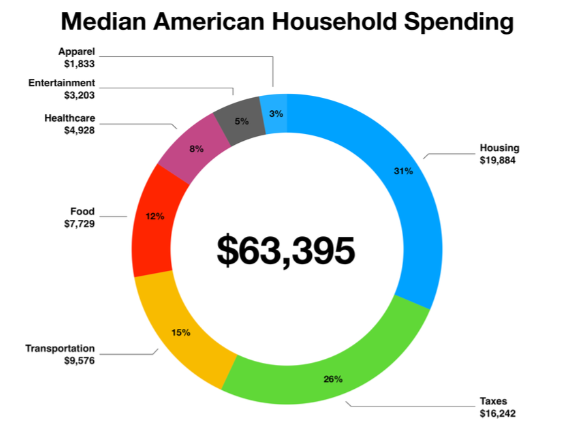
GRAPH: Median American Household Spending
This graph shows how the average American household spends their money across a variety of common categories, with the central number representing median income.
What other categories, not listed here, do you spend money on regularly?
In what meaningful ways does median household spending different from your own teen spending?
VIDEO: Budgeting for Teens
In the graph above you saw both common budget categories as well as how teen budgeting might differ substantially from independent adult budgeting. This next video shows some tips for teens who want to create their own budget document.
In your own words, what is the difference between Income and Expenses?
Even if you’re not in control of most of your family’s household spending, why might it be a good idea to start budgeting your own money now?
ACTIVITY: Is It a Need or a Want?
As the video suggests, saving money is an important part of budgeting, but it’s not always easy when there are so many temptations to spend, spend, spend. One way to be thoughtful about your spending is to categorize what, for you personally, feels like a need (an essential for you to live your daily life) and a want (a nice-to-have item or service that you could do without). Other than food, shelter, and water, the definition of needs is fluid and changes between individuals and their circumstances.
VIDEO or ARTICLE: How to Build a Budget If You Don't Have a Steady Income
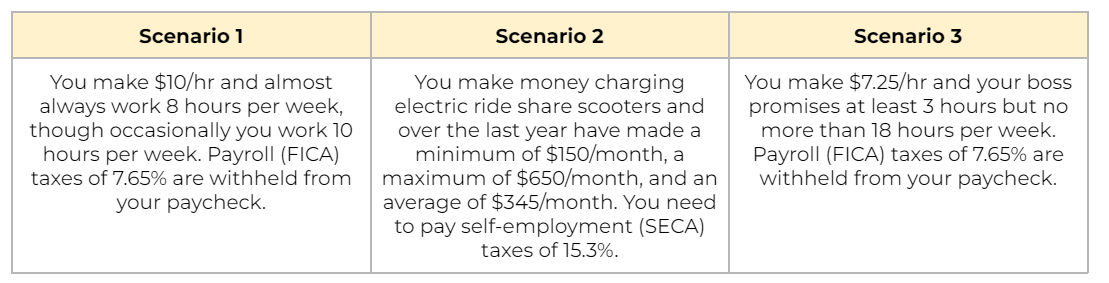
Many teens and adults do not have a steady income every week or month. Your boss may schedule you for an irregular number of hours; you may have periods of the year where you receive gifts, refunds, bonuses, or other infusions of cash; or you may work in the gig economy or on commission where income depends directly on output. Choose to watch this video or read the article to get some tips for budgeting with irregular income.
Why is determining your “noodle budget” so important if you have an irregular income?
How are squirrels and people different?
Time to practice making a budget. Your prom is 7 months away, and at your school, the average amount each student spends on prom is $850. You currently have $65 in savings.
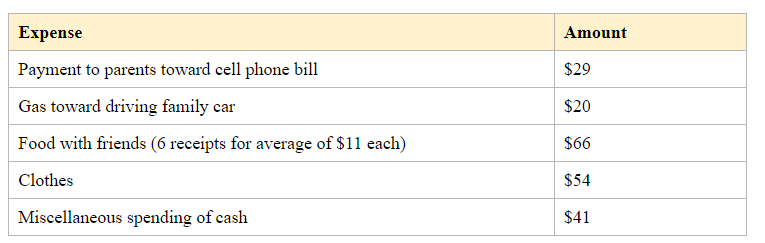
For the past month, you’ve kept track of your spending and arrive at this list:
Use this template to create a budget that allows you to attend prom in 7 months. A few tips:
Be sure to read all details of the problem before you get started
You may need to re-work your earnings or spending, after your first attempt, in order to make the budget work
Round each value to the nearest whole dollar
SUPER IMPORTANT: Use the short-hand assumption that every month has 4.3 weeks
Draw in the Show your Work below and create your budget. What made this difficult? Easy?
What earnings assumptions did you use when creating this budget?
What spending changes did you have to make, if any, for your budget to work?
Which statement best summarizes how income and expenses are used in a budget?
Each income line has one expense line attached to it in a budget
The total income plus the total expenses forms the budget
The total income minus the total expenses forms the budget
Income and expenses mean basically the same thing in a budget
Tonya and Tonio are twins, and they have 3 older siblings too. Which statement best classifies needs versus wants in their family?
Everyone in this family likely has different needs and wants
Everyone in the family has different needs but the same wants
Everyone in the family has the exact same needs and wants
Actually, everyone on the planet has the same needs and wants
If you work in the gig economy and have uneven earnings throughout the year, which option is best for managing your budget?
Only pay your bills in months where you’ve earned above your typical amount
Each month, invest your earnings in the stock market to try to double your money
On months where you earn more than average, save the extra rather than spending it
Be sure you spend the exact same amount every month, regardless of how much income you had
Why is it beneficial to map out a variety of combinations for purchases when keeping a budget?
Explain why it is important to not only graph an equation but also to interpret the different points on the graph.
Go back to Questions 3 and 4. Though the combinations on the budget line are all mathematically possible, what makes some of the solutions problematic in real life?
What was most challenging about creating this budget?
How does this process change, if at all, if you are trying to budget for college, a car, or something else more expensive than prom?