Ɛhia
1
Ɛhia
1
Ɛhia
1
Ɛhia
1
Ɛhia
1
Ɛhia
1
Ɛhia
1
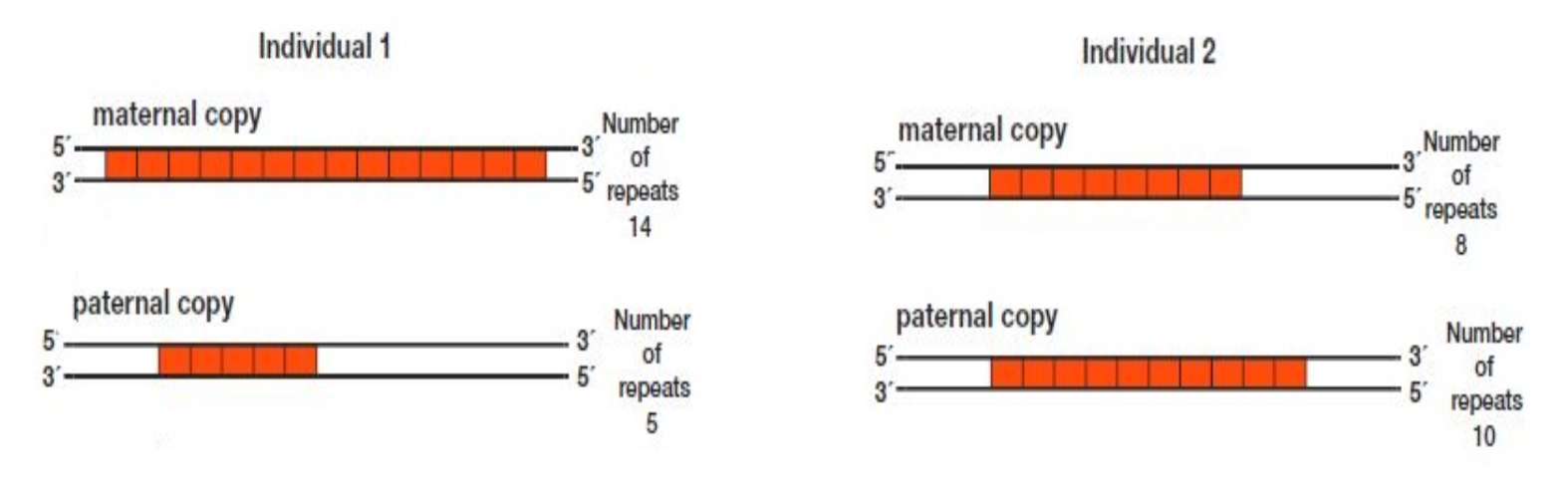
Based on the loci to be amplified from these 2 individuals, which gel has the PCR fragments in the correct relative positions?
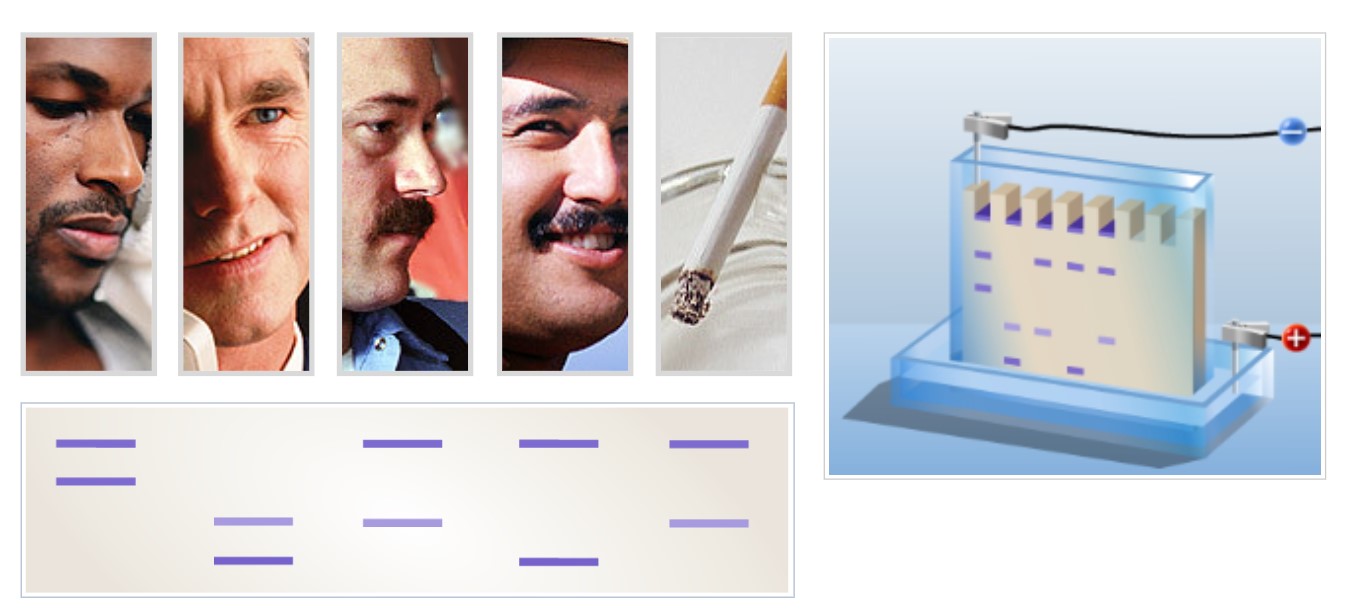
Compare the DNA from 4 suspects with the DNA obtained from saliva found on a cigarette butt left at a crime scene. Select the match.
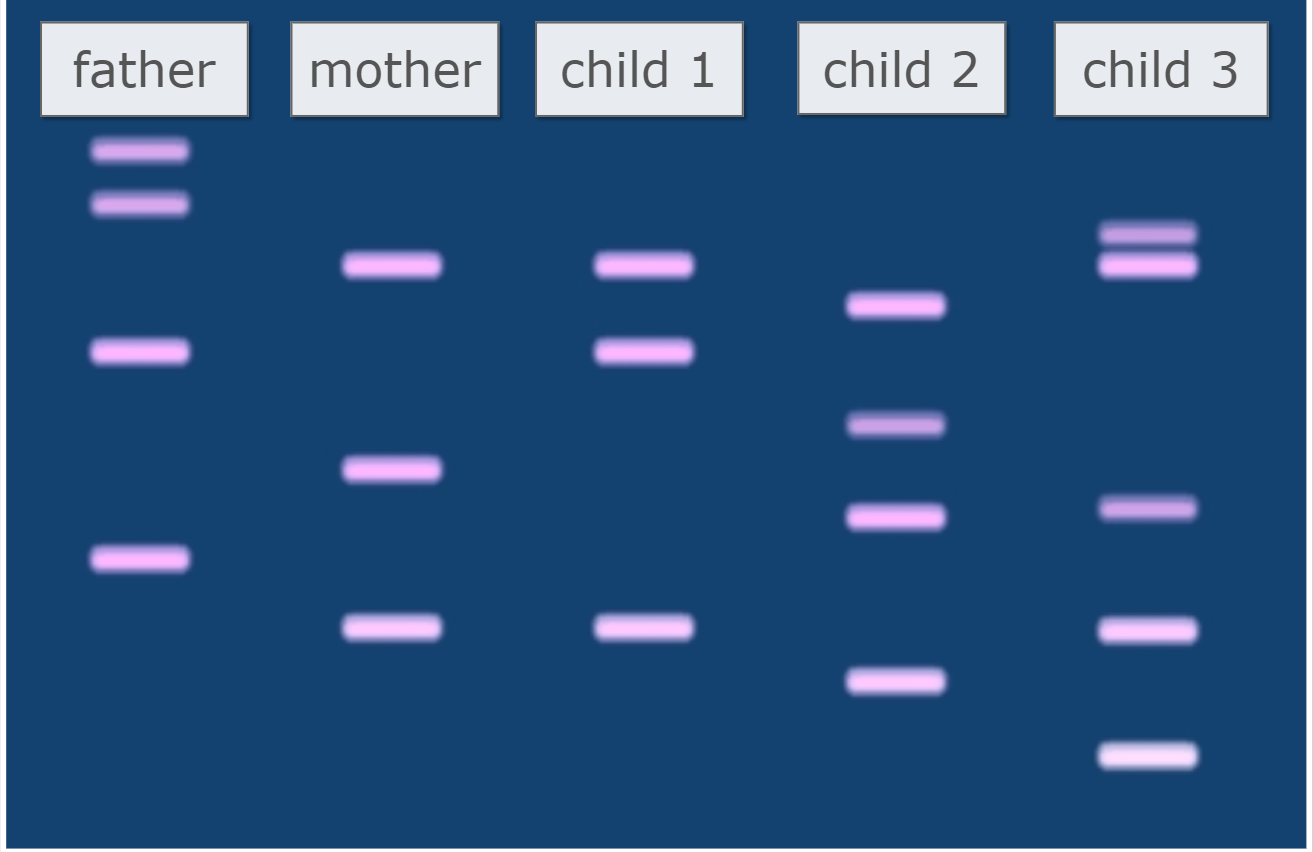
Study the illustration of children and parent DNA bands and determine the nature of the relationship between each child and the parents.
| Draggable item | arrow_right_alt | Corresponding Item |
|---|---|---|
child 2 | arrow_right_alt | child with two natural parents |
child 3 | arrow_right_alt | child with adoptive parents |
child 1 | arrow_right_alt | child with natural mother and adoptive father |
A break-in occurred at a high school that involved the theft of several computers. At the time of the break-in, the building was empty. A motion detector in one of the hallways alerted police. When the police arrived, they found that one of the doors leading into the school had been propped open with paper wedged into the doorjamb. The door appeared to be locked, but it was not, and it could be pushed open. Near the door, police found a cold soft drink can. Because of the cool temperature of the drink, police suspected that the can was recently left by one of the intruders.
The can was bagged as evidence, and in the forensics laboratory, a DNA sample was obtained from the lip of the can. A clerk at a nearby convenience store remembered selling canned soft drinks to three young men just before the break-in occurred. The surveillance video in the convenience store was examined, and the clerk was able to provide the police with the names of all three young men who were in the store just prior to the break-in. The three young men were fingerprinted, and each provided a mouth swab containing their DNA sample.
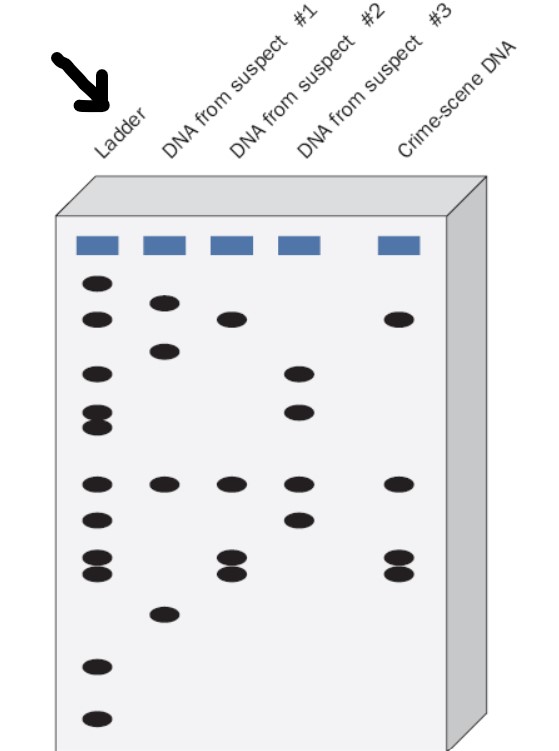
What is the purpose of the DNA ladder?
Did any suspect share all four bands of DNA with the crime-scene DNA? If so, which suspect or suspects?
Note that one band of the evidence DNA was found in all four suspects. Explain how this is possible.
What arguments could a defense lawyer present to support his claim that even though his client’s DNA was consistent with the crime-scene DNA, his client did not commit the crime?
Refer to the scenario presented at the beginning of this activity and your knowledge of DNA profiling. List the many ways that DNA technology has improved the ability of law enforcement to solve crimes.
Refer to the scenario and identify the evidence that could help the police identify who was recently at the crime scene. Prepare a table listing the evidence and describe what type of testing should be done on that evidence.
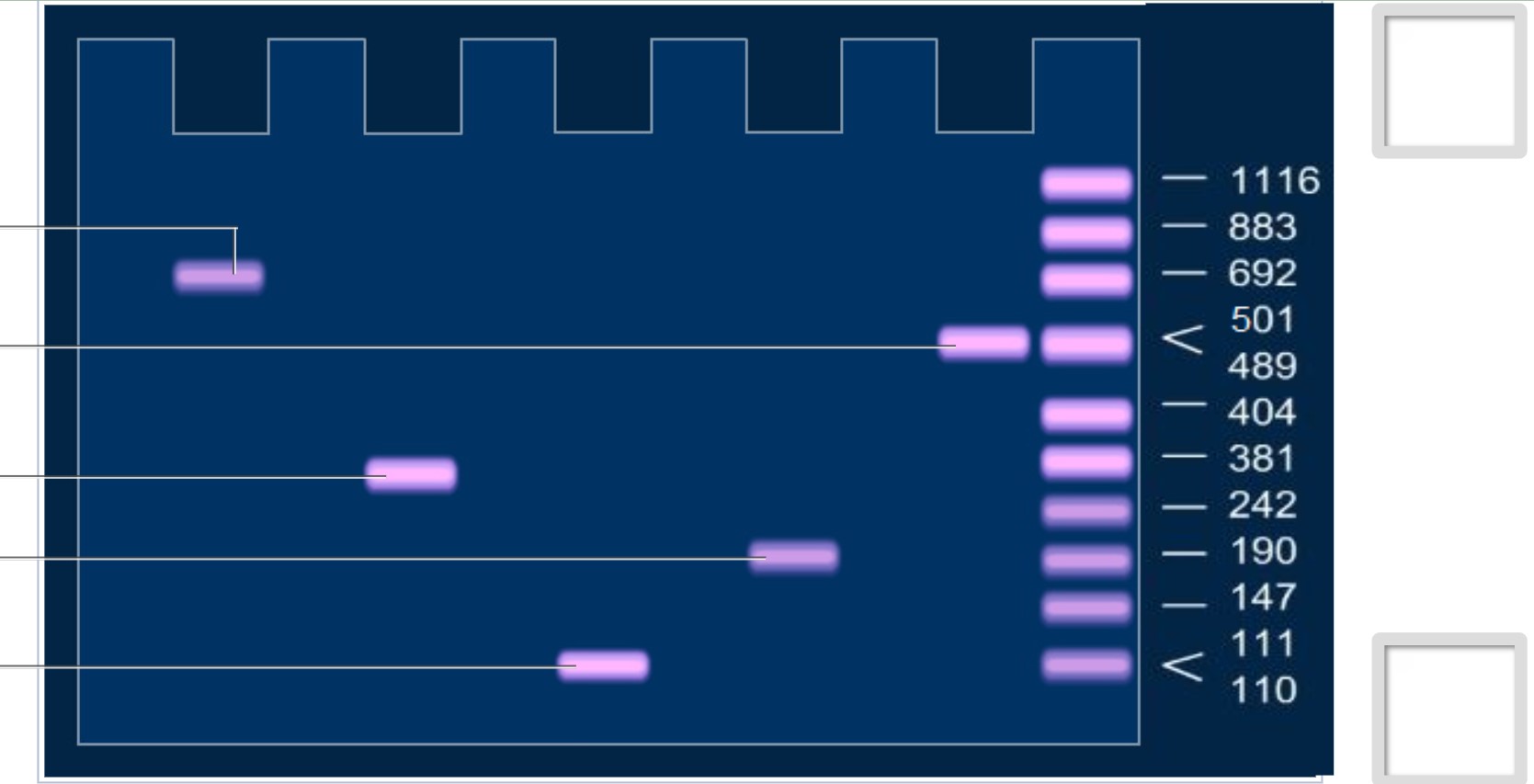
Approximately how long is this DNA segment?
Approximately how long is this DNA segment?
Approximately how long is this DNA segment?
Approximately how long is this DNA segment?
Approximately how long is this DNA segment?
What charge should be shown here?
What charge should be shown here?
If any of the suspects did not share any of the bands found in the crime-scene DNA, can they be excluded as suspects?