Read the passage and answer the questions that follow.
Title: Exploring the Rain Shadow Effect
Imagine you're standing at the base of a tall mountain range, ready to embark on an exciting adventure. You've probably noticed that some parts of the world are lush and green, while others are dry and arid. Why does this happen, and what's the secret behind these differences? It's time to dive into the fascinating world of the rain shadow effect!
Passage:
The rain shadow effect is a weather phenomenon that happens when moist air from an ocean or a large body of water meets a big mountain range. Here's how it works:
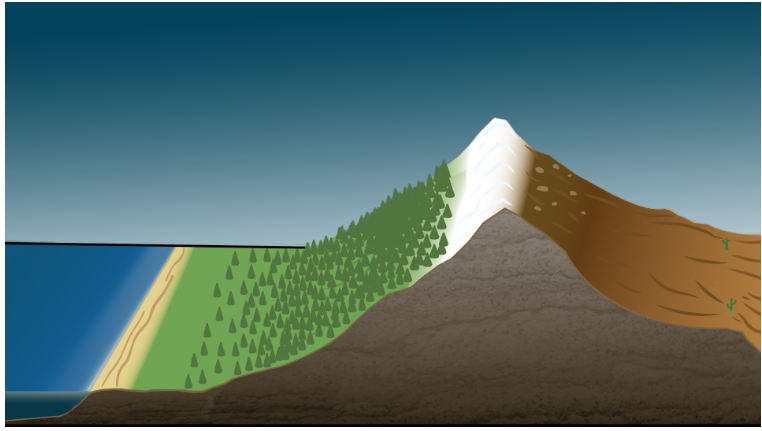
When the moist air hits the mountains, it's forced to go up, over the peaks. As the air rises, it cools down, and when the air cools, the air condenses and forms clouds and rain. This is why the side of the mountains where the moist air is coming from is often lush and green. It gets plenty of rain, making it a great place for plants and animals to thrive.
But what about the other side of the mountains, the side where the air is descending (going down)? This side is known as the "leeward side," and it's where the rain shadow effect comes into play. As the air descends, it warms up, and when it warms up, it dries out. That's why this side of the mountains gets very little rain, making it a dry and often desert-like place.
Now, let's explore this phenomenon further with some questions: