OBJECTIVES & STANDARDS
Math Objectives
Correctly use arithmetic with decimals and percents
Create a mathematical model in the form of a budget
Common Core Math Standards
Personal Finance Objectives
Appreciate the importance of creating a budget
Identify features and limitations of three different budgeting strategies
Create a budget given imperfect information
National Standards for Personal Financial Education
Spending
1b: Develop a budget to allocate current income to necessary and desired spending, including estimates for both fixed and variable expenses
9a: Explain how having a system for financial record-keeping can make it easier to make financial decisions
Earning Income
7c. Differentiate between gross, net, and taxable income
DISTRIBUTION & PLANNING
Distribute to students
OBJECTIVES & STANDARDS
Math Objectives
Correctly use arithmetic with decimals and percents
Create a mathematical model in the form of a budget
Common Core Math Standards
Personal Finance Objectives
Appreciate the importance of creating a budget
Identify features and limitations of three different budgeting strategies
Create a budget given imperfect information
National Standards for Personal Financial Education
Spending
1b: Develop a budget to allocate current income to necessary and desired spending, including estimates for both fixed and variable expenses
9a: Explain how having a system for financial record-keeping can make it easier to make financial decisions
Earning Income
7c. Differentiate between gross, net, and taxable income
DISTRIBUTION & PLANNING
Distribute to students
COMPARE: Gross vs. Net Pay
Chien always works 20 hours/week at $15/hour and gets paid every 2 weeks.
Chien is always dismayed, however, to learn that his net pay is noticeably less. What items on his pay stub could be accounting for the difference?
Which one -- gross pay or net pay -- is synonymous with “take home pay”?
When creating his budget, which pay should Chien use and why?
ARTICLE: Reasons Why You Should Budget Your Money
You probably know by now that a budget is a useful way for you to keep track of your money. But what exactly makes it such a powerful tool? Skim through this article to find out.
Out of the six reasons provided, which is the most important to you? Why?
Despite these reasons for keeping a budget, many people do not have a budget. Why do you think this is?
VIDEO: Zero-Based Budgeting 101
Now that you know WHY you should budget, we’ll use three videos to learn some specific strategies for creating a budget. The first is known as zero-based budgeting, and although this might sound intimidating, it involves allocating every last dollar in your monthly budget to some saving or spending category.
What is the core characteristic that defines a zero-based budget?
Bianca has take-home pay every month of $800. She anticipates having $675 of expenses in August.
In a zero-based budget, why is it important that she put the extra $125 in some budget category?
Where might you suggest Bianca budget that extra $125? Why?
Why might some budgeters consider zero-based budgeting to be simply too much work?
VIDEO: How To Budget Money As A Teen
The previous video mentioned that if the zero-based budgeting strategy doesn’t work for you, you might try the Cash Envelope System instead, which this teen YouTuber will describe.
What are some reasons that a cash envelope system could be an effective way to budget for your “wants”?
Name at least one potential downside of using a cash envelope budget.
VIDEO: Building a Budget
We’ll round out the learning with a third budgeting strategy video, this one on 50/30/20 Budgeting, which involves allocating your funds into three broad categories without worrying about breaking expenses into finer subcategories such as “travel” and “clothing.”
Now that you’ve learned about Zero-based Budgeting, Cash Envelope Method, and a 50/30/20 Budget, which one seems easiest to use? Which one seems hardest? Explain your thinking.
Easiest?
Hardest?
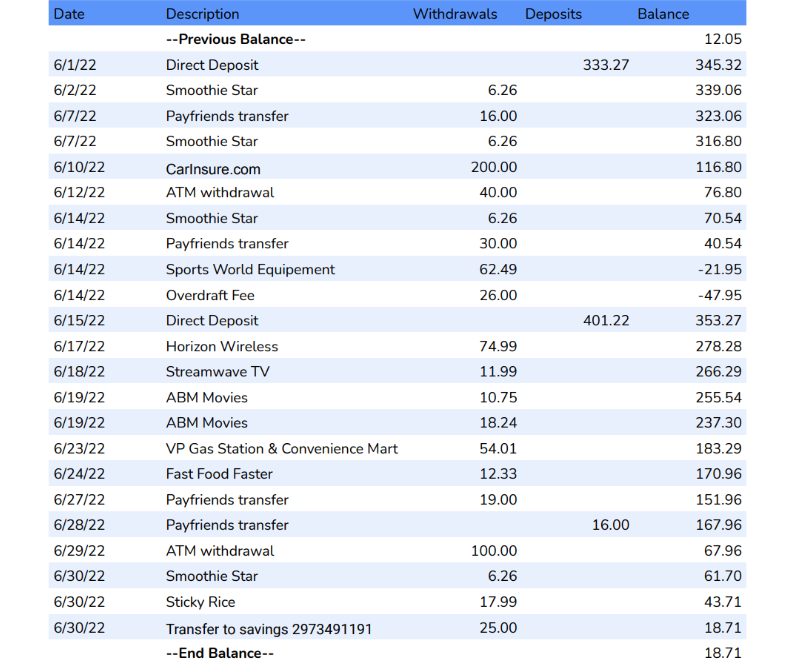
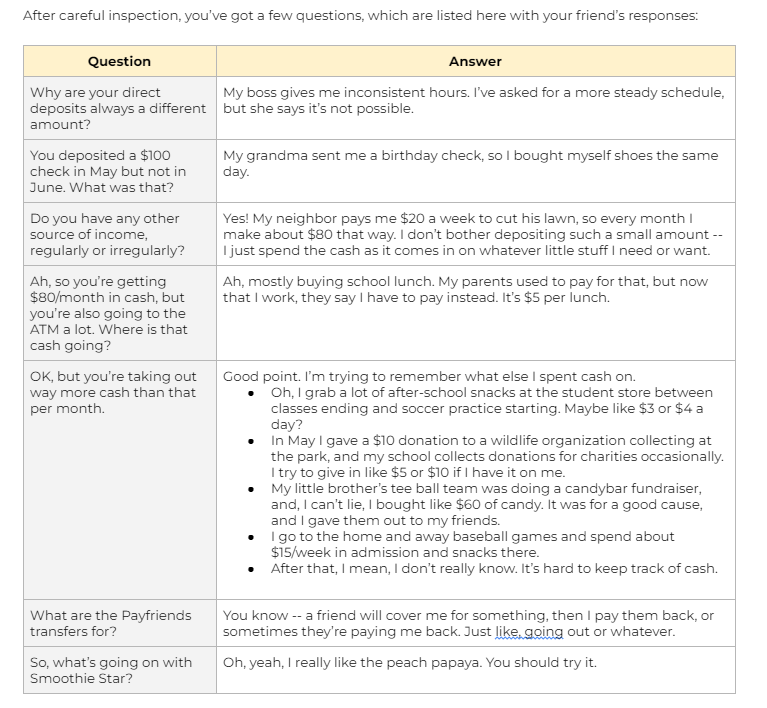
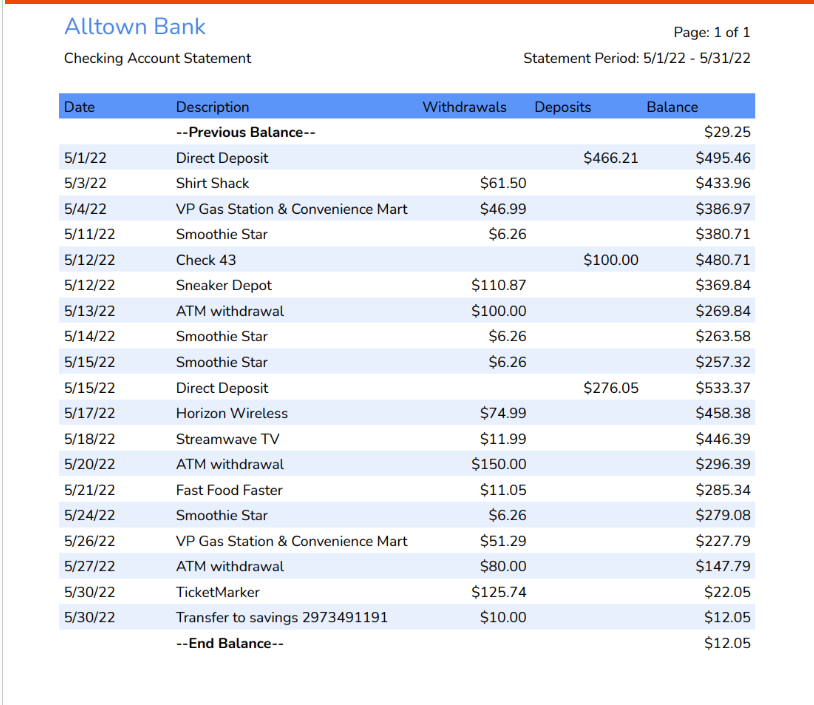
Now that you’re such a budgeting expert, with three separate techniques up your sleeve, a friend comes to you with a whole mess of information about their finance records from the last 2 months and says, “Please, please, please! Can you set up a budget for me? I need to get my money under control before I head off to college next year.” You’ve agreed to help your friend make a budget that works for them. Here’s their checking account statements for May and June:
In a separate document, create a budget for your friend using a zero-based budget, the cash envelope system, or 50/30/20. Make sure it’s clear enough that the friend will be able to understand how to better organize their money going forward. Screen shot your budget and insert here :)
Which action is most aligned to the goals of using a zero-based budget?
Bring your checking account balance to $0 every week, even if it means you overdraw your account often
Be sure to have one or more budget lines for saving so that it doesn’t get left as an afterthought
If, at the end of your budgeting you end up with $185 leftover, you should just spend that on fun stuff
Try not to seek out more sources of income, because then your budget will no longer work
Alyssa is labeling envelopes so she can start using the cash envelope system of budgeting on a monthly basis. Which envelope is probably NOT worth her making?
An envelope for her cell phone online bill pay of $64
An envelope for the $100/month she’s budgeting for clothes, shoes, and accessories at the mall with her friends
An envelope for the $28/month she’s limiting herself to at her favorite coffeeshop
An envelope for the $15/month she’ll use to thrift shop at the flea market each third Saturday with her grandma
If you are following a 50/30/20 Budget, what two items fall into the 20 category?
Wants & needs
Saving & debt repayment
Income & expenses
Fixed & variable costs