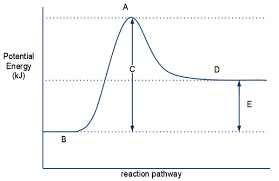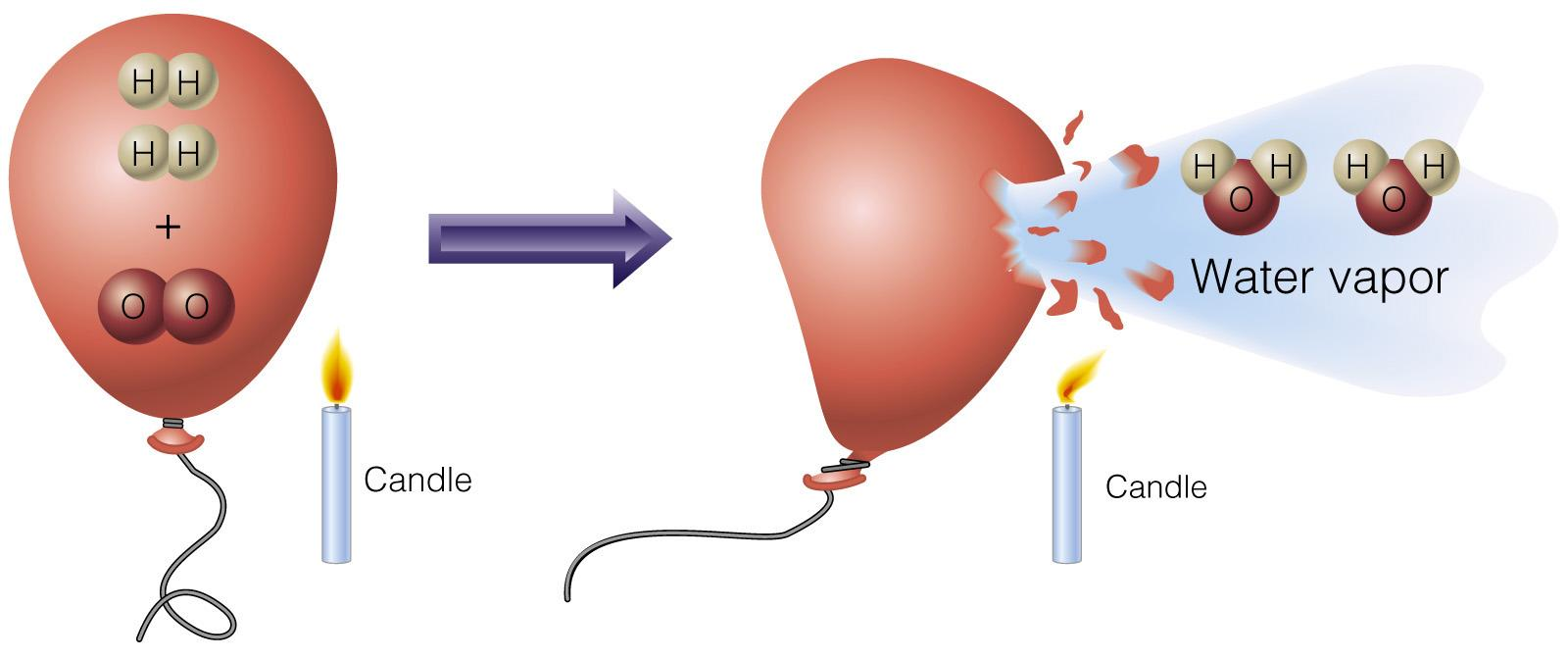
This image above best represents what type of chemical reaction? Explain your answer.
This image above best represents what type of chemical reaction? Explain your answer.
Read each question and choose the choice that best answers each question.
Match the vocabulary terms to the correct definition.
| Draggable item | arrow_right_alt | Corresponding Item |
|---|---|---|
Activation Energy | arrow_right_alt | An increase in this will typically increase the rate of reaction. It is measured by hot hot or cold a substance is. |
Surface Area | arrow_right_alt | A material is used to decrease the speed of a chemical reaction. |
Endothermic | arrow_right_alt | The amount of substance in a given volume. |
Concentration | arrow_right_alt | Lowers activation energy for the reaction to begin |
Catalyst | arrow_right_alt | The minimum amount of energy needed for a reaction to take place. |
Temperture | arrow_right_alt | This reaction will release heat into the surrounding area. |
Inhibitor | arrow_right_alt | This reaction will absorb heat from the surrounding area. |
Exothermic | arrow_right_alt | The area of the chemical substances used in a chemical reaction. |
This image above best represents what type of chemical reaction? Explain your answer.
When we increase the amount of concentration of a substance, how are we affecting the rate of reaction?
| Draggable item | arrow_right_alt | Corresponding Item |
|---|---|---|
MG + FE2O3 --> FE + MGO | arrow_right_alt | Combustion |
C2H4 + O2 --> CO2 + H20 | arrow_right_alt | Double Displacement |
NABR + HPO4 --> NA3PO4 + HBR | arrow_right_alt | Decomposition |
PBSO4 --> PBSO3 + O2 | arrow_right_alt | Single Replacement |
Which side of a chemical equation are the reactants?
What does activation energy refer to in a chemical reaction?
How do we comply with the law of conservation of matter with chemical equations?
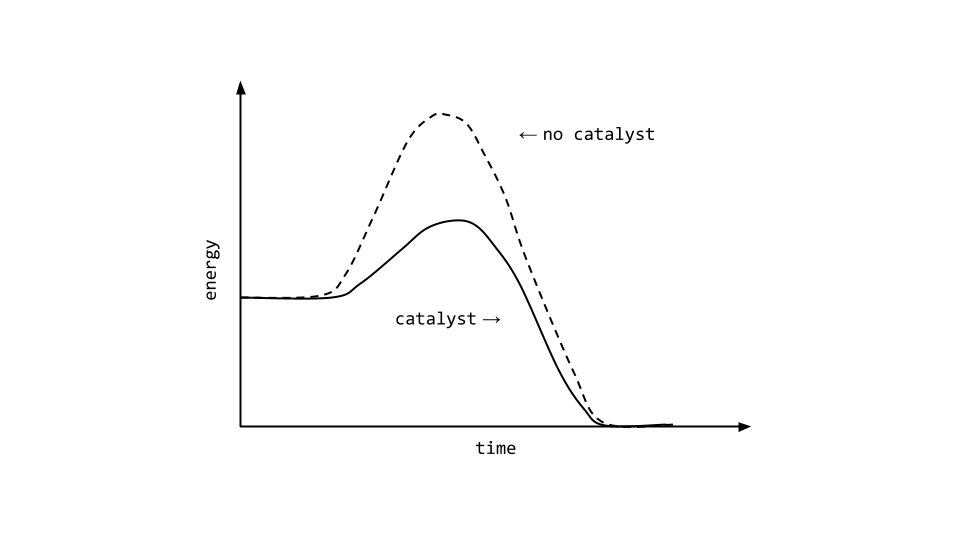
What is this graph displaying?
In an endothermic reaction, the products have less energy than the reactants because energy is released.
Are catalysts consumed in the chemical reactions they facilitate?
Increasing the surface area of the reactants will decrease the rate of the reaction.
Which accurately describes the function of a catalyst in a chemical reaction?
What happens if the activation energy in a chemical reaction is not reached?
How does a catalyst affect the activation energy of a reaction?
The human body has chemical reactions happening all the time. If we increase this in your saliva the food in your mouth will break down faster.
All reactions must have enough energy to start the reaction.
What would likely happen if you remove a catalyst from a chemical reaction?
Heat gives the reactant particles more energy. You can increase the surface area and concentration or also use a catalyst it speed up the reaction
What type of reaction is shown below?
CA(OH)2 + AL2(SO4)3 --> CASO4 + AL(OH)3
If you change the concentration of a substance, that means you are adding more of that substance to the same given volume. This will make the reaction slow down.
Explain the graph above to me. (Including het vocabulary terms catalyst, activation energy, exothermic/endothermic)