The Scientific Revolution and The Enlightenment

Last updated over 1 year ago
26 questions
Note from the author:
Last lesson of the year!
Learning Intention:
I am learning about the Scientific Revolution, the Enlightenment, and their effects on the way people think even today.
Success Criteria:
I can define the Scientific Revolution and the Enlightenment.
I can identify the most famous scientists and philosophers of the time, and explain what they accomplished.
I can recite the steps of the Scientific Method.
I have created a timeline of the Scientific Revolution.
I can list the three natural rights we are all born with, and other rights too!
I can explain what capitalism is in my own words.
I know the consequences of the signing of the English Bill of Rights.
Required
1

Ancient peoples, like the Babylonians, thought of the stars and planets the same as Earth.

Required
1

Ancient peoples, like the Babylonians, could accurately record planets moving.

Required
3

What things did Greek astronomers believe?

Required
1

Nicolaus Copernicus wasn't the first person to believe the sun was at the center of the solar system, but he was the first person to do what?

Required
1

It was illegal to publish books that went against Catholic doctrine. You could be excommunicated, jailed, or killed.
Why do you think Nicolaus Copernicus published his book anyways?

Required
1

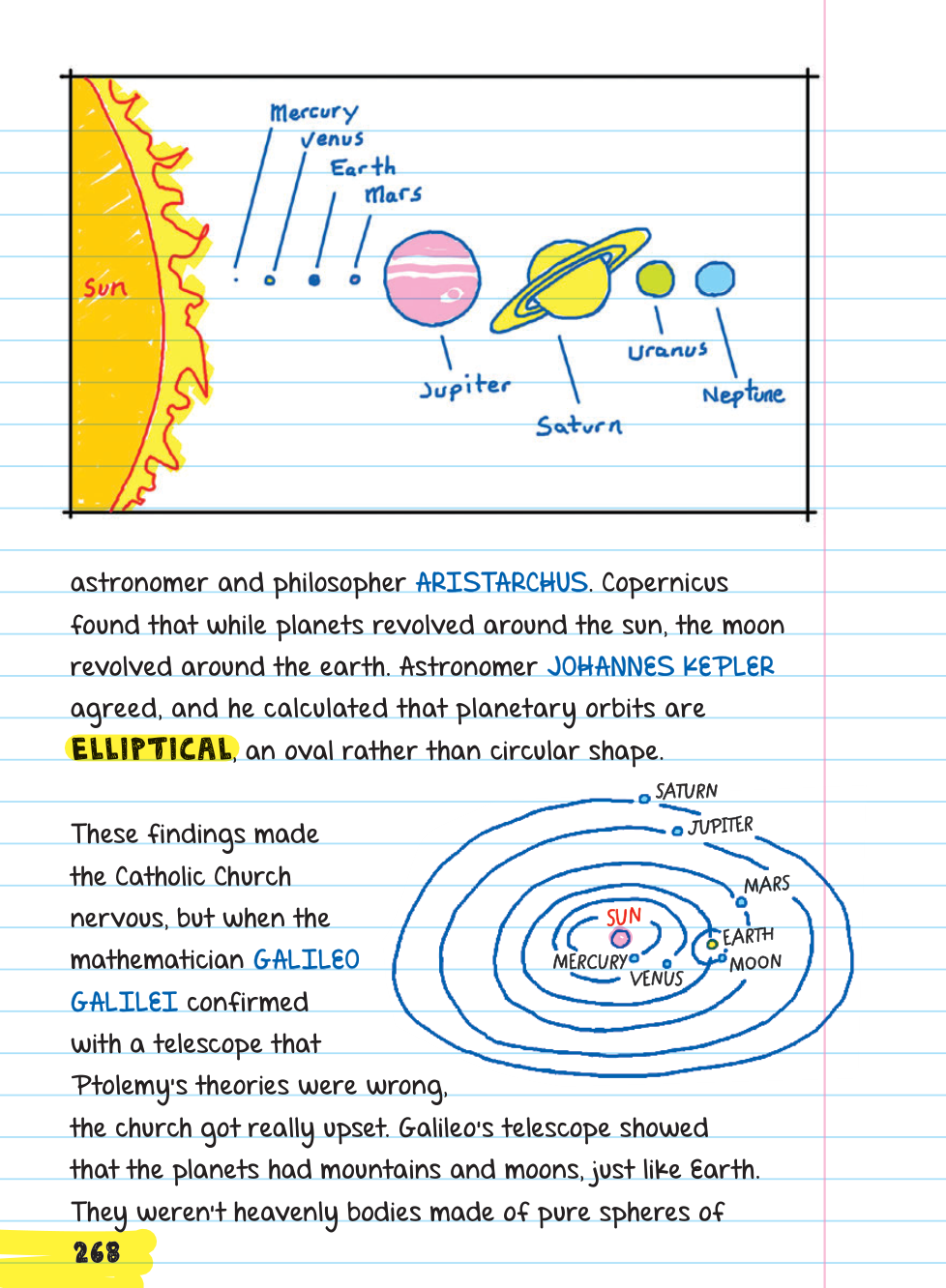
Johannes Kepler proved using Math that the sun was at the center of the solar system, and that the planets moved in ellipses not circles.

Required
1

Galileo Galilei didn't invent the telescope, but he did do what to it?

Required
3

Galileo was the first human to ever observe, what, using a telescope?
Select all that apply.

Required
1

How were Galileo and Kepler similar?

Required
1

How were Galileo and Kepler dissimilar?

Required
1

Ancient and Medieval peoples believed that comets were bad luck.

Required
1

Edmund Halley used Math to prove that three comets were actually one comet, and that it would return in 1758.

0

Halley's Comet will return in 2061.

Required
3

What was William Hershel known for?
Select all that apply.

Required
1

The Laws of Physics sometime defy common sense.

Required
1

Heavier objects drop faster then lighter objects.

Required
1

The problem with Aristotle's ancient experiments is he was dropping objects with different qualities besides just weight (mass).

Required
2

Galilei Gallio's experiment atop the Leaning Tower of Pisa changed Science in two ways. What are those two ways?

…
Required
1

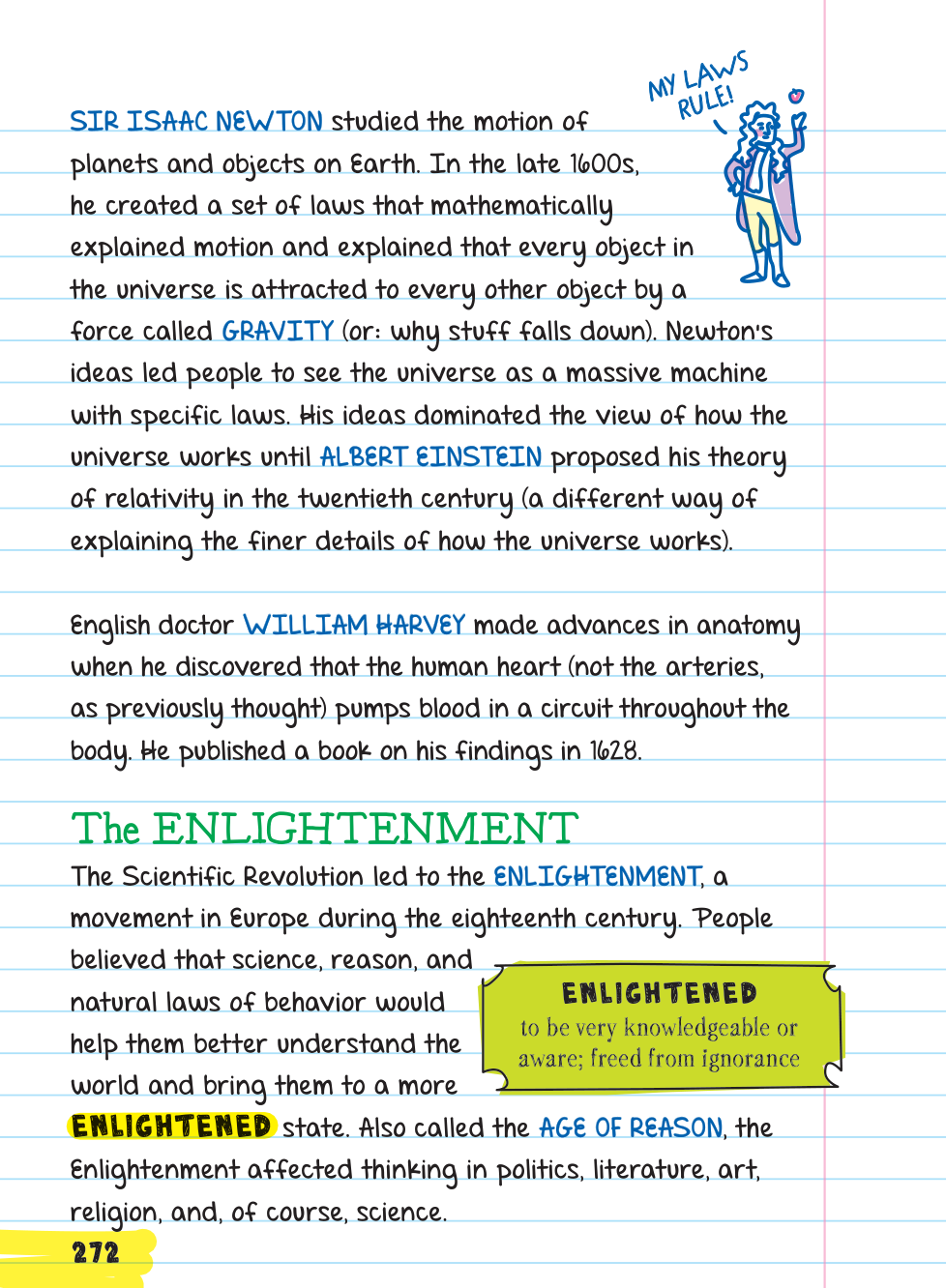
Sir Isaac Newton invented the theory and of gravity by connecting the idea that the force that pulls objects to the ground is the same force that keeps the moon around the earth.

Required
3

Select below all of the things gravity causes to happen.

Required
1

Newton's Three Laws of Motion established what is now known as Classical Physics.

Mr. Bergh will give you a 4 Worlds sheet.
You will need this paper before starting the new chapter.
Title it "The Scientific Revolution and The Enlightenment".
Write your name and period as well. Date optional.
If you run out of space ask for another 4 Worlds Sheet.
Rubric (How you will be graded for the 4 Worlds.)
4 - I filled all 4 boxes with relevant notes, drawings, vocabulary, big ideas, and connected them together.
3 - I filled the equivalent of 3 boxes.
2 - I filled the equivalent of 2 boxes.
1 - I filled the equivalent of a box.
0 - I did not fill any boxes.
This lesson's grade mostly comes from notes. You must read and take notes.
Doesn't have to be 4 Worlds, but it does have to be on a paper.
Required
2

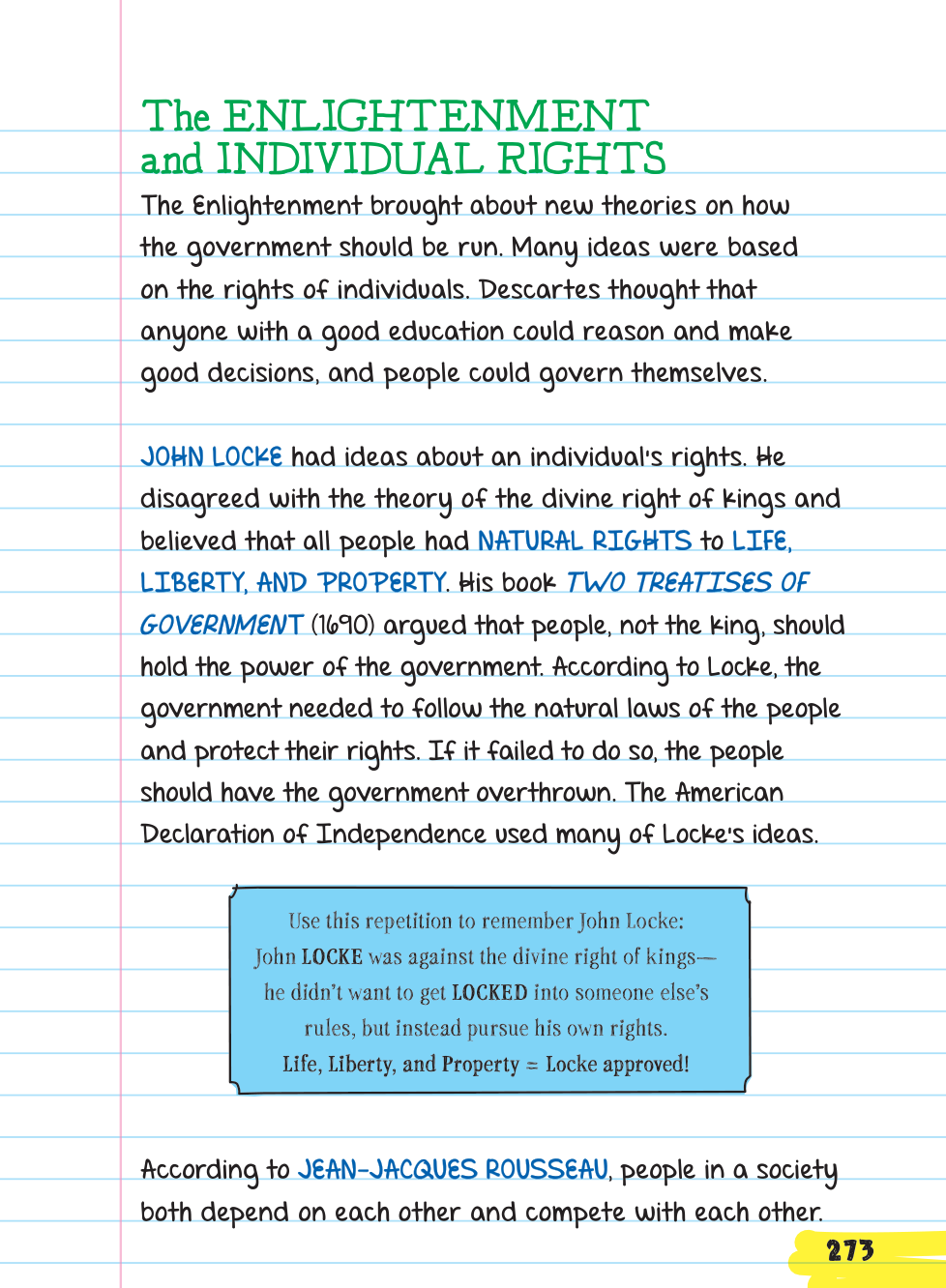
You can blame Rene Descartes for two things. What are they?

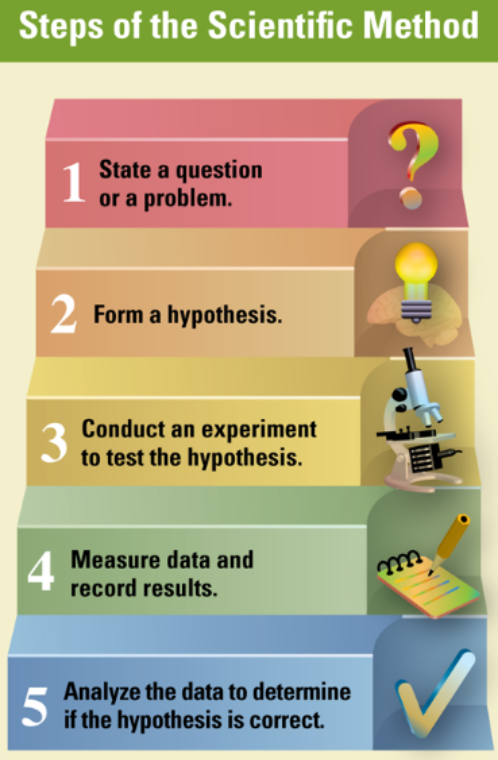
Francis Bacon codified the Scientific Method.
The steps remain largely the same today.
On the front of your 4 Worlds Sheet draw out the Steps of the Scientific Method as seen to the left.
This will be on the test...
Eventually it'll be on a test in Science class too!
Flip your 4 Worlds Sheet to the back. Turn the back of your paper into a number line.
Then copy the timeline below onto your number line.
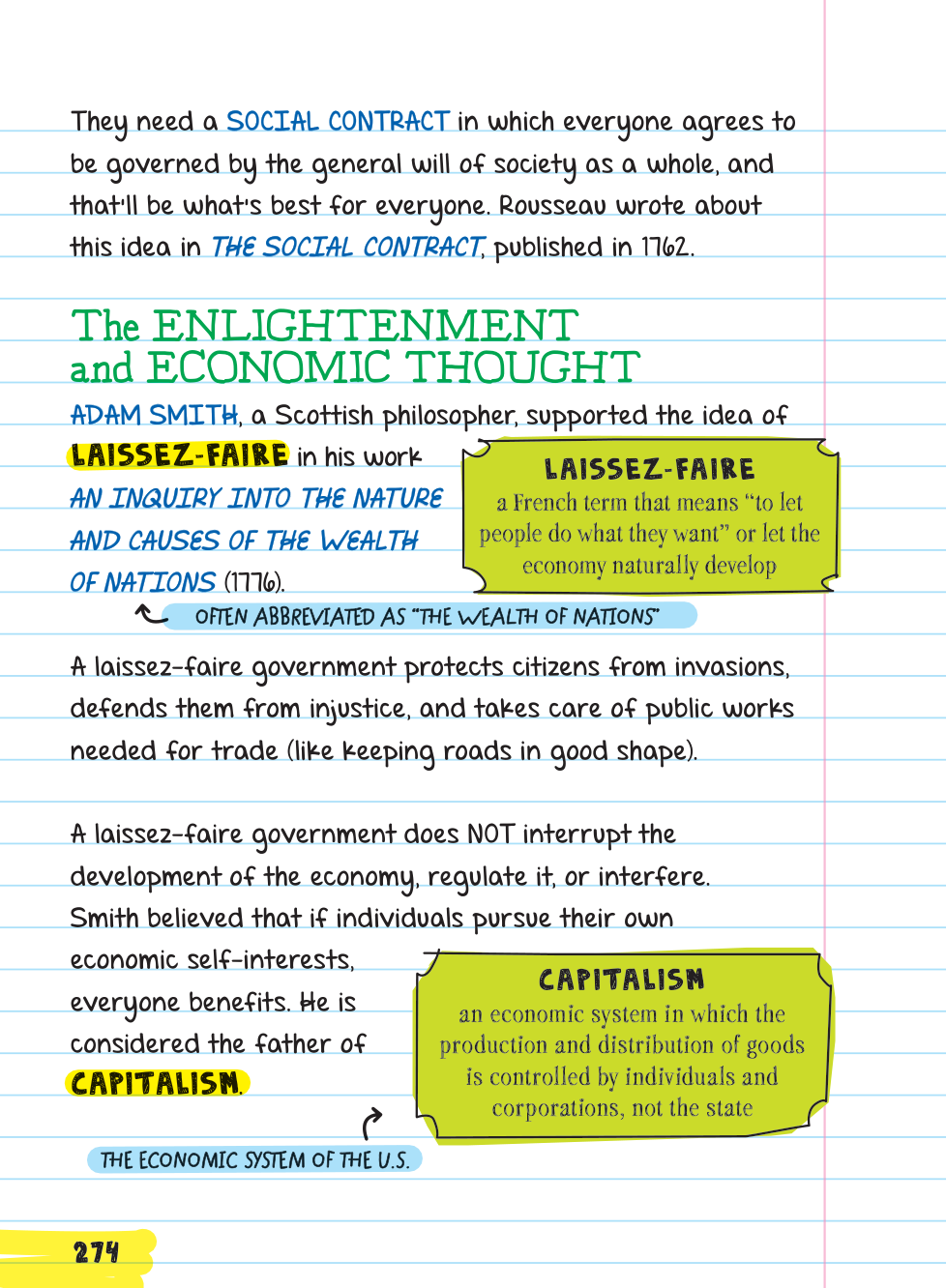
Enlightenment thinkers were the first Social Scientists.
They apply the Scientific Method to a social problems.
Economics, the study of money.
Politics, the study and practice of governments.
Psychology, the study of how people think and act.
Sociology, the study of human society.
History, the study of past events by humans.
Law, the study of systems of laws.
and Linguistics, the study of language.
These are all examples of Social Sciences that came to exist because of the work of Enlightenment thinkers.
Required
2

Do you want to be a Social Scientist? If so type which type you'd like to be and why. If no, still explain why.

Required
3

What the the three natural rights every person is born with? (According to Western Enlightenment Thinking...)

Required
1

We all have natural rights.
What rights do you believe you have?
Type as many as you can think of.

Required
2

The English Bill of Rights was the first every written document to outline the rights of the citizen. It authorized free elections, freedom of speech, the right to petition (complain to the government), and protected people from cruel and unusual punishments.
Of the rights mentioned above, which is the most important to you? Why?

Below is an image I made to help you understand the birth of Science as it's own subject.
Scientific acts have been occurring for as long as man has invented things but historically people didn't see doing these things as Science, they saw it as philosophy.
The Greeks were especially famous for this.
Saint Thomas Aquinas opened the doors for science to exist in Europe. He was a Catholic priest who said you could be a Christian and also learn about the world using sources other then or in addition to the Bible. Then comes all the scientists we've learned about in class who one by one start to support theories using tested evidence.
Science can be said to officially exist as an educational subject after Sir Francis Bacon in England and Rene Descartes in France both publish the Scientific Method that all scientists use today.
You really like Science and what to get extra credit in Mr. Bergh's History class?
Watch the video below as a step on your +100 hours of learning outside of school.
In this video Sir Isaac Newton's theory of gravity is proved incorrect. Albert Einstein's Theory of Relativity is actually more compelling a theory of why stuff falls down.
To receive extra credit write to Mr. Bergh or speak to Mr. Bergh in person a full explanation of
(1) what Sir Isaac Newton's Theory of Gravity is,
(2) what Albert Einstein's Theory of Relativity is,
(1) what Albert Einstein's Theory of Relativity is,
(4) how it works, and
(5) how Einstein's theory is more accurate then Newton's theory.