TEXT: FRICTION
As you read the text, think about motion and how we move on different types of surfaces.
As you read the text, think about motion and how we move on different types of surfaces.
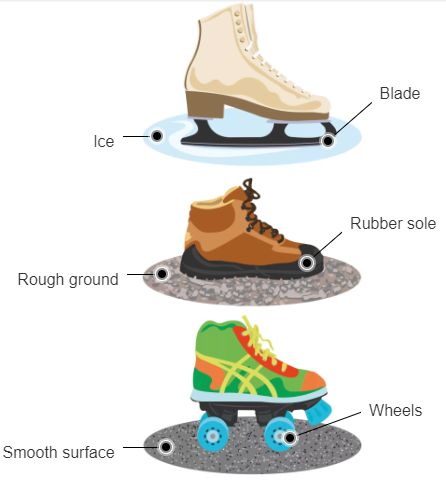
How does the surface we move along affect the type of footwear we use?
How can we use our understanding of friction help develop shoes, tires, and other technology?
How can a drag plate increase and decrease friction during motion?
Why are drag plates a necessary feature for dog sleds? Watch a section of the video below to help understand the importance of a drag plate.
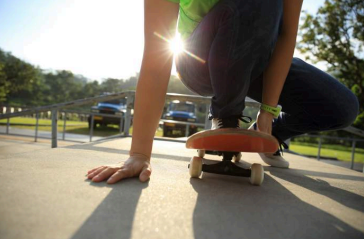
If you have ever ridden a skateboard, you have experienced friction. Friction is the resistance to rolling or sliding when two objects rub together.
Imagine your skateboard is rolling nicely on a smooth surface. Suddenly, you roll onto rough, bumpy concrete. What happens? The rough surface slows your roll. You will have to push harder to overcome the effects of friction.
Friction isn’t all bad for skateboarders. You can use friction in several ways to make it easier and safer to stop. Use a foot break. Put one foot down and allow it to drag on the ground. Friction between the surface and the bottom of your shoe will cause you to slow and stop.
Rolling over grass can slow you down. Be careful. Really thick grass can cause too quick a stop, and you could crash. If you want to be safer, simply stop pushing and allow the friction between any surface and the wheels to eventually stop you. Use your knowledge of friction to skateboard better.
Why is friction an important force here on Earth?
Click the link to see how friction affects aircraft in the atmosphere.
How do pilots overcome friction in the atmosphere (air resistance)?
How does friction transform energy during shuttle reentry?
Click the link to explore how motion is affected when the amount of friction is increased or decreased. Choose the FRICTION simulation. You may have to click it twice.
How does friction affect motion?
Friction is a force that motion. This means it works against the motion and slows or stops objects. Friction is also the reason we can hold a pencil, sit in a chair, and ice skate.
We can use our understanding of how friction works in different ways. The surface along
which we travel tells us a lot about the amount of friction we will experience. A surface, like ice, allows us to move more freely. There is less friction between us and the surface, so we don’t slow down as quickly. Other surfaces such as soil, rocks, grass, and rugged asphalt are and provide a greater amount of friction. Rough surfaces slow us down more quickly. If we understand the of our materials, we can build and design technology to help us move more efficiently.
Because we live on Earth, we experience friction everywhere. Pilots of aircrafts and space
shuttles must account for , a type of friction experienced as we move through the air. Captains of watercrafts and submarines must account for , a type of friction experienced in water, as they move through rivers, lakes, and oceans.
can be a force we work with or work against. Imagine yourself on a roller coaster. You want to be able to move down the track quickly, especially during the drops, but you also want the brakes to bring your cart to a stop when the ride is over. Understanding when to increase or decrease friction is central to this technology!