4.9 Creating a Budget
star
star
star
star
star
Last updated 10 months ago
25 questions
Note from the author:
OBJECTIVES & STANDARDS
Math Objectives
- Calculate averages
Common Core Math Standards
- Link to all CCSS Math
- CCSS.HSF.IF.B.4
- CCSS.HSF.IF.B.5
Personal Finance Objectives
- Differentiate between salary and wage work
- Create and analyze a zero-based budget using a spreadsheet
National Standards for Personal Financial Education
Earning Income
- 2b: Describe how intangible benefits can affect a worker’s career choices and income
- 6a: Calculate the amount of taxes a person is likely to pay when given information or data about the person’s sources of income and amount of spending.
Spending
- 1b: Develop a budget to allocate current income to necessary and desired spending, including estimates for both fixed and variable expenses.
- 1d: Evaluate the advantages of using budgeting tools, such as spreadsheets or apps
DISTRIBUTION & PLANNING
Distribute to students
- Student Activity Packet
OBJECTIVES & STANDARDS
Math Objectives
- Calculate averages
Common Core Math Standards
- Link to all CCSS Math
- CCSS.HSF.IF.B.4
- CCSS.HSF.IF.B.5
Personal Finance Objectives
- Differentiate between salary and wage work
- Create and analyze a zero-based budget using a spreadsheet
National Standards for Personal Financial Education
Earning Income
- 2b: Describe how intangible benefits can affect a worker’s career choices and income
- 6a: Calculate the amount of taxes a person is likely to pay when given information or data about the person’s sources of income and amount of spending.
Spending
- 1b: Develop a budget to allocate current income to necessary and desired spending, including estimates for both fixed and variable expenses.
- 1d: Evaluate the advantages of using budgeting tools, such as spreadsheets or apps
DISTRIBUTION & PLANNING
Distribute to students
- Student Activity Packet
Intro Warm-Up
DISCUSSION PROMPT: Would you rather….?
Not all jobs have a consistently weekly or monthly paycheck. Many jobs operate on a commission basis. Others are on a contract basis and some jobs are seasonal.
1
Would you prefer a job with a variable weekly income but the potential to earn a higher salary based on your performance OR would you prefer a consistently weekly paycheck but without as much earning potential? Explain your preference.
Learn It
ARTICLE: Salary vs. Hourly Pay: What Are the Differences?
As noted in the intro, some jobs offer pay on a salary basis, while others pay their employers an hourly wage. Use the article to answer the following question.
Salary vs. Hourly Earnings: What Are the Differences?
Jennifer Herrity
Updated July 31, 2023
When looking for a new job, compensation is often the deciding factor for many people. When you are hired for a position, you will receive earnings as either a salaried or hourly employee. Understanding the difference between salary or hourly pay can be helpful.
In this article, we discuss the differences between hourly and salary pay, including the benefits and disadvantages of each.
Why is important to understand salary and hourly pay?
Learning about salary vs. hourly wage is essential, especially when you’re negotiating rates for a new job. Understanding the difference between a salary versus an hourly wage can help you choose the best position to suit your needs.
What is an hourly rate?
Your hourly rate is the amount of money you earn for each hour you spend working. As an hourly employee, you should get paid for all of the hours that you work. If an employer wants more of your time, they’ll have to pay you more.
For example, if you work 25 hours and 30 minutes, you’ll get paid for 25.5 hours. If your hourly rate is $17.50, you’ll receive $446.25 for your time:
$17.50 x 25.5.
What is a salary?
Salary is a consistent payment to an employee based on working a full-time position. Employers typically usually distribute salaries on a monthly or bimonthly basis, but some businesses pay salaries out annually. The amount and frequency of your pay should be part of your employment contract.
Each salary payment is a fixed amount. For example, you’ll get $5,000 per month before taxes with a salary of $60,000 per year. This is called gross pay, and the amount after taxes is net pay.
Many large employers have a set salary range for each position. Salary range is typically determined by comparing the industry averages based on position type, level and location. Salaries are also related to your education, your previous experience and the amount of time you’ve worked for a company. Salary ranges are also impacted by supply and demand. Typically you can get better offers in areas with multiple vacancies for jobs similar to yours.
Read more: What is Gross Pay?
1
What are the differences between salary and hourly pay?
1
How could being an hourly employee affect your budget planning?
MATH CONNECTION - BUDGETING AS AN HOURLY EMPLOYEE
ARTICLE: 8 Tips for Budgeting When You Earn an Hourly Paycheck
Read the article and answer the questions below.
https://www.earnin.com/blog/8-budgeting-tips-when-you-earn-an-hourly-paycheck-
April 27, 2021
8 Budgeting Tips When You Earn an Hourly Paycheck
📷
📷 📷 📷
Everyone constantly reminds you of the importance of budgeting, but how are you supposed to do that when you’re an hourly employee who works a different amount every week? Ask a search engine that sees the future “how to calculate my paycheck hourly”? Ask your shift manager how many hours you’ll be scheduled for over the next three months, knowing full well they haven’t bothered to think that far ahead?
Budgeting on an hourly paycheck can be tricky, but it’s possible. Follow these tips to help you manage your money more efficiently:
Calculate Your Average Hourly Paycheck
Though you don’t have a consistent income, hopefully, it’s somewhat predictable. Most people plan their budgets according to how much money they rake in per month, so you can do something similar and calculate your average paycheck. Add up the number of hours you worked each month over the past several months — do at least six to be safe — and divide by six to get your average hours per month. Multiply the result by your hourly wage to calculate your average hourly paycheck.
For example, let’s say you have a part-time job and worked 120 hours in January, 130 hours in February, 110 hours in March, 100 hours in April, 135 hours in May, and 125 hours in June. That’s an average of 120 hours per month. Multiplied by the federal minimum wage, that’s about $870 per month before tax.
Estimate On the Lower Side
Though you should keep your average monthly income in mind, it’s best to plan your budget as if you’ll make less money that month than more. Save what you make from months when you work more hours to roll over toward the months when you work less. You could put yourself in a precarious position if you plan to have extra cash that you end up not making.
Calculate Your Monthly Expenses
Next, calculate how much you can expect to pay each month for rent, utilities, internet, transportation, insurance, groceries, and other bills. If there’s variation between months, do the same as above and calculate your average essential expenses. This number will give you an idea of what you owe and what you have leftover to save or put toward emergency costs.
Know What Your Pay Cycle Means
A critical aspect of budgeting is knowing when you get paid. There are four common kinds of pay schedules: monthly, semi-monthly, bi-weekly, and weekly. You will have two paydays per month under a semi-monthly cycle or a payday every other week (for a total of 26 paydays per year, instead of 24) under a bi-weekly cycle.
Your pay schedule is important because it affects how you pay your bills. If your rent and utilities are due on the last day of the month, but your paycheck doesn’t come in until the first day of the next, then you need to be sure you’ve saved enough from previous paychecks to cover the entire amount. Should your pay cycle not align with your bills’ due dates and you would be able to cover them if you were paid slightly earlier, you could use an app like Earnin to access your paycheck ahead of payday for hours you’ve already worked.
Get Ahead of Schedule
Though your shift manager may not plan as far ahead as you want them to, it’s still a good idea to get your schedule as soon as it’s out. You also don’t need to know when you work the next month as long as you know how much. Ask your manager for an idea of how many hours they plan to schedule you for. It never hurts to inquire, and if they can give you a ballpark, you can prepare some slight adjustments to your budget.
Figure Out Your Tax Rate
You don’t take home as much as you make — as you know, part of your paycheck goes toward taxes. Taxes vary by income level and your state, so use SmartAsset’s hourly paycheck tax calculator to determine how much you can expect to pay in taxes and budget accordingly.
Another reason to have an idea of your taxes beforehand is because, as an employee, your employer should deduct taxes from your paycheck before sending it over to you. You fill out a W-4 when starting a new job that your employer uses to calculate how much to withhold, so you want to fill it out accurately and avoid paying too much or too little.
Don’t Forget to Save
It’s not said often enough, but it’s true: saving is a privilege. Not everyone has the freedom to put aside money every paycheck, but it’s essential to save whatever you can. Pay your expenses, have a little fun each month, and remember to stash whatever is leftover in a savings account — anything, no matter how minor, is better than nothing.
Adjust As Necessary
No budget made with a fluctuating paycheck will be definite, so be prepared to make adjustments accordingly. Did an unexpected cost arise? Did you work overtime last week? Whether you make more or less money this month than last, don’t be so determined to stick to your original plan that it puts you in a tight spot.
Your income might fluctuate, but as long as you have an idea of how much you make each month and what your expenses will be, you can plan a solid budget that accounts for variations.
Daniel Norris on Unsplash
Please note, the material collected in this blog is for informational purposes only and is not intended to be relied upon as or construed as advice regarding any specific circumstances. Nor is it an endorsement of any organization or Services.
1
What do you think is the most important tip from the article for setting a budget when you earn an hourly paycheck?
5
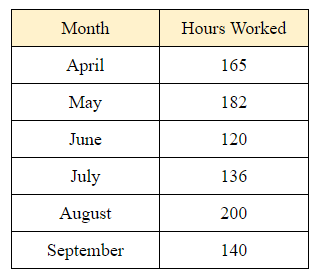
You are setting your budget as an hourly employee making $19 per hour. You look back at your last 6 months of work and record the following:
a. Calculate your average hours worked per month. Round down to the nearest whole hour_______
b. Use your average hours per month to calculate your average monthly gross income._______
c. You worked the fewest hours during June. How much LESS than your average monthly gross income did you earn?_______
d. How might this affect your spending in June?_______
1
What is your estimated monthly take-home pay after taxes? Enter your data into Free Paycheck Calculator: Hourly & Salary.- Select “Hourly” for Type
- Enter your hourly wage then average hours worked into “Hours (per pay period)”
- On the LEFT, change Location to your home location and Pay Frequency to “Monthly” (since we are entering a month of hours in step 2)
- Leave all other fields the same
- Screen shot your answer into the drawing
What is your estimated monthly take-home pay after taxes? Enter your data into Free Paycheck Calculator: Hourly & Salary.
- Select “Hourly” for Type
- Enter your hourly wage then average hours worked into “Hours (per pay period)”
- On the LEFT, change Location to your home location and Pay Frequency to “Monthly” (since we are entering a month of hours in step 2)
- Leave all other fields the same
- Screen shot your answer into the drawing
Explore It
ACTIVITY: Building a Budget
In this exploration activity, you are going to construct a budget...with a catch. Three major categories of your budget will be selected at random: Salary, Housing, and Student Loan balance. Your main task will be to budget the remaining items and make any necessary compromises in order to have a net-zero budget.
*You will have a paper copy to write down your numbers to make looking at your budget easier to copy into your spread sheet (question 16). Make sure to change restrictions to "anyone with the link" can view.
1
Occupation and Income
- Use the Wheel of Occupations to select your occupation.
- Estimate your income entering your job title and state on Indeed.com Salaries. Depending on your job, it may be an hourly rate or a yearly salary.
- Hourly: multiply by 160 to find your estimated monthly income
- Salary: divide by 12 months to get an estimated monthly salary.
Occupation: _______
Monthly Income:_______
Annual Salary: _______
1
Income tax
Enter your annual salary in the Paycheck Calculator to find your total income tax, including FICA and state taxes. Record your taxes due and total take-home pay after taxes.
Total Taxes:_______
After-Tax Income:_______
1
Housing
- Use the Wheel of Housing Situations to select your housing
- Find the average cost of rent or a mortgage in your area.
- If you are going to rent, find the cost of rent by entering your zip code in Fair Market Rent by ZIP Code.
- If you are going to own, find the average monthly mortgage for your state on What Is The Average Mortgage Payment?
- Use this value for a 2 BR house
- Add an additional $250 per month for a 3 BR house
Housing Payment: _______
1
Student Loans
- Use the Wheel of Student Loan Debts to find your student loan amount.
- Use the Student Loan Calculator to find your total monthly student loan payment. The only item you should change is your Loan Amount.
Student loan debt monthly payment:_______
1
Pay yourself
The 50/30/20 rule allocated 20% of your after-tax income to debt reduction and savings.
- Calculate your total savings (20% of your after-tax income)
- Is your saving goal more than your student loan payment? Record any excess here, which will go towards your emergency fund.
Total savings:_______
Portion towards emergency fund:_______
1
Health Insurance
You need health insurance. The averages costs are as follows:
- Health insurance - $440 per month
- Dental insurance (optional) - $30 per month
- Vision insurance (optional) - $18 per month
Total monthly health insurance costs:_______
1
Food
- Estimate your grocery bill using this Grocery Calculator.
- Estimate your budget for eating out, by multiplying the number of times you eat out by $13 for each person in your household.
- Record your total food budget, including groceries and eating out.
Grocery budget:_______
Eating out budget:_______
Total food budget:_______
1
Transportation
- Choose a transportation option and record your total transportation costs.
Option 1: Own a Car
Choose a car payment, then add insurance and gas costs. If you choose a used car, add maintenance as well.
The average monthly payment for a car is as follows: (source)
- $563 for a new car
- $397 for a used car
- $450 for a leased car
Additional costs of owning a car (source).
- Insurance costs $100 per month
- Gas costs $154 per month
- Maintenance and repairs cost $113 for cars over 5 years.
Option 2: Public Transportation
Monthly public transportation costs can vary significantly based on your location. For simplicity, use the average for all cities of $67 per month (source).
Transportation costs:_______
1
Utilities
The average total utility bill is $370 per month.
Choose the utilities you need and add up their average costs, based on this infographic. Assume you must have electricity, water and natural gas.
Utilities:_______
25
Make a copy of FA-4.9 Monthly Budget Spreadsheet and enter your monthly income and expenses from Part I. This is your budget! Paste a link to messages. Be sure your sharing permissions are changed form restricted to "anyone with the link" _______
1
What is the value in the Difference box in cell C4?_______ Screen shot your budget.
1
If you have a negative number in cell C4, you are spending more than you are earning. If you have a positive number in cell C4, you are earning more than your expenses. Your goal in a zero-based budget is to have cell C4 be exactly $0.00. Describe what steps you would take to “zero” your budget.- Start with the items that you chose: Food, optional insurance, transportation, optional utilities. Can you reduce those to bring your budget out of the negative?
- You can reduce your housing and utility costs by taking on 1 or 2 roommates and splitting the costs, assuming you have an extra bedroom to accommodate them.
- Still stuck? Consider adjusting your monthly emergency fund savings.
- If you can’t afford housing even with roommates, you have the option to move back home and pay $300 to cover expenses. Change your housing cost to $300 and your utilities to $0.
- You can allocate any “extra” money to saving, debt reduction, emergency fund or “wants”
If you have a negative number in cell C4, you are spending more than you are earning. If you have a positive number in cell C4, you are earning more than your expenses. Your goal in a zero-based budget is to have cell C4 be exactly $0.00. Describe what steps you would take to “zero” your budget.
- Start with the items that you chose: Food, optional insurance, transportation, optional utilities. Can you reduce those to bring your budget out of the negative?
- You can reduce your housing and utility costs by taking on 1 or 2 roommates and splitting the costs, assuming you have an extra bedroom to accommodate them.
- Still stuck? Consider adjusting your monthly emergency fund savings.
- If you can’t afford housing even with roommates, you have the option to move back home and pay $300 to cover expenses. Change your housing cost to $300 and your utilities to $0.
- You can allocate any “extra” money to saving, debt reduction, emergency fund or “wants”
1
Part III: ReflectionAnswer the following questions about your budgeting experience.Did you have difficulties creating a budget where the difference between salary and expenses was not negative? What kind of compromises did you have to make so that your budget worked out?
Part III: Reflection
Answer the following questions about your budgeting experience.
Did you have difficulties creating a budget where the difference between salary and expenses was not negative? What kind of compromises did you have to make so that your budget worked out?
1
You were assigned certain items like salary, housing and student loan balance. If you could choose these items instead of being assigned randomly, what kind of changes would have made your budget more favorable?
1
You may have noticed that there is a second tab at the bottom of your budget spreadsheet labeled “Transactions.” How might you be able to use this tab to help build your budget?
1
What do you think was the biggest overall lesson that you learned from creating your own budget?
Exit Ticket
1
- A salaried worker...
- Is always eligible for overtime
- Is paid the same regardless of the number of hours worked
- Never has to work weekends
- Never receives health benefits
- A salaried worker...
- Is always eligible for overtime
- Is paid the same regardless of the number of hours worked
- Never has to work weekends
- Never receives health benefits
1
You make $15 an hour and worked 100 hours, 90 hours, and 137 hours over the past 3 months. What is your average monthly gross salary?- $1500.00
- $1635.00
- $1750.00
- $1833.00
You make $15 an hour and worked 100 hours, 90 hours, and 137 hours over the past 3 months. What is your average monthly gross salary?
- $1500.00
- $1635.00
- $1750.00
- $1833.00
1
All of the following are advantages of hourly work EXCEPT...- Overtime compensation
- A consistent paycheck
- Holiday pay (time and a half or double time)
- More control of your schedule
All of the following are advantages of hourly work EXCEPT...
- Overtime compensation
- A consistent paycheck
- Holiday pay (time and a half or double time)
- More control of your schedule