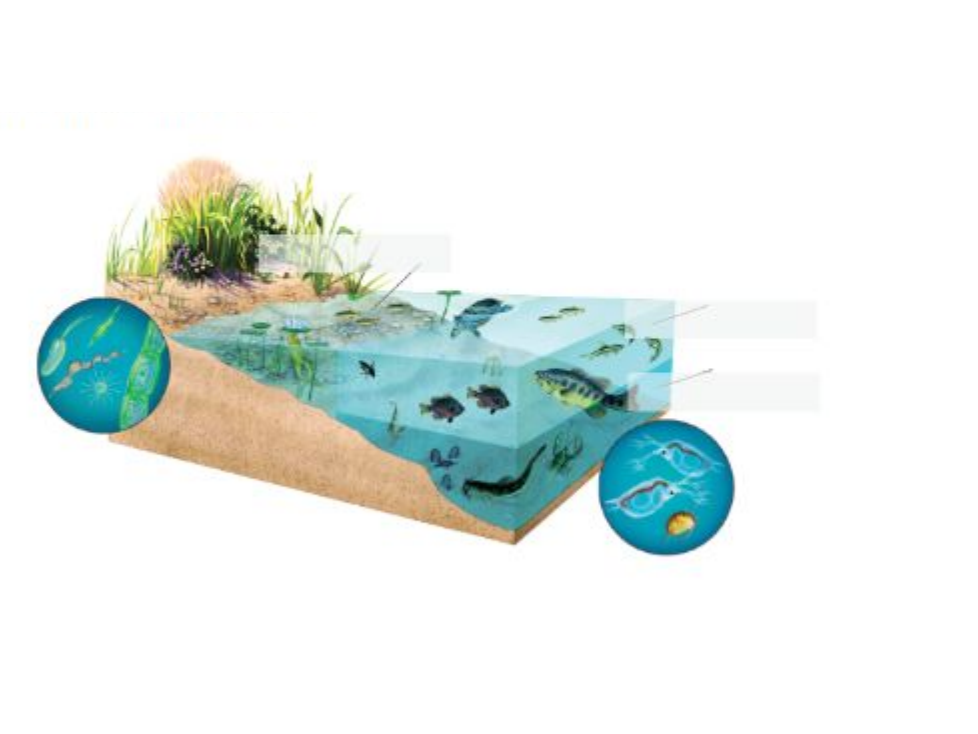
Mmuae Afoforo a Wobɛpaw:
Limnetic Zone
Littoral Zone
Profundal Zone
Categorize each characteristic.
Oligotrophic Lake | Eutrophic Lake | |
|---|---|---|
Nutrient-poor | ||
Nutrient-rich | ||
found high in mountains | ||
found at lower altitudes | ||
very few plants live here | ||
typically no animal species present | ||
many different plant species present | ||
a variety of animal life found here |
Zones of a Lake
Lakes and ponds are divided into 3 zones based on the amount of sunlight able to penetrate the water.
The area closest to the shore is the littoral zone. The water here is shallow, sunlight is able to reach all the way to the bottom. There are an abundance of producers present and lots of photosynthesis occurring. Many consumers (frogs, worms, crustaceans, ect) live in this area as well.
The limnetic zone is the open water area that is well lit and is dominated by plankton. Many species of fish live in this zone as well, due to the abundance of food.
The deepest zone is the profundal zone. Minimal light is able to penetrate through the limnetic zone and reach the profundal zone. Its much colder & lower in oxygen than the other two zones. There's only a limited number of species live in this harsh environment.
Categorize each characteristic.
Littoral Zone | Limnetic Zone | Profundal Zone | |
|---|---|---|---|
close to shore | |||
Deepest part | |||
open water area that is well lit | |||
Cold | |||
Many aquatic plants | |||
low in oxygen | |||
has lots of plankton | |||
area of high photosynthesis | |||
sunlight able to reach the bottom | |||
no sunlight | |||
lots of fish |