A biologist is observing an organism under a microscope and concludes that it is a unicellular organism.
Which of the following observations provides evidence that this organism must be unicellular, not multicellular?
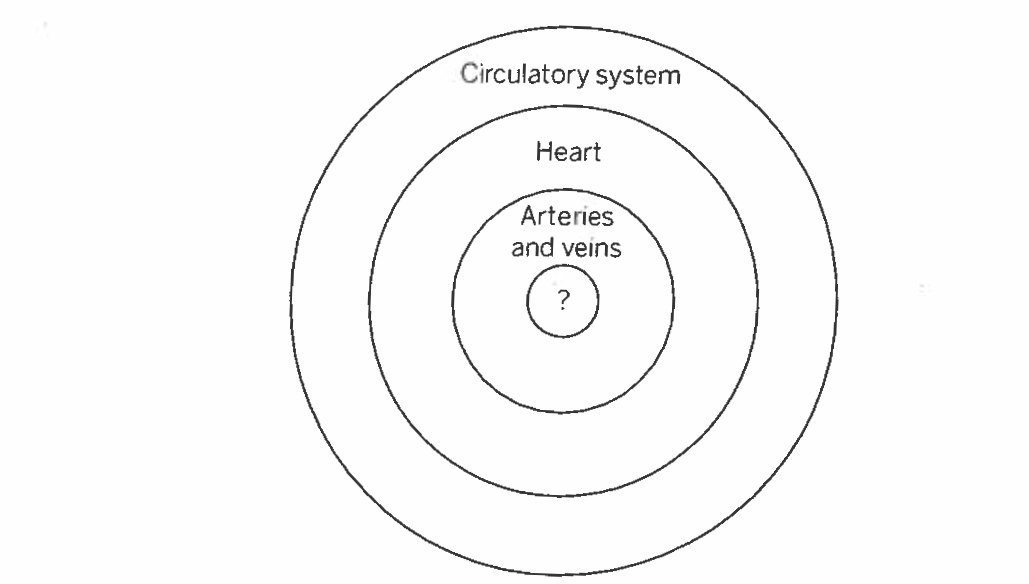
A student is making a model of the cardiovascular system, showing the different components, or levels, that make up this system.
Which component of the system is indicated by the question mark (?) in the model?
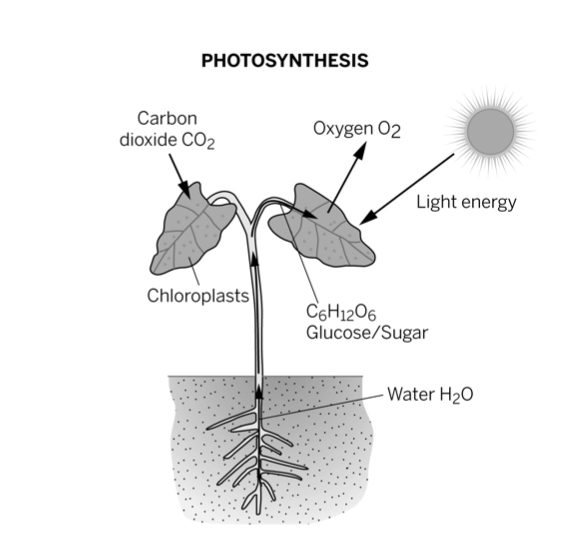
The image above shows how a plant uses light energy to make food. Choose the statment that best describes the chemical process of photosynthesis.
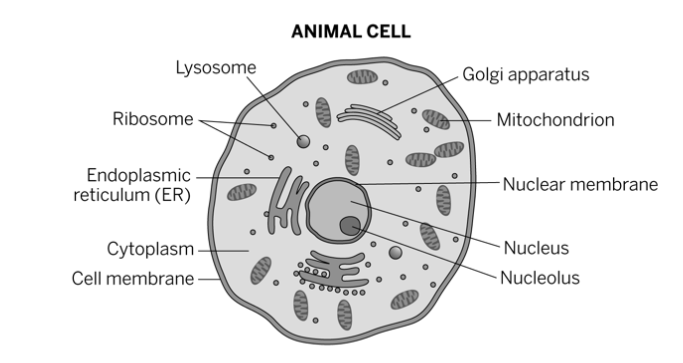
Animal cells have structures that perform specific functions in the cell. Mitochondria are organelles that float within the cell. Because they produce most of the cell's energy, mitochondria are nicknamed "the powerhouse of the cell".
Which of the following types of cells would have the greatest number of mitochondria?
A person's senses rely on sensory receptors. These are specialized cells in the nerves that respond to mechanical, physical or chemical stimuli. Sometimes, multiple stimuli are needed for the sensory receptors to work. All of this sensory information is transmitted to the brain.
Which of the following is a chemical sensory stimuli.
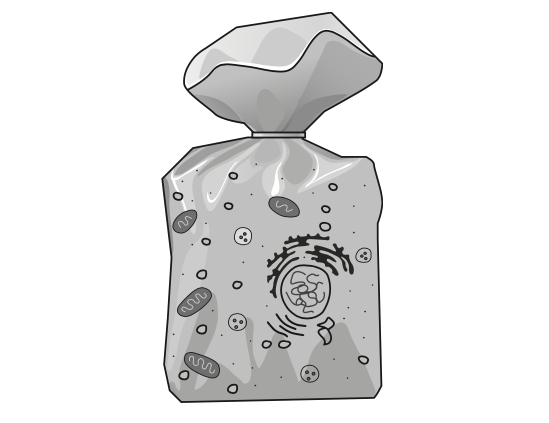
Why is the woven cloth a good choice for improving the student’s cell model?
Cells are the building blocks of all living things. Cells are so small that they cannot be seen with the unaided eye. The diameter of a cell is about 10–100 times smaller than the width of a strand of hair. An organism can be made up of one or many cells. Because an individual cell is alive, it grows and develops, can reproduce, responds to its surroundings, and uses energy. The human body is made of structures at different scales. Different types of cells make up tissues and organs. Various combinations of organs and tissues make up systems that perform functions important for sustaining life. The human body has several different systems, each with a specific function. Each system works with other systems to ensure that the body works properly.
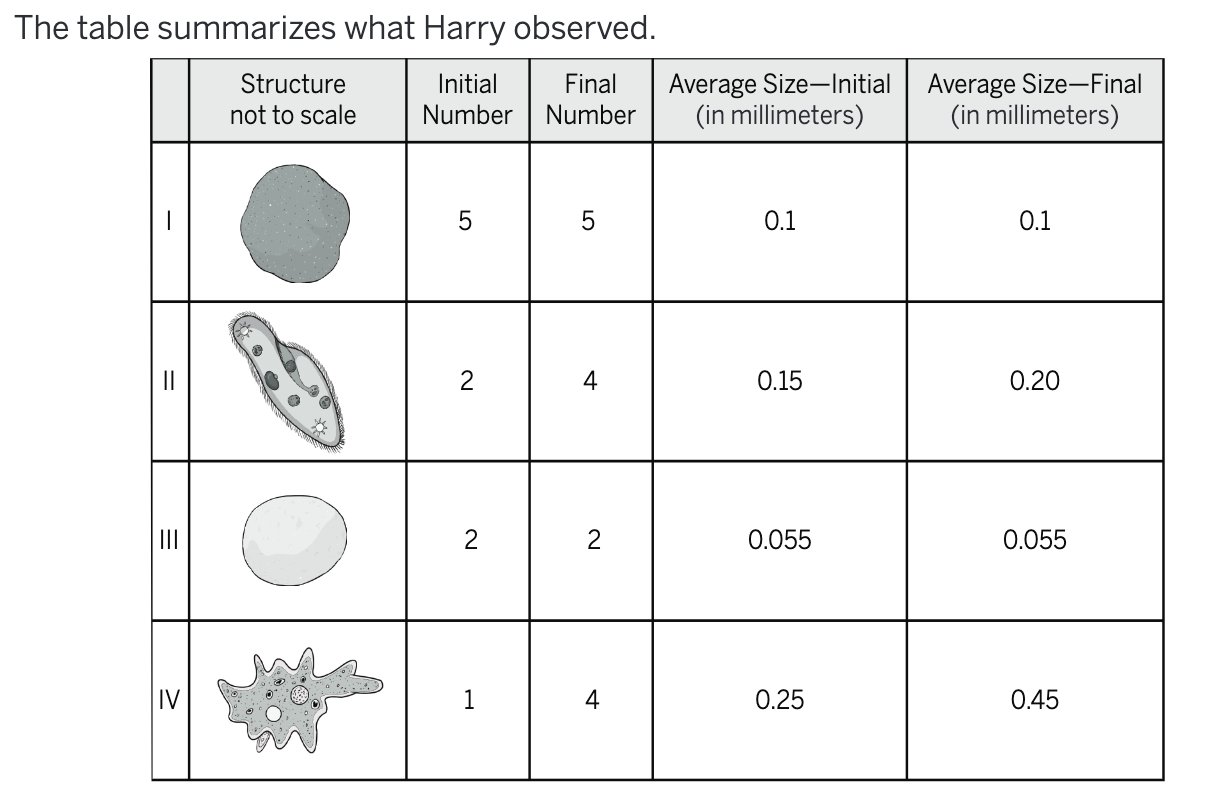
Harry examines a drop of pond water under a microscope. He draws pictures of structures
that he observes, counts them, and measures their sizes. Eight hours later, he comes back
and observes the same drop again. He counts the structures and measures their sizes.
Which of the structures is likely a living thing? Select all that apply.
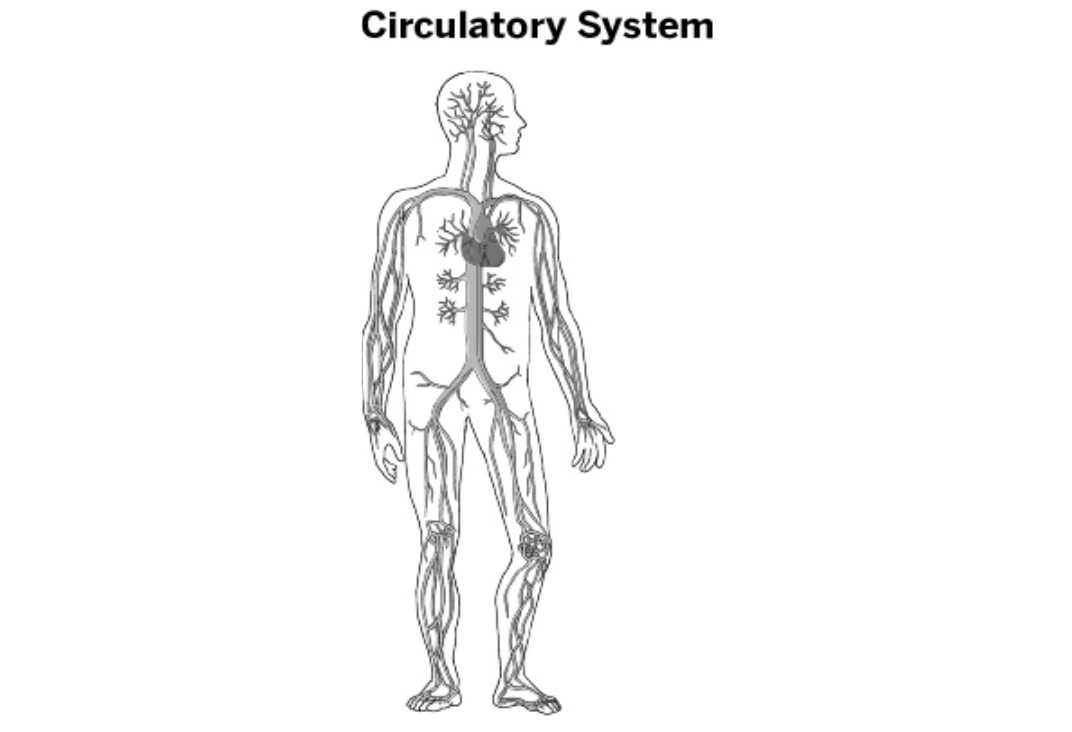
Which body systems work together when Tom lifts a book off the table? Select all that
apply. Only choose systems directly involved in lifting the book.
What is the evidence for your answer(s)? Select all that apply.
How do the systems work together to help Tom to lift the book?