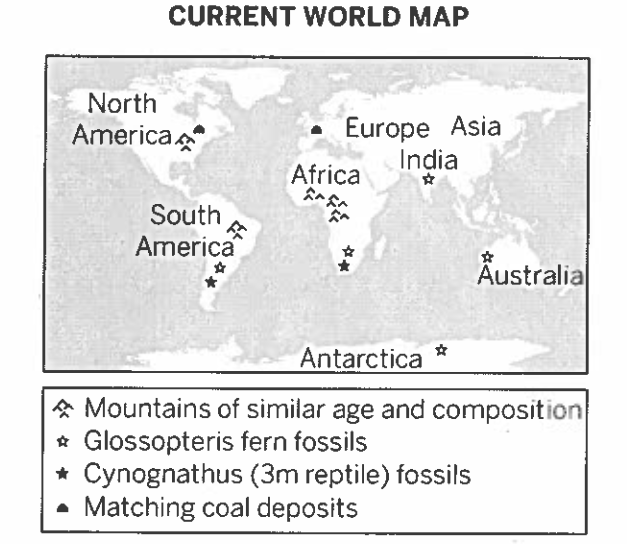
Another way to understand how Earth's surface has changed is to look at the distribution of
extinct life-forms in the fossil record. In their research, the paleontologist and the geologist have found evidence that, more than 3 million years ago, the sea life on each side of Latin America was the same. (Today, the Pacific Ocean is to the west of Latin America, and the Atlantic Ocean is to the east.) Less than 3 million years ago, the sea life began to diverge and eventually became very different.
Which of the statements is true? Choose TWO correct answers.
Which of the following statements is most correct?
Which observation best supports your answer to Part A?
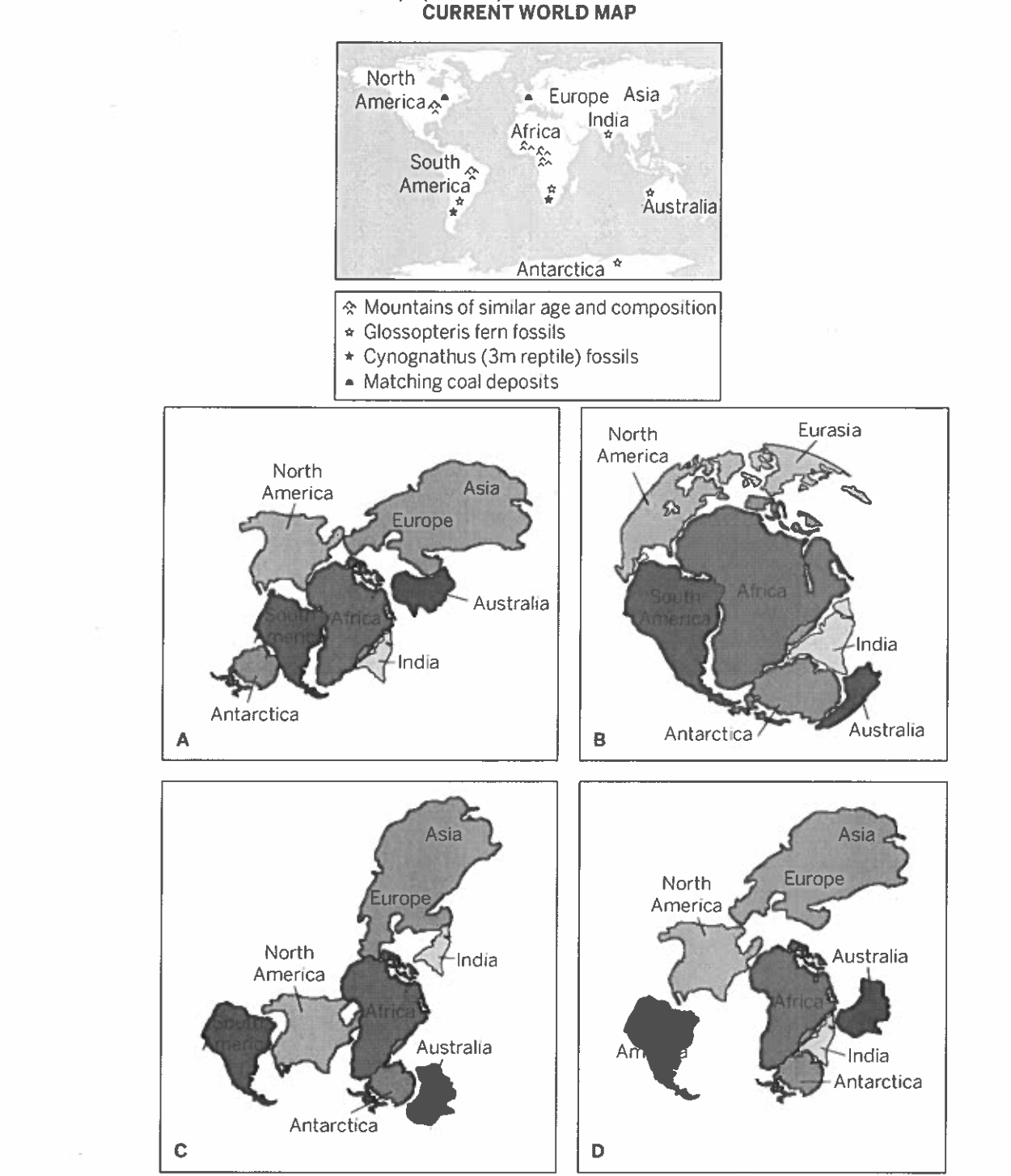
Compare the current world map on the previous page to the four maps above showing what Earth might have looked like millions of years ago. Based on the fossil distribution in the current world map, which of these is most accurate?
In this performance task, you will answer five questions.
A geologist is giving a lecture to help people understand why fossils are sometimes found in
unexpected places. This includes fossils of fish found in tall mountains and fossils of tropical
plants found in deserts. She will also discuss why the same fossils are found in different
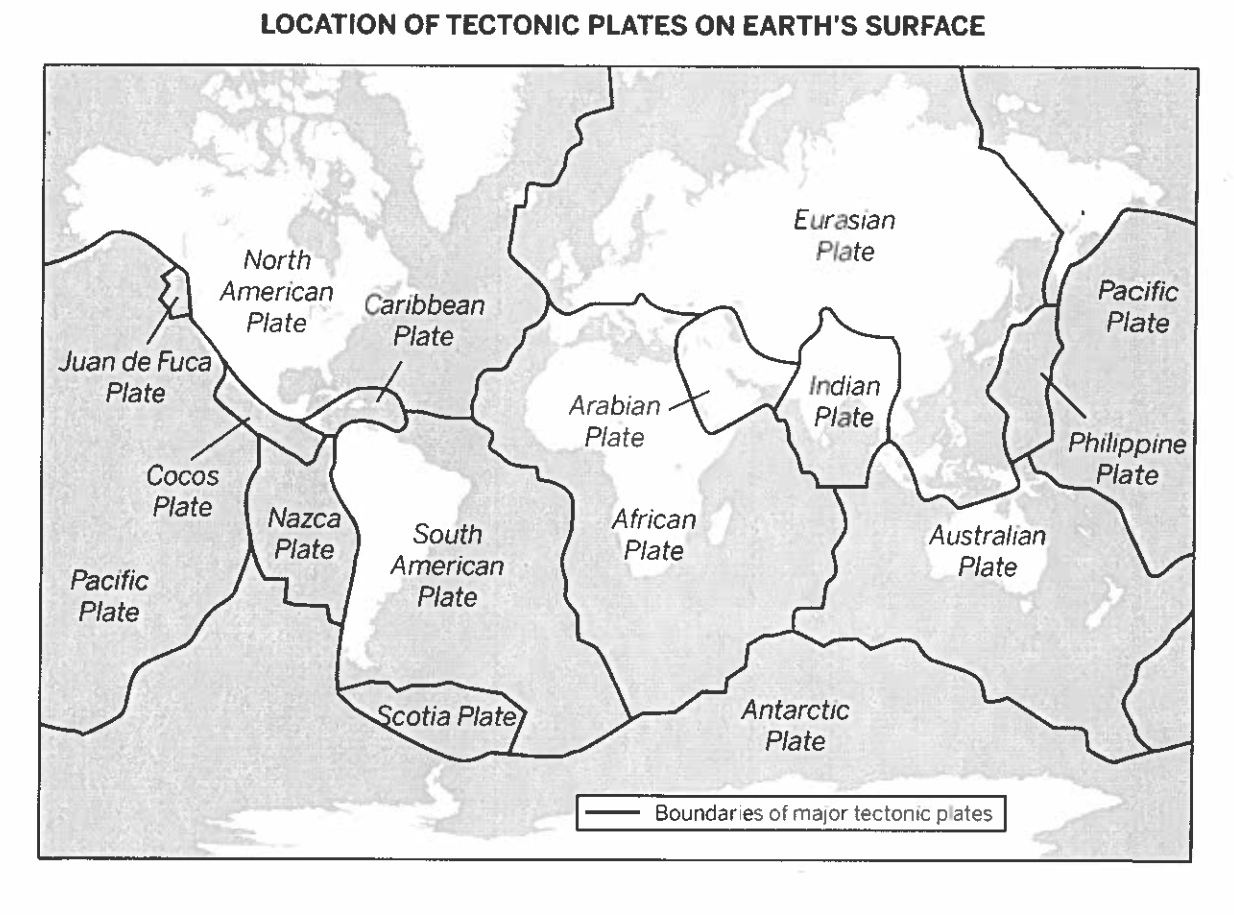
locations thousands of miles apart and why they are not found in some places at all. She begins by explaining that Earth's surface is made up of many large slabs known as plates, which are constantly moving although very slowly. The movement of Earth's plates is known as plate tectonics. This movement helps explain why some fossils are found in strange places.
Questions 5-6
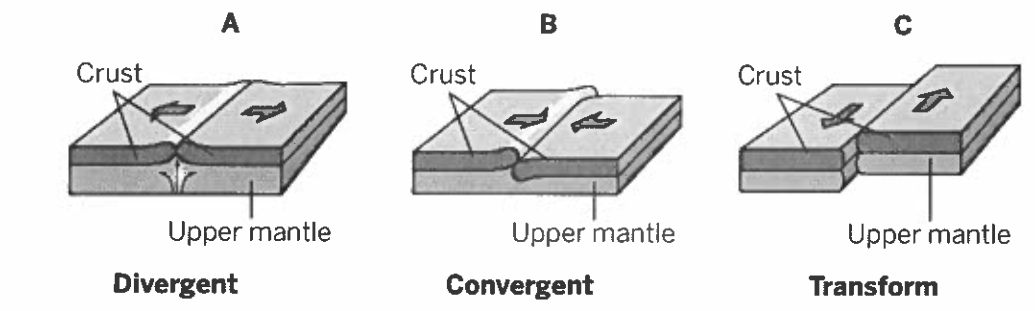
When plates meet, one plate will often slide beneath a second in a process called subduction, causing the second plate to push upward. Because of great pressure. the hard rock of the plate that sinks is often destroyed, along with any fossils contained in that part of the plate. At other times, plates will pull apart or slide alongside each other.
Examine the map on the previous page and the diagrams below closely to answer the following questions.
Which of the following statements is most correct?
Which observation best supports your answer to Part A?
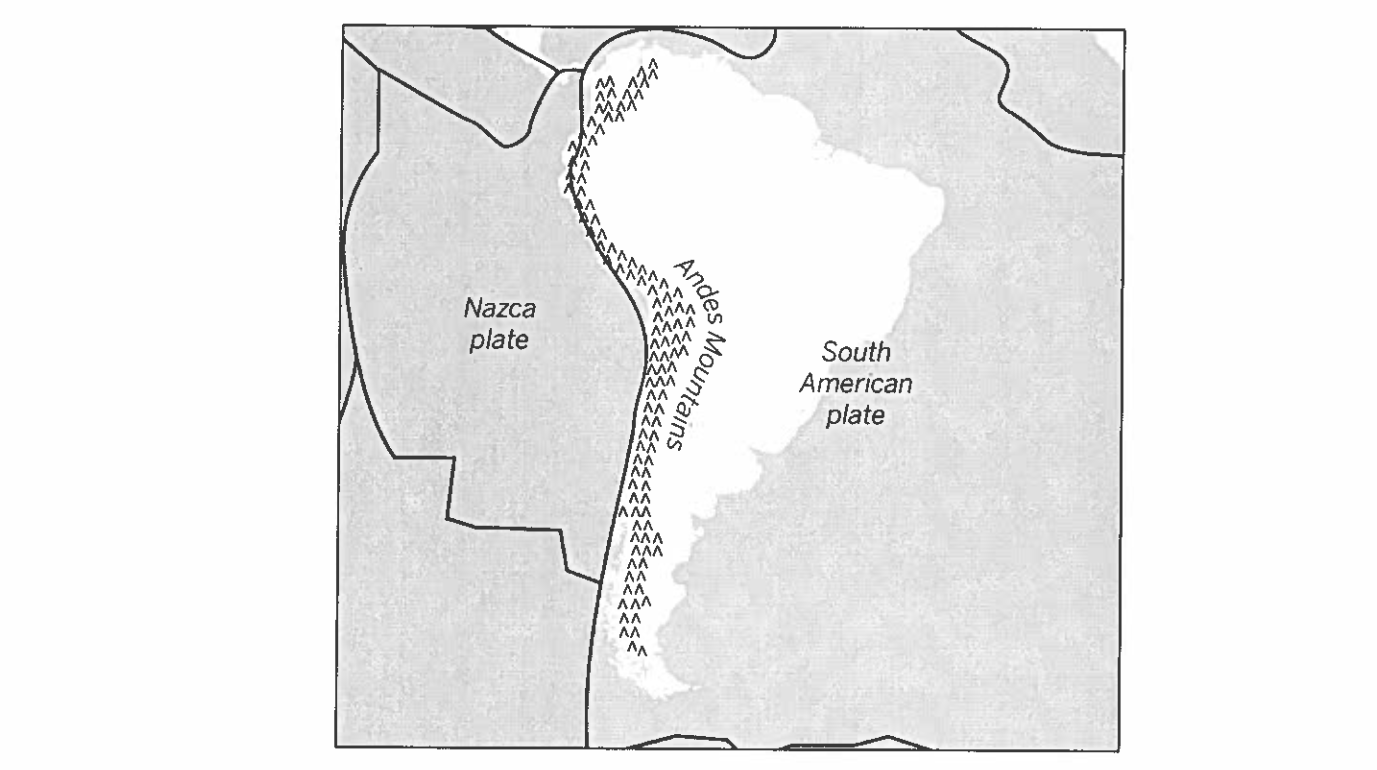
How did marine fossils come to be high in the Andes Mountains? Choose the two best options.
The paleontologist and the geologist now think that they have enough evidence to prove that Earth's Surface has changed over time. Scientists can see how landmasses once aligned by comparing which of the following?
The geologist explains that there are additional reasons some areas don't contain fossils. Earth's surface is made up of three major rock types: metamorphic, igneous and sedimentary.
Fossils do not occur in igenous rock because it comes from magma found deep within Earths mantle. When sedimentary rock transforms into metamorphic rock the fossils are destroyed. Which process most closely describes the transformation?

Hawaii has very few fossils. Look at the map, and consider what you have learned so far. Explain why the island of Kauai is smaller than the island of Hawaii and why there are so few fossils on any of the islands.