Ɛhia
1
Complete the sentence - "With their newfound prosperity, people could spend on..."
Complete the sentence - "With their newfound prosperity, people could spend on..."
As you watch the video take note of 3 things that happened during the 1920s:
Complete the sentence - "With their newfound prosperity, people could spend on..."
Complete the sentence - "There has been a proliferation of _______ during COVID."
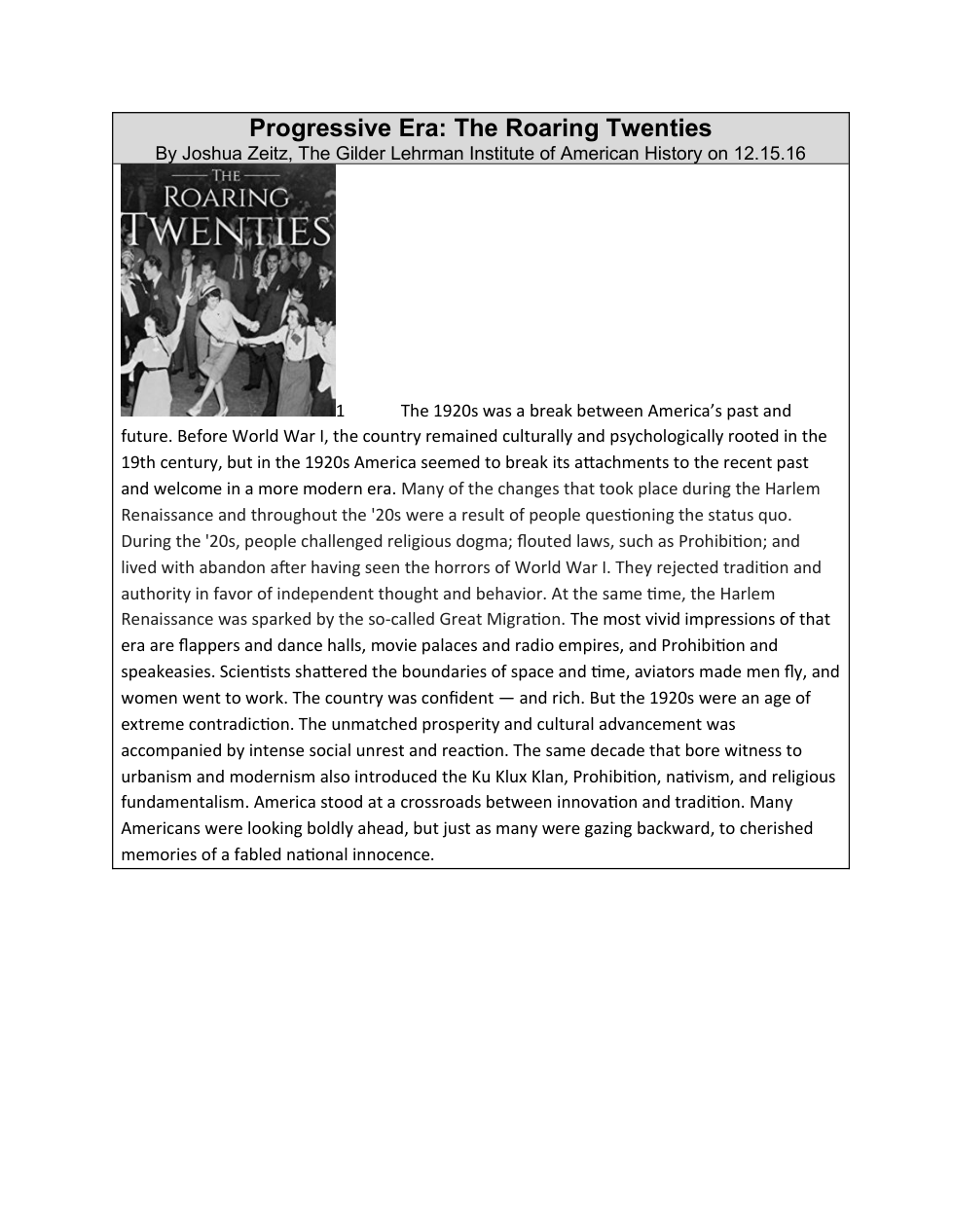
What does the "status quo" mean? (You can use the internet to look up a definition)
What are three ways the status quo was challenged, according to this section?
Why were the 20s a decade of contradiction?
Contradiction- a combination of statements, ideas, or features of a situation that are opposed to one another
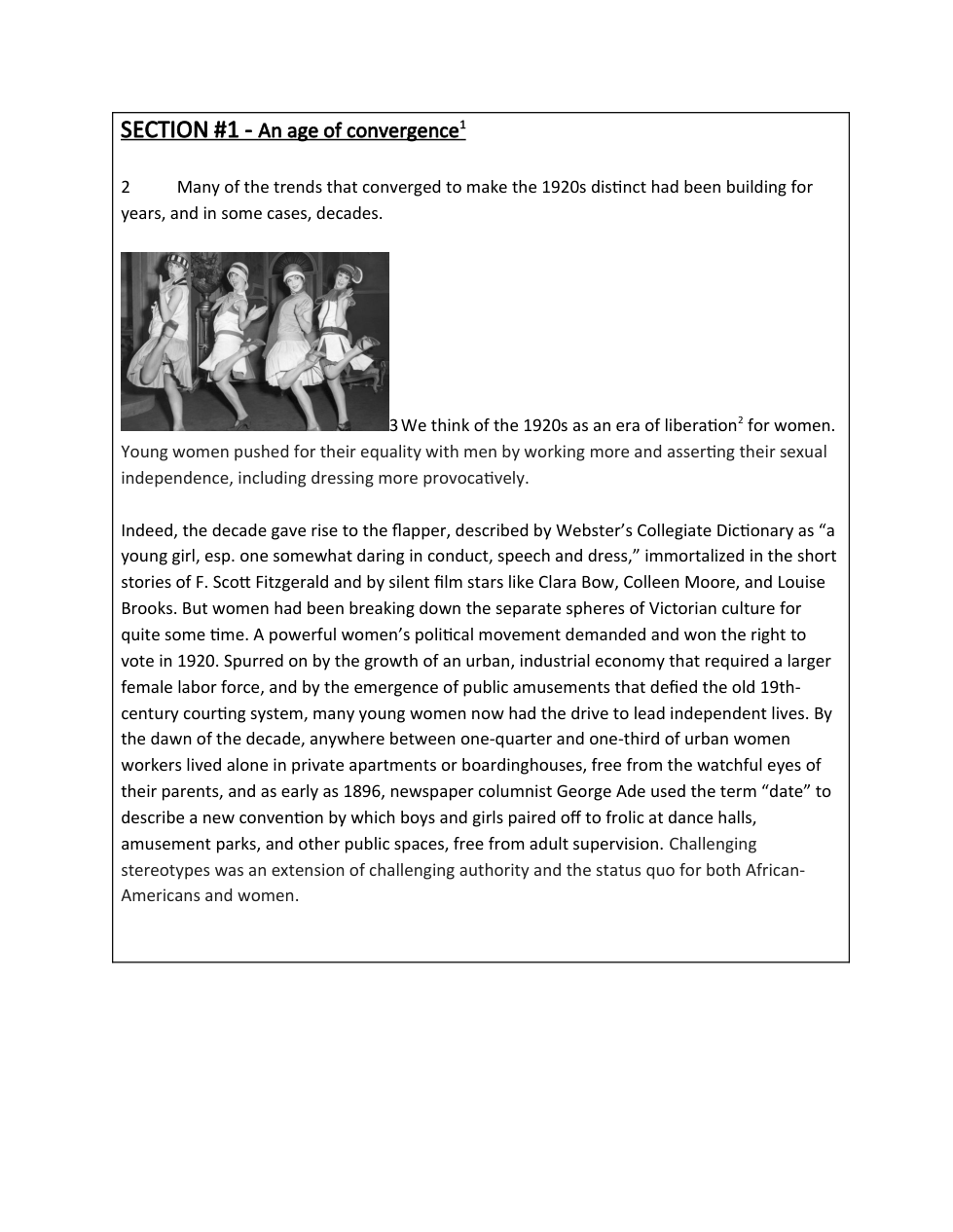
Why was the 1920s an "era of liberation" (freedom) for women? Use two examples.
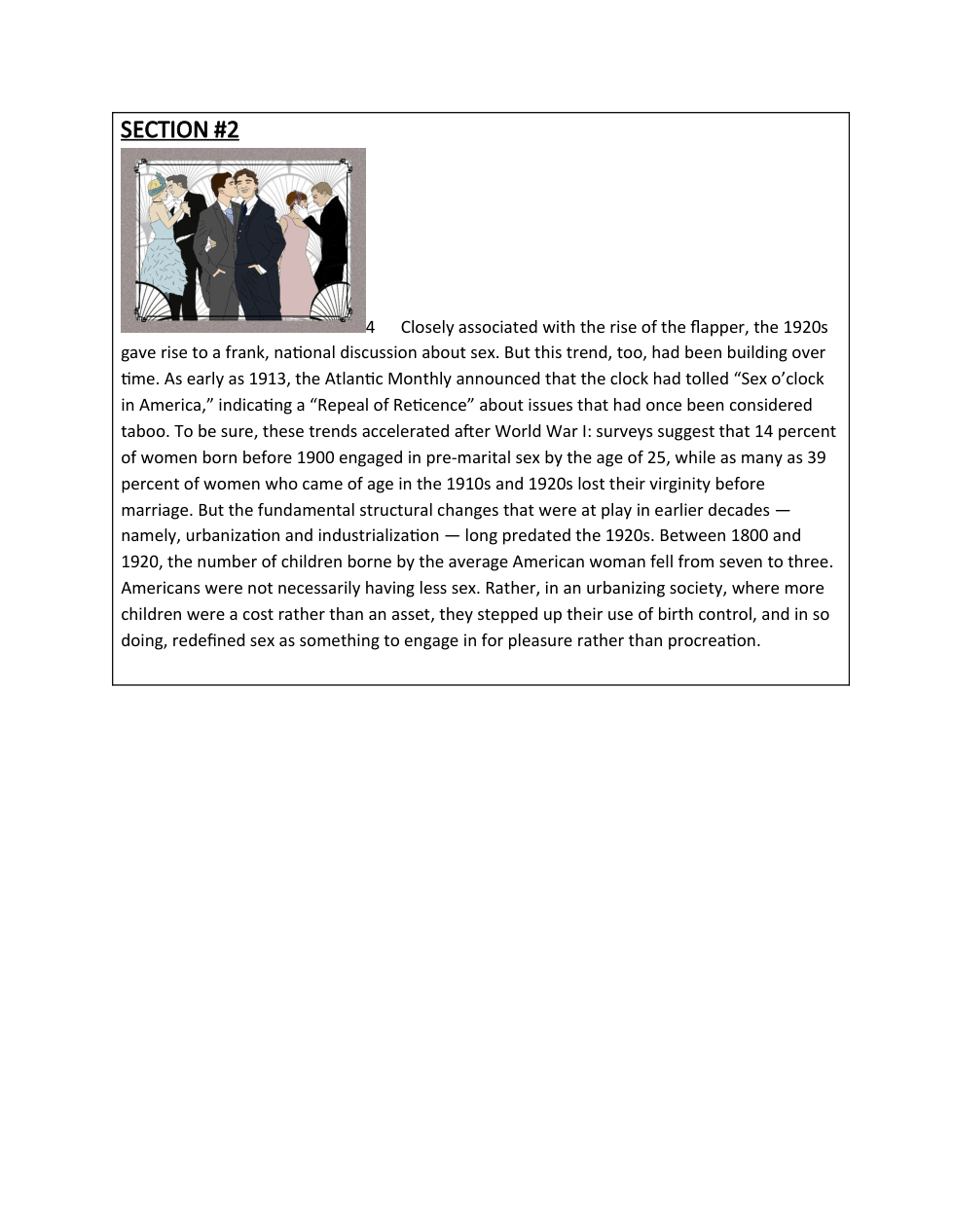
What is the main takeaway from this paragraph?
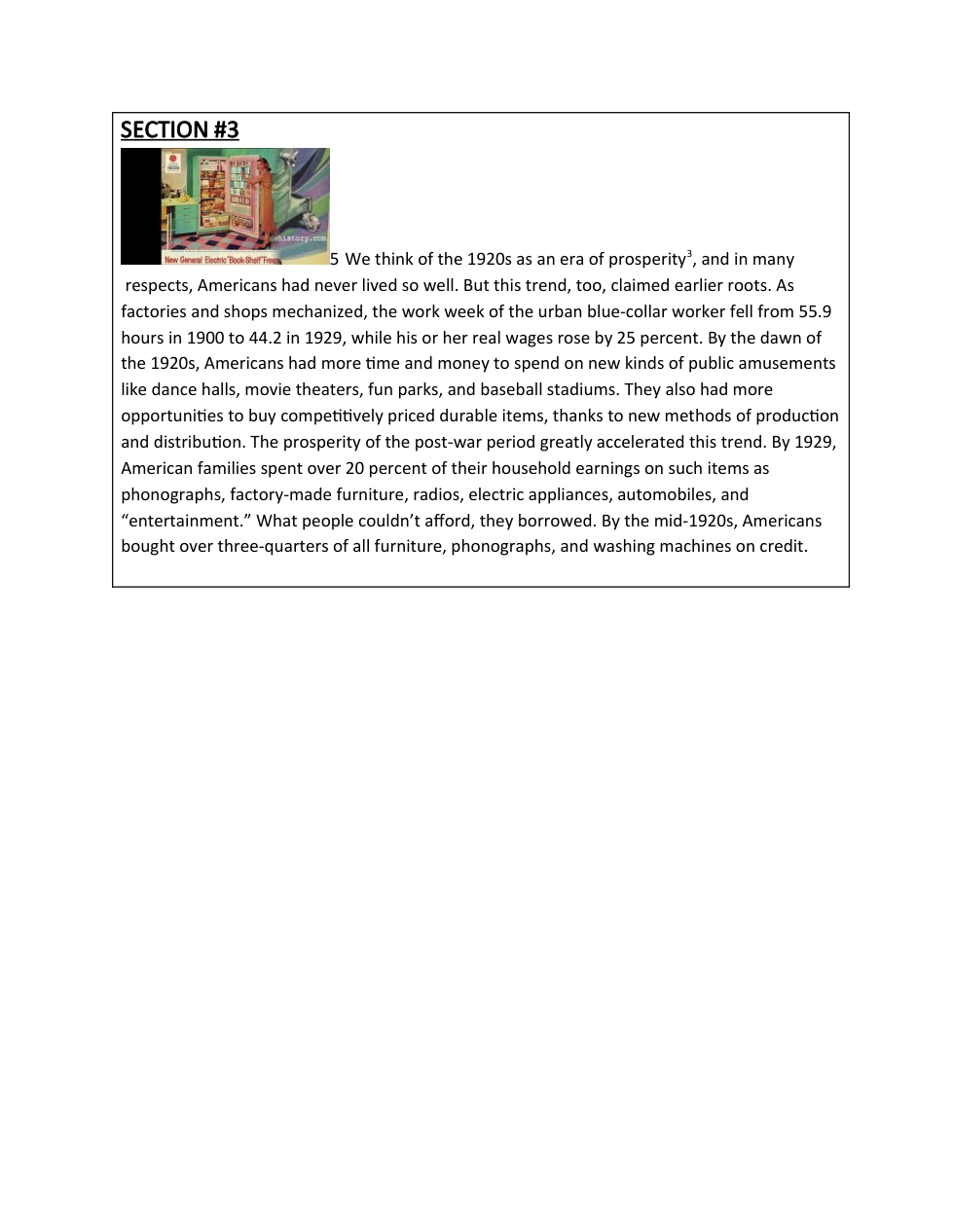
What were two reasons why the 1920s was an "era of prosperity", according to this paragraph?
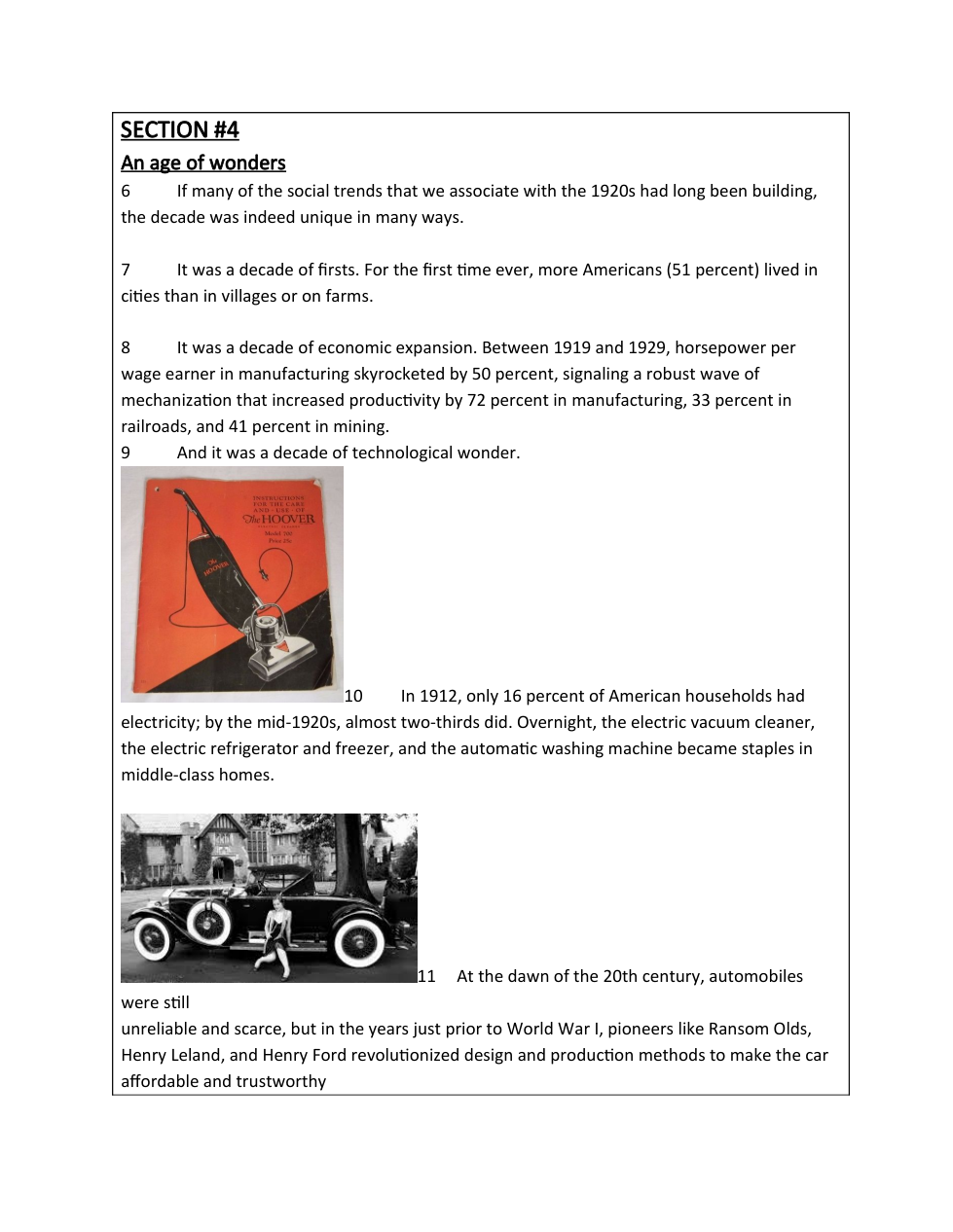
What were three new innovations in the 1920s?
Think - What might be the impact of these innovations on people's daily lives? (In other words, what would they have to spend LESS time doing or have MORE time to do?)
Section #5
12 Another pre-war technology that came of age in the 1920s was film. By the mid-1920s, movie theaters were selling 50 million tickets each week, a sum equal to roughly half the US population! And the generation that came of age in the 1920s learned things at the movie palace that they couldn’t learn in school. “The only benefit I ever got from the movies was in learning to love and the knowledge of sex,” a young woman confided to an interviewer in the mid-1920s. “If we didn’t see such examples in the movies,” explained another, “where would we get the idea of being ‘hot'? We wouldn’t.” These young informants might have been thinking of the 1923 blockbuster Flaming Youth, which one reviewer described as “intriguingly risqué, but not necessarily offensively so. The flapperism of today .... with its jazz and its utter disregard of the conventions, is daringly handled in this film. And it contains a bathing scene in silhouette that must have made the censors blink." The Harlem Renaissance was a part of what was known as the Roaring '20s. The Harlem Renaissance took place throughout the 1920s until the mid-1930s. However, it was distinct from the era's larger social and cultural influences because it concerned the blossoming of African-American art, literature and music. Still, the Harlem Renaissance shared many similarities with the overall period.
What was the impact of film, according to the article?
How was the Harlem Renaissance related to the 1920s?
Section #6
13 Like film, radio was invented in the late 19th century, but experienced its formative era of commercial expansion in the 1920s. On November 2, 1920, radio station KDKA in Pittsburgh, Pennsylvania, broadcast the presidential election returns. It was the first-ever live radio transmission for a popular audience, and although few Americans that evening had the necessary technology to hear the results, by 1922 more than 3 million households had acquired radio sets. Seven years later, more than 12 million households owned radios, fueling an industry that saw $852 million in annual sales. The Roaring '20s was the time of the Jazz Age. Many of the top jazz musicians were African-Americans, such as Duke Ellington, Louis Armstrong and Fats Waller. A central component of the Harlem Renaissance, jazz reached beyond Harlem in the 1920s. As Americans in the '20s became more progressive and rejected traditional forms of music, notions about morality, and what was deemed respectable, they accepted and enjoyed jazz in their households via radio.
What was the significance of the radio in the 1920s?
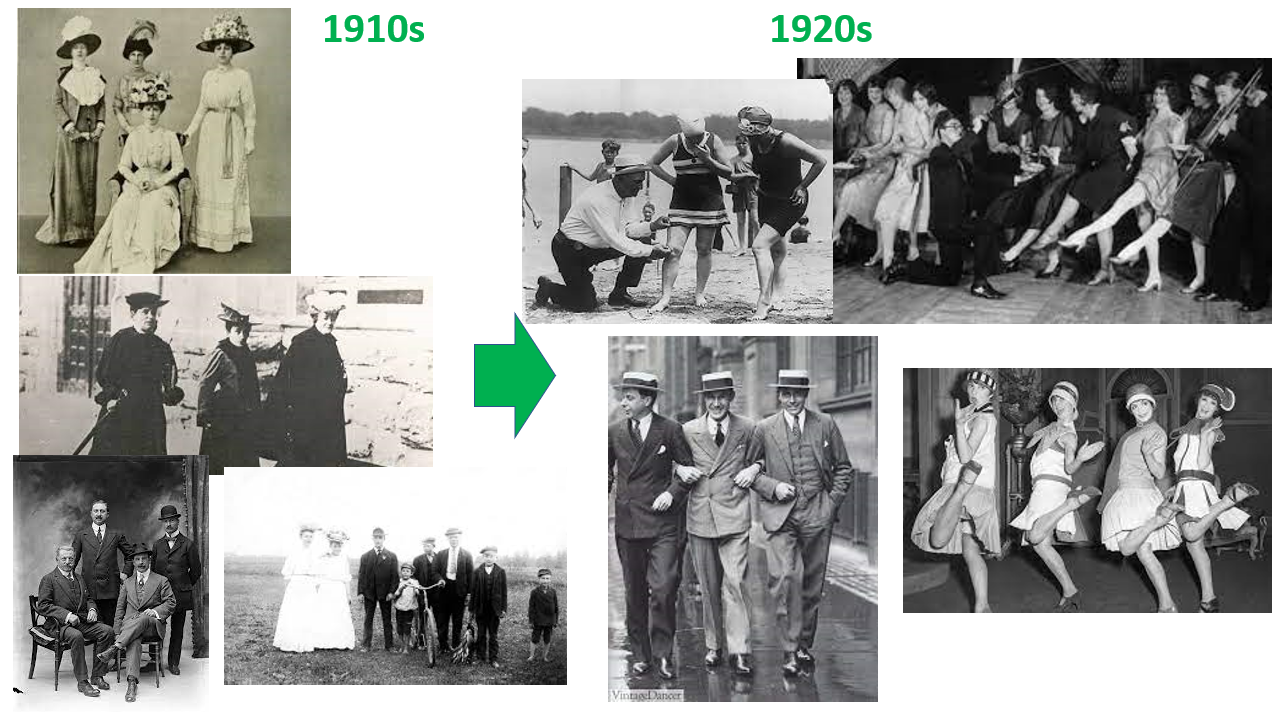
What’s the Difference???
Looking at the pictures and thinking of the text above, what words come to mind to explain the difference between the 1910s and 1920s?
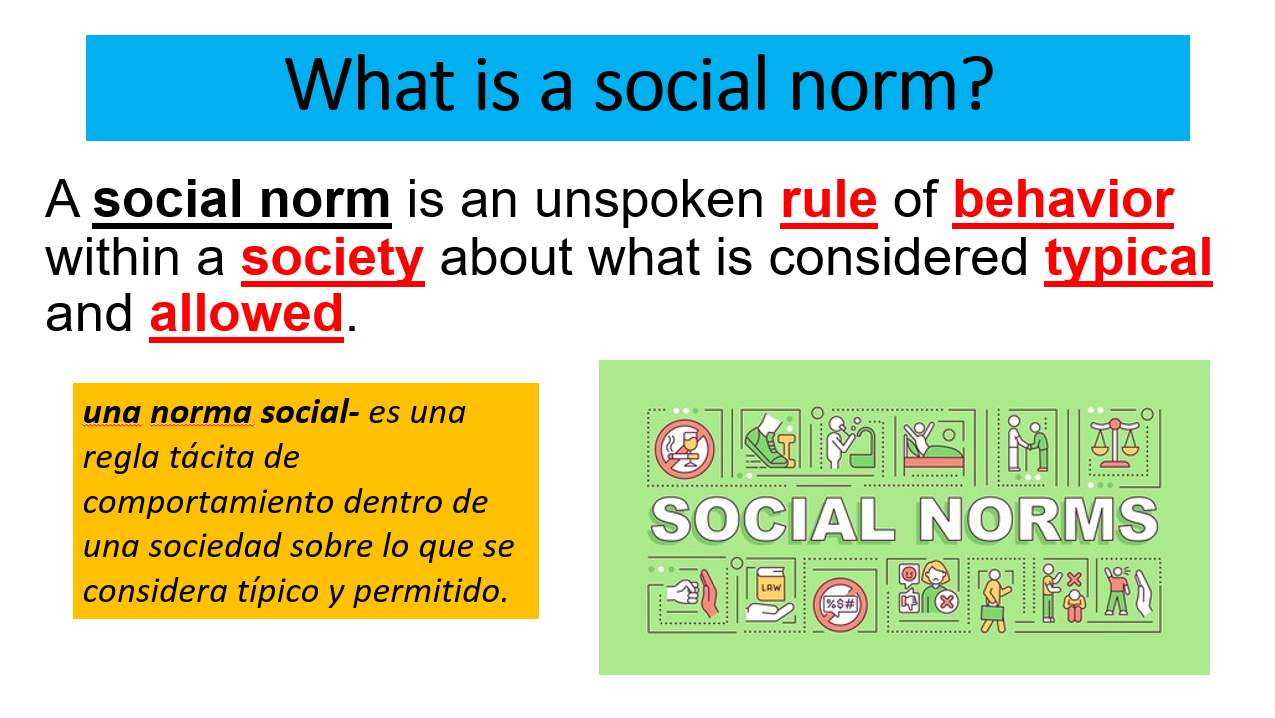
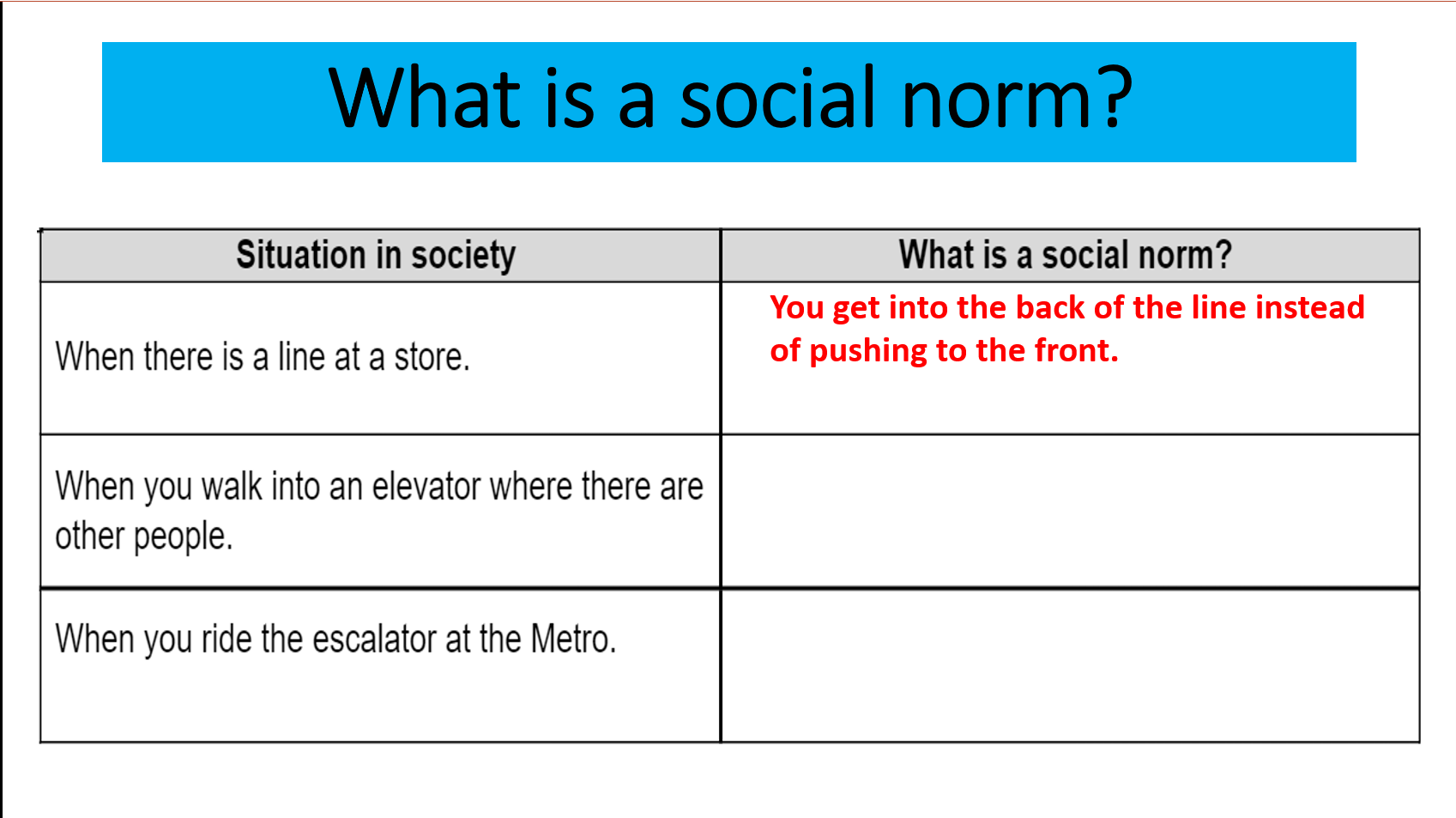
Which is a social norm for walking into an elevator with other people?
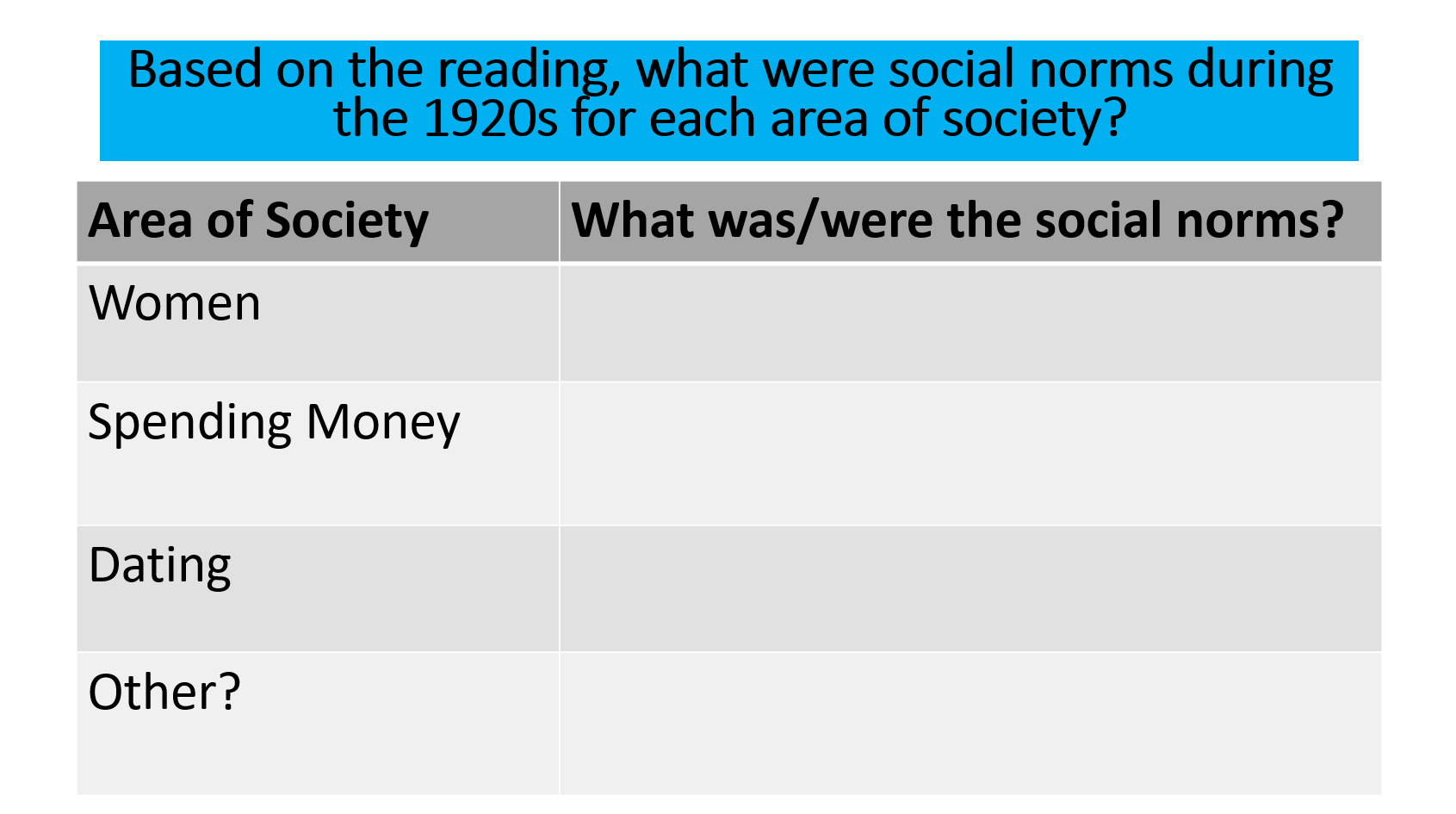
Social Norms for Women - Include the paragraph #
You can also use the photos above.
Social Norms for Spending Money- Include the paragraph #
If you finish early look at this article. What are 2-3 new things you learn about the 1920s?
What are 2-3 new things you learn about the 1920s in this article?
Reflection - Why do you think the 1920s were called the "Roaring 20s"?
How were the 1920s a time of prosperity and proliferation? Provide at least three specific examples from class (video, reading, photos) in your response. Your response should also include these two new vocab words and be at least 3-4 sentences:
Additional Word Bank:
Americans
innovations freedoms experienced
technologies
independence new Roaring Twenties
Which are the social norms for riding the escalator at the Metro?
Social Norms for Dating- Include the paragraph #
Any other social norms you can think of? Include the paragraph #