Log in
Sign up for FREE
arrow_back
Library
Notes Quiz - Naming Ions
By TRACI SIEVERS
star
star
star
star
star
Share
share
Last updated about 2 years ago
39 questions
Add this activity
zoom_in
zoom_in
1
1
1
1
zoom_in
1
1
1
zoom_in
1
1
1
1
zoom_in
1
1
1
1
zoom_in
zoom_in
zoom_in
1
1
1
1
zoom_in
zoom_in
1
1
1
1
zoom_in
1
1
1
1
zoom_in
zoom_in
zoom_in
zoom_in
1
1
1
1
zoom_in
zoom_in
zoom_in
zoom_in
1
1
1
1
zoom_in
zoom_in
zoom_in
zoom_in
zoom_in
1
1
1
1
Question 1
1.
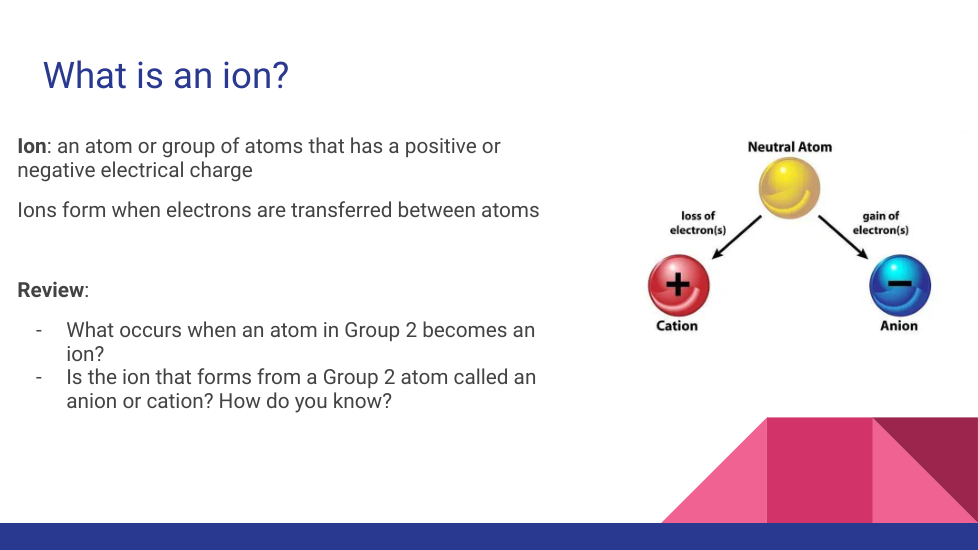
What happens when an atom gains an electron?
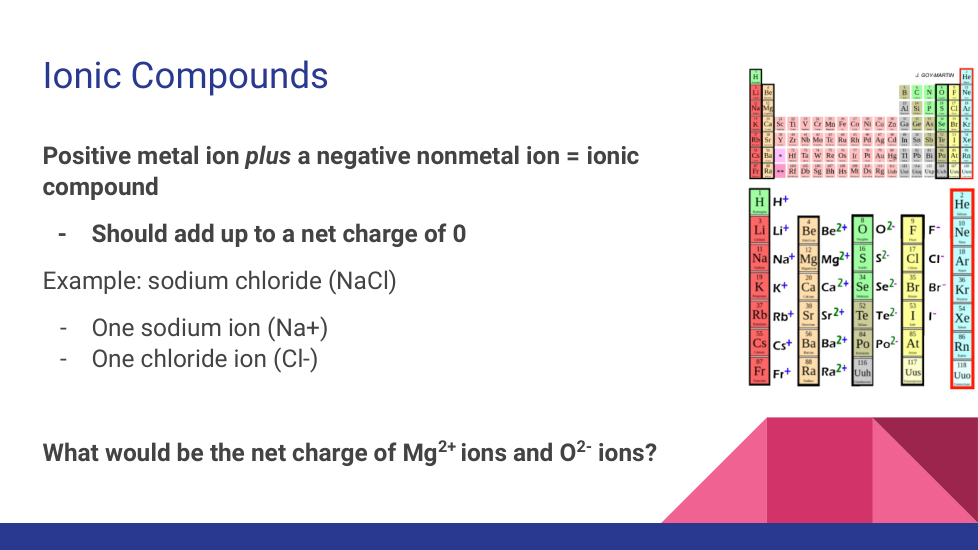
It becomes a positive ion
It becomes a negative ion
It loses its atomic structure
It becomes a molecule
Question 2
2.
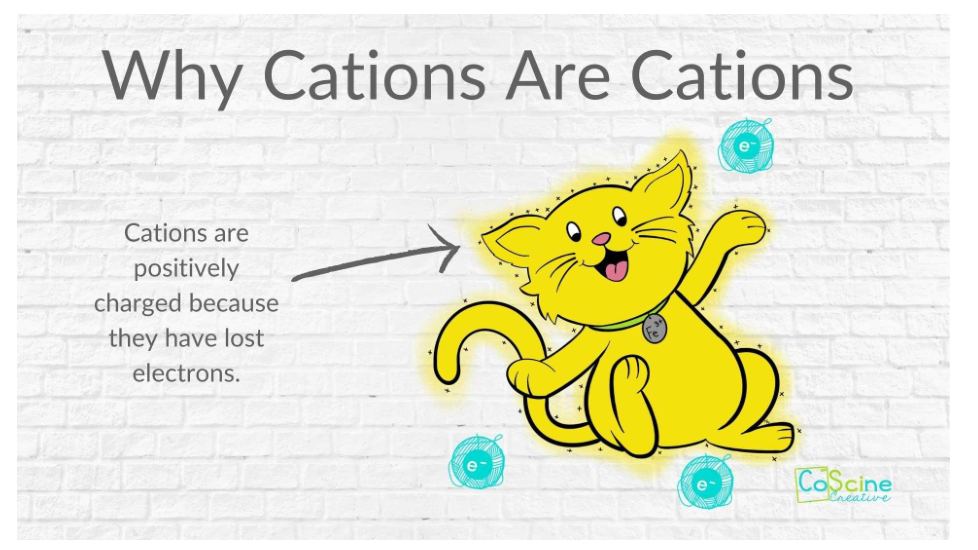
How does an atom become a cation?
It gains a neutron
It gains an electron
It loses an electron
It loses a proton
Question 3
3.
Which ion represents an atom that has gained three electrons?
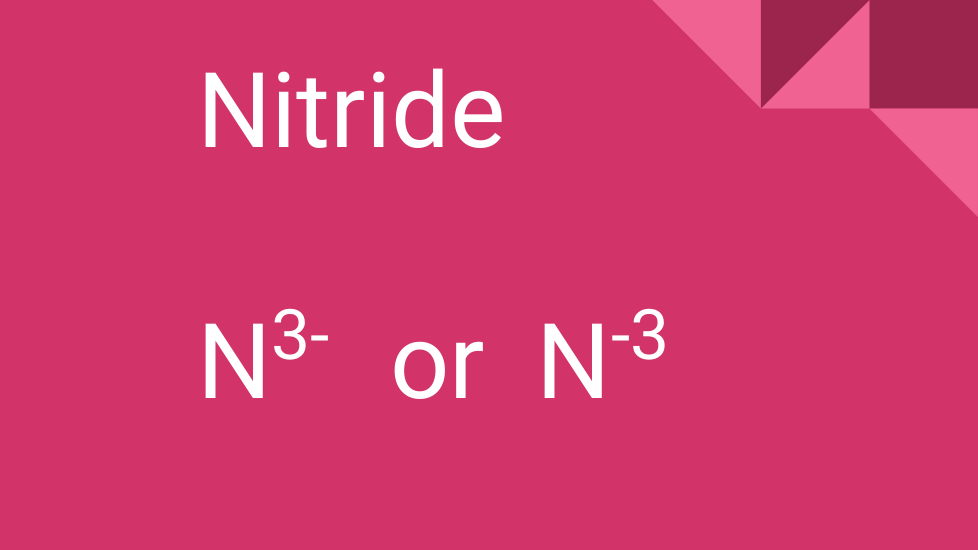
Cation with charge of -3
Anion with charge of -3
Cation with charge of +3
Anion with charge of +3
Question 4
4.
What determines the charge of an ion?
The number of neutrons
The atomic mass of the ion
The number of lost or gained electrons
The number of protons
Question 5
5.
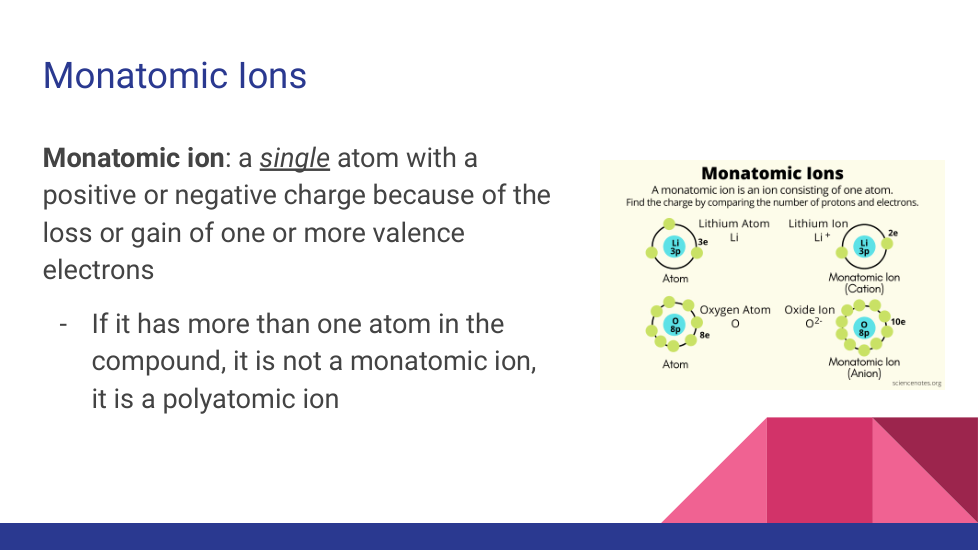
Ionic compounds are electrically____?
Positive
Charged
Neutral
Negative
Question 6
6.
What is the net charge on a stable ionic compound?
Negative
Zero
Depends on the ions present
Positive
Question 7
7.
Why do ionic compounds have a net charge of zero?
Only positive ions
They don't always have zero net charge
Equal amounts of positive and negative charge
Only negative ions
Question 8
8.
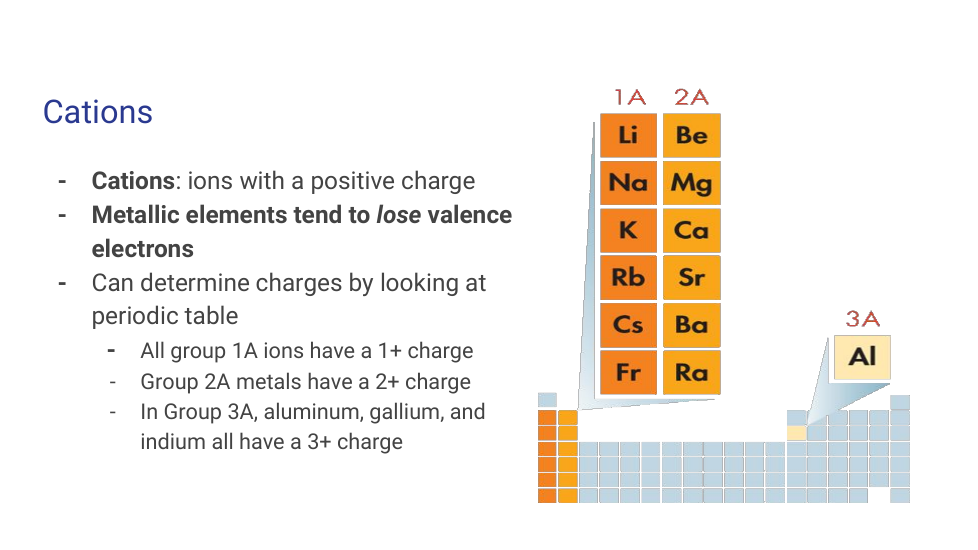
What is the charge of a sodium (Na) ion?
-1
+2
+1
-2
Question 9
9.
How do atoms become monatomic ions?
By gaining or losing protons
Through ionizing radiation
By breaking covalent bonds
By gaining or losing electrons
Question 10
10.
What is the charge of an oxide ion (O)?
-2
+1
-1
+2
Question 11
11.
What does an ion with a -1 charge gain?
One proton
One neutron
One positron
One electron
Question 12
12.
What is a cation?
A neutral substance
An uncharged ion
A negatively charged ion
A positively charged ion
Question 13
13.
What occurs during the formation of a cation?
An atom loses protons
An atom loses electrons
An atom gains protons
An atom gains electrons
Question 14
14.
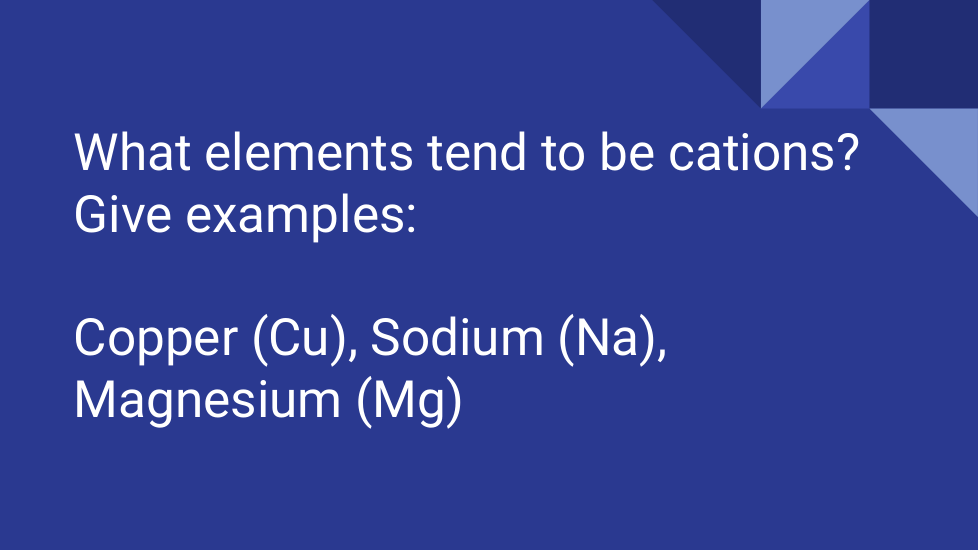
Which atom is more likely to form a cation?
Chlorine
Sodium
Fluorine
Oxygen
Question 15
15.
If an atom has 3 electrons in its outer shell, what might it form?
A cation
A anion
A covalent bond
A polar bond
Question 16
16.
Which of these is a typical cation?
O 2-
Cl-
Na+
H 2-
Question 17
17.
Which ion represents a cation?
NO3 -
PO4 -
SO4 2-
Mg 2+
Question 18
18.
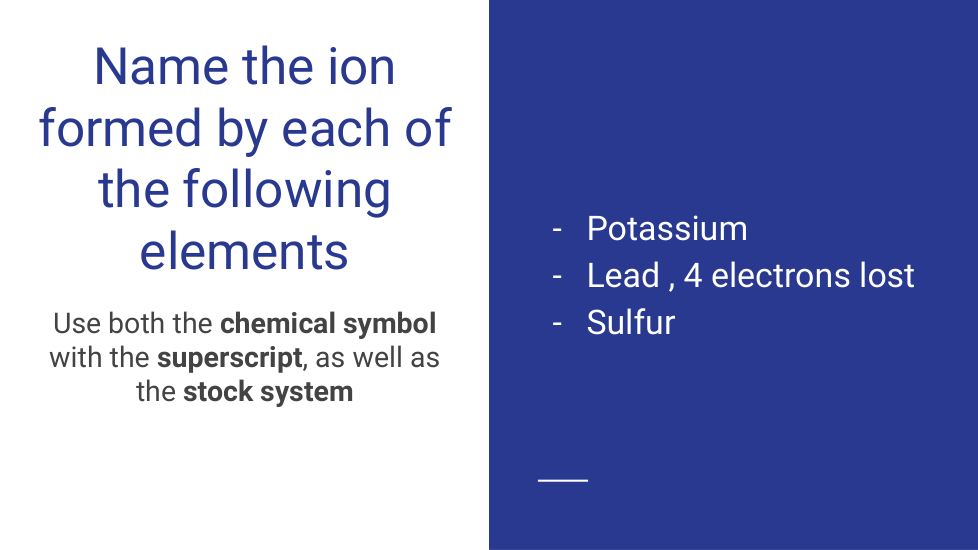
What will a Potassium (K) atom likely form when it becomes ionized?
K 2-
K +
K -
K 2+
Question 19
19.
How many electrons do cations typically have in comparison to their neutral state?
Less
Depends on the element
More
Equal
Question 20
20.
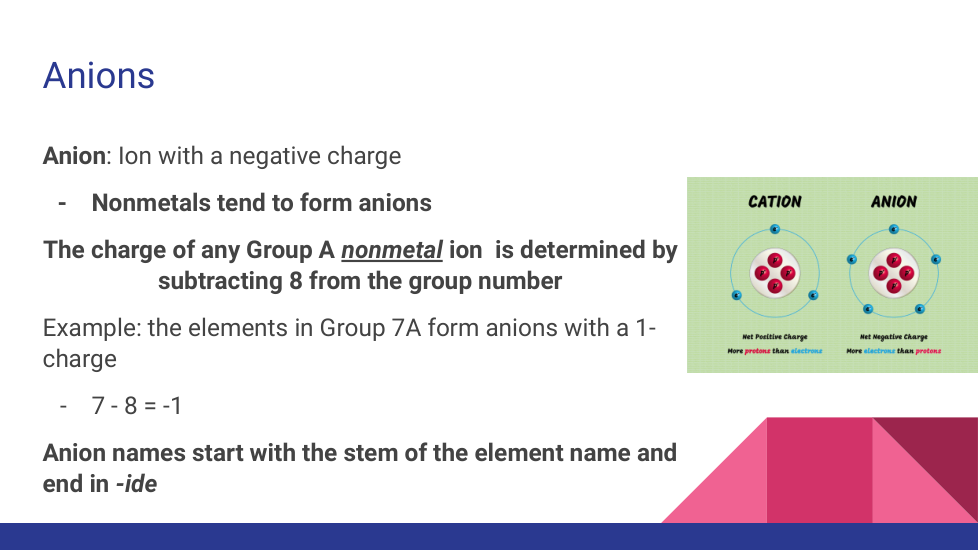
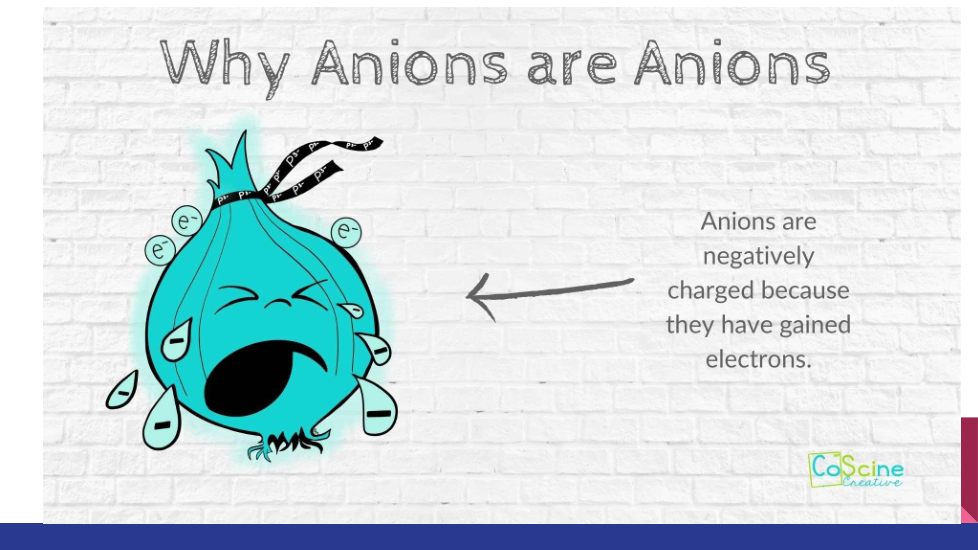
What creates an anion?
An atom gains electrons
An atom gains protons
An atom loses electrons
An atom loses neutrons
Question 21
21.
What is the charge of an anion?
Both positive and negative
Negative
Neutral
Positive
Question 22
22.
In ionic compound formation, what do anions usually form from?
Metalloids
Noble gases
Metals
Nonmetals
Question 23
23.
What is an example of an anion?
Mg 2+
Na +
Cl -
H +
Question 24
24.
What is the charge of most anions?
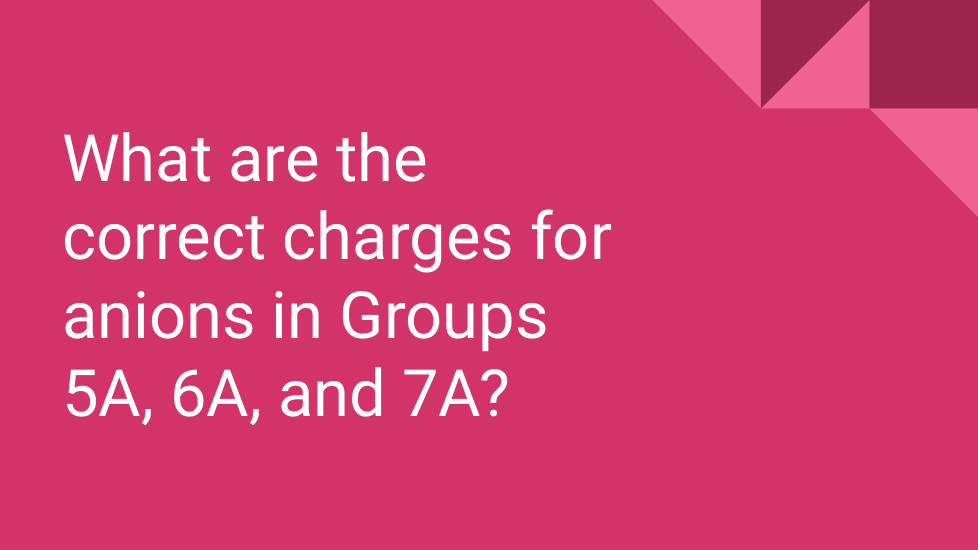
Negative
Both positive and negative
Neutral
Positive
Question 25
25.
Which of the following is NOT an example of an anion?
SO4 2-
Na +
Cl -
O 2-
Question 26
26.
What happens to an atom to make it an anion?
It loses protons
It gains electrons
It gains protons
It loses electrons
Question 27
27.
Which of the following represents a polyatomic anion?
SO4 2-
O 2-
Al 3+
NH4 +
Question 28
28.
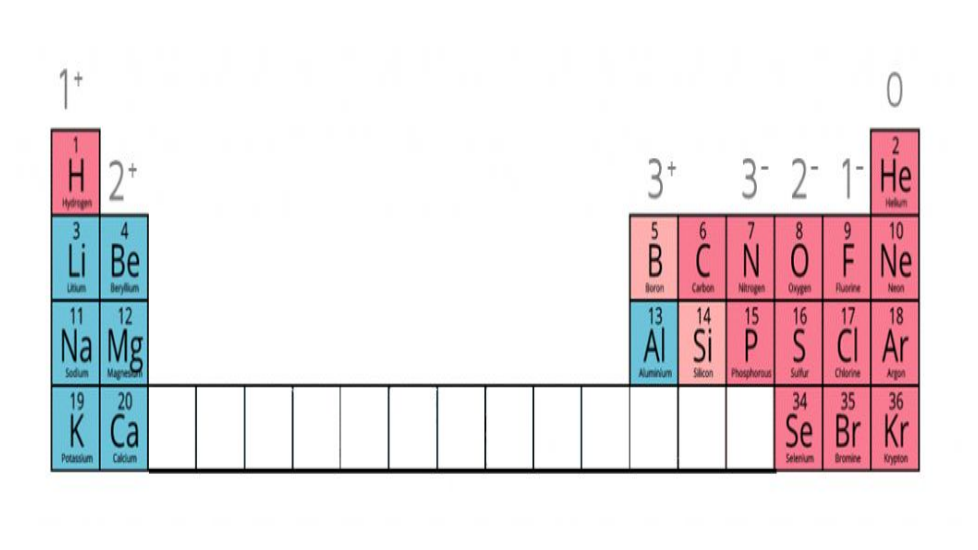
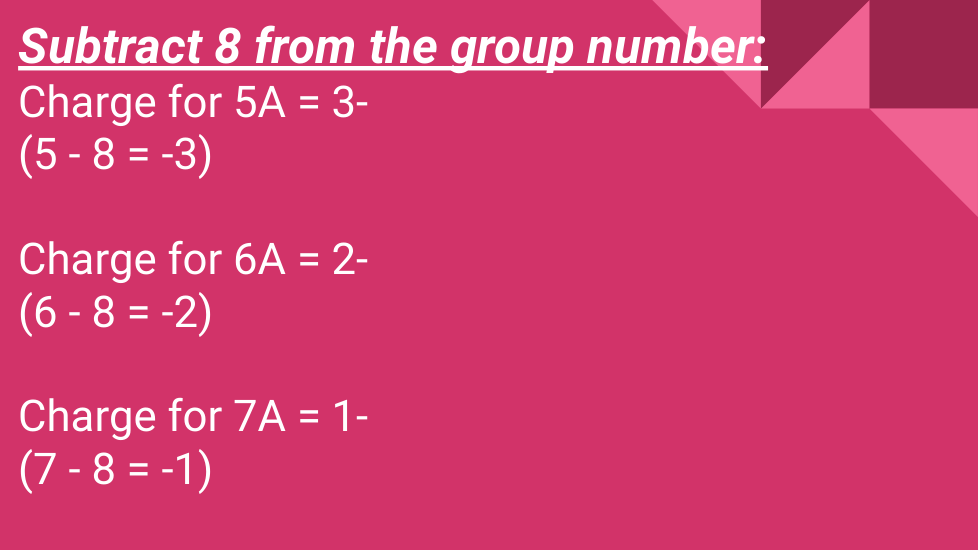
Which group in the periodic table frequently forms ions with +1 charge?
Alkaline Earth Metals
Alkali Metals
Transition Metals
Halogens
Question 29
29.
What is the common ionic charge of elements in Group 17 (Halogens)?
+2
-1
+1
-2
Question 30
30.
Which group in the periodic table forms ions with a +2 charge most often?
Alkali Metals
Noble Gases
Halogens
Alkaline Earth Metals
Question 31
31.
Noble gases do not readily form ions due to their...?
Positive charge
Large atomic size
Low electronegativity
Full valence electron shells
Question 32
32.
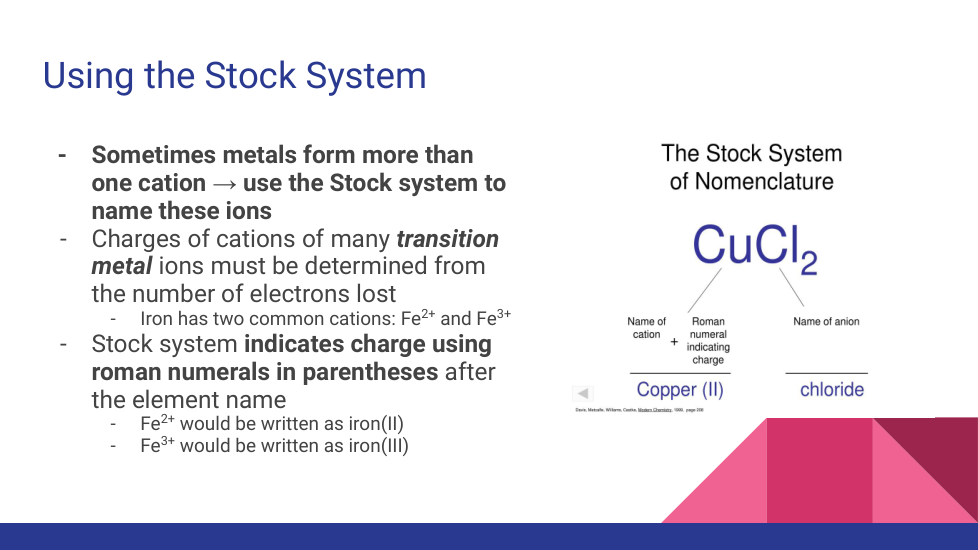
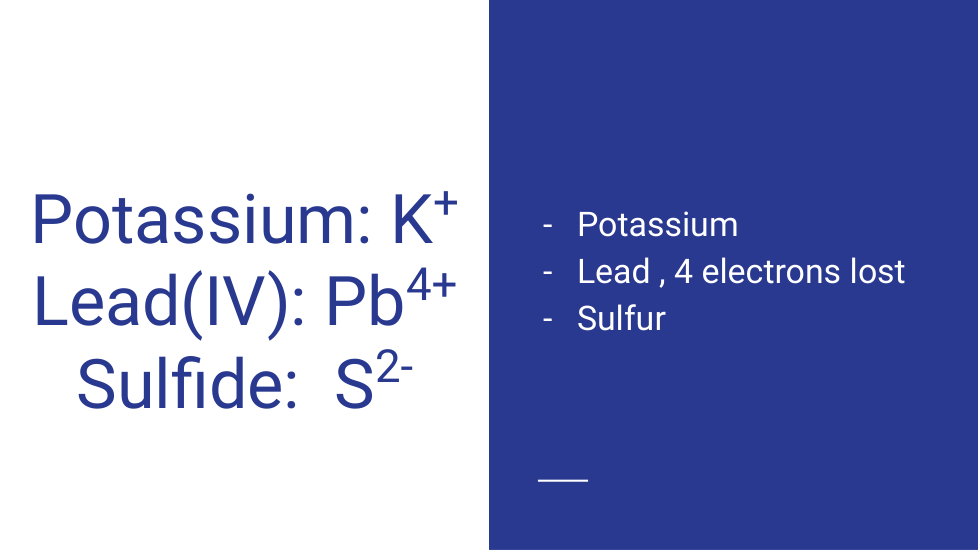
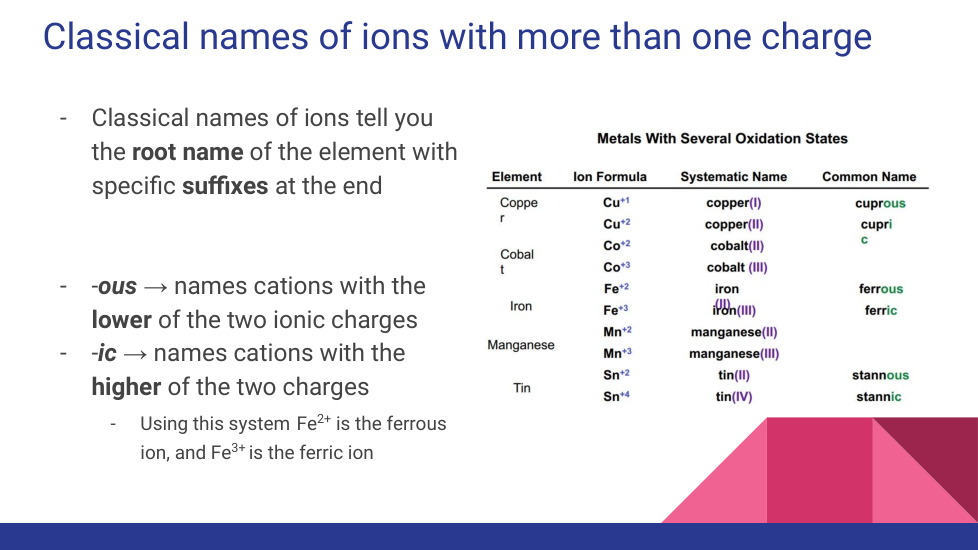
What is the stock name for Fe 3+?
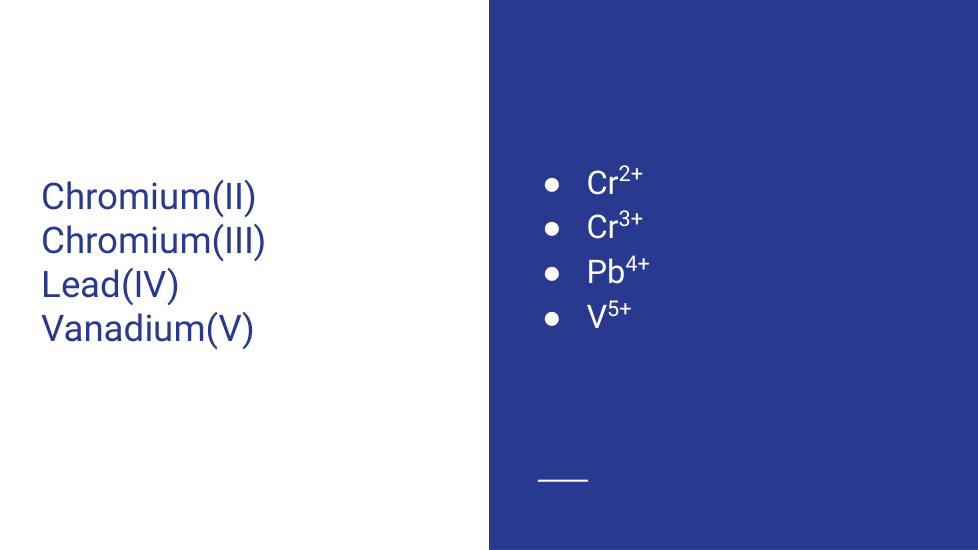
Iron (I) Ion
Iron Ion
Iron (II) Ion
Iron (III) Ion
Question 33
33.
How is the Cu 2+ ion represented in the stock system?
Copper (III) Ion
Copper (II) Ion
Copper (I) Ion
Copper Ion
Question 34
34.
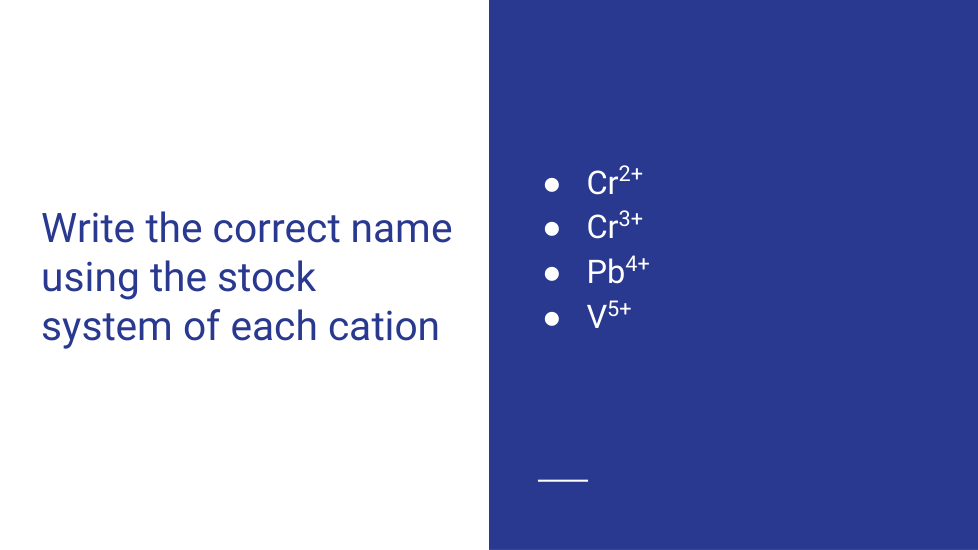
Which is the correct stock name for Sn 4+?
Tin (II) Ion
Tin Ion
Tin (I) Ion
Tin (IV) Ion
Question 35
35.
In stock system, how is Pb 2+ ion named?
Lead (II) Ion
Lead (III) Ion
Lead Ion
Lead (I) Ion
Question 36
36.
What is the -ic ending indicating in transition metal ions?
Lowest possible oxidation state
Negative ion
Higher possible oxidation state
Metal ion
Question 37
37.
What does a suffix -ous in a transition metal ion's name specify?
Element belongs to halogens
Higher possible oxidation state
Neutral state ion
Lower possible oxidation state
Question 38
38.
What is the name of Cu + ion?
Cupric
Copperous
Copperic
Cuprous
Question 39
39.
What is the correct name for Fe 3+ ion?
Ferric
Ironous
Ironic
Ferrous