Period E - Class Data
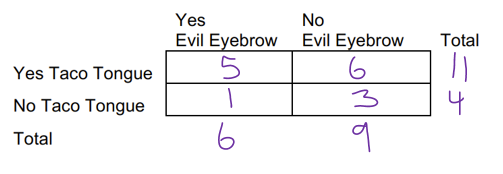

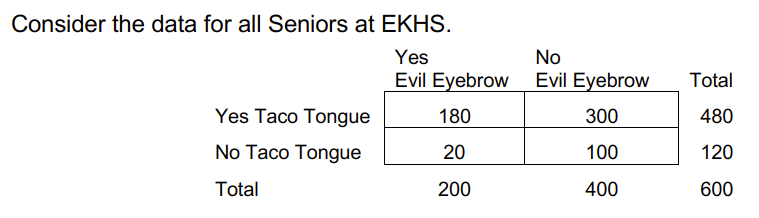
Answer as a fraction that is NOT simplified
Period E - Class Data
Answer as a fraction that is NOT simplified
Period E - Class Data
Answer as a fraction that is NOT simplified
Answer as a fraction that is NOT simplified
Answer as a fraction that is NOT simplified
Explain your answer above
Answer as a fraction that is NOT simplified
You would read this notation as "The Probability of a student being 'Yes Taco Tongue' GIVEN that they are 'Yes Evil Eyebrow'"
Based on the answers above, are 'Yes Taco Tongue" and "Yes Evil Eyebrow" independent?
Explain your answer above
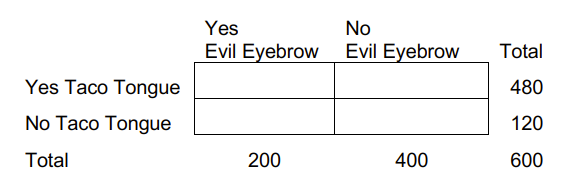
You may be wondering what the data would look like if Evil Eyebrow and Taco Tongue WERE independent. The next few questions will lead you through completing this table.
What percent of all EKHS Seniors are Yes Taco Tongue?
Answer as a decimal rounded to two places
If Taco Tongue and Evil Eyebrow are independent, what percent of the Yes Evil Eyebrows should be Yes Taco Tongue?
Answer as a decimal rounded to two places
How many people would this be?
Complete the table, using the same logic as above.
Find each of the following using the independent table you just created.
Answer as a fraction that is NOT simplified
Answer as a fraction that is NOT simplified
Answer as a fraction that is NOT simplified
What do you notice about all three of the previous answers?
Frequently confused with Mutually Exclusive events. Remember that Mutually Exclusive events can't even happen at the same time. If one happens, you KNOW the other one didn't, so they are NOT independent.
This is not an auto-graded question. Don't worry if formative says your answer is wrong.
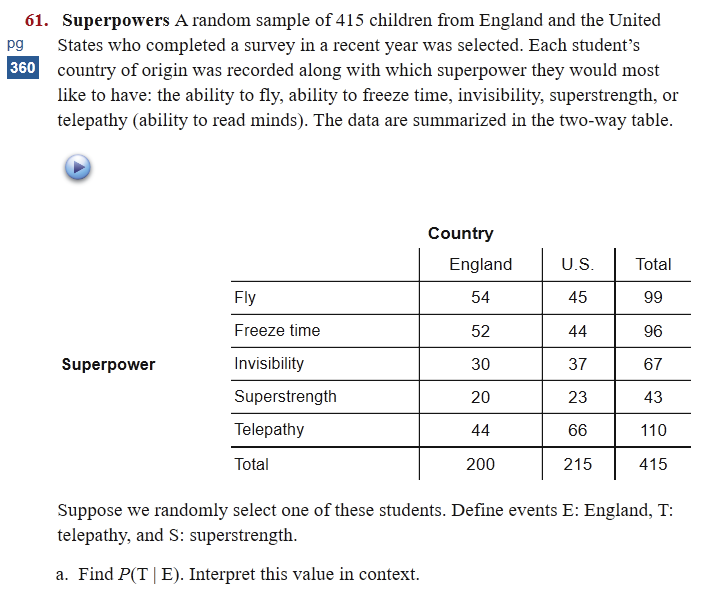
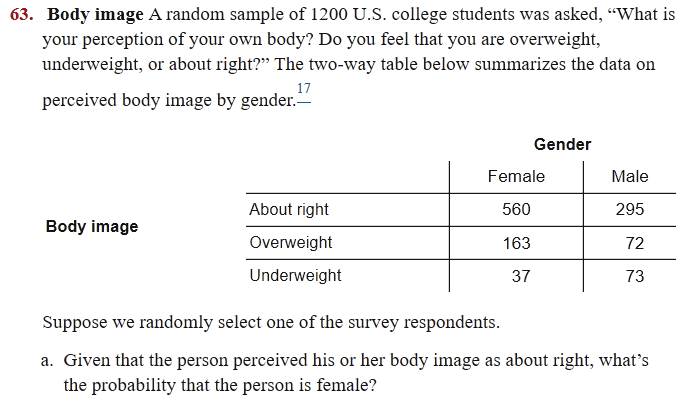
P(T|B)
P(B|T)
P(T)
P(B)
Green = Blue
Are there any problems above that you would like to go over in class? Indicate the question numbers below (Numbers refer to the Formative question number). I'll try to cover anything that is highly requested.