Population-Limiting Factors
star
star
star
star
star
Last updated 7 months ago
5 questions
Density-independent factors
Any factor in the environment that does not depend on the number of members in the population per unit of area is a density-independent factor.
These factors are usually (but not always) abiotic. They include things like natural phenomena such as forest fires or weather events. Weather events that limit populations include drought or flooding, extreme heat or cold, tornadoes, and hurricanes.
Populations can be limited by the unintentional results of human activities. Such as pollution or alterations of a landscapes. Air, land, and water pollution (the results of human activities) can limit populations. Pollution reduces available resources by making some of the resources toxic.
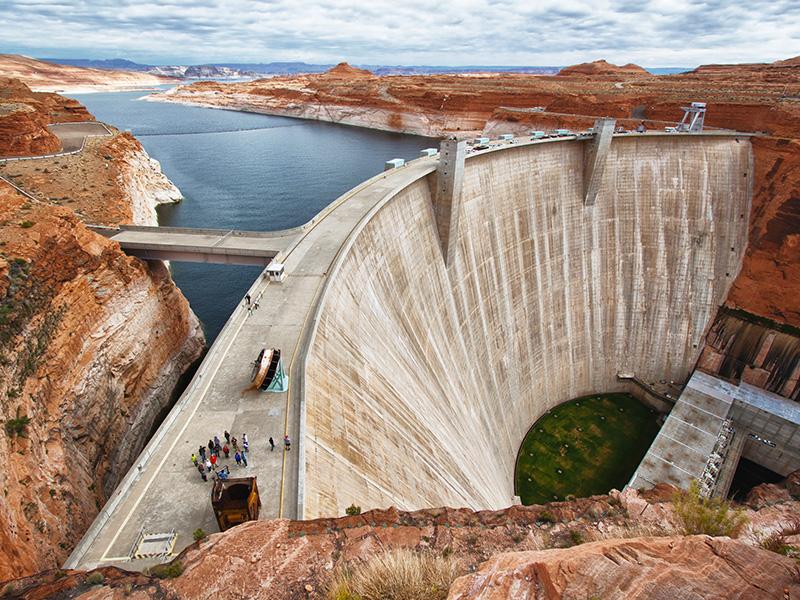
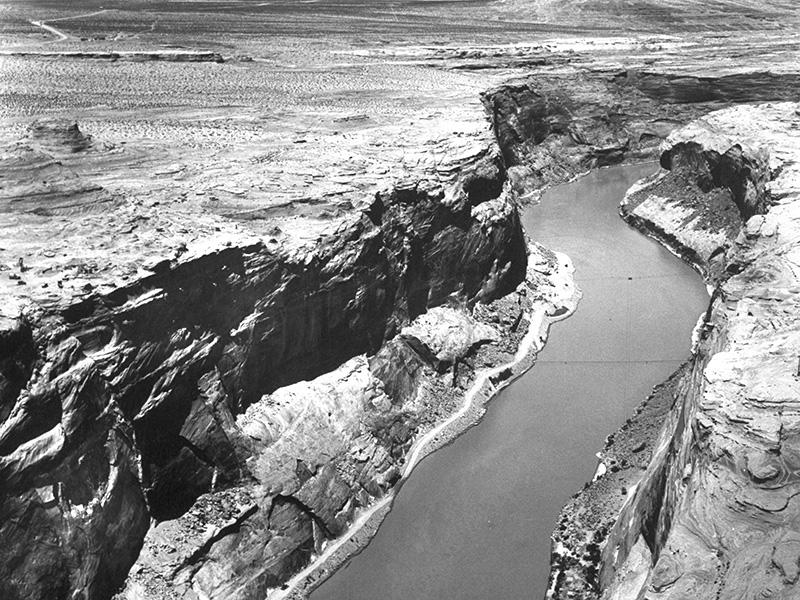
For example, over the last 100 years, human activities on the Colorado River, such as building dams, water diversions, and water barriers, have significantly reduced the amount of water flow and changed the water temperature of the river. In addition, introduction of non-native fish species altered the biotic factors in the river. Because of changes in the river, the number of small fish called humpback chub was reduced. During the 1960s, the number of humpback chub dropped so low that they were in danger of disappearing from the Colorado River altogether.
Density-dependent factors
Any factor in the environment that depends on the number of members in a population per unit of area is a density-dependent factor. These factors are often biotic factors such as predation, disease, parasites, and competition.
Predation
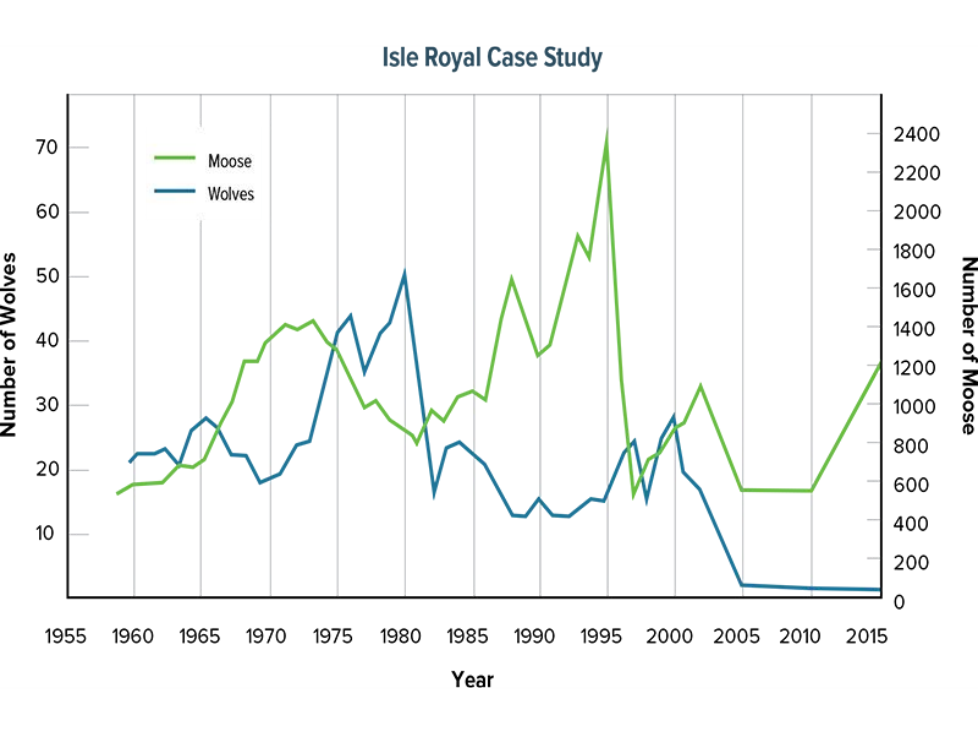
A study of density-dependent factors was done the the wolf and moose populations in northern Michigan on Isle Royale, located in Lake Superior. Prior to the winter of 1947-48, there were no wolves on Isle Royale. During that winter, a single pair of wolves crossed the ice on Lake Superior, reaching the island. During the next 10 years, the population of wolves reached about 20 individuals. Check out the graph that shows the results of a long-term study done by population biologists. The green line represents the moose population. The blue line represents the wolf population.
Disease
Outbreaks of disease tend to occur when population size has increased and population density is high.
Competition
Competition between organisms also increases when density increases.
Parasites
Similar to disease, parasites spread easily and quickly through a dense population. The presence of parasites is a density-dependent factor that can negatively affect population growth.
1
Which factor is an environmental factor that depends on population numbers?
1
Why is disease considered a density-dependent environmental factor?
1
Which is a density-independent factor for a flock of Canada geese on a large lake?
2
A density-independent factor is any factor in the environment that __________ on the number of members in a population per unit area. These factors are usually __________ and include natural phenomena such as weather events.
2
Select examples of density-independent factors. Select all that apply.