Figure 5-1 shows a portion of a blank periodic table. Identify the segments labeled A and B.
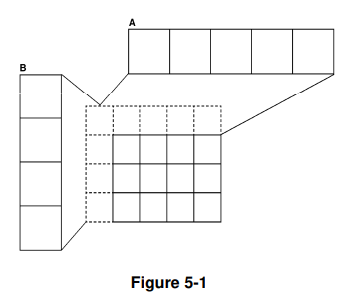
Figure 5-1 shows a portion of a blank periodic table. Identify the segments labeled A and B.
What determines shielding?
What is nuclear charge?
Lithium has a lower electronegativity than H because of Li having more shells/shielding
Match the item with the statement
Negatively charged subatomic particle
the central part of the atom, positively charged.
Positively charged subatomic particle
the smallest particle of an element that retains the properties of that element
the number of them is the same as the atomic number of an element
atom
electron
proton
nucleus
Three main categories of elements in the periodic table
Figure 5-1 shows a portion of a blank periodic table. Identify the segments labeled A and B.
What is the charge of a cation?
What was Rutherford able to establish? There are 4.
Extra Credit (optional) for maximum of 3 points: Why does Helium, Argon, and Neon not have electronegativity values? You can use terms like shielding, nuclear charge, and/or valence electrons in your answer?