6
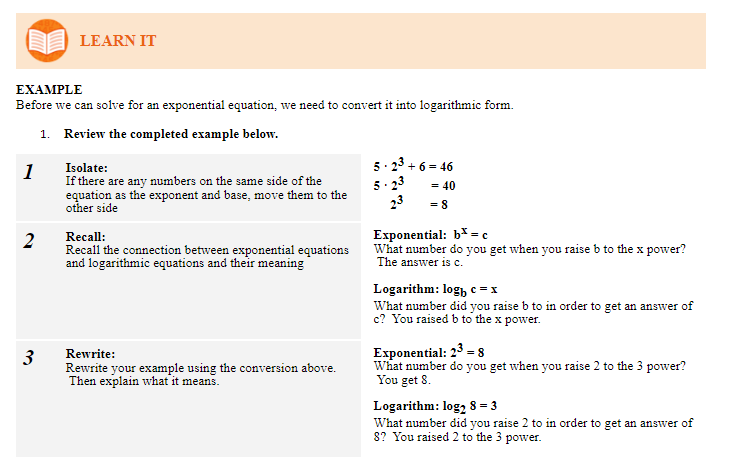
Isolate each base and exponent, then convert to logarithmic form.
4
Evaluate each logarithm
8
Convert each of the following to logarithmic form, then solve for the variable.
VIDEO: Introduction to Logarithms
As you saw in the intro, we sometimes need to solve for an exponent but we haven’t learned how to isolate a variable in the exponent part of an equation. That’s where logarithms come in! Watch this introduction to logarithms. Then, answer the questions.
OBJECTIVES & STANDARDS
Math Objectives
Explain what the purpose of a logarithm is
Convert between exponential and logarithmic functions
Use the change of base formula to evaluate logarithms
Solve exponential equations using logarithms
Common Core Math Standards
Personal Finance Objectives
Use the Rule of 72
Determine the time required to meet investing goals
National Standards for Personal Financial Education
Earning Income
10d: Identify different potential sources of retirement income
Investing
2b: Compare nominal annual rates of return over time on different types of investments, including cash flows and price changes
DISTRIBUTION & PLANNING
Distribute to students
OBJECTIVES & STANDARDS
Math Objectives
Explain what the purpose of a logarithm is
Convert between exponential and logarithmic functions
Use the change of base formula to evaluate logarithms
Solve exponential equations using logarithms
Common Core Math Standards
Personal Finance Objectives
Use the Rule of 72
Determine the time required to meet investing goals
National Standards for Personal Financial Education
Earning Income
10d: Identify different potential sources of retirement income
Investing
2b: Compare nominal annual rates of return over time on different types of investments, including cash flows and price changes
DISTRIBUTION & PLANNING
Distribute to students
EXPLORE: How Long Does Your Investment Take to Mature?
Delilah makes an investment of $10,000 at 7% annual interest and wants to wait until it reaches $15,500 before withdrawing her investment.
Write an exponential equation that represents this situation where x represents years.
What problems do you run into trying to solve an equation like this?
For now, estimate the amount of time it will take to reach $15,500. (We’ll revisit this later!)
Briefly summarize what logarithms are used for.
PRACTICE: Converting Logarithms
Complete each problem by converting to the specified form.
Convert each exponential equation into logarithmic form.
b.
c.
Convert each logarithmic equation into exponential form.
Isolate each base and exponent, then convert to logarithmic form.
Evaluate each logarithm
Convert each of the following to logarithmic form, then solve for the variable.
PRACTICE: Evaluating Logarithms using the Change of Base Formula
Evaluate each of the following using the change of base formula. Round to 3 decimal places.
Now that we know how to use logarithms to solve for an exponent, let’s revisit Delilah’s situation from the Intro. Recall that Delilah is investing $10,000 at 7% annual interest until her account reaches $15,500.
Use the equation that you set up in the intro and solve it to calculate how long her money must be invested before it reaches its target amount.
It would take Delilah
Why might it be important for Delilah to know the exact amount of time it takes instead of an estimate?
While diversifying her portfolio, Noelle decides to invest $12,500 into a mutual fund. Historically, the mutual fund has yielded 7% interest annually.
Write an exponential equation to model this situation where x represents years and f(x) represents the amount of money in the mutual fund after x years.
If Noelle’s goal was to grow your investment to $21,000, how many years would it take for her investment to reach this goal? (Hint: Convert your equation into logarithmic form and use the change of base formula.) About
FIRE stands for Financial Independence, Retire Early. It’s a movement with the goal of individuals being extremely frugal and saving until they have enough money to retire earlier than the common age of 65. FIRE savers use investments to help generate additional income so that they can meet their savings goals sooner and to have passive income streams after retirement.
Amos put $50,000 of his FIRE savings into an index fund that he predicts has an average annual rate of return of 9%. He wants to generate $180,000 as a part of a larger saving strategy before his early retirement date in 15 years.
Substitute the values for Amos’ income, principal, and rate into the formula and isolate the base and exponent.
Use logarithms to calculate how long it will take Amos to earn $180,000 in passive income.
Did Amos meet his goal of generating $180,000 in interest before his early retirement in 15 years?
Noelle is given the option (Option 1) to invest an additional $2,500 (for a total of $15,000) or switch her investment (Option 2) to a different fund that has the potential to yield 10% instead of 7%. If her goal remains the same (reaching $21,000), which option should she choose to reach her goal fastest?
Watch this video about the Rule of 72 then summarize what the Rule of 72 tells us.
Hanna invested $10,000 in the Fidelity 500 Index Fund (FXAIX), which is an index fund that aligns with the performance of the S&P 500. The average historical rate of return of the S&P 500 is 10.67%. Use the rule of 72 to estimate how long it will take for Hanna’s money to double.
Write an exponential equation that represents Hanna’s investment. x=time
Use logarithms to calculate exactly long it will take for Hanna to double her investment.
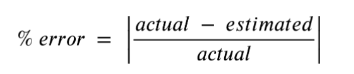
Show how closely the rule of 72 was to the actual exact answer by performing a percent error calculation.
% error=
When would it be appropriate to use the Rule of 72 instead of calculating the exact time.
How could Amos shift his investment strategy to meet his 15 years savings goal? Justify your response.