Log in
Sign up for FREE
arrow_back
Library

AE Midterm

star
star
star
star
star
Last updated about 2 hours ago
62 questions
Required
1
Required
5
Required
2
Required
3
Required
1
Required
1
Required
1
Required
4
Required
4
Required
1
Required
1
Required
1
Required
1
Required
1
Required
2
Required
1
Required
1
Required
1
Required
1
Required
1
Required
1
Required
1
Required
1
Required
4
Required
1
Required
3
Required
1
Required
2
Required
1
Required
2
Required
1
Required
2
Required
1
Required
1
Required
1
Required
1
Required
1
Required
1
Required
2
Required
2
Required
1
Required
1
Required
5
Required
2
Required
1
Required
1
Required
2
Required
2
Required
1
Required
2
Required
1
Required
2
Required
1
Required
1
Required
2
Required
1
Required
3
Required
1
Required
2
Required
2
Required
1
Required
1
Question 1
1.

Groups of satellites in various orbits that work together to accomplish a mission are called constellations.

Question 2
2.

Identify the aircraft components.
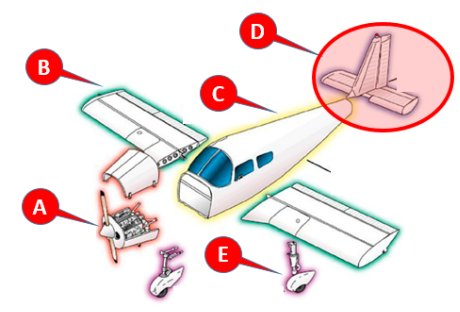
Draggable itemarrow_right_altCorresponding Item
D
arrow_right_alt
Power Plant
A
arrow_right_alt
Wing
C
arrow_right_alt
Fuselage
B
arrow_right_alt
Empennage
E
arrow_right_alt
Landing Gear
Question 3
3.

This is the ONLY PARAMETER that determines the orbital period.

Question 4
4.

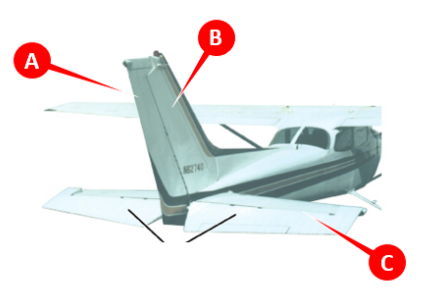
Identify the aircraft components.

Draggable itemarrow_right_altCorresponding Item
A
arrow_right_alt
Rudder
B
arrow_right_alt
Vertical Stabilizer
C
arrow_right_alt
Horizontal Stabilizer
Question 5
5.

Which of the following men was responsible for the Laws of motion and gravitation?

Question 6
6.

The aileron controls motion on the longitudinal axis. This motion is referred to as...

Question 7
7.

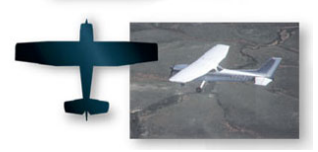
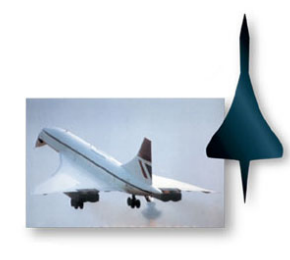
The picture below is an example of what type of planform?

Question 8
8.

Match with orbit type with the correct description.

Draggable itemarrow_right_altCorresponding Item
Molniya
arrow_right_alt
Short orbital period of approx 90 minutes
Low Earth Orbit
arrow_right_alt
Period equals one day
Geostationary
arrow_right_alt
Highly inclined AND highly elliptical orbit
Polar
arrow_right_alt
Inclination of 90 degrees
Question 9
9.

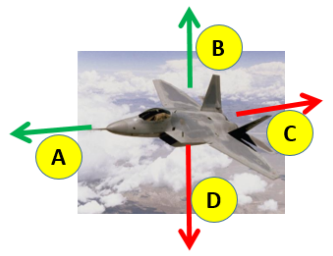
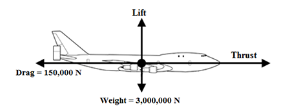
Identify the forces that act on an aircraft.

Draggable itemarrow_right_altCorresponding Item
C
arrow_right_alt
Thrust
A
arrow_right_alt
Lift
B
arrow_right_alt
Drag
D
arrow_right_alt
Weight
Question 10
10.

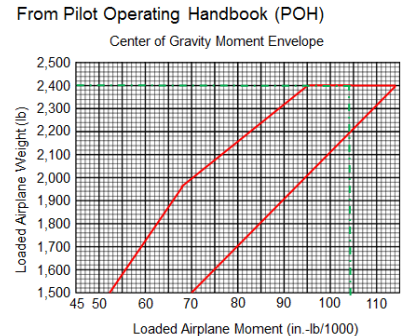
The total weight of an airplane, passengers, and baggage is 2100 lb. This weight creates a moment of 95,000 lb-in. Using the chart below, is the plane safe to fly?

Question 11
11.

Which of the following ideas/concepts explain how lift is created?

Question 12
12.

The Earth's atmosphere is made up of...

Question 13
13.

_______________ is the operating mode of the Department of Transportation responsible for the safety of civil aviation.

Question 14
14.

The picture below is an example of what type of planform?

Question 15
15.

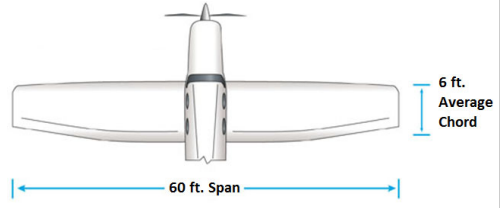
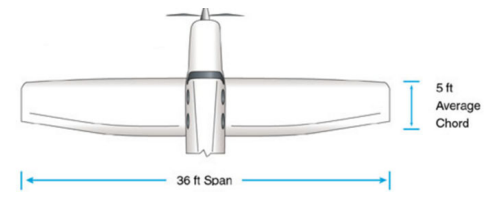
Using the picture below, what is the aircraft's wing area in square feet?

Question 16
16.

Gliders are able to glide better than typical aircraft because...

Question 17
17.

Which of the following statements is NOT correct regarding Air Traffic Control?

Question 18
18.

What percent of aviation accidents are related to human factors?

Question 19
19.

__________ is a system to prevent a collision between aircraft operating in the system and to organize and expedite the flow of traffic, and to provide support for National Security and Homeland Defense.

Question 20
20.

A typical turn is initiated___________; as the yoke is turned in the direction of the intended turn, the outside wing rolls upward and moves backward relative to the fuselage due to adverse yaw.

Question 21
21.

The ___________ of an airplane can change any time that weight is added or removed from the aircraft.

Question 22
22.

To best overcome the effects of spatial disorientation, a pilot should:

Question 23
23.

In order to make the airplane yaw left, which statement is true about the pilot and the control surface?

Question 24
24.

Match the definition with the forces that act on an airplane in flight.

Draggable itemarrow_right_altCorresponding Item
Force created by the effect of airflow as it passes over and under the wing
arrow_right_alt
Weight
Force that acts in the opposite direction of flight
arrow_right_alt
Lift
Forward-acting force
arrow_right_alt
Thrust
Gravitational attraction of the Earth
arrow_right_alt
Drag
Question 25
25.

Why is there a ring of satellites around the Earth's equator roughly 22,000 miles away form the Earth?

Question 26
26.

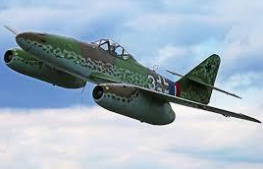
The Messerschmitt Me 262 is the world's first turbojet fighter and has the following characteristics:
Wing Area = 21.7m2
Max Weight = 66,700 N
Max Speed = 241 m/s
Max Altitude = 11450 m (air density of 0.34 kg/m3)

If the fighter is loaded to the max and flying at max altitude, what coefficient of lift is needed in order to maintain level flight?

Question 27
27.

_________________ is the angle between the Earth’s equatorial plane and the
plane of the orbit. It describes the tilt of the orbit.

Question 28
28.

The summit of Mt. Everest is 29,000 ft (8848 m). Calculate the air pressure on a standard day on the summit of Mt. Everest.

Question 29
29.

Which of the following is NOT a layer of the Earth's atmosphere?

Question 30
30.

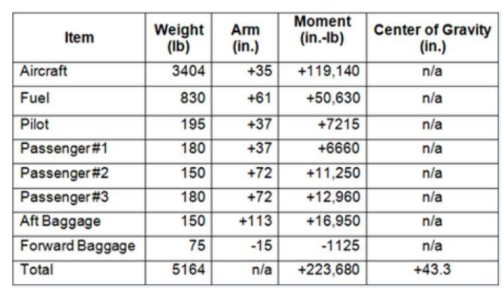
The chart shows an unsafe loading scenario for a light twin-engine airplane. Which change would create a safe loading scenario, given that the airplane has a(n):
  • Weight limit of 5,200 lbs
  • Acceptable center gravity (CG) range of +38 to +43
  • Aft baggage limit of 200 lbs
  • Forward baggage limit of 100 lbs

Question 31
31.

How do gliders gain altitude?

Question 32
32.

What factors affect the center of gravity of an aircraft? Check all answers that apply.

Question 33
33.

Which orbital parameter must use a reference point in space, because an earth based reference point will move as the earth rotates?

Question 34
34.

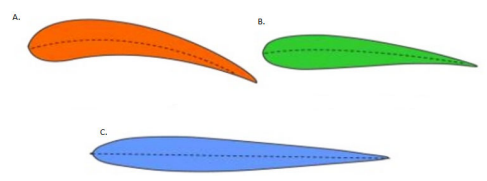
Which of the following airfoils is designed for high lift at low speeds?

Question 35
35.

An object is moving slowest at apogee.

Question 36
36.

What is the aspect ratio of the aircraft?

Question 37
37.

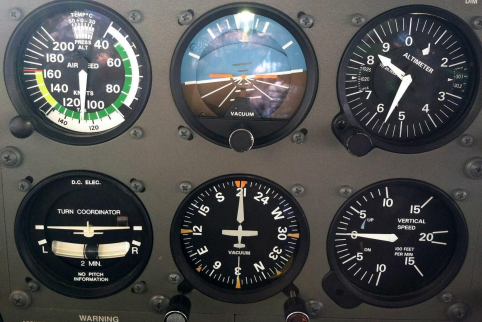
Based on the navigation instruments shown, the airplane is _____________

Question 38
38.

The largest percent of aviation accidents are related to...

Question 39
39.

A shuttle with a mass of 103,000 kg is flying 370 km above Earth's surface. How much potential energy does it have?

Question 40
40.

Match the orbital parameter with the correct symbol.

Draggable itemarrow_right_altCorresponding Item
Semi-Major Axis
arrow_right_alt
Argument of Perigee
arrow_right_alt
Right Ascension of the Ascending Node
arrow_right_alt
i
Inclination
arrow_right_alt
a
Question 41
41.

The aircraft shown is cruising at a constant 350 knots horizontally while its rate of climb is decreasing. What is most likely true about the thrust and the lift?

Question 42
42.

You are working on a team that monitors and controls a communications satellite in a low-Earth orbit. A team of astronauts is dispatched to add some additional hardware to the satellite so that it can collect new data. The astronauts accidently break off part of the satellite during docking, losing that part. The piece is of significant size but was mainly used for the launch. The astronauts are able to repair the break and install the new hardware. The satellite remains fully functional.

The piece of the satellite that was lost is a significant piece of debris. Who is responsible for what happens to he broken piece of satellite that was lost?

Question 43
43.

Match the definition to the correct term.

Draggable itemarrow_right_altCorresponding Item
The "tilt" of the orbit relative to the equator.
arrow_right_alt
Inclination
The point in the orbit of an object (such as a satellite) orbiting the earth that is at the greatest distance from the center of the earth.
arrow_right_alt
Eccentricity
The measure of how circular or elliptical an orbit is.
arrow_right_alt
Semi-Major Axis
Describes the size of an orbit. For circular orbits, altitude is often used in place of this term.
arrow_right_alt
Apogee
The point in the orbit of an object (such as a satellite) orbiting the earth that is the closest to the center of the earth.
arrow_right_alt
Perigee
Question 44
44.

You are working on a team that monitors and controls a communications satellite in a low-Earth orbit. A team of astronauts is dispatched to add some additional hardware to the satellite so that it can collect new data. The astronauts accidently break off part of the satellite during docking, losing that part. The piece is of significant size but was mainly used for the launch. The astronauts are able to repair the break and install the new hardware. The satellite remains fully functional.

The original satellite had a mass of 9500 kg, and its orbit had gravitational potential energy equal to -5.56 x 10¹¹ joules. What is the approximate distance of the original satellite from the surface of the Earth?

Question 45
45.

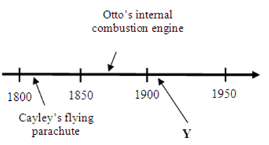
Which event in the history of human flight could be located at the point Y on the milestone chart shown?

Question 46
46.

Who developed the Keplerian Element Set which describes the orbital parameters of satellites' orbits?

Question 47
47.

Put the following human space missions in order from the earliest to the most recent.

  1. Sputnik
  2. Gemini
  3. Apollo
  4. Mercury
  5. Shuttle
Question 48
48.

What two details of a satellite's orbit can be determined from examining a ground trace?

Question 49
49.

Which event is typically credited with the beginning of the "space age" marking the beginning of space exploration and resulting in rapid development of accomplishments in space?

Question 50
50.

Re-order the following events into the correct sequence from the earliest to the most recent.

  1. first woman non-stop crossing of the Atlantic ocean
  2. first hot air balloon flight
  3. first satellite launched by the US
  4. first airplane flight
  5. first supersonic flight
Question 51
51.

What is the projection of a satellite's orbit onto the earth, represented in a 2D map called?

Question 52
52.

Re-order the following aircraft navigation systems into the correct sequence from the earliest introduction to the most recent.

  1. Very High Frequency Omni-Directional Range System (VOR)
  2. Global Positioning System (GPS)
  3. Long Range Navigation (LORAN-C)
  4. Non-Directional Beacon (NDB)
Question 53
53.

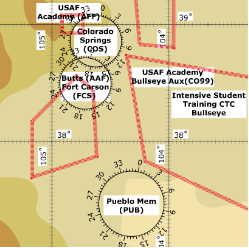
As a pilot, you filed your flight plan to travel from Colorado Springs (COS) to Pueblo (PUB), Colorado. Your current location is
Assuming you are on course, your heading is approximately ________.
Use the flyway planning chart shown to answer the question.

Question 54
54.

A satellite that is orbiting Earth has an eccentricity of 0 and an inclination of 90 degrees. Which diagram BEST represents the orbital path of the satellite?

Question 55
55.

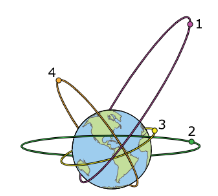
Match the orbit number with the correct orbit type.

Draggable itemarrow_right_altCorresponding Item
Low Earth Orbit
arrow_right_alt
2
Geostationary
arrow_right_alt
1
Highly Elliptical
arrow_right_alt
3
Medium Earth Orbit
arrow_right_alt
4
Question 56
56.

The point in an orbit that is closest to the Earth.

Question 57
57.

Match the control surfaces with the control direction.

Draggable itemarrow_right_altCorresponding Item
Elevator
arrow_right_alt
Pitch
Rudder
arrow_right_alt
Yaw
Aileron
arrow_right_alt
Roll
Question 58
58.

Which of the following is part of the empennage? (Select all that apply)

Question 59
59.

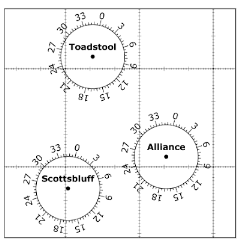
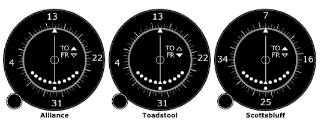
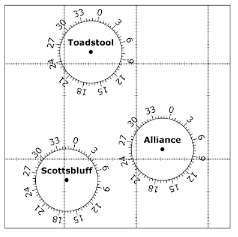
You are going to fly your personal aircraft to Scottsbluff. You take off from Toadstool at noon on Friday and plan to land at Scottsbluff that afternoon. You experience a crosswind that blows the plane off course. You need to determine your position by taking three very high frequency omnidirectional range readings.

Based on the three VOR readings, what city are you presently over?

Question 60
60.

You are going to fly your personal aircraft to Scottsbluff from Toadstool. On your return trip, there is a thunderstorm between Scottsbluff and Toadstool. You decide to fly to Alliance and refuel before continuing to Toadstool. As you leave Alliance, what should your Scottsbluff VOR read?

Question 61
61.

A plane crashed on October 25, 1999. You want to know more details about the cause of the crash. Where on the internet can you read a credible source with specific technical flight expertise regarding the plane crash?

Question 62
62.

Kepler's Second Law of Planetary Motion states that "A line joining a planet and its star sweeps out equal areas during equal intervals of time." Using this information, if a satellite's orbit is not circular, which of the following are true?