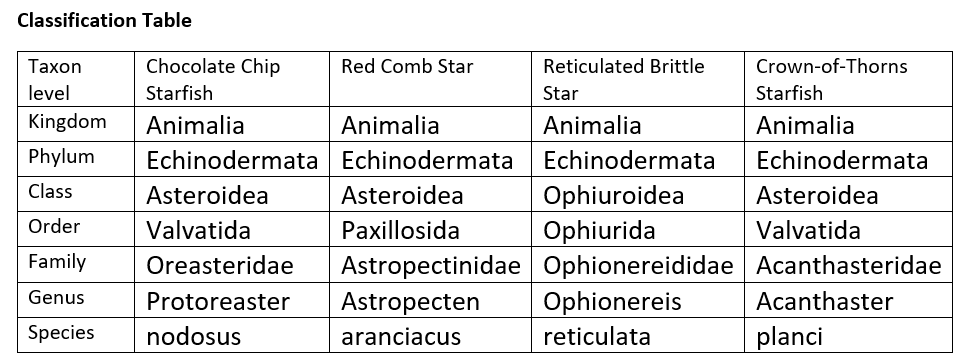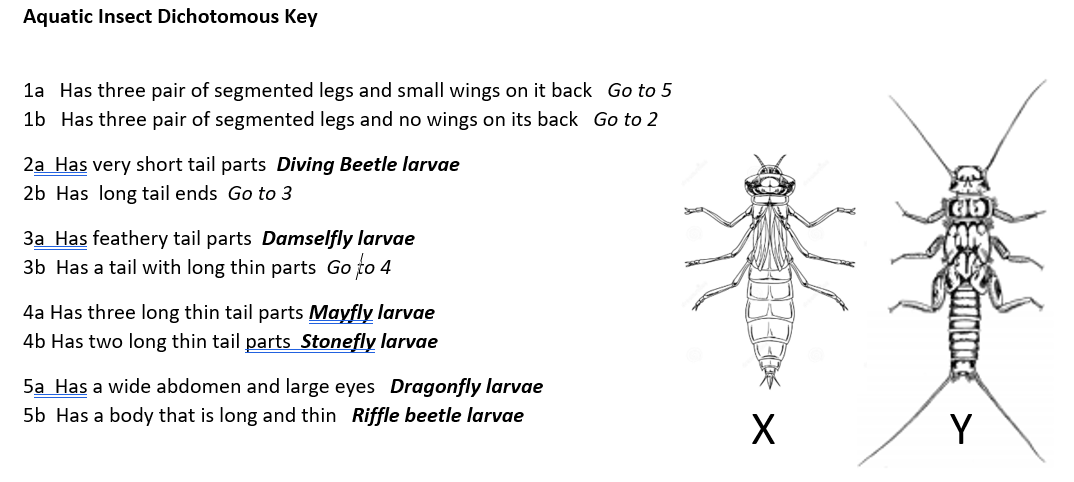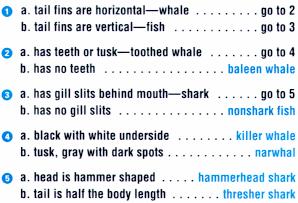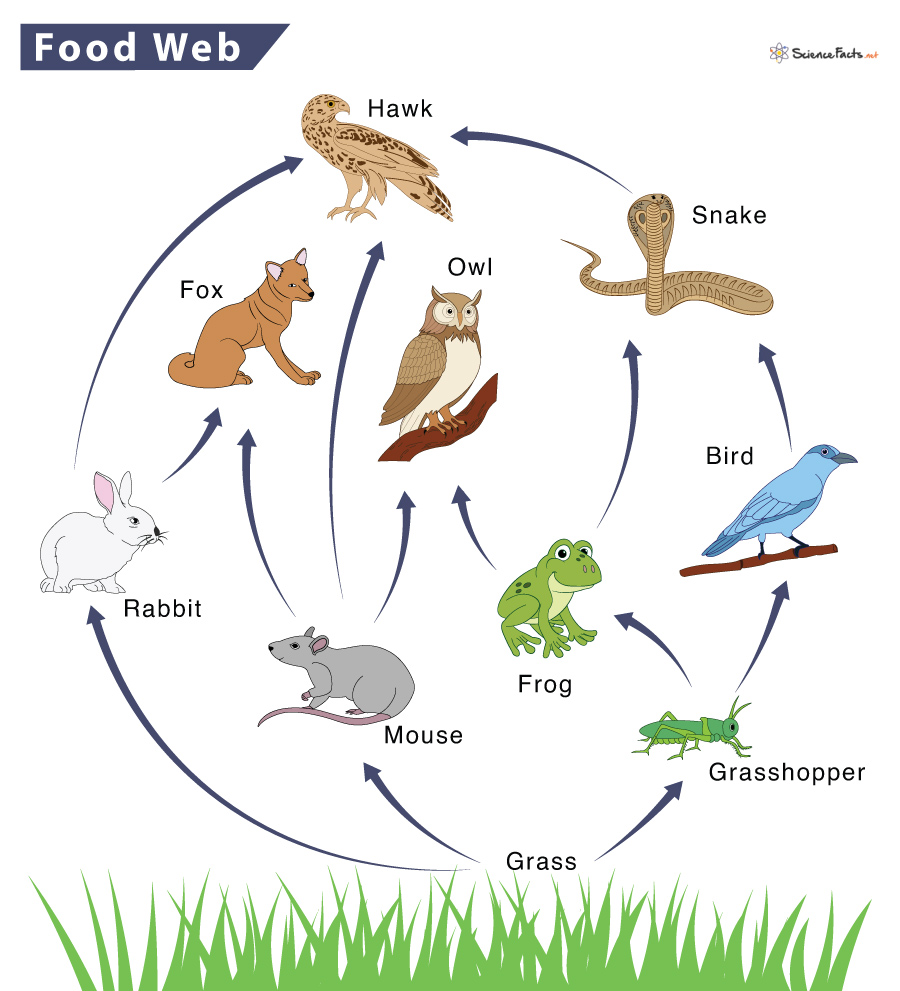
Use the diagrams to answer the questions to the best of your ability. Each question will allow you to check your answer so you know you are studying the right answers/material.
1 point
1
Question 1
1.
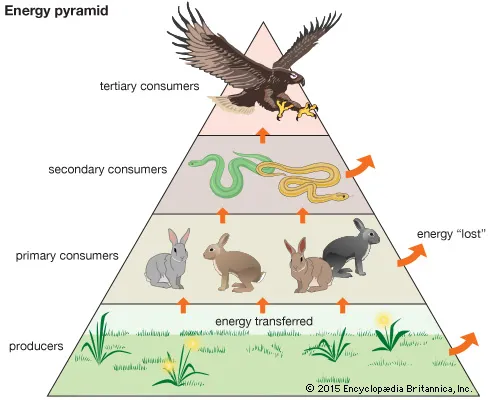
Where does all energy in an ecosystem come from?
Required
0 points
0
Question 2
2.
Draw arrows to show the direction of energy movement.
Required
1 point
1
Question 3
3.
Identify the producer in the foodweb.
Required
1 point
1
Question 4
4.
Plants are also known as Autotrophs.
Required
1 point
1
Question 5
5.
Removal of what organism would have the biggest impact on the ecosystem?
Required
1 point
1
Question 6
6.
Name one primary consumer
Required
1 point
1
Question 7
7.
Identify the top level (apex) heterotroph.
Required
1 point
1
Question 8
8.
Which trophic level contains the most energy?
Required
1 point
1
Question 9
9.
What is the job of decomposers in the trophic pyramid?
Required
1 point
1
Question 10
10.
What happens to energy as it moves up the trophic levels?
Required
1 point
1
Question 11
11.
how much energy gets passed to the next level in an energy pyramid?
1 point
1
Question 12
12.
Bacteria and the human colon: Bacteria live in the colon of humans and are able to feed off the indigestible food that the human body cannot break down (cellulose of plants). In the process of breaking down the food, the bacteria also make much-needed vitamins that the human body in turn can use to keep healthy.This is an example of...
1 point
1
Question 13
13.
Bee and the flower: Bees fly from flower to flower-gathering nectar, which they make into food. When they land in a flower, the bees get some pollen on their hairy bodies, and when they land in the next flower, some of the pollen from the first one rubs off, pollinating the plant. This is an example of...
1 point
1
Question 14
14.
Tapeworm and animals: Tapeworms are segmented flatworms that attach themselves to the insides of the intestines of animals such as cows, pigs, and humans. Tapeworms get food by eating the host's (animal) partly digested food, depriving the host (animal) of nutrients. This is an example of...
1 point
1
Question 15
15.
What is commensalism?
1 point
1
Question 16
16.
Which of the following is an example of commensalism?
1 point
1
Question 17
17.
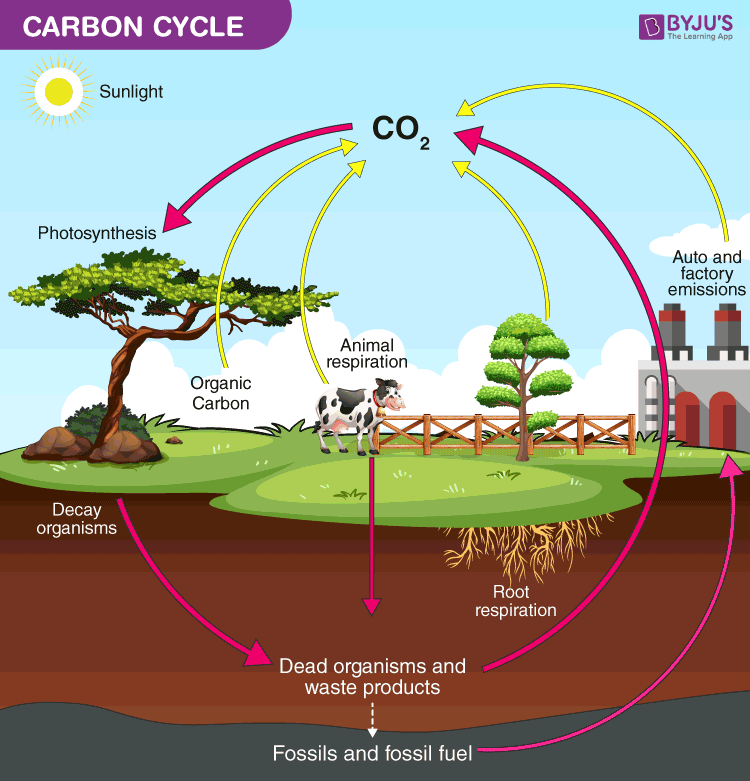
What process releases carbon dioxide into the atmosphere?
1 point
1
Question 18
18.
What process removes carbon dioxide from the atmosphere?
1 point
1
Question 19
19.
Bacteria are important in both the carbon and nitrogen cycles.
1 point
1
Question 20
20.
Plants make nitrogen and carbon available for heterotrophs
1 point
1
Question 21
21.
Natural selection is also known as...
1 point
1
Question 22
22.
Which explains how natural selection occurs?
1 point
1
Question 23
23.
What causes natural selection to happen over time?
1 point
1
Question 24
24.
What is the result of natural selection?
1 point
1
Question 25
25.
The levels of organization are cell, tissue, ____________, organ systems, organism, population, community, ecosystem, biome,biosphere. What word is missing?
1 point
1
Question 26
26.
Match the body system with its function:
Draggable item
arrow_right_alt
Corresponding Item
Circulatory system
arrow_right_alt
Transports oxygen, nutrients, and waste throughout the body
Digestive system
arrow_right_alt
Breaks down food and absorbs nutrients
Respiratory system
arrow_right_alt
Takes in oxygen and removes carbon dioxide
1 point
1
Question 27
27.
Match the body system with its main organ:
Draggable item
arrow_right_alt
Corresponding Item
Nervous system
arrow_right_alt
Muscles
Skeletal system
arrow_right_alt
Brain
Muscular system
arrow_right_alt
Bones
1 point
1
Question 28
28.
Match the body system with its major function:
Draggable item
arrow_right_alt
Corresponding Item
Endocrine system
arrow_right_alt
Regulates hormones and body functions
Immune system
arrow_right_alt
Fights off infections and diseases
Integumentary system
arrow_right_alt
Protects the body and regulates temperature
1 point
1
Question 29
29.
Match the body system with its task:
Draggable item
arrow_right_alt
Corresponding Item
Reproductive system
arrow_right_alt
Filters waste from the blood and removes it from the body
Excretory system
arrow_right_alt
Helps in immunity and fluid balance
Lymphatic system
arrow_right_alt
Allows for the production of offspring
1 point
1
Question 30
30.
Which of the following are excretory organs?
1 point
1
Question 31
31.
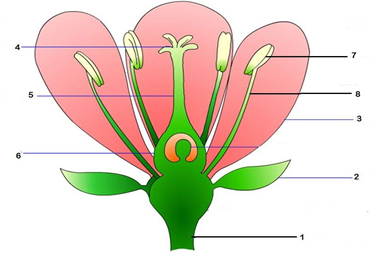
Which flower parts are female?
1 point
1
Question 32
32.
Which process involves the transfer of pollen from anther to stigma?
1 point
1
Question 33
33.
What is the male reproductive structure of a flower?
1 point
1
Question 34
34.
What is the female reproductive structure of a flower?
1 point
1
Question 35
35.
Match the transport tissue in plants with its function.
Draggable item
arrow_right_alt
Corresponding Item
Phloem
arrow_right_alt
Transport sugars and organic nutrients
Xylem
arrow_right_alt
Transport water and minerals
1 point
1
Question 36
36.
Plant systems include root and shoot. These systems often work together.
1 point
1
Question 37
37.
Match the kingdoms with their corresponding characteristics.
Draggable item
arrow_right_alt
Corresponding Item
Plantae
arrow_right_alt
Heterotrophic decomposers with chitin cell walls.
Fungi
arrow_right_alt
Multicellular organisms that ingest food.
Animalia
arrow_right_alt
Photosynthetic organisms with cellulose cell walls.
1 point
1
Question 38
38.
Match the kingdoms with their corresponding characteristics.
Draggable item
arrow_right_alt
Corresponding Item
Protista
arrow_right_alt
Mostly single-celled eukaryotes with various nutritional modes.
Archaea
arrow_right_alt
Prokaryotic organisms with unique cell walls and membrane lipids.
Eubacteria
arrow_right_alt
Prokaryotic organisms with peptidoglycan cell walls.
1 point
1
Question 39
39.
Which is the least specific taxonomic classification category?
1 point
1
Question 40
40.
Which is the most specific taxonomic classification category?
1 point
1
Question 41
41.
What is the scientific name of humans?
1 point
1
Question 42
42.
Scientific names include genus and ______________.
1 point
1
Question 43
43.
Match the following terms with their definition.
Draggable item
arrow_right_alt
Corresponding Item
Punctuated Equilibrium
arrow_right_alt
Similar structures found in different species indicating a common ancestor.
Natural Selection
arrow_right_alt
Process by which organisms that are best adapted to their environment survive and reproduce.
Analogous Structure
arrow_right_alt
Theory proposing that evolution occurs in rapid bursts followed by long periods of stability.
Homologous Structure
arrow_right_alt
Similar structures found in different species but not indicating a common ancestor.
1 point
1
Question 44
44.
Match the following terms with their definition.
Draggable item
arrow_right_alt
Corresponding Item
Mutation
arrow_right_alt
Change in gene frequencies due to random events in small populations.
Artificial Selection
arrow_right_alt
Breeding of organisms by humans for desired traits.
Gene Flow
arrow_right_alt
Change in DNA sequence that can lead to genetic variation.
Genetic Drift
arrow_right_alt
Movement of genes between populations through migration.
1 point
1
Question 45
45.
Which of these is NOT a line of evidence for evolution?
1 point
1
Question 46
46.
According to homologous structures, the similarities of mammal limbs provide evidence that...
1 point
1
Question 47
47.
Two organisms that are closely related would have...
1 point
1
Question 48
48.
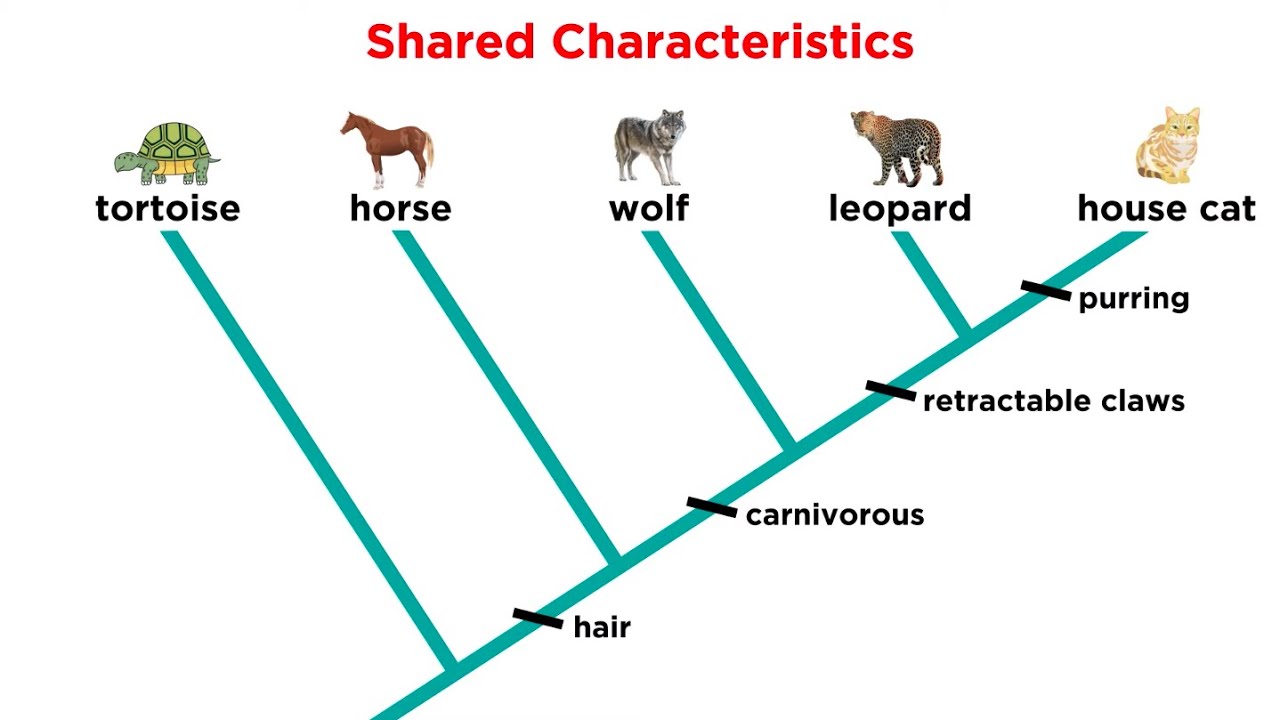
Which organism is most related to a house cat?
1 point
1
Question 49
49.
Horses and house cats have a common ancestor that had hair.
1 point
1
Question 50
50.
Which two are the most closely related?
1 point
1
Question 51
51.
Use the dichotomous key to determine the correct classification of the insect in the diagram X (has wings).
1 point
1
Question 52
52.
Which organism has a vertical tail fin, gill slits behind the mouth, and his tail is half the length of the body?
1 point
1
Question 53
53.
Which of these is NOT found in a prokaryote?
1 point
1
Question 54
54.
Check ALL of the things found in BOTH prokaryotes and eukaryotes
1 point
1
Question 55
55.
What is the cell wall of a plant made of?
Draggable item
arrow_right_alt
Corresponding Item
Chitin
arrow_right_alt
Plants
Cellulose
arrow_right_alt
Bacteria
Peptidoglycan
arrow_right_alt
Fungi
Required
0 points
0
Question 56
56.
Draw a picture of a phospholipid and label the regions that are: polar, and nonpolar.
1 point
1
Question 57
57.
Very small nonpolar molecules such as gases like carbon dioxide, are able to go through the cell membrane in a process called
1 point
1
Question 58
58.
Simple diffusion is also classified as
2 points
2
Question 59
59.
Sometimes particles need assistance crossing the phospholipid bilayer, because they are _________________ and need the help of a transport protein.
1 point
1
Question 60
60.
The other type of transport is ____________________, which requires energy, because it moves particles against the concentration gradient.
1 point
1
Question 61
61.
Selective permeability allows __________ molecules to pass through the plasma membrane.
1 point
1
Question 62
62.
What is the movement of water from an area of low concentration to an area of high concentration across a semi-permeable membrane?
1 point
1
Question 63
63.
Which process requires energy to move molecules against the concentration gradient?
1 point
1
Question 64
64.
Which process allows the movement of molecules from an area of high concentration to an area of low concentration with the help of transport proteins?
1 point
1
Question 65
65.
What is the movement of molecules from an area of high concentration to an area of low concentration?
1 point
1
Question 66
66.
Which process results in the host cell bursting and releasing new viruses?
1 point
1
Question 67
67.
Which process allows a virus to lay dormant inside the host cell?
1 point
1
Question 68
68.
Which of the following is NOT a characteristic of viruses?
1 point
1
Question 69
69.
What type of genetic material do viruses typically possess?