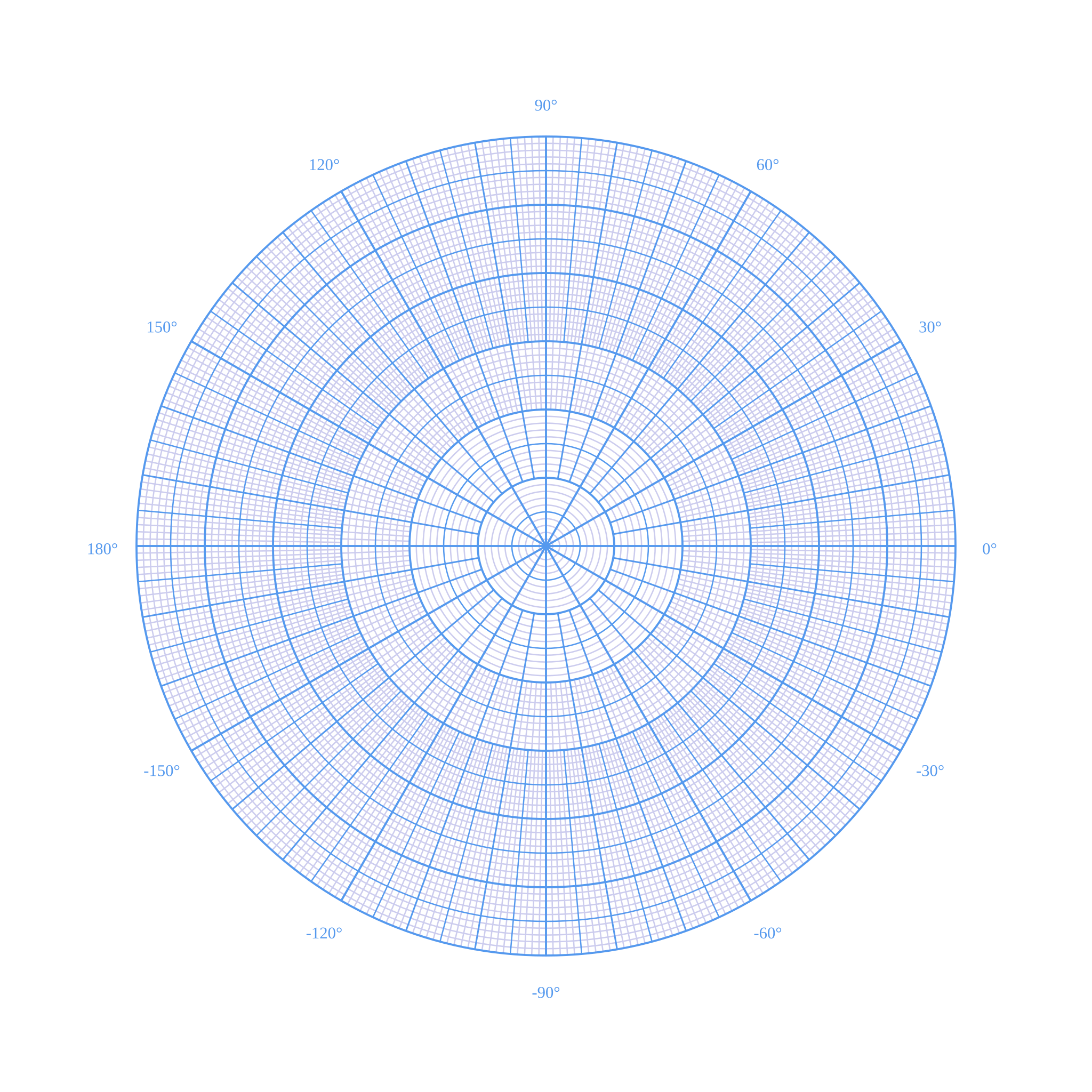
Match the polar coordinate point to the graph. Look for the dot next to the drop area to determine which should go where. The dots are large so the spots are approximate.
Mmuae Afoforo a Wobɛpaw:
Review: y=5 represents a
y=5 represents a
x=3 represents a
x=3 represents a
What does a negative theta mean?
Match the polar coordinate point to the graph. Look for the dot next to the drop area to determine which should go where. The dots are large so the spots are approximate.
What does a negative r mean?
A relation is considered a function when there is only one output for ever input. for
The typical convention we use is that y is a function of x. We have seen that these can be invertible, so x can be a function of y. similarly the convention for polar function is that r is a function of theta. There are probably occasions where these are invertible, but I don't think they will come up much. For now, I want you to think of r being a function of theta. that means that
Consider what the "vertical line test" means for determining if a relationship is a function in a cartesian graph. What kind of test would you use to determine if a graph in a polar coordinate is a function?
graphing a circle using cartesian coordinates, you would use
Where a is a constant, and the radius of the circle. In polar coordinates, you would use r=a, where a is that same constant. One of these equations is a function, the other is not. Explain why.
Consider the following polar graph.
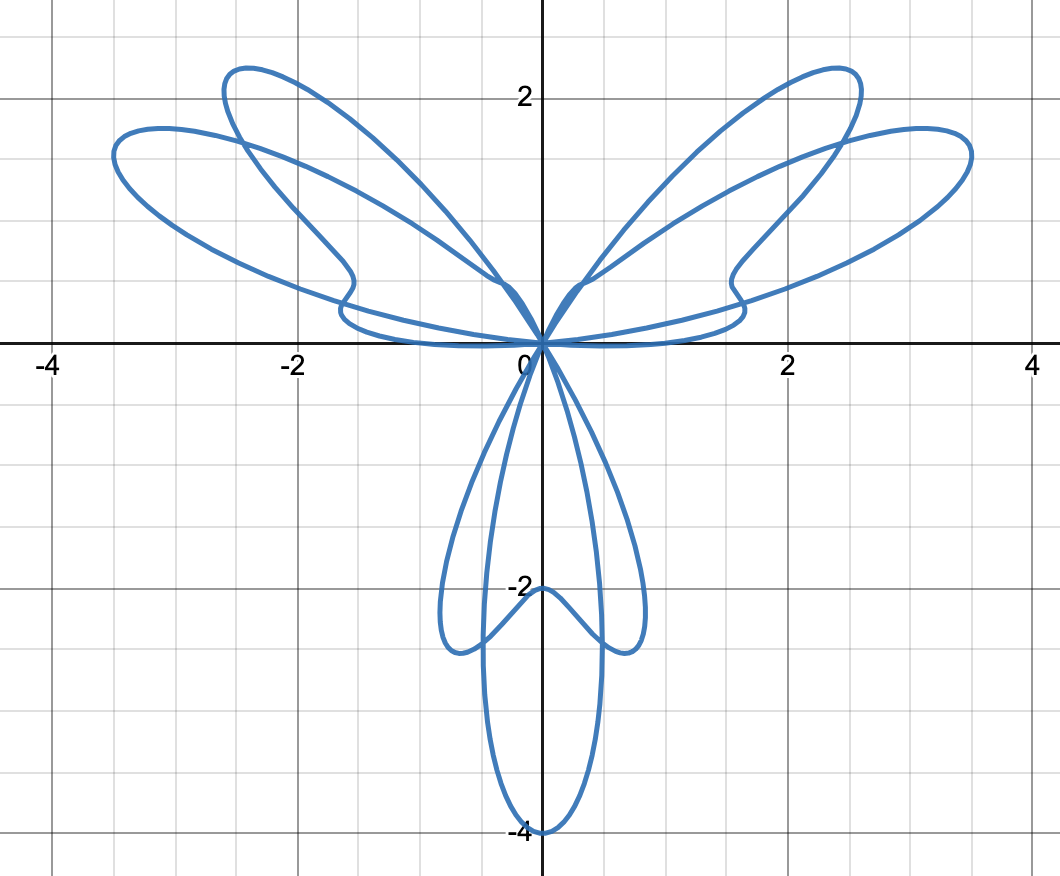
The graph overlaps itself several times. In a cartesian coordinate system you would know this is not a function, but in polar coordinates it is. The equation for this graph
Your friend tells you that there are multiple outputs for the same input, therefore it is not a function. How do you respond?
Which of the following explains how to transform a cartesian ordered pair into a polar coordinate ordered pair
which of the following shows how to convert a polar ordered pair to a cartesian ordered pair?
the graph of x=y gives a straight line, and has a domain of all real numbers, and a range of all real numbers. What would the equation
look like, and what would its domain and range look like?
Jane finds a graph of what she assumes is y=x with a domain of x
the relationship between x,y and r,theta is always the same, whether you are converting points, or working with equations. match the relationships here.
| Draggable item | arrow_right_alt | Corresponding Item |
|---|---|---|
| arrow_right_alt | ||
| arrow_right_alt | ||
| arrow_right_alt | ||
| arrow_right_alt |
ok, now we can work with equations. start with the equation
Pull up desmos and plug this in. Does it look like y=x?
intuitively, what do you think a polar equation like
will look like when you turn it into a rectangular equation?
to work with going from polar to rectangular, you need to be comfortable substituting in the following two relations
and
so if I give you the equation
what would you get by substituting (don't solve for y yet)
now, if you did that right, you should be taking the sine of an arc tan function. lets separate that one out first. and let's simplify, to see how it works. lets just solve
One of the trickier parts of precalc is that you stare at it trying all sorts of different algebraically, but a shift in perspective is probably better. try instead thinking through this one geometrically. which of the following shows what
gives you.
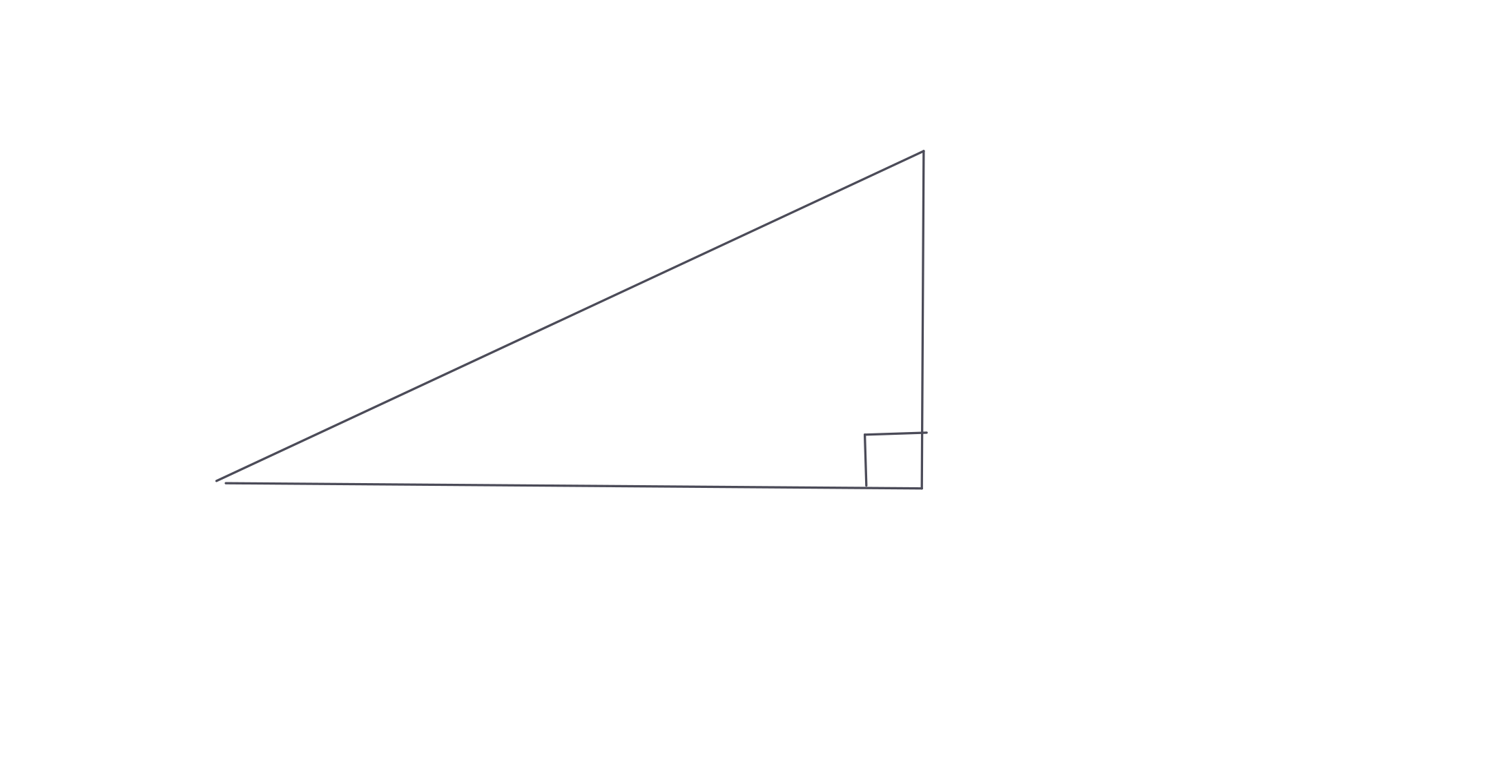
What is the hypotenuse of the triangle above?
given just that information, which of the following is
if you noticed, the original equation has
which of the following is the proper translation of that?
go to this desmos graph. https://www.desmos.com/calculator/hjrbagaejm
play with different values of a,b,c and d. How would you describe the translation and dilation transformations are for polar equations?
Categorize the basic concepts from this lesson into "I've got this", "I'm shaky" and "so confused
converting from polar coordinates to rectangular coordinates
converting from rectangular coordinates to polar coordinates
convert a polar equation to a rectangular equation
convert a rectangular coordinate to polar coordinate
how you can tell if something is a function
graphing a polar equation
taking a trig function of an inverse trig function
transformations of polar coordinates
I've got this
I'm shaky
so confused