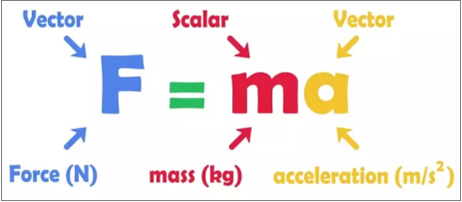
Forces: Newton's Laws of Motion (F = ma)
star
star
star
star
star
Last updated over 2 years ago
14 Nsɛmmisa
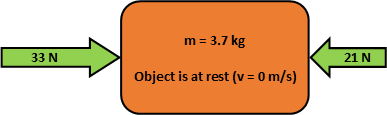
Refer to the force diagram to the left for question 1) - 3).
Calculate the net force (Fnet) acting on the object.
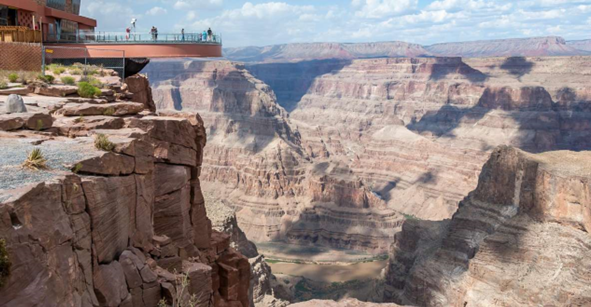
Adam is visiting the Grand Canyon with his family. Despite repeated warnings from a park ranger, Adam throws a 0.85 kg (8.3 N) rock off a cliff. Midway through the rock’s fall, the air resistance (pushing upward) on the rock is 4.1 N.
Calculate the net force acting on the rock.

As a softball rolls to the right at 2.6 m/s along the ground, it encounters a frictional force of 1.2 N to the left. The ball’s mass is 0.18 kg, and the ground pushes back against the ball with a force equal to the its weight.
Calculate the net force acting on the softball.
In what direction is the net force applied?
Calculate the acceleration of the object.
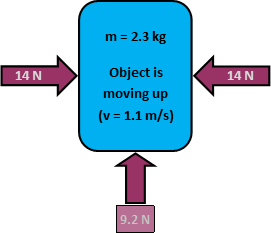
Refer to the force diagram to the left for questions 4) - 8).
In what direction is the net force applied?
Calculate the acceleration of the object.
The object's speed will ...
Will the object's motion change direction?
In what direction is the net force acting on the rock?
In most cases, for objects in free-fall on Earth, the acceleration due to gravity is 9.8 m/s2. In this specific case, what is the rock's acceleration?
In what direction is the net force applied?
Calculate the acceleration of the object.