Most wildfires are naturally occurring and many ecosystems benefit from the natural cycles of forest fires. Burned forests eventually decompose, replenishing the soil with nutrients that allow for new species to grow. Certain plants, such as the Giant Sequoia trees of the Redwood forests, even depend on fires to reproduce. However, man-made changes in Earth’s climate have created hotter and drier fire environments, leading to larger wildfires and longer fire seasons.
What has been your experience with wildfires? Have you or your loved ones ever been affected by wildfires?
Categorize aspects of wildfires into the appropriate sphere.
Particles in the air
Smoke & smog
Dry soil
Trees burned
Animals flee
Polluted water
Atmosphere
Hydrosphere
Geosphere
Biosphere
Identify the 2 spheres interacting in the example:
Ash may be carried by winds many miles from the fire and then dropped into streams.
Burned plant debris that did not blow away becomes the new soil that can provide some nutrients for new plants
Rainfall over burned land carries ash, soot, and dirt into streams and rivers, changing the turbidity, temperature, and pH.
Smoke and noxious fumes can coat the lungs of animals and people, affecting their ability to breathe.
Wildfire is part of the natural life cycle of a forest. They clear out dead and decaying material on the forest floor and release nutrients back into the soil. Indigenous peoples understood the value fire had on the land and would purposely set them to clear forests for hunting, agriculture, and travel. Today, prescribed burns are used to reduce the potential fuel for catastrophic wildfires.
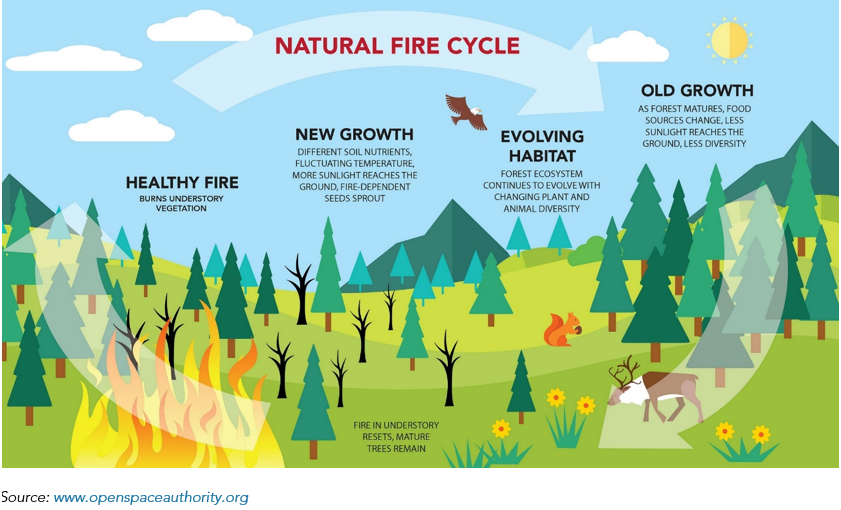
Using the image above to help you, what is one benefit of wildfires?
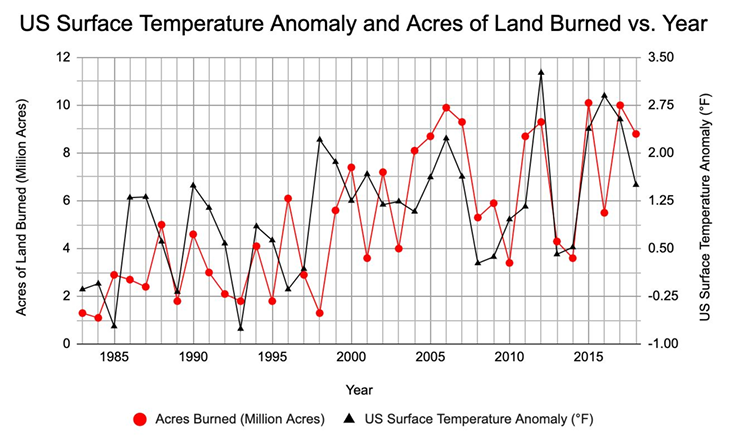
Scientists have been monitoring changes in global temperatures and the amount of wildfires. Consider the following graph that shows the US surface temperature anomaly (the number of degrees above average) and the acres of land burned each year.
What is the relationship?
As the temperature anomaly increases over time, the number of acres burned
Predict: How could higher temperatures lead to more wildfires?
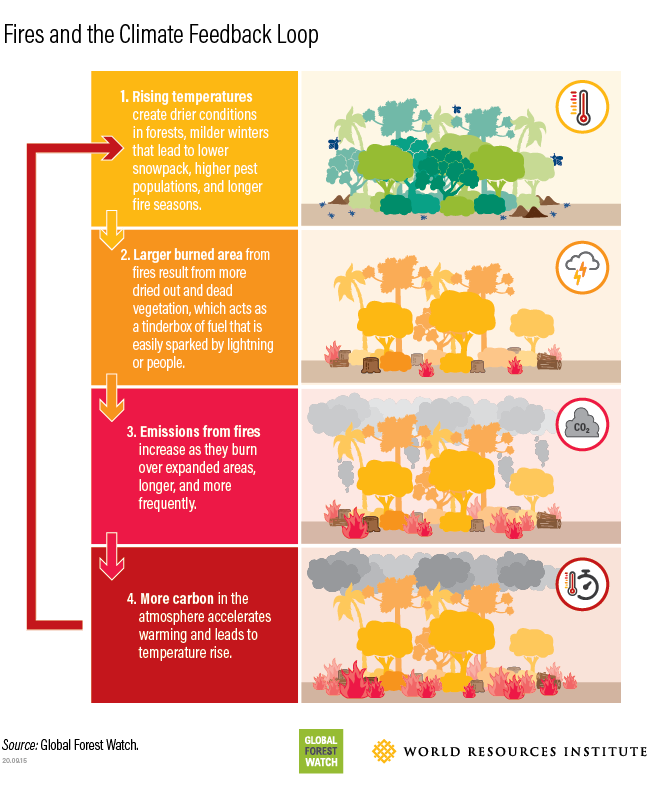
Consider the following feedback loop:
Which type of feedback loop does this represent?
Justify your answer: Why did you select the type of feedback loop for the previous question?
Extend your thinking: What can humans do to reduce the impact of wildfire?
Self Assessment: Learning Target #1: Identify Earth's spheres and describe how they interact
Self-Assessment: Learning Target #2: Define negative and positive feedback loops and explain how they are different