What part of the nucleotide is #1?
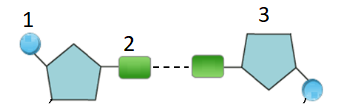
What part of the nucleotide is #1?
What type of organic molecule are DNA and RNA?
What is the building blok of DNA and RNA?
Compare and Contrast. DNA and RNA. Move the words to show the similarties and differences between DNA and RNA.
Has the Base U
Ribose Sugar
Double helix
Has the Base T
Deoxyribose Sugar
Single Stranded
DNA
RNA
What part of the nucleotide is #1?
What part of the nucleotide is #2?
What part of the nucleotide is #3?
Put the steps of DNA replication in order.
End with 2 DNA strands, each strand has one original and one new strand
Polymerase add nucleotides
DNA helicase unwinds the DNA
Ligase glues the fragments on the lagging strand
In the picture below, which number indicates the leading strand. The strand that is built continously (in one piece) during DNA replication?
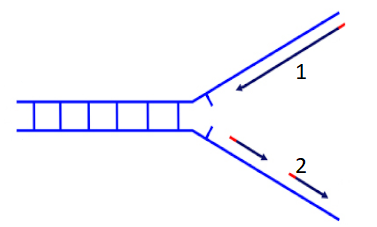
In the picture below, which number indicates the lagging strand. The strand that is built in pieces during DNA replication?
If there is 22% of G in a DNA strand, how much C is there in the complementary strand?
Where does transcription occur?
What is made at the end of transcription?
Where does translation occur?
What is made at the end of translation?
How many codons are in the sequence:
Which of the following describes a mutation in a parent that could change the phenotype of its future offspring?
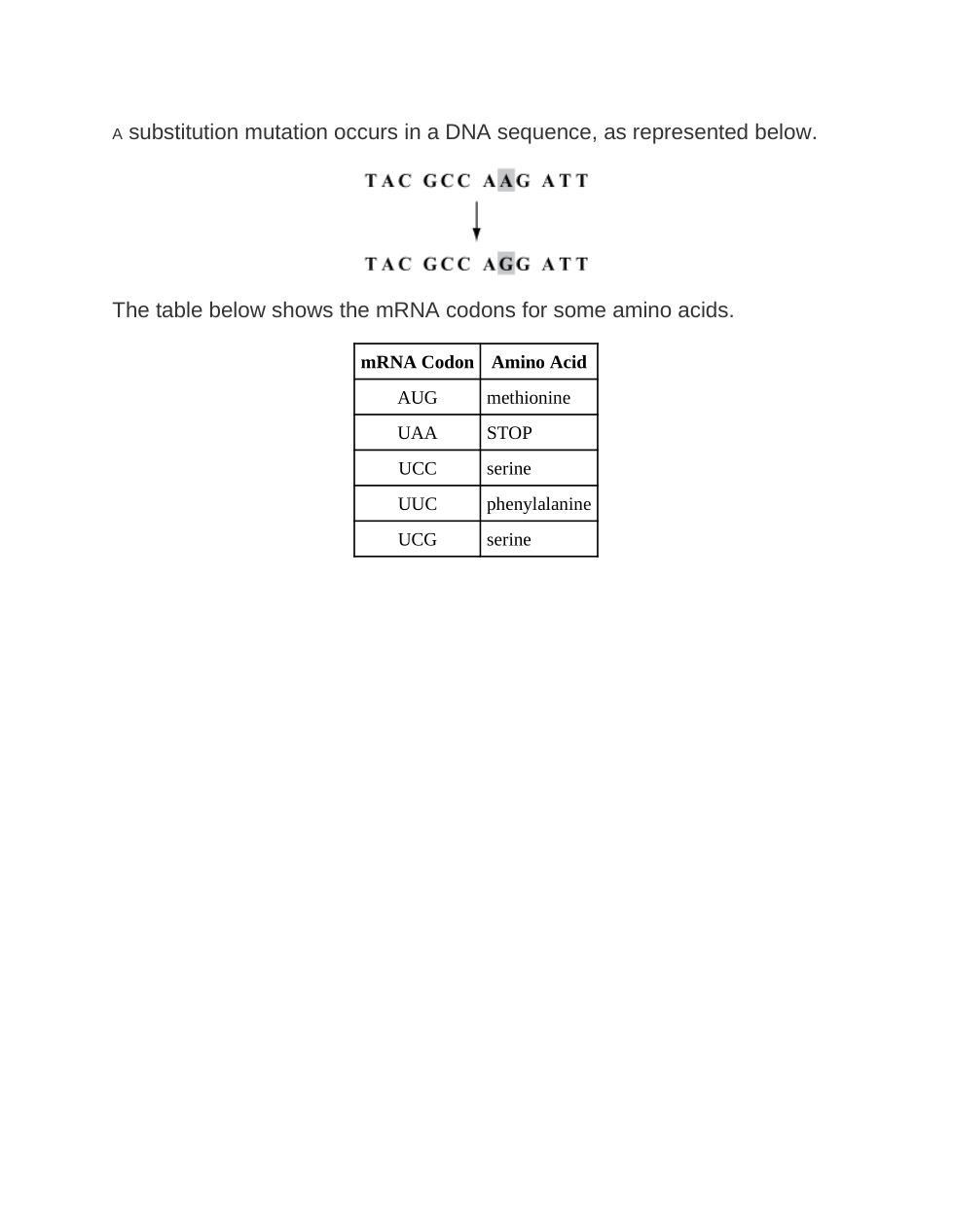
What type of mutation occurred in the DNA sequence shown?
Based on this information, what is the expected effect of the mutation?