CFTR Gene

Last updated over 1 year ago
7 questions
The CFTR gene is responsible for regulating the flow of water across cell membranes that produce mucus, sweat, saliva, and tears. Mucus is the substance that moistens and protects the lining of airways in the lungs, the digestive system, and other tissues in the body.
An inherited condition is caused by a mutation in the CFTR gene. For people with this CFTR mutation, the cells that make mucus produce a very thick mucus, which builds up. The buildup of thick mucus in the lungs can lead to severe breathing problems, such as frequent coughing and respiratory infections. A buildup of thick mucus in the pancreas can also disrupt digestion.

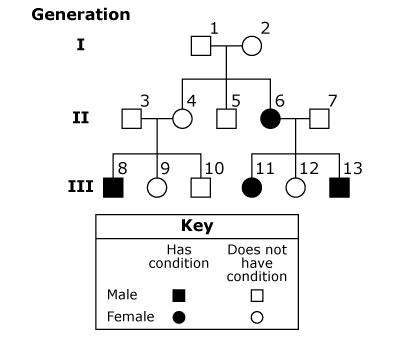
The diagram shows a pedigree for a family that is affected by this inherited condition.

1

People with the CFTR mutation often experience digestive problems, which can result in weight loss. Which of the following most likely occurs as a result of the digestive problems?

1
The pedigree shows which family members are affected by the CFTR mutation.

Select from the drop-down menu to correctly complete the sentence.

For the person labeled 8 to have inherited the condition, the CFTR mutation must have been present in the parents' __________ cells
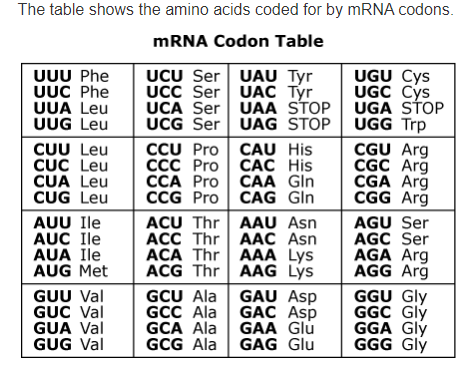
The CFTR mutation most often occurs when three nucleotides from the gene sequence are deleted. The DNA sequence without the mutation and the DNA sequence with the mutation are shown.

DNA sequence without mutation

TAG TAG AAA CCA CAA


DNA sequence with mutation:

TAG TAA CCA CAA


1

Which of the following is the mRNA sequence for the DNA sequence without the mutation?

1

Based on the information, which amino acid is missing in the protein produced by the CFTR mutation?

The condition caused by the CFTR mutation is controlled by a single gene with two alleles, D and d


1

Based on the pedigree, identify the most likely inheritance pattern

1

The person labeled 12 in the pedigree has a biological child with a person who is heterozygous for the condition. Draw a punnett square to show this cross.

1

Based on your Punnett square in number 6, determine the probability that the child from this cross will inherit the condition.