Log in
Sign up for FREE
arrow_back
Library

Semester 1 Final Exam Study Guide

star
star
star
star
star
Last updated over 2 years ago
90 questions
Required
1
Required
1
Required
1
Required
1
Required
1
Required
1
Required
1
Required
1
Required
1
Required
1
Required
1
Required
1
Required
1
Required
1
Required
1
Required
1
Required
1
Required
1
Required
1
Required
1
Required
1
Required
1
Required
1
Required
1
Required
1
Required
1
Required
1
Required
1
Required
1
Required
1
Required
1
Required
1
Required
1
Required
1
Required
1
Required
1
Required
1
Required
1
Required
1
Required
1
Required
1
Required
1
Required
1
Required
1
Required
1
Required
1
Required
1
Required
1
Required
1
Required
1
Required
1
Required
1
Required
1
Required
1
Required
1
Required
1
Required
1
Required
1
Required
1
Required
1
Required
1
Required
1
Required
1
Required
1
Required
1
Required
1
Required
1
Required
1
Required
1
Required
1
Required
1
Required
1
Required
1
Required
1
Required
1
Required
1
Required
1
Question 1
1.

Question 2
2.

Question 3
3.

What are the independent and dependent variables?

How does the amount of sunlight affect a plant's growth?

Required
1
Required
1
What are the independent and dependent variables?

How does the amount of time sleeping affect the amount of weight a baby gains?

Required
1
Required
1
What are the independent and dependent variables?

What affect does the amount of silica have on the lava's speed?

Required
1
Question 9
9.

Question 10
10.

Question 11
11.

Question 12
12.

Required
1
Required
1
Required
1
Required
1
Question 17
17.

Question 18
18.

Question 19
19.

Question 20
20.

Question 21
21.

Question 22
22.

Question 23
23.

Question 24
24.

Question 25
25.

Question 26
26.

Question 27
27.

Question 28
28.

Question 29
29.

Question 30
30.

Question 31
31.

Question 32
32.

Question 33
33.

Question 34
34.

Question 35
35.

Question 36
36.

For the four statements below, identify which are true for plant cells animal cells, or are true for both

Required
1
Required
1
Required
1
Required
1
Question 41
41.

Question 42
42.

Question 43
43.

Question 44
44.

Question 45
45.

Question 46
46.

Question 47
47.

Question 48
48.

Question 49
49.

Question 50
50.

Question 51
51.

Question 52
52.

Question 53
53.

Question 54
54.

Question 55
55.

Question 56
56.

Question 57
57.

Question 58
58.

Question 59
59.

Question 60
60.

Question 61
61.

Question 62
62.

Question 63
63.

Question 64
64.

Question 65
65.

Question 66
66.

Question 67
67.

If a sample of DNA contains 26% Adenine, what percent of the sample is Thymine?

Question 68
68.

If a sample of DNA contains 36% Adenine, what percent of the sample is Guanine?

Question 69
69.

Question 70
70.

Question 71
71.

Question 72
72.

Question 73
73.

Question 74
74.

Question 75
75.

Question 76
76.

Question 77
77.

Question 78
78.

Question 79
79.

Question 80
80.

Question 81
81.

Question 82
82.

Question 83
83.

Question 84
84.

Question 85
85.

Question 86
86.

Question 87
87.

Question 88
88.

Question 89
89.

Question 90
90.

What is the dependent variable in an experiment?
the variable that is not relevant
the variable that remains constant
the variable that is manipulated
the variable that is being measured
What is the independent variable in an experiment?
the variable that remains constant
the variable that is manipulated
the variable that is being measured
the variable that is not relevant
Which variable is controlled by the experimenter?
the constant variable
the irrelevant variable
the dependent variable
the independent variable
Question 4
4.

Question 5
5.

Question 6
6.

Question 7
7.

Question 8
8.
Draggable itemarrow_right_altCorresponding Item
arrow_right_alt
arrow_right_alt
If you want to test how temperature affects the breathing rate of fish, what would be an appropriate ‘testable’ question?
How does temperature affects the breathing rate of fish?
How does breathing rate of fish affects the temperature?
Which graph typically shows the change in a variable over time?
Bar graph
Pie chart
Scatter plot
Line graph
What is the purpose of a control group in a science experiment?
To make the experiment more interesting
To test multiple variables
To ensure the experiment is successful
To provide a baseline for comparison
What role does the control group play in a science experiment?
To serve as a reference for comparison
To make the experiment more challenging
To predict the outcome of the experiment
To control the variables being tested
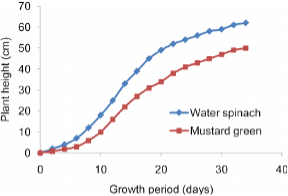
An investigation was carried out by a biology class that wanted to measure the growth rate of two spice plants. Students took a measurement of the height (cm) of water spinach and mustard green plants over 40 days. Use the graph below to help you answer questions.
Question 13
13.

Question 14
14.

Question 15
15.

Question 16
16.

Which of the following is a characteristic of life?
Static
Inorganic
Reproduction
Inanimate
What is the ability of an organism to maintain a stable internal environment?
Homeostasis
Respiration
Adaptation
Mutation
What is the process by which organisms obtain and use energy?
Metabolism
Growth
Excretion
Reproduction
What is the passing of traits from parents to offspring called?
Photosynthesis
Ecology
Heredity
Evolution
What is the main difference between Prokaryotic and Eukaryotic cells?
Presence of a nucleus
Type of organelles
Cell wall composition
Size of the cell
Which type of cell has a more complex internal structure?
Eukaryotic
Prokaryotic
Animal cell
Plant cell
What do both Prokaryotic and Eukaryotic cells have in common?
Cell membrane
Mitochondria
Chloroplasts
Nucleus
Which type of cell is found in bacteria?
Prokaryotic
Eukaryotic
Plant cell
Animal cell
What is the main function of the nucleus in a cell?
Produces energy
Contains DNA
Controls cell movement
Regulates cell size
What is the primary role of the nucleus in heredity?
Stores genetic information
Synthesizes proteins
Fights off pathogens
Breaks down nutrients
What is the main function of the mitochondria?
Waste elimination
DNA replication
Transportation
Energy production
Which organelle is responsible for generating ATP?
Endoplasmic reticulum
Nucleus
Mitochondria
Golgi apparatus
What is the powerhouse of the cell?
Lysosome
Peroxisome
Mitochondria
Ribosome
Which organelle is known as the 'cellular power plant'?
Golgi apparatus
Chloroplast
Centriole
Mitochondria
What is the main function of ribosomes in cells?
Energy production
Cellular respiration
DNA replication
Protein synthesis
What is the primary role of ribosomes in organisms?
Produce proteins
Maintain homeostasis
Control cell division
Transport nutrients
What is the main function of the cell membrane?
Provide structure for the cell
Store genetic material within the cell
Regulate movement of substances in and out of the cell
Produce energy for the cell
Which statement best describes the role of the cell membrane?
Producing proteins for the cell
Breaking down waste materials in the cell
Protecting the cell from its surroundings
Transporting oxygen to the cell
What is the function of the lysosome?
Synthesize proteins
Digest cellular waste
Produce energy
Control cell division
What is the main function of the vacuole in a cell?
Storage of water and nutrients
Generation of energy
Manufacturing of proteins
Elimination of waste products
Question 37
37.

Question 38
38.

Question 39
39.

Question 40
40.

Which process requires energy from the cell?
diffusion
active transport
passive transport
osmosis
Which process does not require energy from the cell?
exocytosis
passive transport
active transport
endocytosis
Which process involves movement of molecules against the concentration gradient?
passive transport
simple diffusion
active transport
facilitated diffusion
Which process allows molecules to move from high to low concentration?
active transport
endocytosis
osmosis
passive transport
Which term describes a solution with equal solute concentration as the cell?
Hypertonic
Isotonic
Neutral
Hypotonic
What happens to a cell in a hypotonic solution?
The cell remains completely unaffected.
Water exits the cell, causing it to shrink.
There is no net movement of water into or out of the cell.
Water enters the cell, causing it to swell.
What happens to a cell in a hypertonic solution?
It stays the same
It divides
It shrinks
It swells
What is the result of a cell placed in a hypertonic solution?
Water moves out of the cell
Water does not move
Water moves into the cell
Water moves in and out of the cell
During which stage of mitosis do the sister chromatids separate?
Telophase
Prophase
Anaphase
Metaphase
Which stage of mitosis is characterized by the alignment of chromosomes in the center of the cell?
Anaphase
Telophase
Prophase
Metaphase
What is the correct order of the stages of mitosis?
Anaphase, Telophase, Prophase, Metaphase
Metaphase, Anaphase, Telophase, Prophase
Prophase, Metaphase, Anaphase, Telophase
Telophase, Anaphase, Metaphase, Prophase
Which stage of mitosis involves the lining up of chromosomes?
Metaphase
Telophase
Prophase
Anaphase
During which stage do the sister chromatids separate?
Telophase
Anaphase
Prophase
Metaphase
What is the purpose of mitosis?
Protein synthesis
Cell division
DNA replication
Energy production
Why does mitosis occur?
Growth and repair
To eliminate waste
To facilitate respiration
To produce gametes
When does mitosis occur?
Only during puberty
Only during embryonic development
Throughout an organism's life
Only in plants
What is the outcome of mitosis?
One larger daughter cell
One haploid daughter cell
Two identical daughter cells
No daughter cells
The number of chromosomes inside a cell is the same during metaphase as at the end of cell separation.
True
False
What is the structure of DNA?
Single strand
Circular
Double helix
Triple helix
What is the role of DNA in protein synthesis?
Breaks down proteins
Helps in cell division
Regulates cell metabolism
Provides instructions for building proteins
What is the difference between a gene and a chromosome?
Genes are segments of chromosomes.
Genes and chromosomes are the same thing.
Chromosomes contain multiple genes on them.
Genes are smaller than chromosomes.
What is a gene?
A large structure found in the cell nucleus.
A type of chromosome.
A molecule that carries genetic information.
A segment of DNA that codes for a protein.
What is a chromosome?
A type of protein.
A thread-like structure that carries genetic information.
A type of RNA molecule.
A small segment of a gene.
What is the purpose of DNA replication in biology?
To produce proteins
To produce RNA
To produce two identical copies of DNA
To form new cells
Why is DNA replication necessary in biology?
To stop cell division
To ensure accurate transfer of genetic information
To remove damaged DNA
To produce energy
What are the three parts of a DNA nucleotide?
Vitamin, phosphate, nitrogenous base
Sugar, phosphate, nitrogenous base
Sugar, lipid, nitrogenous base
Sugar, protein, nitrogenous base
Which scientist below was responsible for providing the evidence for what the structure of DNA looks like?
James Watson & Francis Crick
Rosalind Franklin
Maurice Wilkins
Original DNA sequence: AGTCTCGG
TCAGAGCC
CTAGACGC
GACTGATT
GATCGATG
Original DNA sequence: GCAATCGATC
CGTTAGCTAG
TACCGGTAGC
ATCGATTGTC
GCTTACGTGC
What is the purpose of DNA transcription?
To divide the cell
To replicate the DNA molecule
To make an RNA copy of a gene
To build proteins from amino acids
Where does DNA transcription occur in the cell?
In the cytoplasm
In the ribosomes
In the mitochondria
In the nucleus
Why is DNA transcription important for protein synthesis?
To provide a template for making mRNA
To repair damaged DNA strands
To convert mRNA into a functional protein
To break down proteins into smaller amino acids
What molecule is directly involved in DNA transcription?
RNA polymerase
DNA polymerase
Ribosome
What is the purpose of DNA translation?
To replicate DNA
To store genetic information
To transcribe RNA
To synthesize proteins
Where does DNA translation occur in the cell?
In the nucleus
In the mitochondria
On ribosomes
In the cytoplasm
What is the main product of DNA translation?
rRNA
Protein
tRNA
mRNA
What is the role of tRNA during DNA translation?
Synthesize proteins
Carry amino acids to the ribosome
Store genetic information
Copy DNA
What are the consequences of transcription going wrong?
Correct protein synthesis
Improved cellular function
Incorrect protein synthesis
Increased cellular division
A change in environmental conditions can lead to mutations.
True
False
Mutations can result in new traits/characteristics in a gene pool.
True
False
Mutations in DNA where a single base is added to or deleted from the DNA sequence is called ______________-
A frameshift mutation
A point mutation
An insertion mutation
A deletion mutation
Six nucleotides were lost causing a genetic disorder. What type of mutation is it?
A point mutation
A deletion mutation
An insertion mutation
Six nucleotides were added to RNA. What type of mutation is it?
A point mutation
An insertion mutation
A deletion mutation
What is the term used to describe the replication of DNA?
Dispersive replication
Semi-conservative replication
Conservative replication
Non-conservative replication
What does semi-conservative replication mean?
DNA strands are fully separated during replication
Each new DNA molecule contains one original strand
Newly synthesized DNA is a mixture of parent and daughter strands
Each nucleotide is replicated only once
What is the structure of DNA?
Triple helix
Single strand
Double helix
Spirograph
What type of bond is made between nitrogenous base pairs?
Nitrogen Bond
Metallic Bond
Ionic Bond
Hydrogen Bond
What is the central dogma of biology?
Information flows from RNA to DNA
Information flows from protein to RNA to DNA
Information flows from DNA to RNA to protein
Information flows from DNA to protein to RNA
Independent Variable
Type of Plant
Amount of Sunlight
Plant's Growth
Type of Sunlight
Dependent Variable
Type of Plant
Amount of Sunlight
Plant's Growth
Type of Sunlight
Independent Variable
Amount of Time
Weight gained
Race of baby
Type of Bed
Dependent Variable
Race of baby
Type of Bed
Weight gained
Amount of Time
Dependent Variable
Amount of Silica
Independent Variable
Lava's Speed
At 20 days, the height of Water spinach plant was approximately ________ cm
50 cm
20 cm
40 cm
30 cm
At 20 days, while the height of the Mustard Green plant was approximately ________cm.
50 cm
40 cm
20 cm
30 cm
What is the purpose of constants in a science experiment?
To change the outcome of the experiment
To ensure that all variables except for the one being tested are kept the same
To measure multiple variables simultaneously
To evaluate the data collected from the experiment
Constants that would need to be kept the same for this investigation (Select All that Apply)
Type of Water
Type of Environment
Amount of Light
This cell requires nutrients but can also produce their own food
Plant Cell Only
Animal Cell Only
Both
This cell uses chemical energy (sugar)
Plant Cell Only
Animal Cell Only
Both
This cell contains both a cell wall and cell membrane
Plant Cell Only
Animal Cell Only
Both
This cell is an example of a Eukaryotic Cell
Plant Cell Only
Animal Cell Only
Both