Log in
Sign up for FREE
arrow_back
Library

Virus Review '23

star
star
star
star
star
Last updated 3 months ago
27 questions
Required
3
Required
1
Required
1
Required
1
Required
4
Required
4
Required
1
Required
1
Required
7
Required
1
Required
1
Required
3
Required
3
Required
1
Required
3
Required
1
1
3
Required
0
Required
1
Required
1
Required
1
Required
3
Required
3
Required
4
Required
6
Required
6
Question 1
1.

Why are viruses NOT considered to be alive? Use NASA's definition of life to explain why viruses are not considered to be alive?


Question 2
2.

Question 3
3.

Question 4
4.

Question 5
5.
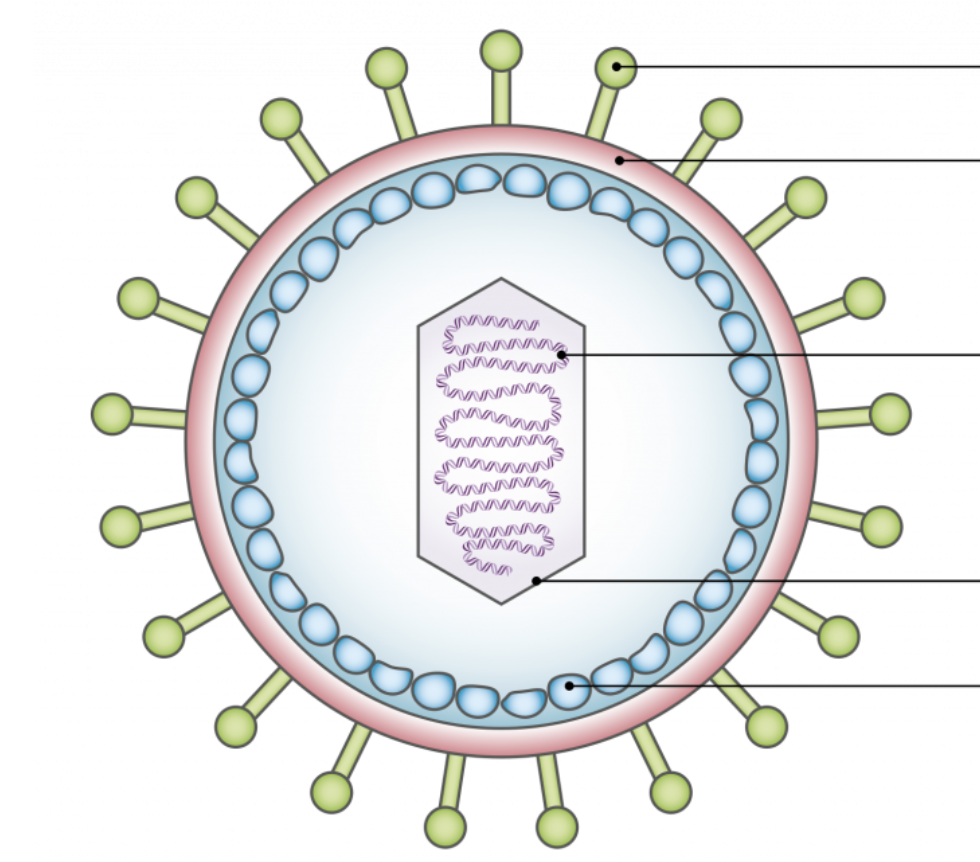
Match the viral structures with their correct labels
Other Answer Choices:
viral capsid
viral genome
viral envelope
spike protein
Question 6
6.
Match the viral functions with their correct labels
Other Answer Choices:
allows virus to attach to host cell via a "lock and key" match with receptors on the host cell surface
layer of cell membrane torn from original host cell - helps hide virus from immune system
protein coat/container that protect viral genome
contain genetic information to make all protein required to produce more viruses
Question 7
7.

Question 8
8.

Question 9
9.
Other Answer Choices:
copying of viral proteins
release
attachment
copying of viral genome (RNA)
uncovering
assembly
entry
Question 10
10.

Question 11
11.

Question 12
12.

Draggable itemarrow_right_altCorresponding Item
arrow_right_alt
arrow_right_alt
arrow_right_alt
Question 13
13.

Draggable itemarrow_right_altCorresponding Item
arrow_right_alt
arrow_right_alt
arrow_right_alt
Question 14
14.

Question 15
15.

From the above video.... What important process needs to happen in the alveoli that allows you to "breathe"?

Question 16
16.

Question 17
17.

Question 18
18.

Question 19
19.

Watch this video, then answer the question

A. What is a zoonotic disease?
B. What is causing more zoonotic diseased to jump to humans (3 reasons)?

Question 20
20.

Question 21
21.

Question 22
22.

Question 23
23.

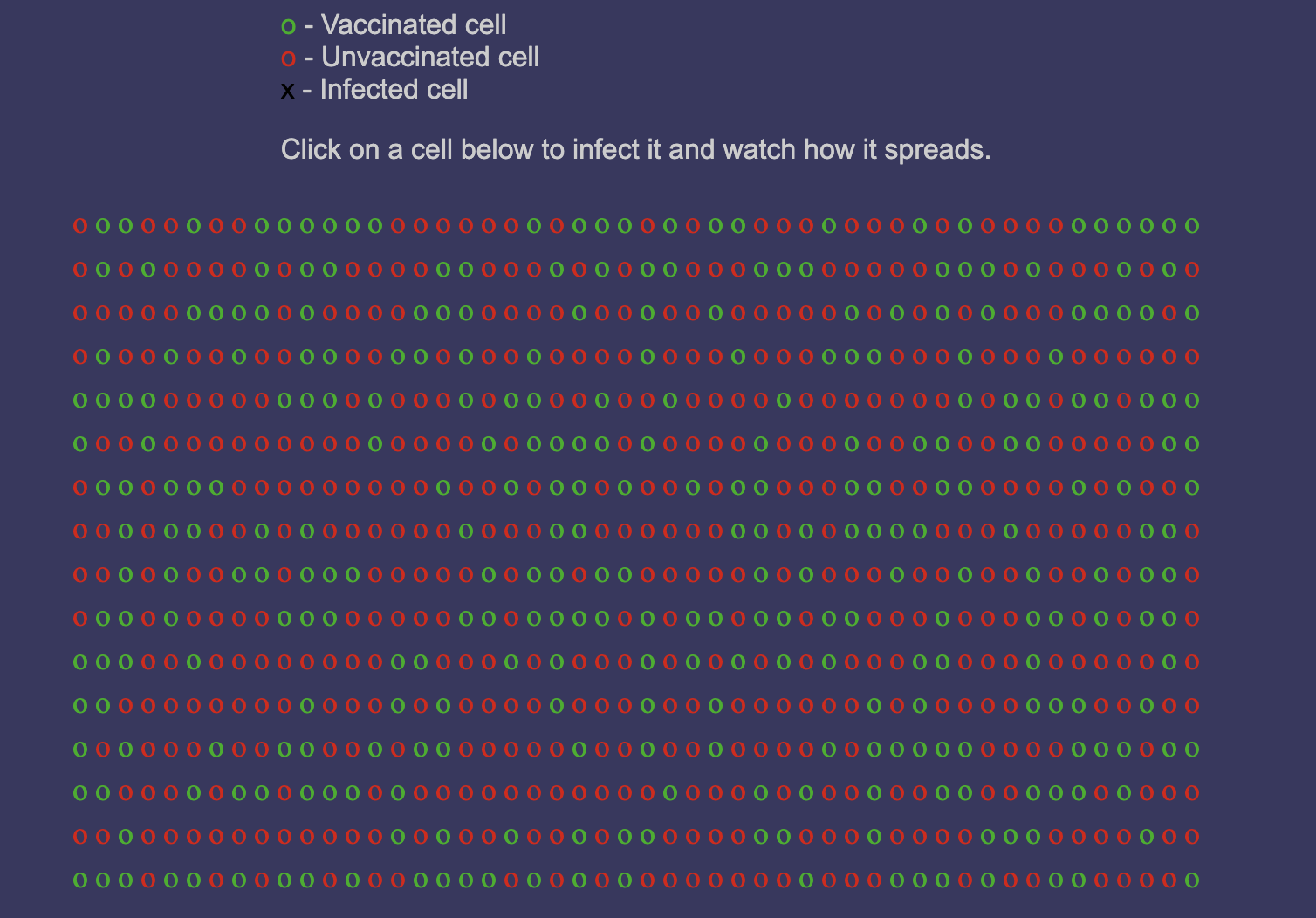
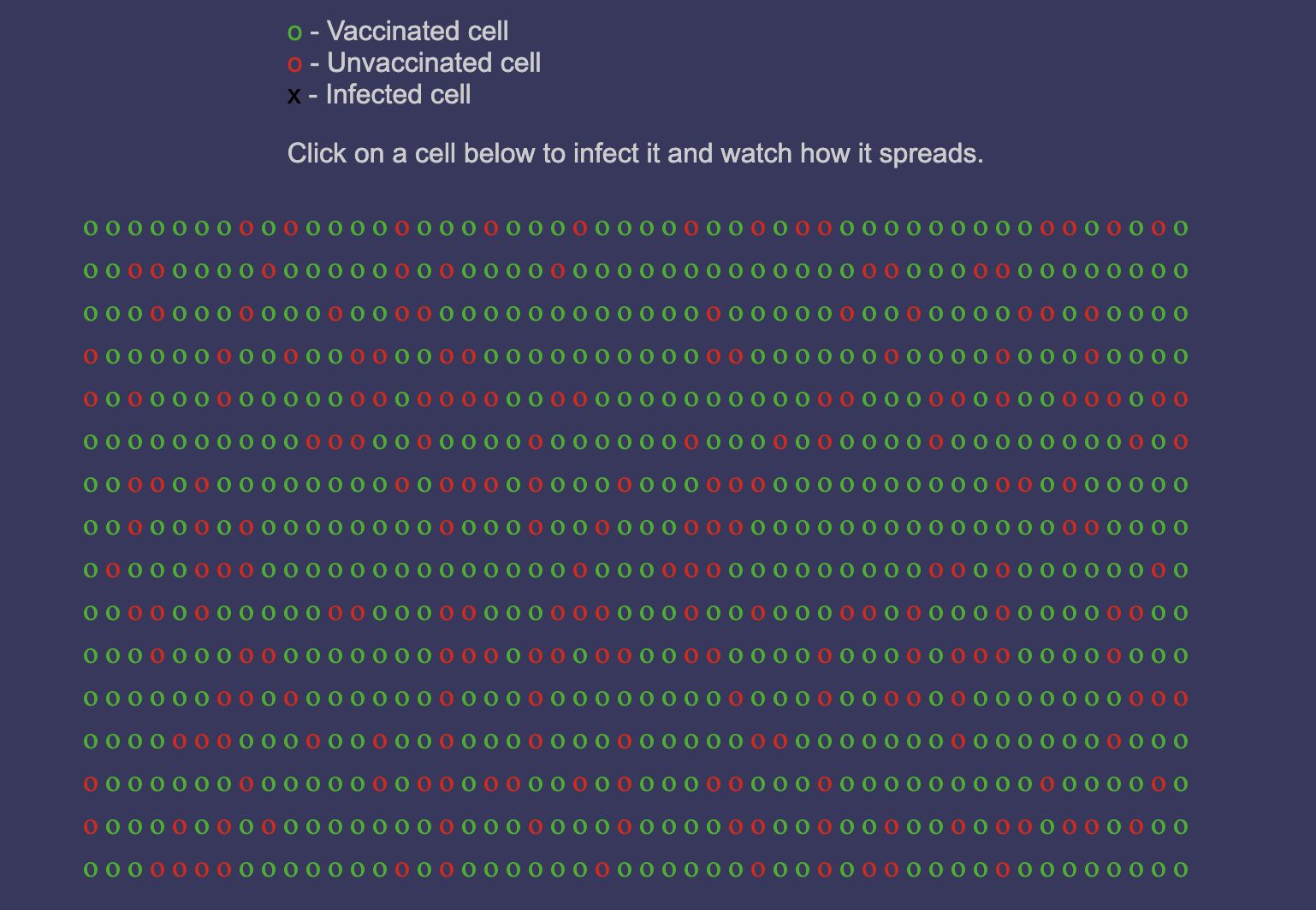
Explain which of these 2 images most likely represent "herd immunity threshold" where enough people in a population have been vaccinated to that people who are not vaccinated are protected?

Image A

Image B

Question 24
24.

Watch this video then summarize in your own words how mRNA vaccines work. Use the words antigen and antibody in your answer.

Question 25
25.
COVID-19 mRNA vaccine - go to this link to see an image of the vaccine. Remember this is the vaccine and NOT the virus. The inside light purple strands represent copies of __________. The light purple strands are copies of__________ of the spike protein and then "teach" other immune cells to recognize the COVID-19 spike protein as__________. This will allow the immune system to "remember" the spike protein and respond __________ if the person gets infected with the SARS CoV-2 virus.
Question 26
26.

Watch this video about the scientists who won the Nobel Prize for the development of an mRNA vaccine for COVID-19. Create a list of your 3 most important things you learned from this video

Question 27
27.

Why are viruses considered "obligate intracellular parasites"? Make sure you consider all 3 parts of the definition!

1. What is the primary function of the RNA genome in coronaviruses?
To protect the virus from the host's immune system
To act as a instructions for making more viral proteins
-To help the virus penetrate host cells
To maintain the virus's structure
In humans, SARS CoV-2 viruses infect ONLY respiratory cells (nose/throat/lungs)?
True
False
From the video above, true or false? The virus contains additional proteins called "nucleoproteins" that help the virus replicate inside the host cell.
true
false
What is a viral capsid?
Invasion and multiplication of a virus in a host organism
Outer membrane surrounding some viruses
Infectious agent that replicates inside a host cell
The protein coat that protects a virus genome
What is the function of the viral envelope?
It is a protein coat protects the virus genome
It is the invasion and replication of a virus
The process of how a virus leaves host cell
It is a protective outer membrane that was torn from the previous host cell
A virus connecting to the host cell membrane by its spike protein connecting to a host cell membrane receptor is called?
viral exit and transmission
viral attachment
genome
viral replication and assembly
What occurs during viral replication and assembly?
Virus copies its RNA/DNA, proteins and assembles new virus particles
Virus surrounds itself with a protein coat
Virus leaves host cell and infects others
Virus invades and multiplies in host organism
Match the process with its correct definition.
Viral attachment
virus hijacks cell's enzymes to copy its RNA/DNA and making of new virus particles in host cell
Viral Replication and Assembly
Virus leaving the host cell by either burst the host cell membrane or budding from its membrane
Viral Exit and Transmission
Virus connecting to the host cell membrane using its proteins that match with host cell receptor proteins
Link each term to its proper definition.
Capsid
a manufactured "drug" triggering immune response to certain infections without making the host sick (or as sick)
Viral Envelope
Protein coat shielding the viral genome
Vaccine
Protective membrane from host cell surrounding some viruses
Watch this video - note SARS CoV-2 does spread well by touch or surfaces. SARS CoV-2 is different from other coronaviruses in that it ...
can only infect cells in the upper part of your respiratory system
can infect cells all the way down deep into your lungs, tiny air sacs called alveoli
From the above video ... What are the macrophages supposed to do?
help the virus replicate
create an environment in the alveoli that stop the virus from replicating
destroy the virus by engulfing it
From the above video .... If too many immune cells start to fight the virus, what can happen to the alveoli?
their thin cell walls can become damaged allowing fluid to leak in
the alveoli may explode
the alveoli may shrink in size so gases cannot be exchanged
From the above video .... What ends up killing most people who die from COVID-19?
the virus infecting the tiny fragile air sacs called alveoli
the immune system ignoring or not responding to the infection
the immune system's "explosive response" to the infection causing damage to the walls of the alveoli
ARDS - acute respiratory distress syndrome - the inability to breathe because fluid has leaked into the lungs
What is herd immunity?
the percentage of the population that can get infected
the percentage of the population that must be vaccinated so that the virus cannot spread to unvaccinated people
the percentage of the population that was infected but then recovered
Why is immunizing a certain percentage of a population important for herd immunity?
it creates protection for those who cannot be vaccinated by stopping the infection from spreading
It makes everyone immune
It completely eradicates the virus
It educates everyone's immune system so they virus cannot infect anyone
What happens if the percentage of immune individuals in a population drops below the herd immunity threshold?
Only the vaccinated individuals remain immune
No effect
The disease may spread more quickly and create an epidemic
The herd immunity threshold increases