categorize the polar equation and image to the type of polar graph
categorize the polar equation and image to the type of polar graph
limacon
rose
Lemniscates
circle
Cardioid
match ways to convert from rectangular to polar and polar to rectangular
| Draggable item | arrow_right_alt | Corresponding Item |
|---|---|---|
r | arrow_right_alt | rcosθ |
θ | arrow_right_alt | rsinθ |
x | arrow_right_alt | |
y | arrow_right_alt |
Last week you played with transforming different polar graphs. There were specific types of forms you should have seen through that. Watch this video to give you an idea of what those types are. do you have any questions?
categorize the polar equation and image to the type of polar graph
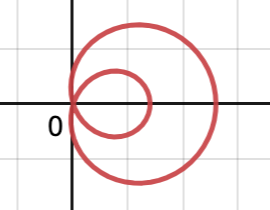
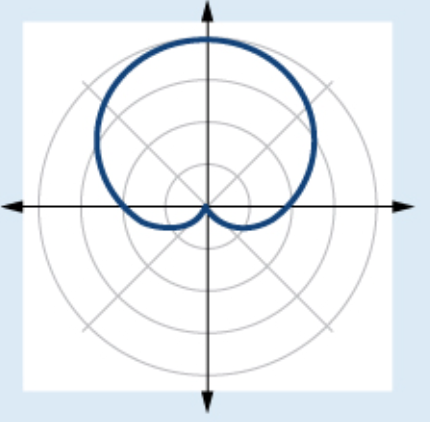
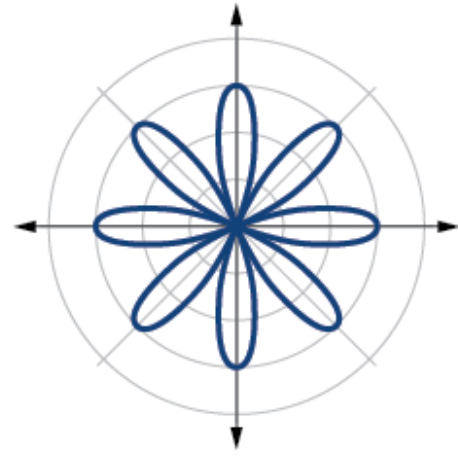
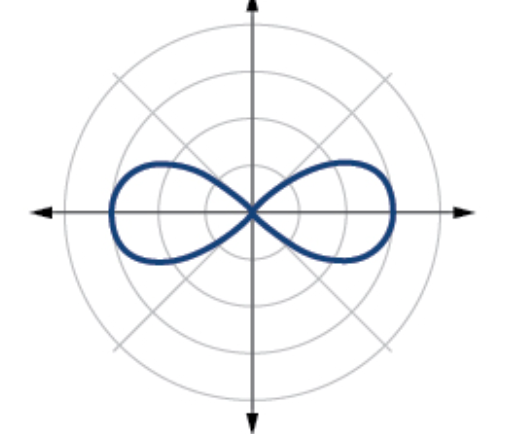
limacon
rose
Lemniscates
circle
Cardioid
a limacon is a subset of cardioids
what is the domain of the following function
Review for imaginary and complex numbers: i =
convert the equation
into polar form. Do not simplify.
You will notice the above rectangular coordinate is that of a circle with its center at (2,4). (if you do not remember equations for circles from algebra, just pop over to desmos and play with these a little). The equation for a regular circle with its center at the origin in polar coordinates is simple, r=<whatever your radius is>. look at your answer to the question above. Do you think that will simplify into a neat and tidy polar equation? why or why not?
What is the value of the complex number (2cis50°)² using De Moivre’s theorem?
Which of the following represents the complex number 5cis(3π / 4) in rectangular form?
someone asked in class several weeks ago how each sine and cosine was calculated. I said there were a couple different ways. One was by using the special angles and then using the various trig identities. if you know
This is an infinite series, but eventually each subsequent term is smaller and smaller and smaller. You may or may not be cuddling your calculator a little tighter right now. Reasonable. The reason I bring this up is because this equation only works with one unit - which unit do you think it works with?
Those of you who were in my Algebra 2 class last year may remember when we learned about the number e, we said there were a couple different ways you could approximate e. One of those I described as "a russian nesting doll of fractions" which looked like this -
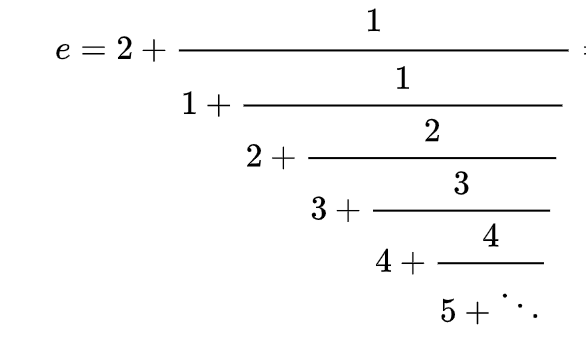
The other way to approximate e is another infinite series like this
do you know the name of the function that is happening in the denominator of each subsequent fraction?
remember back to the first session, we discussed the different representations of functions: verbal, numeric, algebraic and graphical. you now have a large number of ways to think about the number e. list the different ways here.
how would you deal with
Categorize your understanding.
The difference between a complex number and an imaginary number
how to translate a rectangular complex number into a polar complex number
There is a crazy form of the complex number where
(categorize just this fact, not whether or not you think you can derive/use this information yet)
using demoivre's theorem
the different shapes different polar equations make
I've got this
I'm shaky
So confused.