Twa kɔ nsɛm atitiriw so
Log in
Sign up for FREE
arrow_back
Laabri

02 Models & Feedback Loops

star
star
star
star
star
Last updated about 1 month ago
15 Nsɛmmisa

Learning Target #1: Describe the use of models in science and how they can change

0.3
0.3

Learning Target #2: Define negative and positive feedback loops and explain how they are different

Ɛhia
0.3
HS-ESS2-2
Ɛhia
0.8
HS-ESS2-2
Ɛhia
0
Asemmisa {{asɛmmisaAhyɛnsode}}
1.

Scientific thinking changes based on new information and technology.

Before watching the video below to learn more about how scientists determined the age of the Earth, make a prediction: How old is the Earth?

Question 2
01:52
keyboard_arrow_down
Ɛhia
0.3
Question 3
02:50
keyboard_arrow_down
Ɛhia
0.3
Asemmisa {{asɛmmisaAhyɛnsode}}
3.

Scientists frequently use

Question 4
03:50
keyboard_arrow_down
0.3
Asemmisa {{asɛmmisaAhyɛnsode}}
4.

Scientists used radiometric dating on to arrive at the 4.565 billion year age of the Earth.

Asemmisa {{asɛmmisaAhyɛnsode}}
5.

Scientists use models to help visualize something that may be difficult to understand.
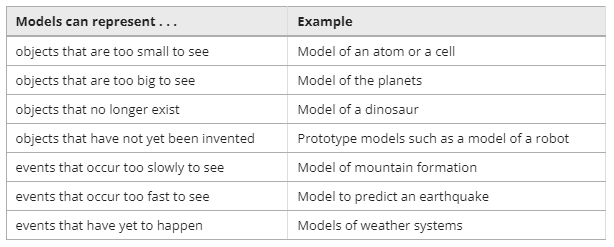
What tools can be used to create models?
Question 6
00:51
keyboard_arrow_down
Ɛhia
0.15
Asemmisa {{asɛmmisaAhyɛnsode}}
6.

Models can change based on new information.

The Ancient Greeks developed the at the center of the solar system.

Question 7
01:53
keyboard_arrow_down
Ɛhia
0.15
Asemmisa {{asɛmmisaAhyɛnsode}}
7.

Copernicus developed the at the center of the solar system.

Feedback loops help us understand cause and effect relationships. A feedback loop occurs when an action or event leads to a certain result, which then influences the original action or event. In a positive feedback loop, the effect of an action amplifies the original action, creating a self-reinforcing cycle. In a negative feedback loop the effect of an action seeks to stabilize and balance a system or condition.

Question 8
00:47
keyboard_arrow_down
Ɛhia
0.3
HS-ESS2-2
Question 9
01:12
keyboard_arrow_down
Ɛhia
0.3
HS-ESS2-2
Question 10
02:31
keyboard_arrow_down
Ɛhia
0.3
HS-ESS2-2
Question 11
02:47
keyboard_arrow_down
0.3
HS-ESS2-2
Ɛhia
0.9
Asemmisa {{asɛmmisaAhyɛnsode}}
12.

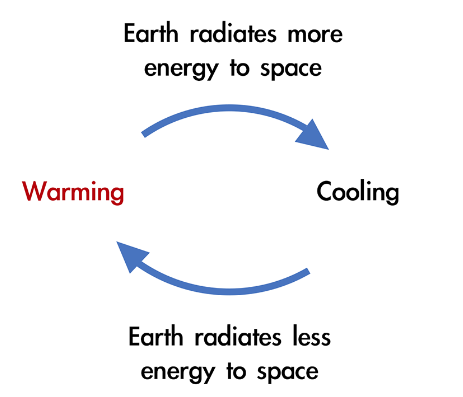
This image is a model of a negative feedback loop here on Earth (and Daisyworld).

Why is this considered a negative feedback loop?

HS-ESS2-2
Asemmisa {{asɛmmisaAhyɛnsode}}
13.

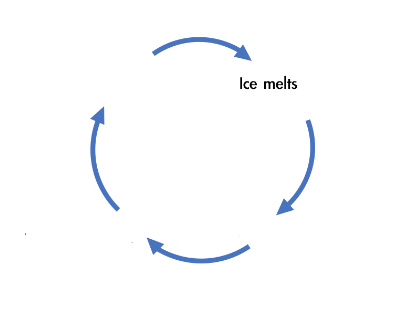
Consider this model of a positive feedback loop briefly mentioned at the end of the Daisyworld video.

Determine the effects of polar ice caps melting.

Mmuae Afoforo a Wobɛpaw:
Warming
More solar radiation is absorbed
Albedo decreases
Asemmisa {{asɛmmisaAhyɛnsode}}
14.

Why is the previous model of melting ice considered a positive feedback loop?

Asemmisa {{asɛmmisaAhyɛnsode}}
15.

Self Assessment: Rate your mastery of each learning target.

1 - I need help!

2

3

4

5 - I could teach this to another student

Learning Target #1: Describe the use of models in science and how they can change

Learning Target #2: Define negative and positive feedback loops and explain how they are different

Asemmisa {{asɛmmisaAhyɛnsode}}
2.

When half of the parent atoms have become daughter atoms, that's called the half life of that element.

Asemmisa {{asɛmmisaAhyɛnsode}}
8.

When the planet is cool, .

When the planet is warm,

Asemmisa {{asɛmmisaAhyɛnsode}}
9.

The albedo of a mirror would be % and the albedo of a black surface would be %.

Asemmisa {{asɛmmisaAhyɛnsode}}
10.

Which type of feedback loop does Daisyworld represent?

Asemmisa {{asɛmmisaAhyɛnsode}}
11.

What functions similar to the white daisies and reflects sunlight here on Earth?