Energy and Matter - Teacher Paced

Last updated 9 months ago
22 questions
Driving Question: How Do Particles Move?
Lina and Vera purchased fruit pops at the grocery store. The drive home was hot and the fruit pops turned slushy. After a few hours in the freezer, the fruit pops were solid again and ready to eat.

1

What is the relationship between temperature and particle motion? A few students have supplied their answers.

Kerenza 💫- Decreased temperature means particles have greater motion

Piker 👾- Decreased temperature stops particle motion

Toyosi 🤖 - Increased temperature means particles have greater motion

Jonothan B🎩 - Increased temperature means particles have less motion

Kaleb Sol👁️ - Temperature does not affect particle motion

Choose the student you agree the most with and explain why you agree with them. 2-3 full sentences

1
How do particles move?


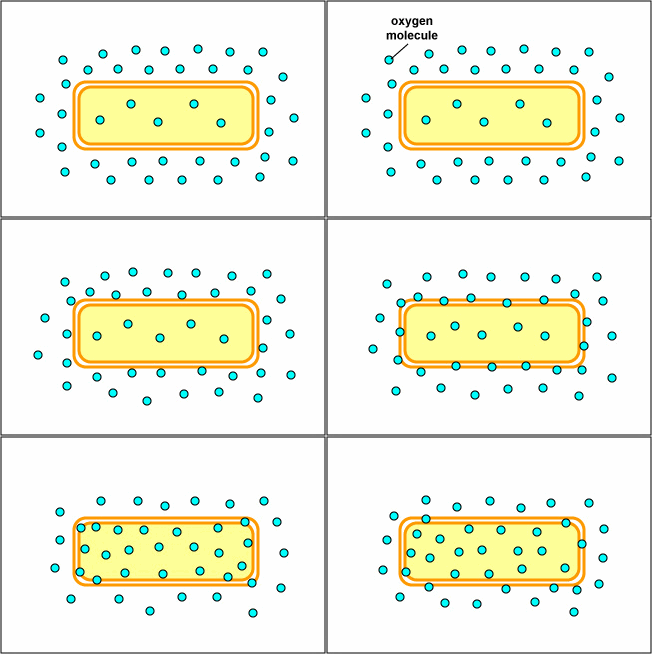
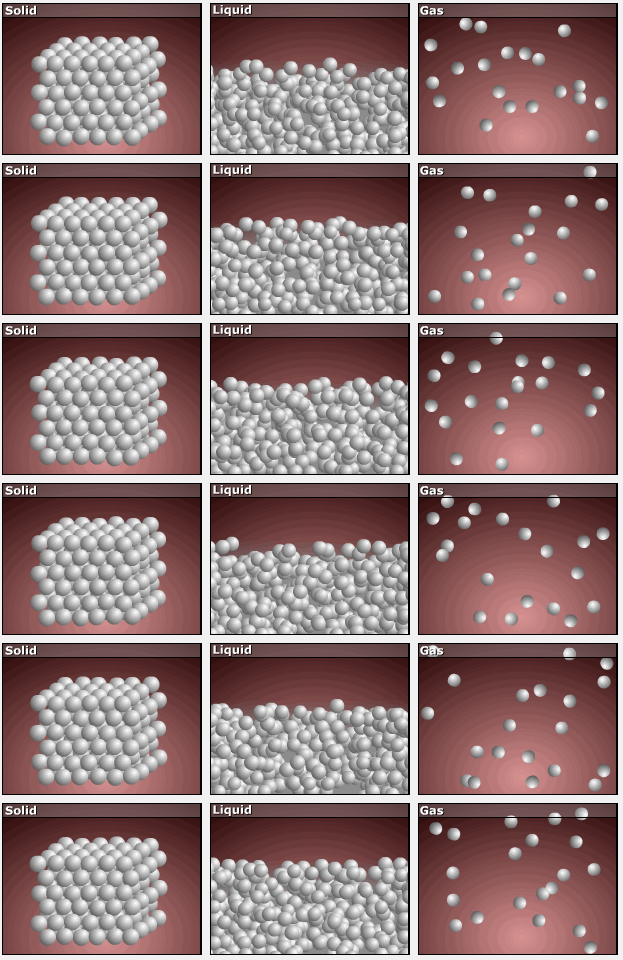
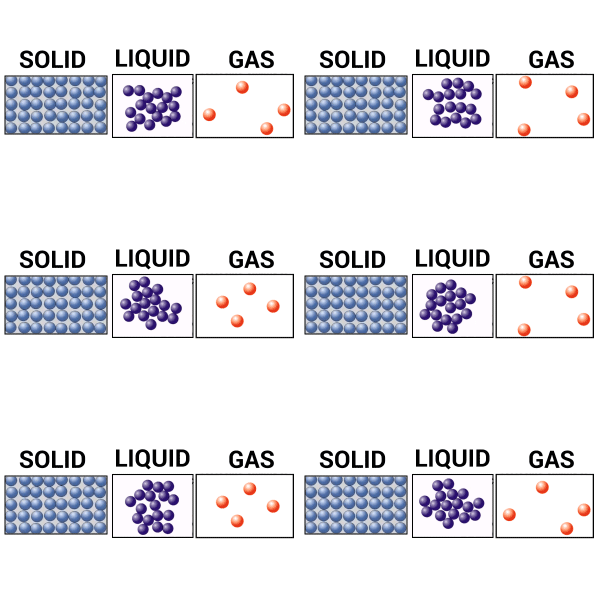
A particle is a small unit of matter. Every solid, liquid, and gas is made of particles; metal, oxygen we breathe, water, and even wood blocks. Do you think these particles move when an object is still?

1

What are the 3 states of matter?

1

What states of matter have particles that move constantly?

1

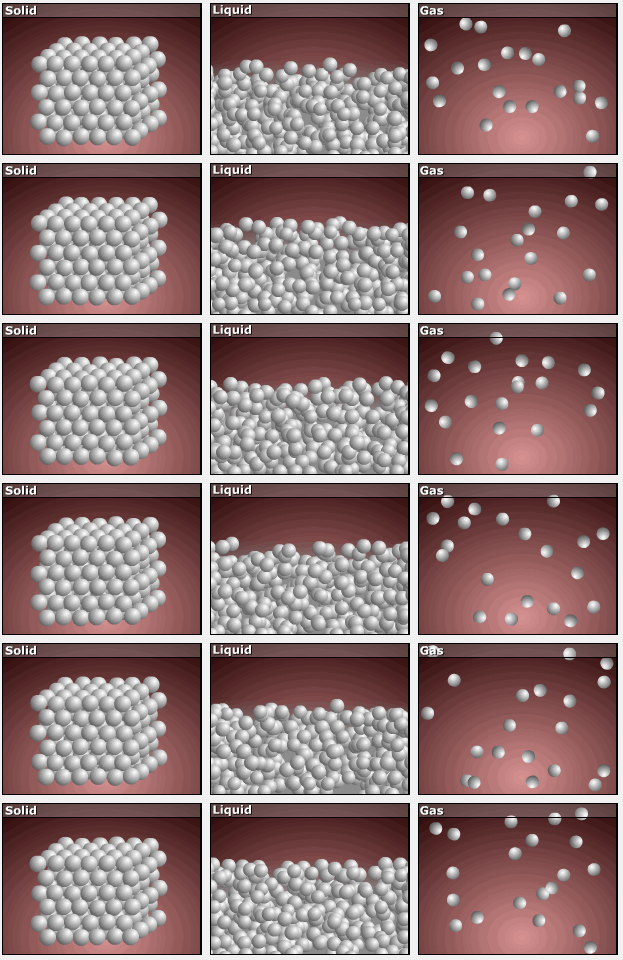
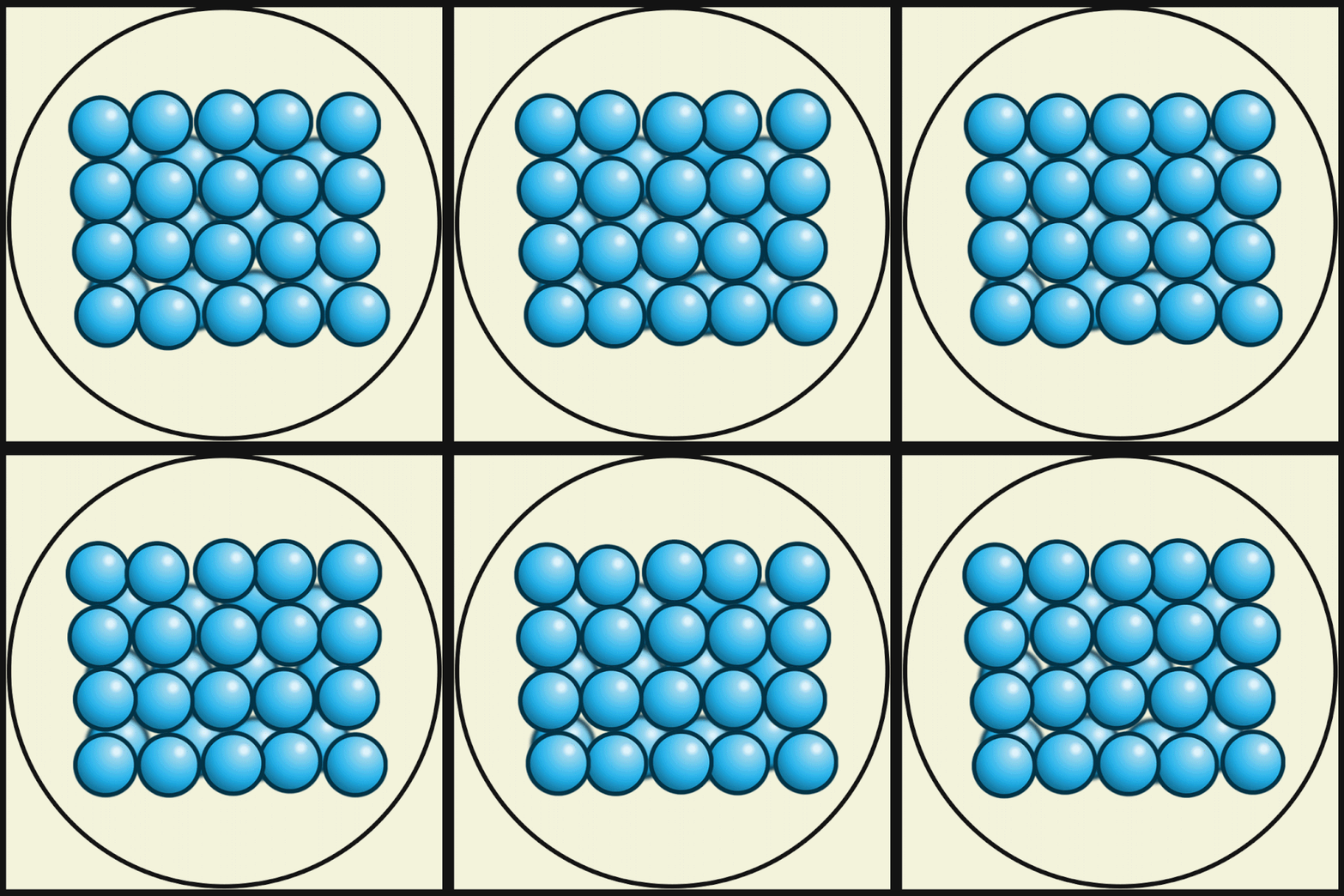
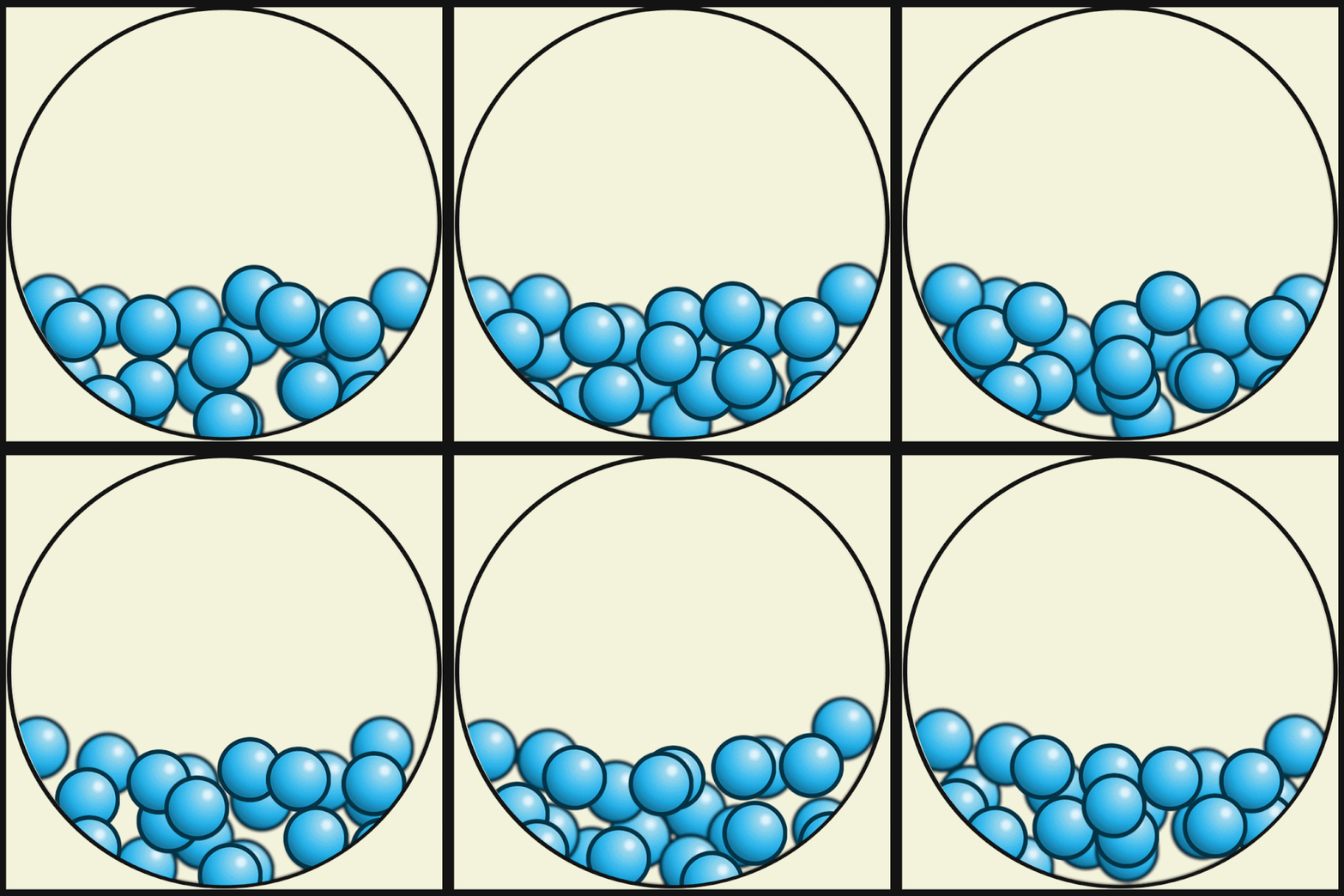
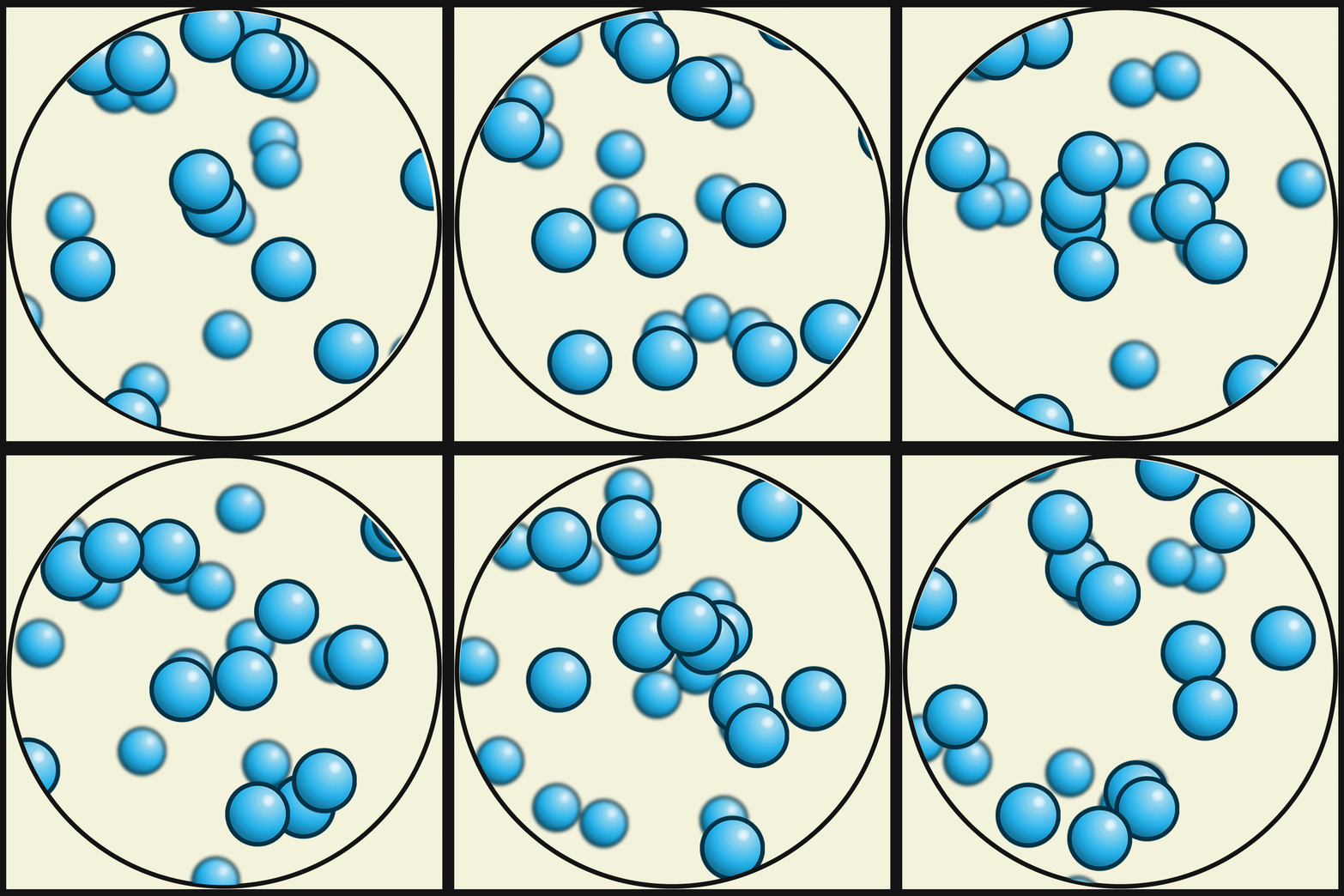
Draw particles in all 3 states of matter!

1

Categorize the following

  • Gas particles
  • Liquid particles
  • Solid particles

Movement and collisions.

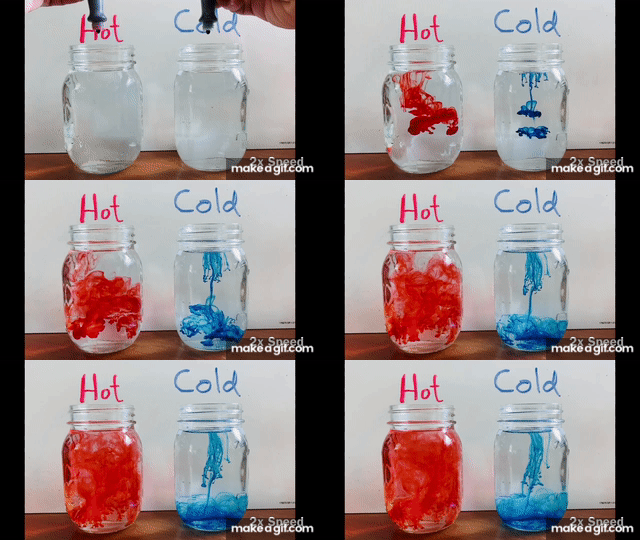
Water particles, like the particles in all liquids, constantly bump and flow past each other in random motion - movement in all directions and at different speeds. The movement and collisions of the water particles push the food coloring particles around, causing the coloring to spread out, or diffuse. Diffusion is the movement of particles from an area of high concentration to an area of low concentration. Diffusion does not happen instantly. Particles diffuse until there is an equal concentration of all the particles in a container, cell, or stage vessel.

4
Diffusion is the movement of particles from an area of __________ concentration to an area of __________concentration. Diffusion will not stop until there is an __________ of all the particles in a container, or cell. Diffusion is __________

1

A) What is a rate?
Example sentence: Anaba had a fast heart rate of 167 beats per minute after Mr. G mentioned they have test next Tuesday.

B) What is diffusion in your own words?

C) What happens when food coloring is added to hot and cold water? Explain the rate of diffusion for both cups.

Record your observations below.

2

Create a model of diffusion by adding molecules to the after image.

Indicate if it is a slow or fast process by circling fast or slow.

Movement and Energy

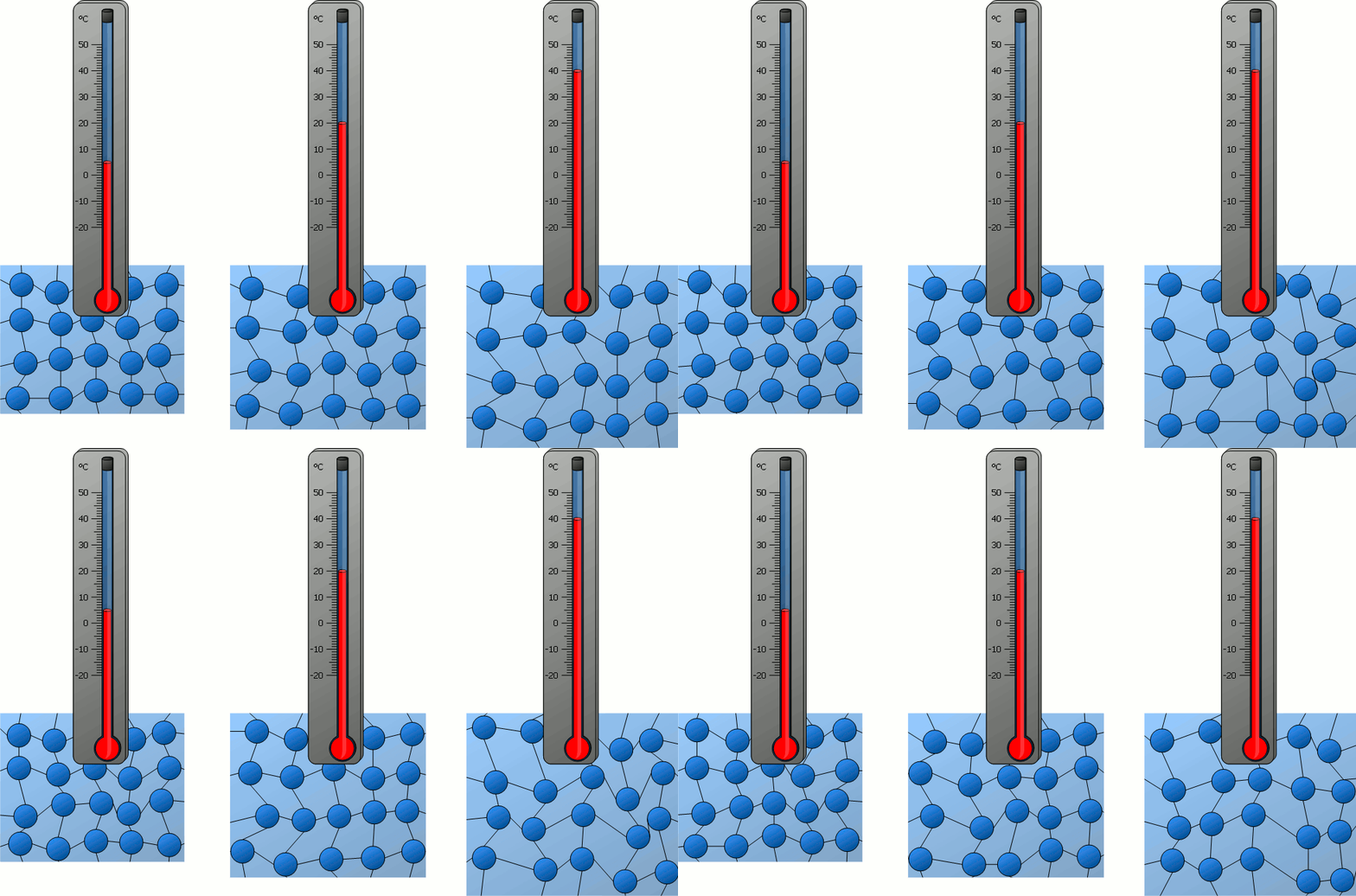
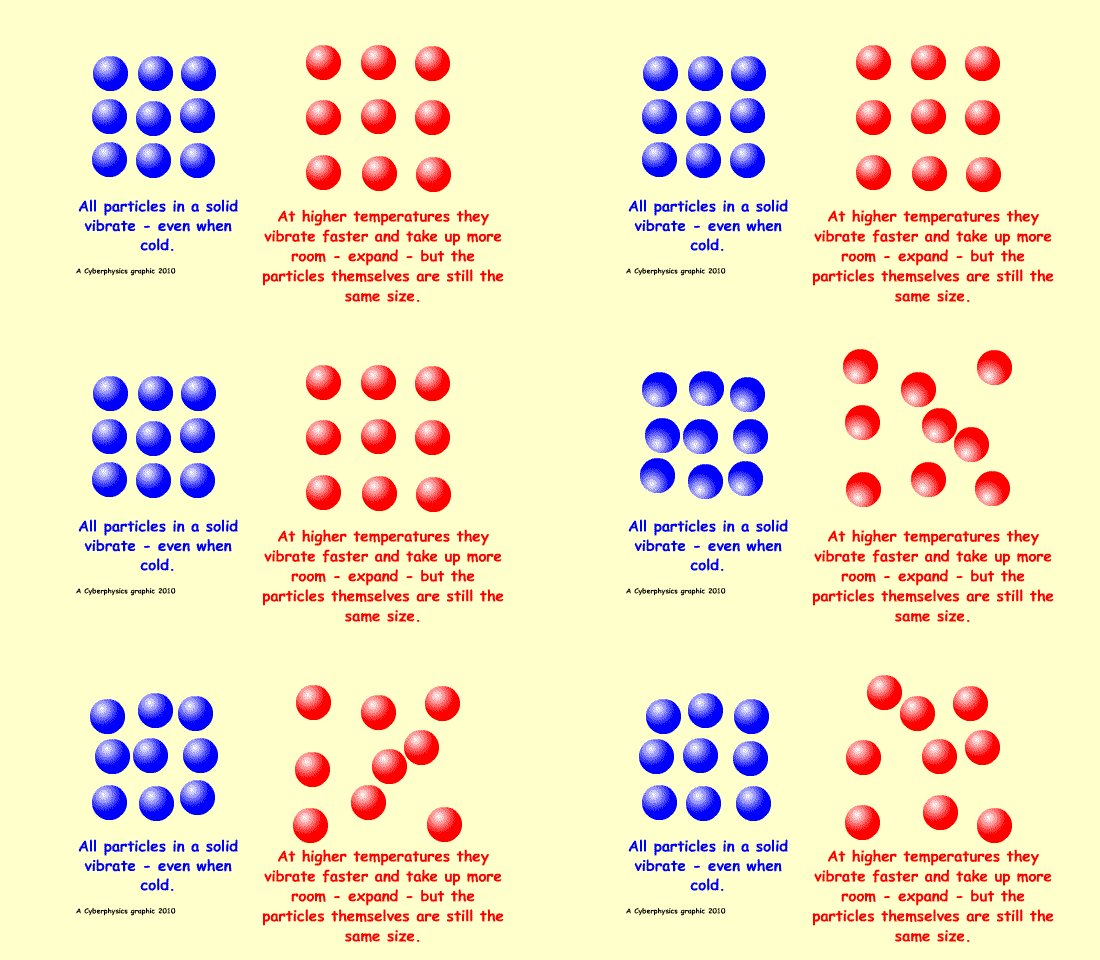
Scientists use diffusion to observe how fast the particles of a substance are moving. The faster the substance diffuses, the faster the particles are moving. In the figure below, energy was added to the water in the form of heat. Added energy increases motion, this is called kinetic energy. Kinetic means "motion". Thermometers measure kinetic energy - the higher the temperature, the more kinetic energy an object has. As the kinetic energy of particles increases, the speed of the particles increases as well. The faster the particles move, the more kinetic energy they have.
1

Which of these images is an image of something that is "kinetic"?

1

How to model Movement. To model particle motion, lines are added to a still image. Since particles travel at different speeds, they need to be represented by different amounts of motion lines. The more motion lines, the faster the particles are moving.

Add motion lines to the liquid particles model on the right to show they are moving faster than the liquid particles on the left. Circle the the model that has more kinetic energy.

6
Kinetic energy is __________. It depends on the __________ of the surroundings. The slower the object __________

Solids have the __________. Gasses have the __________. Liquids have a __________ compared to gasses and solids.

Energy and Volume


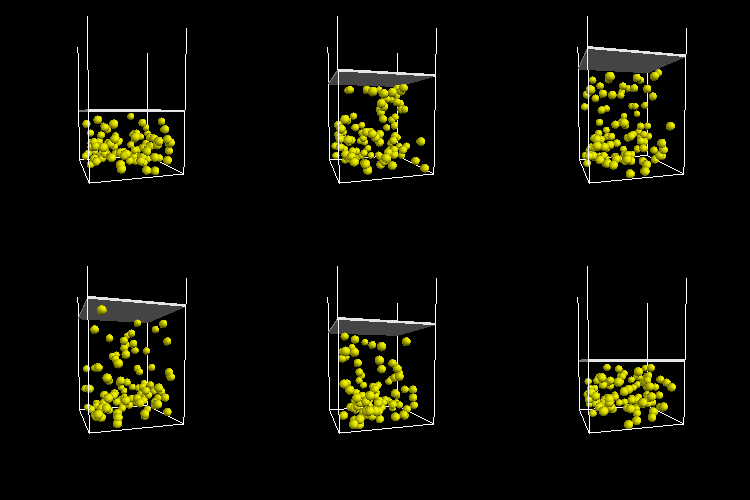
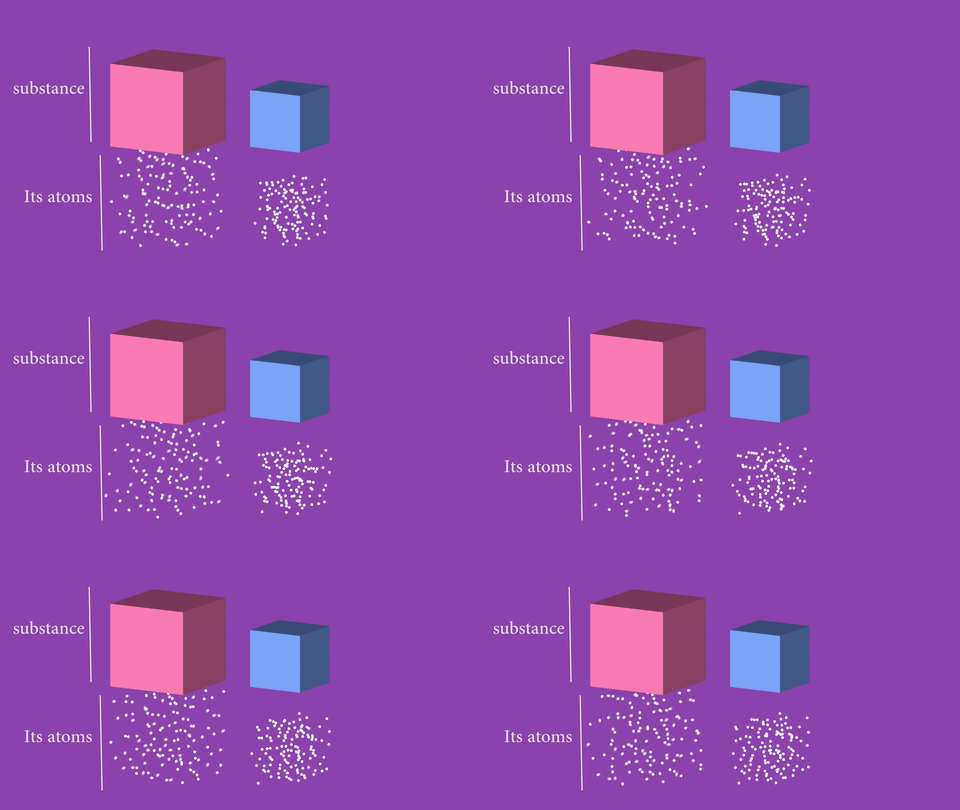
As the kinetic energy of a material increases, particles move faster. They collide with each other more often and push each other far apart. The increase in volume of a material when particle motion increases is known as thermal expansion. The opposite can also occur. A substance can lose kinetic energy and the particles will move slower. As they move slower they collide with each other less often, which causes the substance to take up less space. This is known as thermal contraction. Thermal contraction happens when particle motion decreases and causes the particles to occupy less volume.
2
When particle motion increases __________.


When particle motion decreases __________.


1
Label the diagram
Other Answer Choices:
expansion
contraction
2

Draw the following images and label if they have more or less kinetic energy and if they are an example of thermal expansion or thermal contraction.

A) Kenny adds ice

B) Holden adds a hot plate

Energy and Temperature


The property of thermal expansion and contraction can be used to measure temperature. Temperature is the measure of average kinetic energy of the particles in a material. The temperature of a substance depends on how much kinetic energy the particles that make up the material have. The lower the kinetic energy of the particles, the lower the temperature of the substance. One way to measure the relative amount of kinetic energy, or speed of the particles, is by measuring how much the substance expands or contracts.

Temperature Scales


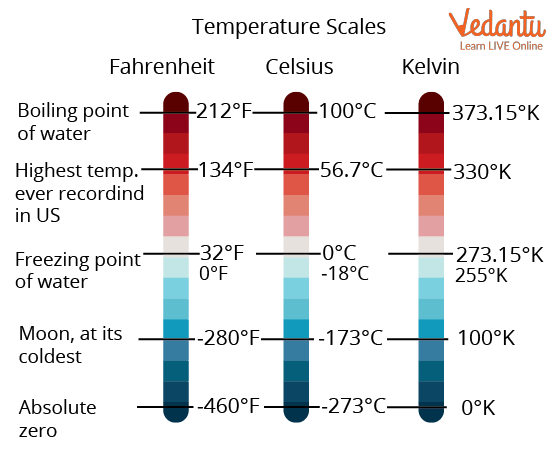
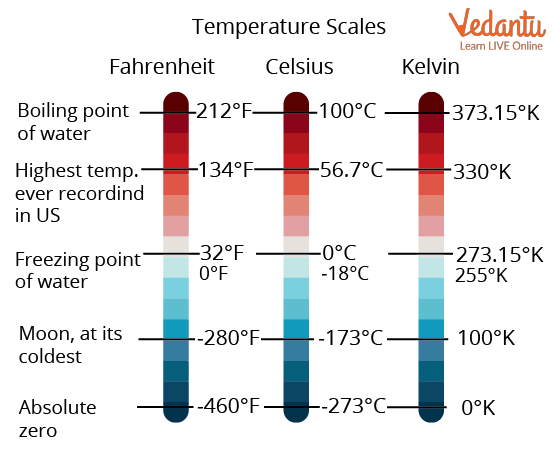
To compare temperatures you need to use the same temperature scale. A scale uses two fixed points and divides the space between the two points evenly. The celsius scale is created with fixed points of 0 degrees celsius, when water freezes and 100 degrees celsius, when water boils. Other scales include Fahrenheit and Kelvin. The Celsius scale is used by scientists worldwide. Scientists also use the Kelvin scale. The Kelvin scale was developed to predict at what temperature particles would stop all motion. The temperature is known as absolute zero at 0 K. If a material reaches 0 K, the particles in that material would not be moving and would no longer have kinetic energy. Scientists have not been able to cool any material to 0 K.


1

What does temperature really measure?

4
Lower temperature = __________ = low reading on a __________.

Higher temperature = __________ = high reading on a __________
4
100 degrees Celsius = __________.
0 degrees Celsius = __________


0 degrees Kelvin = __________

212 degrees Fahrenheit = __________
32 degrees Fahrenheit = __________

2

Ryder and Lucas had 3 cups with liquids in it. Ryder measured the first cup to be 40 degrees C. Lucas measured the second cup to be 40 F degrees. And they both measured the last cup to be 40 degrees K.

Ryder put his hand in the first cup and said, "this is TOO Hot". He then put his hand in the second cup and screamed, "its TOO cold". Then he put his hand in the last cup and it was super freezing, "I can't feel anything he screamed". Ryder and Lucas thought they had safe liquids that felt the same. I mean "we had the same measurements", said Lucas.

What did Ryder and Lucas do wrong - what should they have done to make sure every cup is safe?

How do particles in a gas behave compared to particles in a liquid?


Think about a time when you smelled what was for lunch even though you were not near the cafeteria. The entire school did not smell the lunch at the same time. The people nearby smelled it first. The scent traveled away from the cafeteria over time. You could smell the lunch because gas particles move. They move in straight lines until they collide with something, like another gas particle. These collisions change the speed and direction of the particle's movements.

Solid Particles


The particles in a solid do not have the same freedom to move around like liquid and gas particles. In a solid, the particles vibrate back and forth in place. Since solid particles only vibrate, they have low amounts of kinetic energy. Expansion and contraction in solids does not occur. However, it is less noticeable because the particles are holding each other in place.
1

In Canada, we compost organic material. Some Canadians put their organic food waste in the freezer.

Why is their no scent from the organic garbage in the freezer compared organic garbage that is left at room temperature?

A Closer Look: Thermal expansion in Solids


The changes to particles at the unobservable level lead to changes you can see. Thermal expansion (rapid movement of particles and expanding of material) occurs in gases, liquids, and solids. Scientists have used their knowledge of thermal expansion to create thermometers. Hot air balloons are able to expand and float because of thermal expansion.
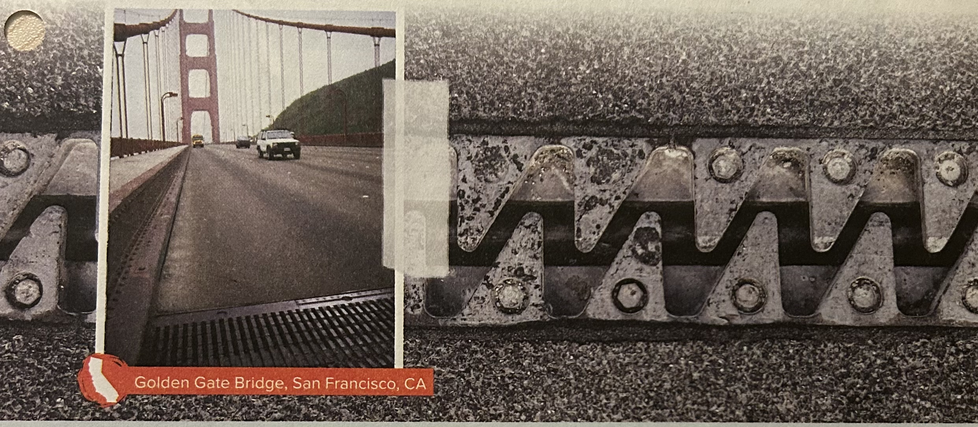
Yes, thermal expansion can have negative effects, like cracking concrete when it is too hot. Two common areas where engineers take steps to guard against thermal expansion are bridges and sidewalks.

Look at the photo of the golden gate bridge. What looks like a metal grate near the bottom of the inset photo is an expansion joint. This joint allows for the metal to expand during high temperatures and for the metal to contract when it is cooler.

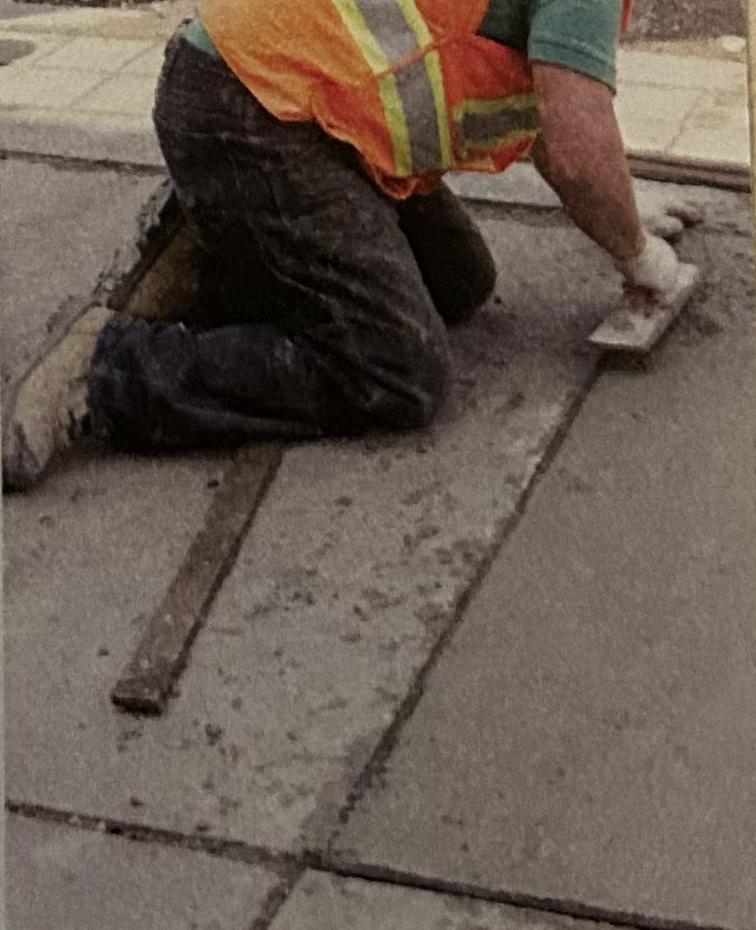
In this photo, a construction worker is adding expansion joints to create concrete. Sidewalks, roads, and parking lots made of concrete are places where the effects of thermal expansion and contraction can be observed. Cracked concrete is a place where thermal expansion has occurred.
1
5

Imagine that you have been hired to build a new bridge. You know you have to include expansion joints, to compensate for temperature changes.

In your design, the company asks you to make sure the bridge can expand and contract on the hottest (40 degrees C) and coldest days of the year (-10 degrees C.

How would you test how far the joint must be able to move?

Create Your Experiment
***Write down the steps that you would you take to determine if the metal is good for thermal expansion in the bridge

Structure you answer like this

Step 1: First...
Step 2: First...
etc.