Preskoči na glavni sadržaj
Prijava
Sign up for FREE
arrow_back
Biblioteka

Context 14 - Modeling Cancer Cells

star
star
star
star
star
Posljednje ažuriranje about 2 years ago
26
Napomena autora:

MMR Resources

1
1
1
Pitanje 1
1.

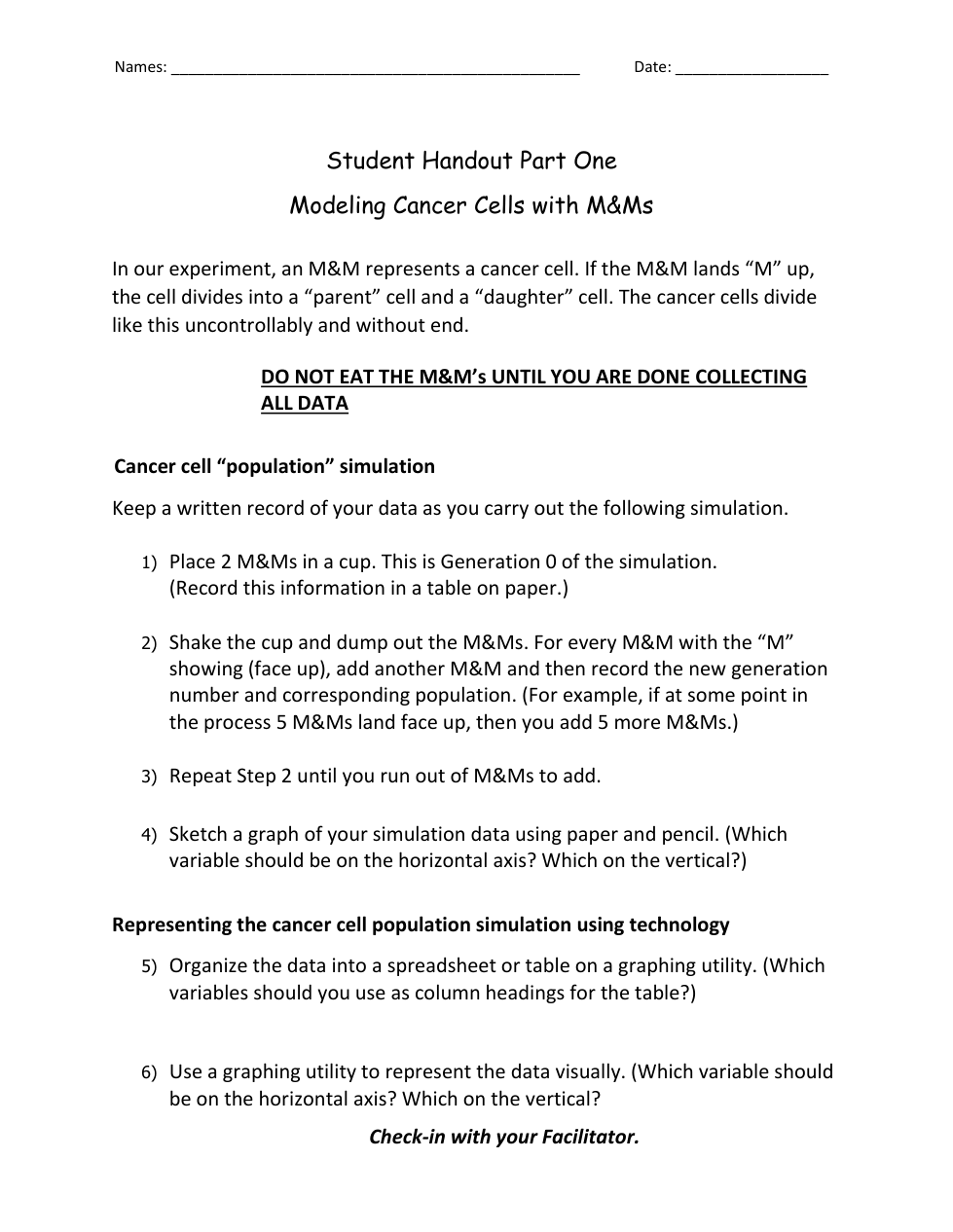
Record the new generation number and corresponding population

Pitanje 2
2.

Sketch a graph of your simulation data.

Pitanje 3
3.

Enter your data into the Desmos Graph below and then screenshot the result.
Desmos Link

1
Pitanje 4
4.

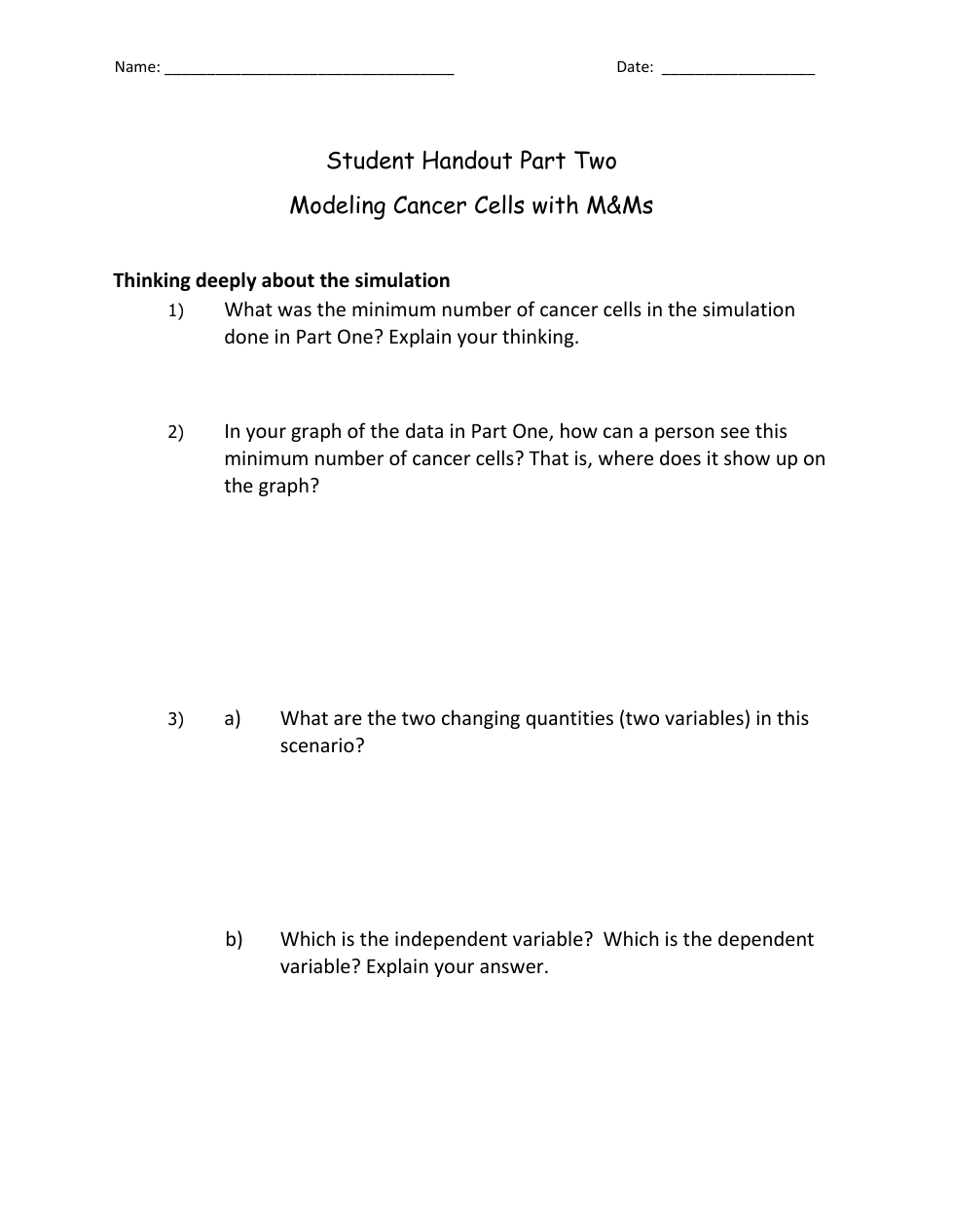
What was the minimum number of cancer cells in the simulation done in Part One? Explain your thinking.

1
Pitanje 5
5.

In your graph of the data in Part One, how can a person see this minimum number of cancer cells? That is, where does it show up on the graph?

1
Pitanje 6
6.

What are the two changing quantities (two variables) in this scenario?

1
1
1
Pitanje 9
9.

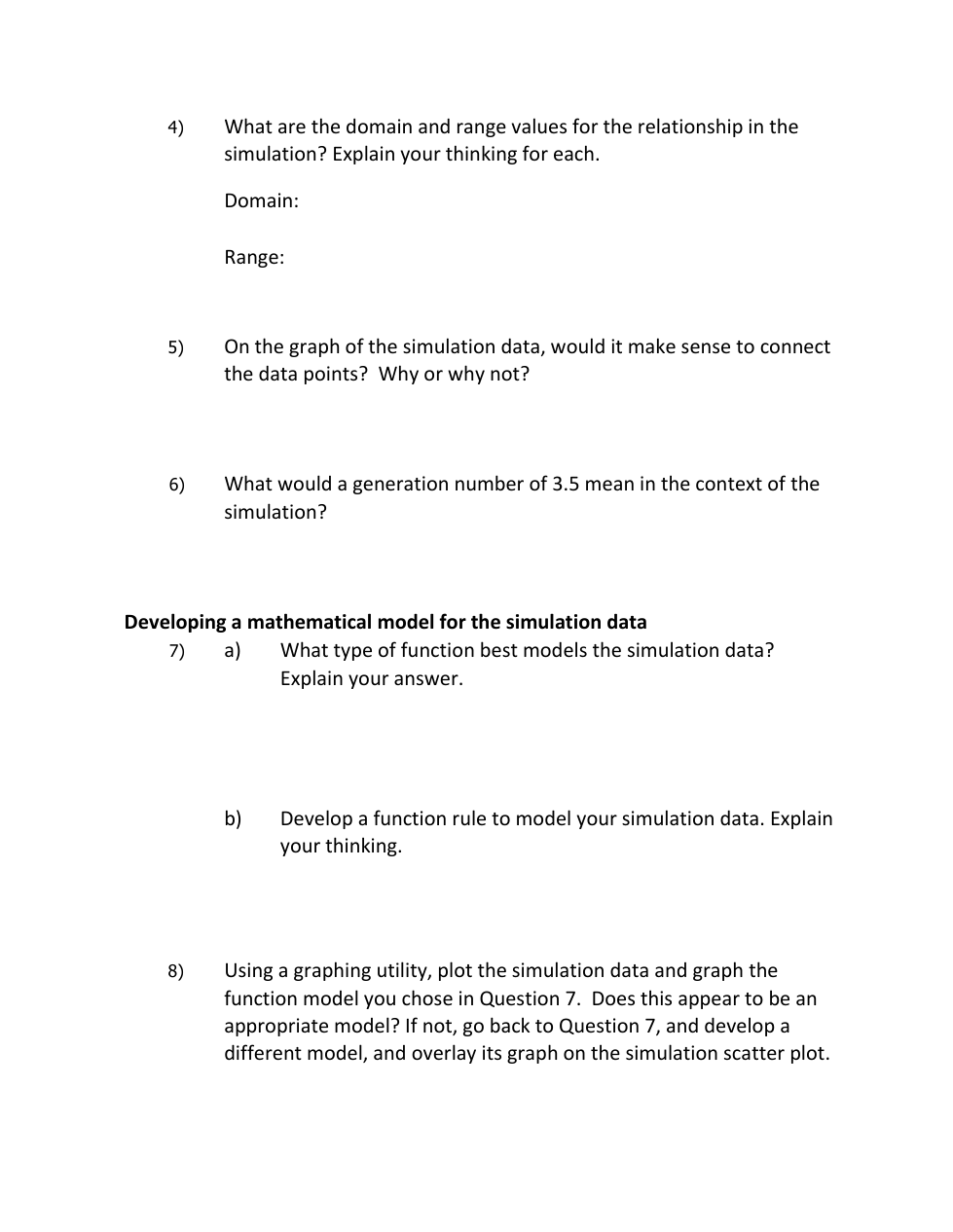
What is the domain values for the relationship in the simulation? (This is all the numbers from the independent variable group)

1
1
1
1
1
1
1
Pitanje 16
16.

What are the domain and range for your graph?

1
Pitanje 17
17.

What do you suppose the domain is for the real-world situation of cancer cells spreading?

1
Pitanje 18
18.

What do you suppose the range is for the real-world situation of cancer cells spreading?

1
1
1
Pitanje 21
21.

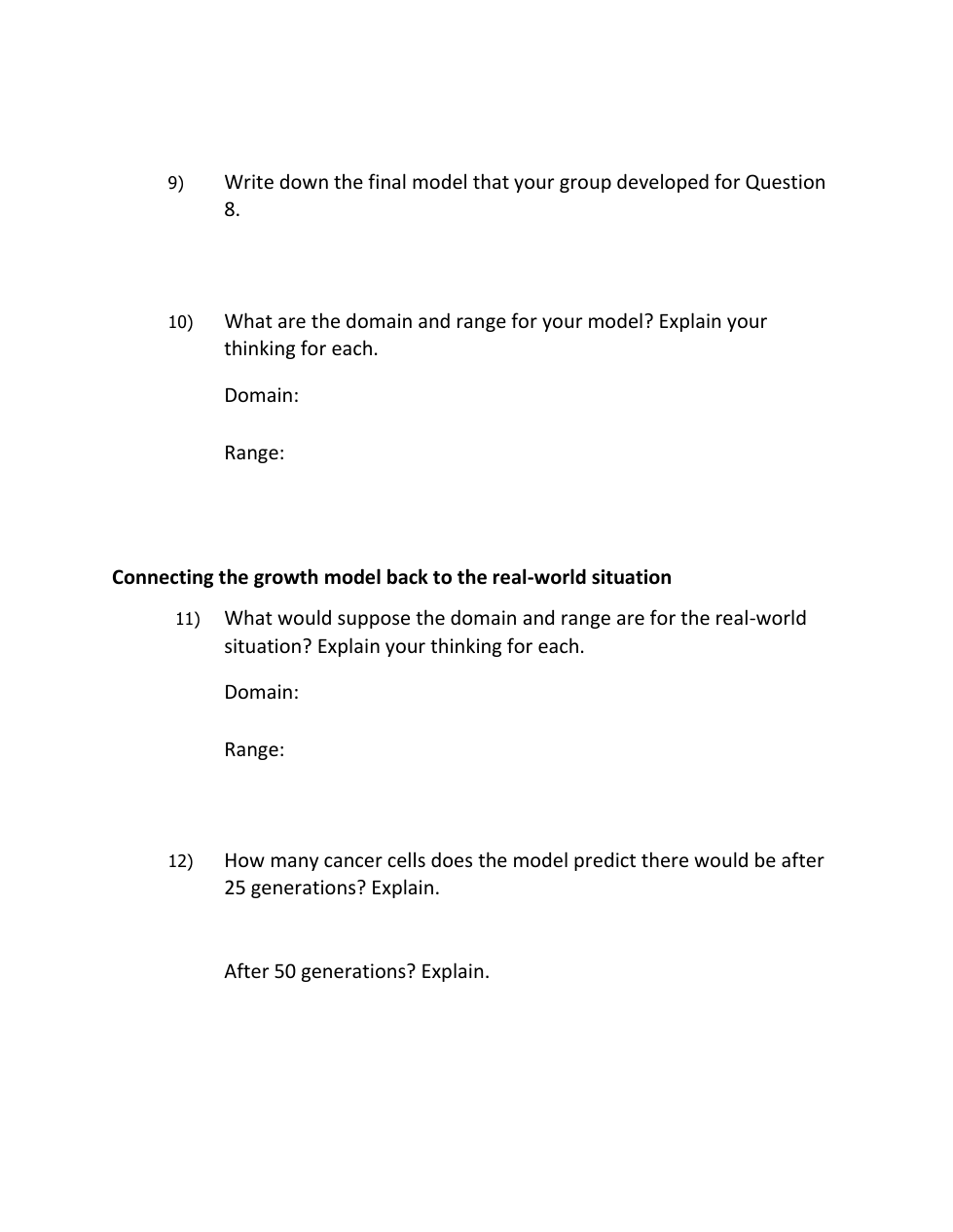
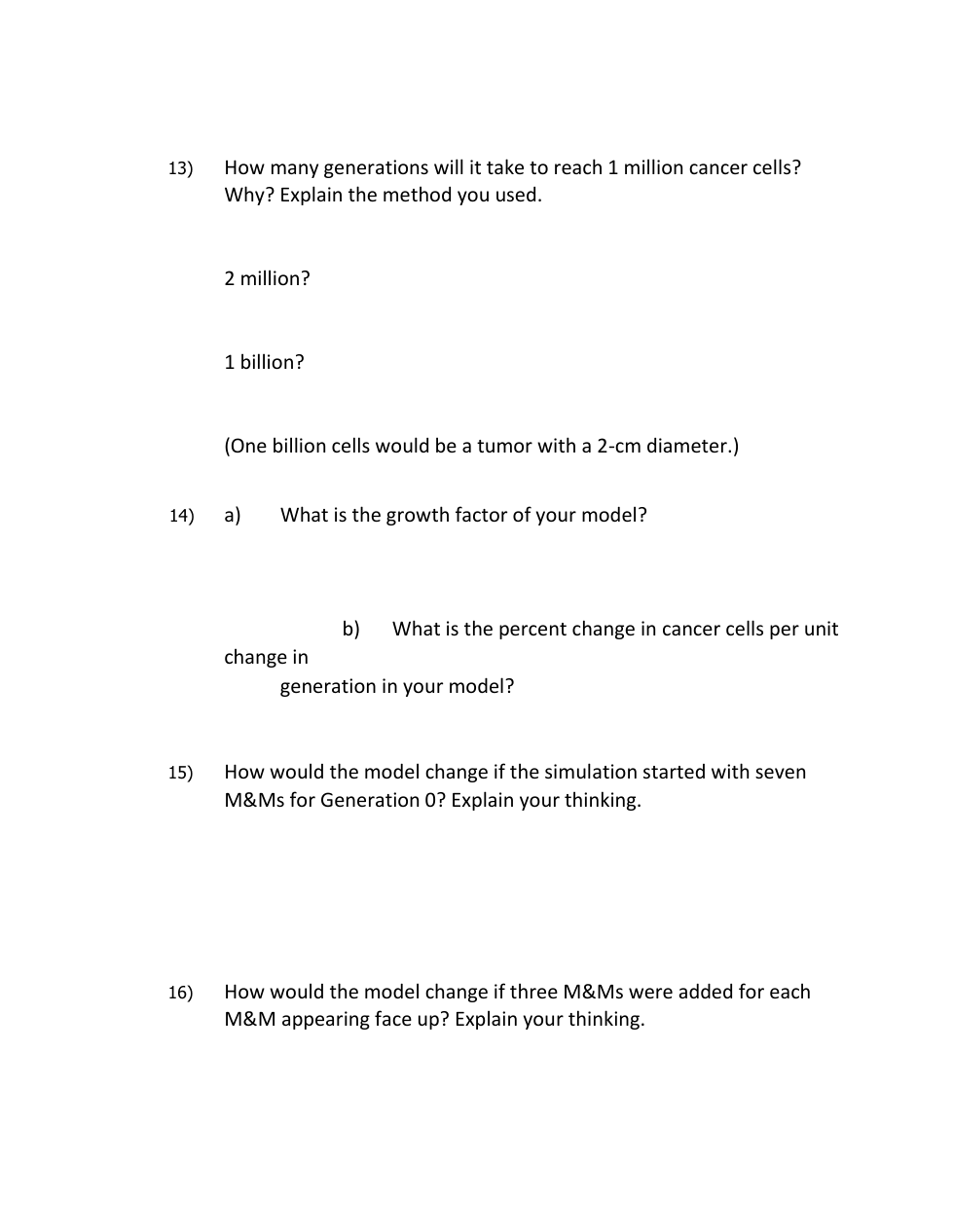
How many generations will it take to reach 1 million cancer cells? Why? Explain the method you used.

1
Pitanje 22
22.

How many generations will it take to reach 2 million cancer cells?

1
1
1
1
Pitanje 7
7.

Which is the independent variable? (This is the part that changes on its own)

Pitanje 8
8.

Which is the dependent variable? (This is the part that only changes when the independent variable changes)

Pitanje 10
10.

What is the range values for the relationship in the simulation? (This is all the numbers from the dependent variable group)

Pitanje 11
11.

On the graph of the simulation data in #3, would it make sense to connect the data points? Why or why not?

Pitanje 12
12.

What would a generation number of 3.5 mean in the context of the simulation?

Pitanje 13
13.

Enter your data into Stapplet.

What type of function best models the simulation data?

Pitanje 14
14.

Using your results from Stapplet, write the equation that would model your data.

Pitanje 15
15.

Graph your equation from #14 in Desmos and compare to the scatter plot you took a screenshot of on #3. Did the results look similar?

Pitanje 19
19.

How many cancer cells does the model predict there would be after 25 generations? Explain.

Pitanje 20
20.

How many cancer cells does the model predict there would be after 50 generations? Explain.

Pitanje 23
23.

How many generations will it take to reach 1 Billion cancer cells?

(One billion cells would be a tumor with a 2-cm diameter.)

Pitanje 24
24.

What is the growth factor of your model?

Pitanje 25
25.

How would the model change if the simulation started with seven M&Ms for Generation 0? Explain your thinking.

Pitanje 26
26.

How would the model change if three M&Ms were added for each M&M appearing face up? Explain your thinking.