Log in
Sign up for FREE
arrow_back
Library

Grade 6 SS Midterm 2024

star
star
star
star
star
Last updated about 1 month ago
36 questions
Required
2.5
Required
2.5
Required
2.5
Required
2.5
Required
2.5
Required
2.5
Required
2.5
Required
2.5
Required
2.5
Required
2.5
Required
2.5
Required
2.5
Required
2.5
Required
2.5
Required
2.5
Required
2.5
Required
2.5
Required
2.5
Required
2.5
Required
2.5
Required
2.5
Required
2.5
Required
2.5
Required
2.5
Required
2.5
Required
2.5
Required
2.5
Required
2.5
Required
2.5
Required
2.5
Required
3
Required
3
Required
3
Required
3
Required
3
Required
10
SECTION 1 - MULTIPLE CHOICE QUESTIONS

Use the eight documents to answer the following 35 multiple choice questions.
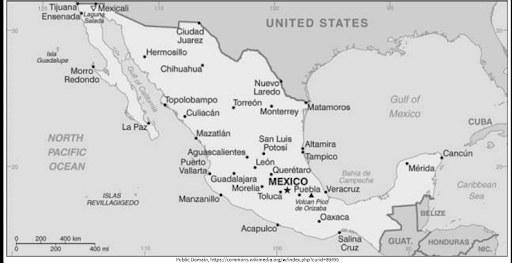
DOCUMENT #1
Use the map to answer questions 1-3.
Question 1
1.

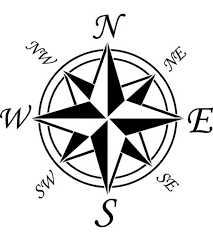
Which map feature would you use to determine the distance from Acapulco to Altamira?

Question 2
2.

What would be an appropriate title for this map?

Question 3
3.

What does the ★ (star) represent on the map?

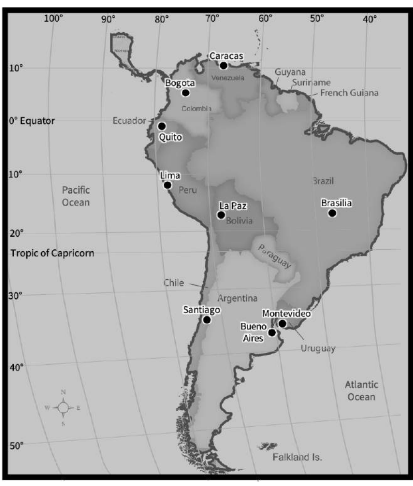
DOCUMENT #2
Use the map of South America to answer questions 4-6.
Question 4
4.


What is the latitude and longitude for the city of Caracas?

Question 5
5.


Which city shown on the map is closest to the equator?

Question 6
6.

In which country do lines of 10°S latitude and 50°W longitude cross?

DOCUMENT #3:
Answer questions 7-9 based on short story below.
One sunny afternoon, the 6th grade class of Harmony Middle School sat huddled around a large wooden table. Their history assignment involved a collection of primary and secondary sources about ancient Egypt. Primary sources, such as papyrus scrolls inscribed with hieroglyphs, offered them firsthand accounts of life and culture in the Nile Valley. Secondary sources included well-respected textbooks and scholarly articles, written by historians who had deeply studied ancient Egypt. Natalia squinted at the ancient map, tracing the network of the Nile with her finger, while Josh and Lila poured over a translated excerpt from the 'Book of the Dead'. Lily and Sam debated over different interpretations by historians. As they dug deeper into their intrigue-filled assignment, they felt like detectives unveiling mysteries of an ancient world. Together, they were piecing together an image of an advanced civilization thousands of years in their past.
Question 7
7.

What can be considered a primary source of historical information?

Question 8
8.

What is the role of secondary sources in their study?

Question 9
9.

Which one of the following is an artifact?

DOCUMENT #4
Use the document below to answer questions 11-14.
Question 10
10.

Based on this document, what was one of the effects of the Neolithic Revolution?

Question 11
11.

Neolithic societies could be considered more complex because:

Question 12
12.

How does the text suggest that animals can be controlled for domestication?

Question 13
13.

One change that is not a result of the Neolithic Revolution?

Question 14
14.

Which of the following is an aspect of a civilization:

DOCUMENT #5

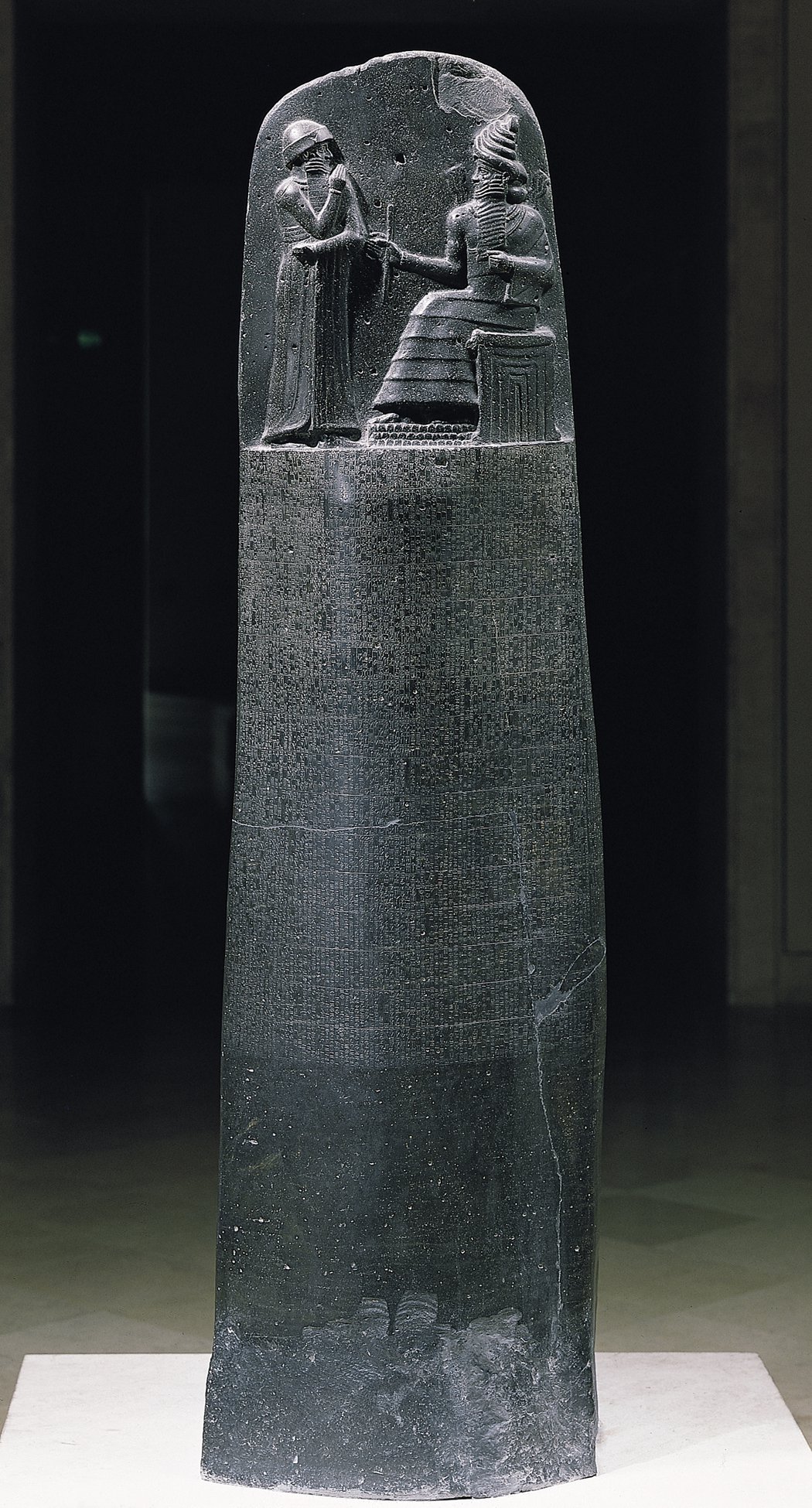
In 1754 B.C., Hammurabi conquered and united all the cities of Mesopotamia under his rule. Although he was a brutal warrior, his greatest achievement was his code of laws, which he had engraved on a towering stone monument. Hammurabi’s Code was not the first, but it was the most complete set of laws that has survived. It is important because it created a set of rules that helped to govern a civilization while trying to protect people even if they had little political power. It called for different punishments based on the class of the lawbreaker and the victim of the crime. In the Code, punishments often fit the crime by demanding and “eye for an eye” or a “tooth for a tooth”.

The following are three of the 282 laws in the Code of Hammurabi:
  • Law # 229. If a builder builds a house for some one, and does not construct it properly, and the house which he built fall in and kill its owner, then that builder shall be put to death.
  • Law # 230. If it kills the son of the owner, the son of that builder shall be put to death.
  • Law # 231. If it kills a slave of the owner, then he shall pay slave for slave to the owner of the house.
Question 15
15.

Although Hammurabi conquered all the city-states of Mesopotamia, he is most famous for:

Question 16
16.

Hammurabi's Code was significant to society because it established

Question 17
17.

What is meant by “eye for an eye” or “tooth for a tooth”?

Question 18
18.

Why were these laws so important?

DOCUMENT #6

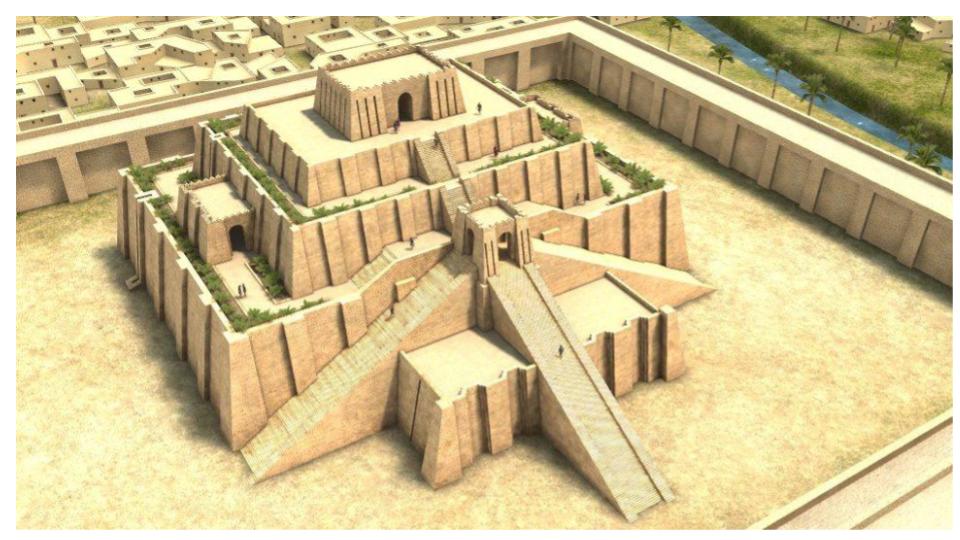
Sumerians and Akkadians practiced polytheism, the worship of many gods. They believed that keeping the gods happy was the key to their own happiness and prosperity(success). On the other hand, if the gods were angry, they might bring suffering and disaster. Sumerians built huge temples called ziggurats. They believed these temples linked Earth with the heavens and linked people with the gods.
Question 19
19.

Ziggurats were buildings used for

Question 20
20.

Based on the size of the ziggurat and the number of stairs, what can be inferred about the value the Sumerians placed on their gods?

Question 21
21.

Based on the text, the Sumerians and the Akkadians looked to their gods for:

Question 22
22.

Ziggurats were mainly found:

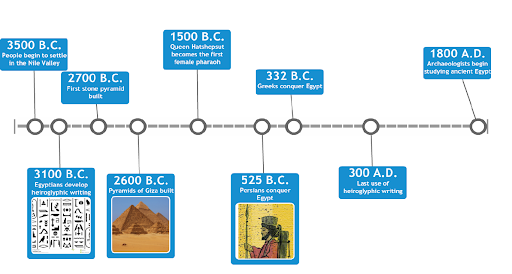
DOCUMENT #7: Timeline of Ancient Egypt
Use the timeline below to answer questions 23-26
Question 23
23.

What year were the first pyramids built?

Question 24
24.

How many years occurred between the Persians conquering Egypt and the Greeks conquering Egypt?

Question 25
25.

What is the time span of this timeline?

Question 26
26.

This is 2025. How many years ago were the Pyramids of Giza built?

DOCUMENT #8

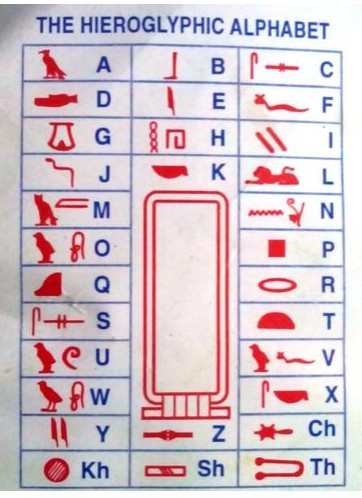
We know about the pharaohs of ancient Egypt because of the written records that were left. These records were kept in hieroglyphics, a system of writing that was based on pictures. Unlike Sumerian cuneiform writing, hieroglyphics represented ideas or objects, but could also stand for sounds. They could be carved into clay or stone, but could also be written on to papyrus, the first paper, which was developed by the Egyptians and made it easier to keep records.
Question 27
27.

What was hieroglyphics?

Question 28
28.

What invention did the Egyptians develop that made keeping records in hieroglyphics easier?

Question 29
29.

How did hieroglyphics differ from cuneiform?

Question 30
30.

Hieroglyphics was a complicated writing system. What was used to decipher this ancient form of writing?

DOCUMENT #9

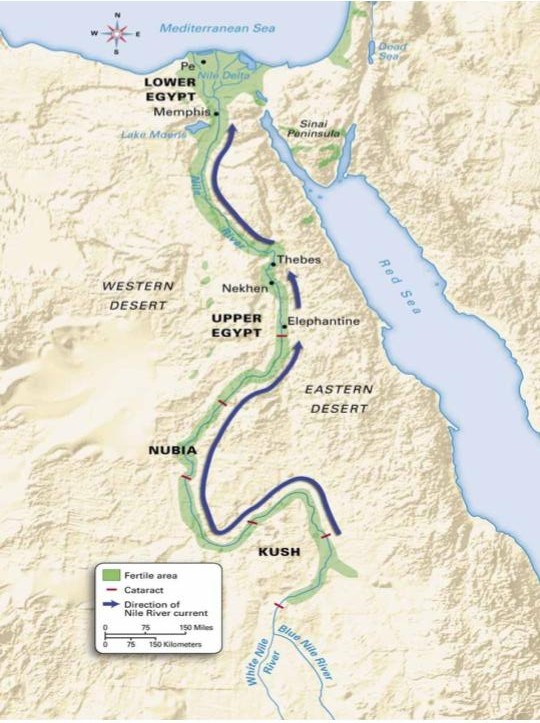
Ancient Egypt


Using the map of Ancient Egypt, answer questions 31-35 below.
Question 31
31.

In which direction does the Nile River flow?

Question 32
32.

Where in Egypt is the land most fertile?

Question 33
33.

Into which sea does the Nile River flow?

Question 34
34.

On which continent is most of Ancient Egypt located?

Question 35
35.

What natural barrier surrounds all of Egypt?

Question 36
36.

SECTION 2 - SHORT RESPONSE QUESTION (10 points)

Technology is a driving force throughout the course of human development.
Choose a group of early humans (Paleolithic OR Neolithic) OR a river valley civilization (Mesopotamia OR Egypt). Then describe one technological development and explain how this development impacted their lives in two different ways.

(Please answer this with a well-constructed response.)