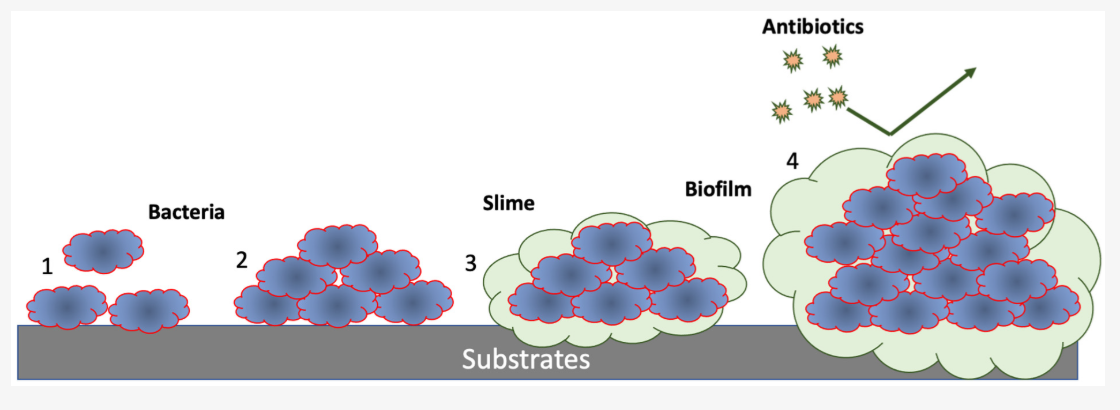
What are the parts of a biofilm?
What are the parts of a biofilm?
What is a biofilm primarily composed of?
What are the parts of a biofilm?
Where are biofilms commonly found?
What purpose do biofilms serve for bacteria?
How do biofilms contribute to antibiotic resistance?
Which environment promotes biofilm formation?
Biofilms are typically easy to remove permamently from surfaces
Does penicillin kills bacteria by poking holes in their cell walls? Watch the video ...
Look at the timeline of antibiotic research. Humans just recently invented antibiotics in the last few years.... true or false?
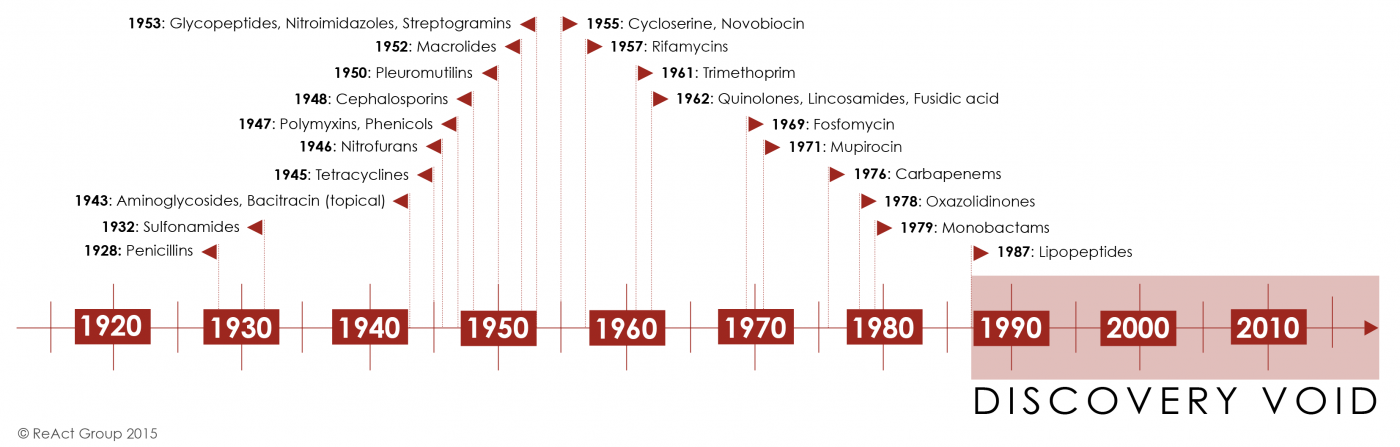
New antibiotics are still be researched and developed .... true or false?
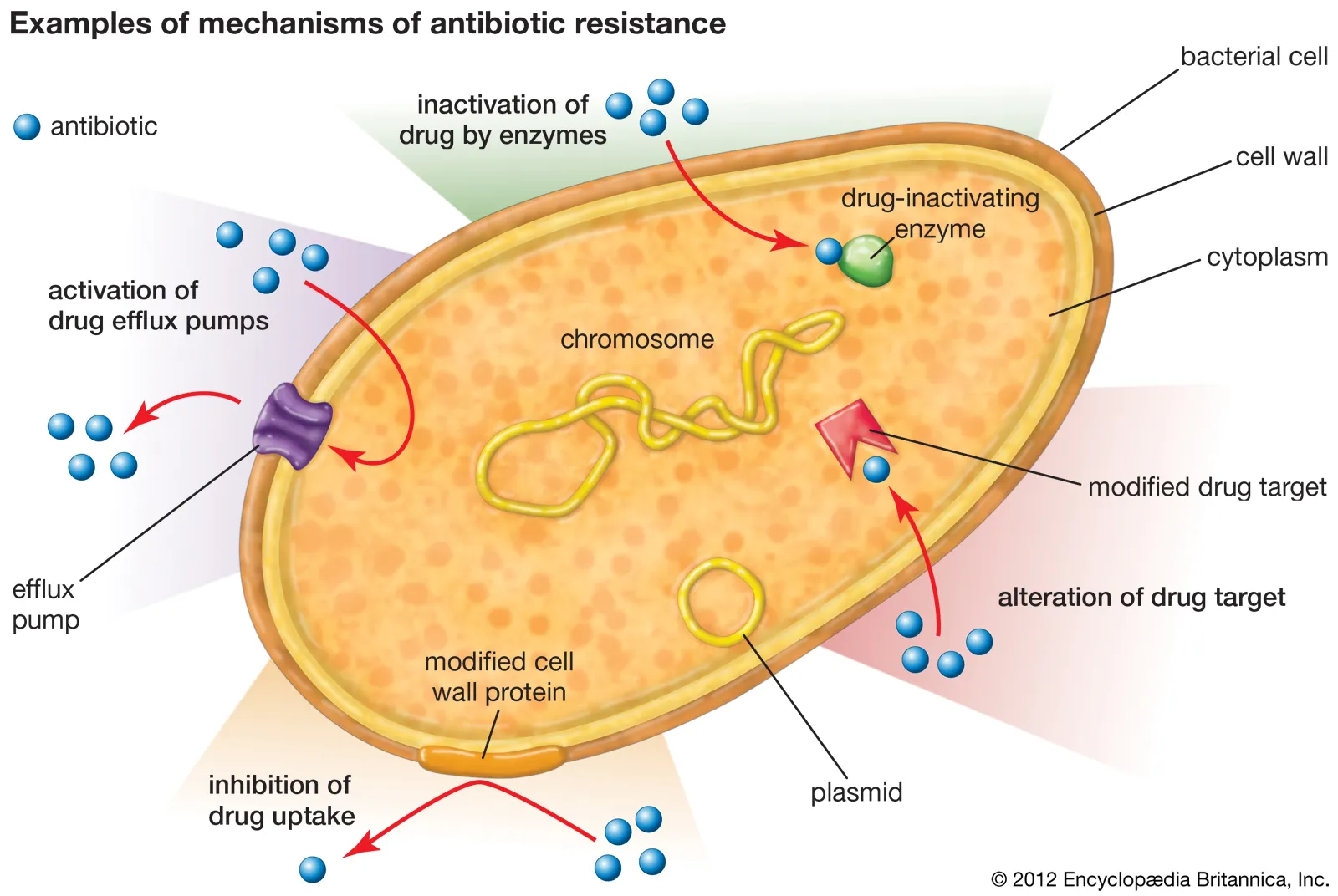
According to the diagram, what the mechanisms that do bacteria use to resist (fight off) antibiotics?
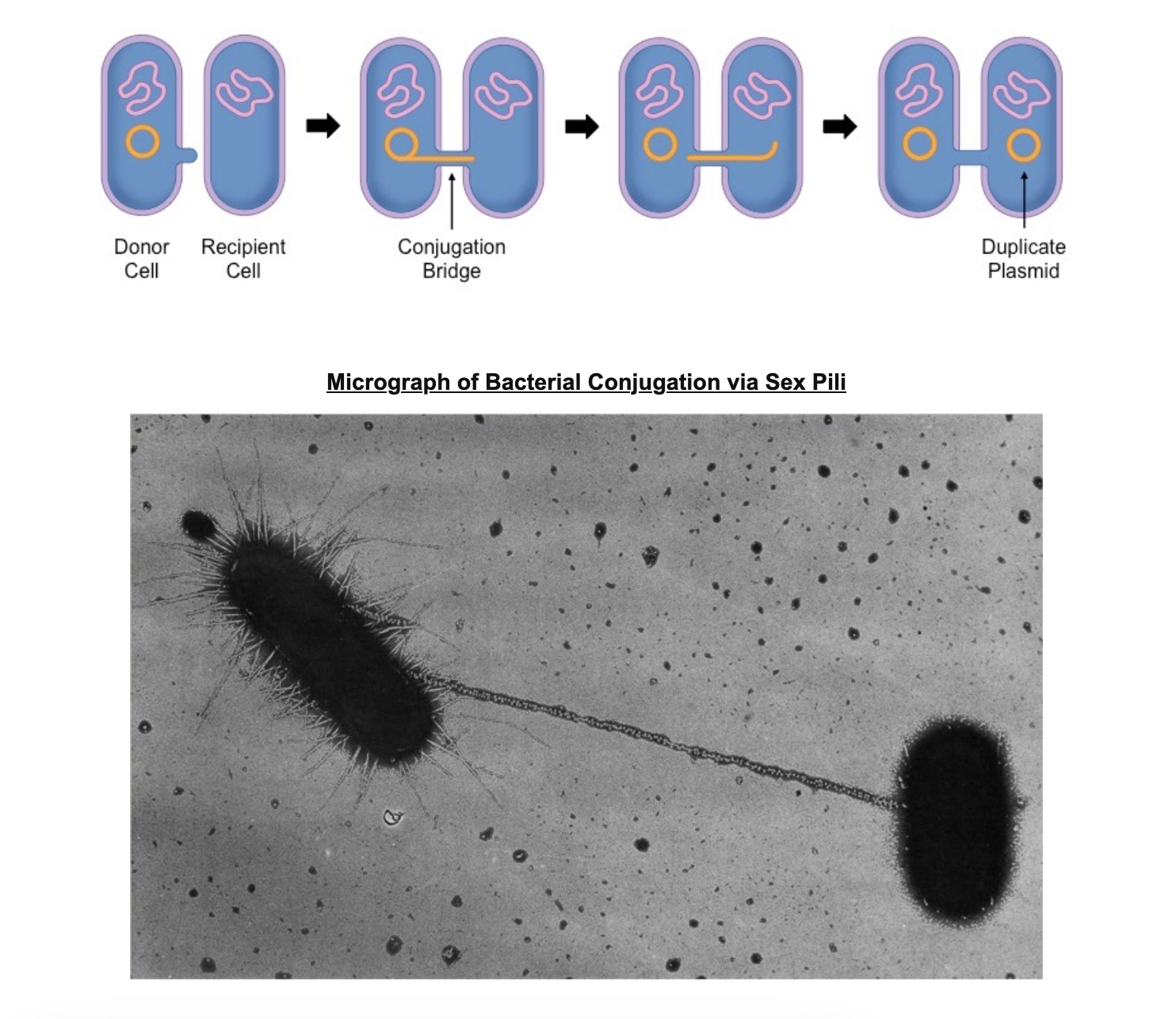
How could an antibacterial resistance trait spread through a bacteria population WITHOUT the bacteria needing to reproduce?
Antibiotic Resistance - Put the following steps in order from first event to last event
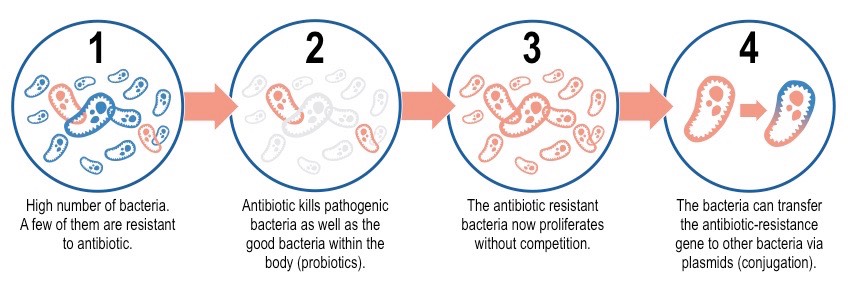
Some mutations (rarely) may allow a bacterium to RESIST (fight off) an antibiotic.
The resistant bacteria reproduce successfully and the amount of resistant bacteria increases in the population
The resistance bacteria are “selected for”. They survive to reproduce...
A population of resistant (or mostly) resistant bacteria has been created.
Mutations - random mistakes in copying bacterial DNA as bacterium gets ready for binary fission (to divide)
Resistant bacteria frequently share antibiotic resistance genes by conjugation - this makes antibiotic resistance spread even faster!
An antibiotic enters the environment of a population of bacteria.
Most of the bacteria are killed - the resistant bacteria are not!
What is multi-drug resistant bacteria ("superbug")?
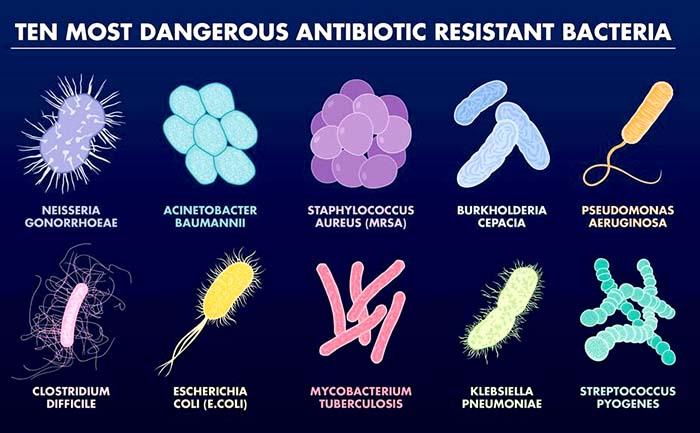
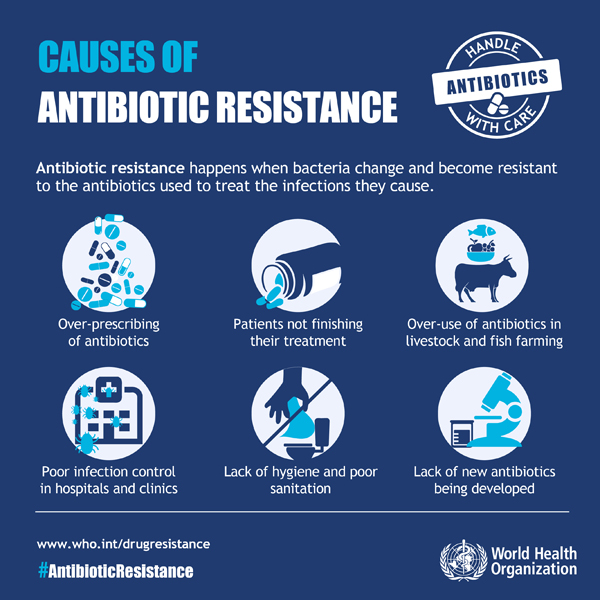
Antibiotics are not only given to people, but to farm animals as well. Antibiotics are also put into many cleaners and detergents. Our environment is full of antibiotics!
Watch this video from the beginning to 5:40 in. You do not have to watch after 5:40.
Why are farm animals fed antibiotics?
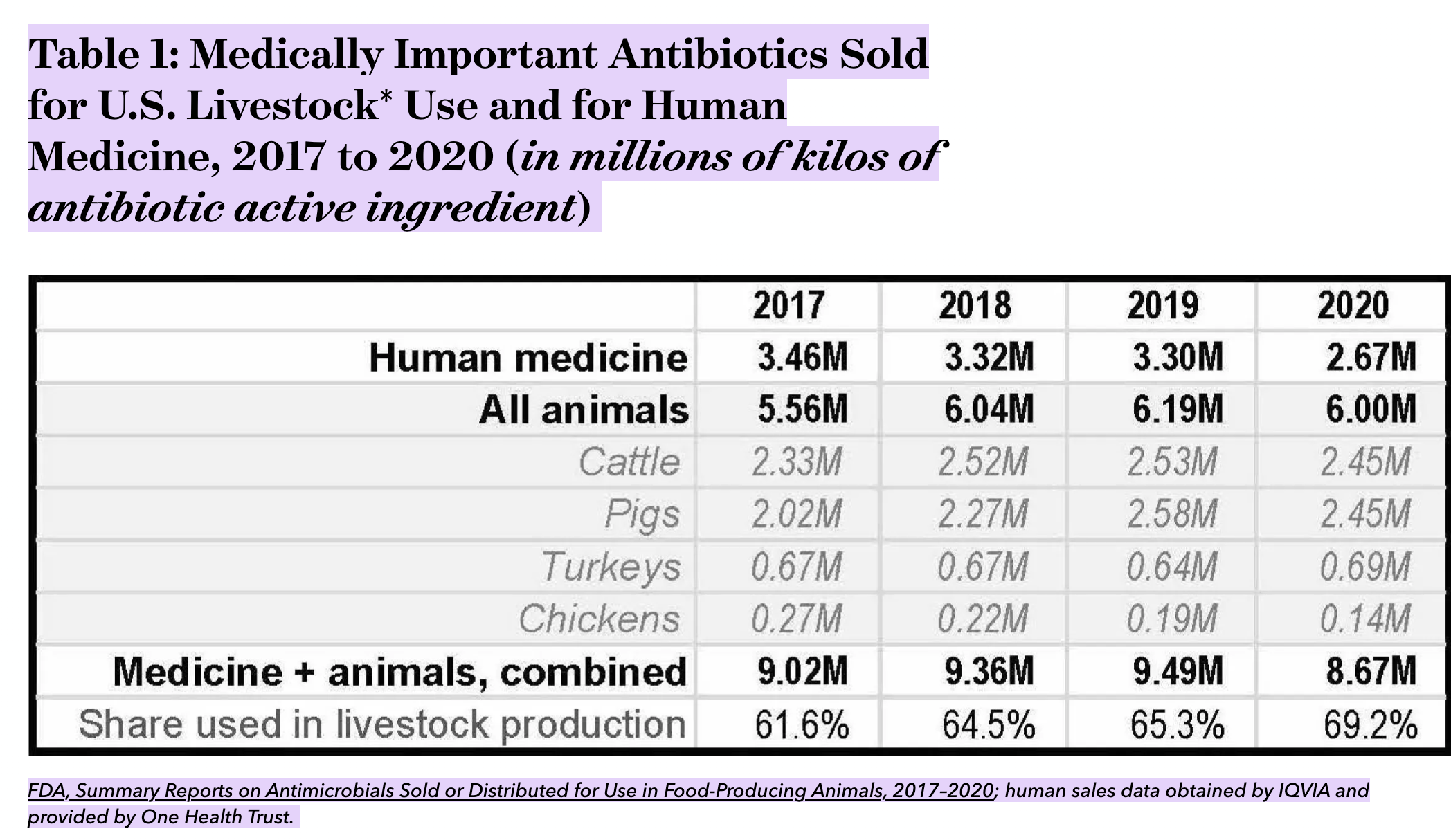
According to the chart, what is the largest percent usage of antibiotics in the US?
Watch this video called "Microbiology resources - How to Measure Zones of Inhibition (ZOI)"
Then watch this short video ....
Describe & explain what is different between the bacterial growth on the 2 petri dishes below

Which antibiotic is most effective at killing this type of bacterium?

Which antibiotic (A, B, or C) is this bacterium resistant to and explain how the image allows you to figure this out?