Log in
Sign up for FREE
arrow_back
Library
Water Cycle - Task Cards 1
By NICHOLAS GLAESER
star
star
star
star
star
Share
share
Last updated almost 2 years ago
20 questions
Add this activity
1
5.8.B
1
5.8.B
1
5.8.B
1
5.8.B
1
5.8.B
1
5.8.B
1
5.8.B
1
5.8.B
1
5.8.B
1
5.8.B
1
5.8.B
1
5.8.B
1
5.8.B
1
5.8.B
1
5.8.B
1
5.8.B
1
5.8.B
1
5.8.B
1
5.8.B
1
5.8.B
Question 1
1.
What change occurs during evaporation?
Water vapor changes to solid water.
Liquid water changes to water vapor.
Water vapor becomes liquid water.
Water vapor is absorbed into the soil on Earth’s surface.
Question 2
2.
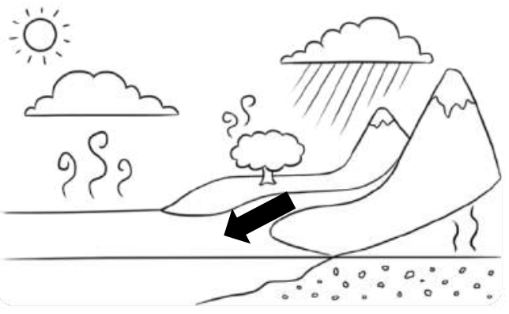
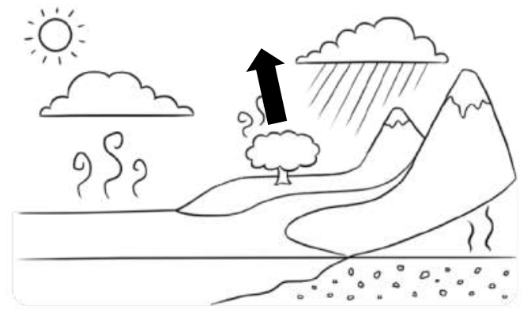
What process in the water cycle is represented by an arrow in the diagram below?
Transpiration
Evaporation
Percolation
Condensation
Question 3
3.
Which of the following is NOT a form which water can take?
Frozen water in a glacier
Liquid water beneath Earth’s surface
None of the above
Water vapor in the atmosphere
Question 4
4.
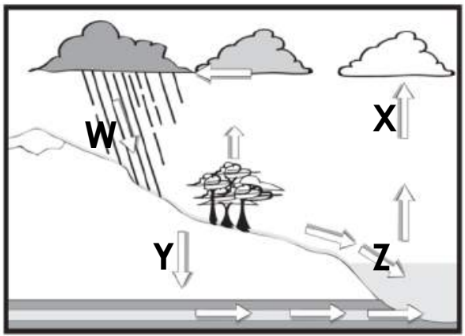
A diagram of the processes involved in the water cycle is shown below. Which arrow best represents percolation?
Arrow Y
Arrow W
Arrow X
Arrow Z
Question 5
5.
What process in the water cycle is represented by an arrow in the diagram below?
Evaporation
Condensation
Runoff
Transpiration
Question 6
6.
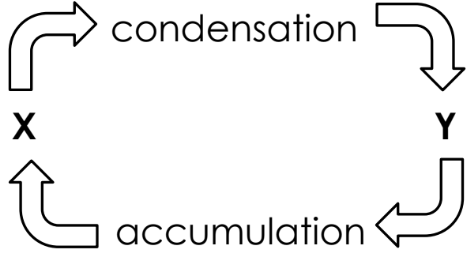
A diagram of stages in the water cycle is shown below.
What process is most likely represented by Stage Y?
Precipitation
Evaporation
Formation of fog
Percolation
Question 7
7.
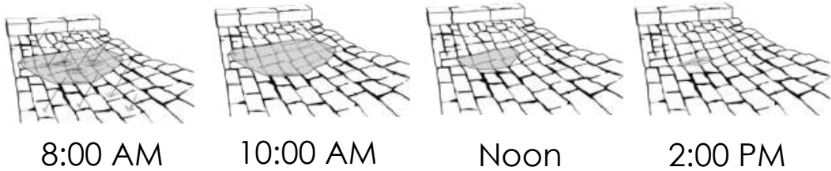
The pictures show the sidewalk at four different times on the same day.
Which process most likely occurred between 10:00 AM and 2:00 PM?
Evaporation
Transpiration
Precipitation
Condensation
Question 8
8.
Which of the following is the least likely to directly follow precipitation?
The decrease of water in a lake
The percolation of water into an aquifer
The runoff of water to a nearby stream
The accumulation of water in a pond
Question 9
9.
Forms of precipitation include—
hail and rain only.
sleet, snow, rain, and hail.
snow, sleet, and hail only.
rain and snow only.
Question 10
10.
A potential sequence of three stages in the water cycle is shown below.
runoff →
Z
→ evaporation
Which process is best represented by Stage
Z
?
The release of water vapor from a tree
The accumulation of water in the ocean
The formation of a cloud
A decrease of water vapor
Question 11
11.
Which of the following statements about groundwater is
NOT
true?
Aquifers store groundwater beneath Earth’s surface.
Water in an aquifer can be polluted.
Groundwater can slowly move to an ocean, lake, or river.
Once water enters an aquifer, it can never escape.
Question 12
12.
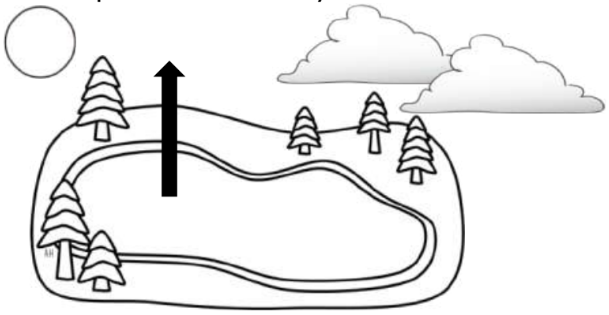
The diagram below shows the Sun, two clouds, and a lake surrounded by land and trees. What process in the water cycle is represented by the arrow?
Transpiration
Percolation
Condensation
Evaporation
Question 13
13.
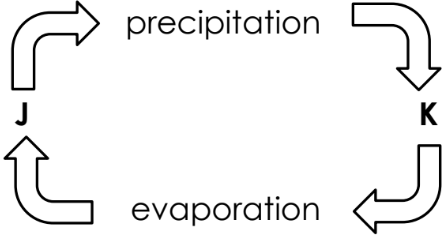
A diagram of stages in the water cycle is shown below.
Which of the following best describes the process represented by Letter J?
Liquid water becomes water vapor
Liquid water falls from clouds
Water vapor changes into liquid water
Frozen water melts into liquid water
Question 14
14.
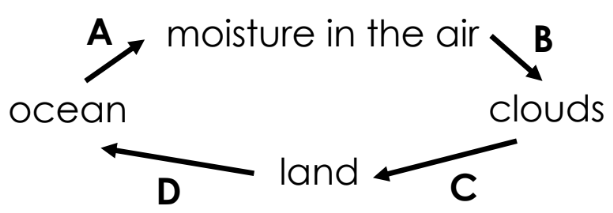
A diagram of the location of water during the water cycle is shown below.
Which arrow best represents the process of condensation?
Arrow A
Arrow B
Arrow C
Arrow D
Question 15
15.
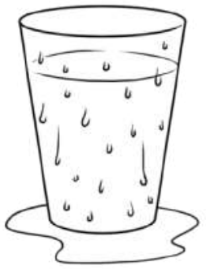
Which process in the water cycle is most similar to the process by which water droplets form on the side of a cold glass of water?
The formation of a cloud
The falling of snow
The evaporation of ocean water
The percolation of water into the soil
Question 16
16.
A potential sequence of three stages in the water cycle is shown below.
Which process is best represented by Stage M?
Transpiration
Condensation
Percolation
Evaporation
Question 17
17.
A Cause and Effect diagram is shown below.
Which statement best completes the diagram?
Cooler temperatures change water vapor into liquid water.
Solar energy decreases the temperature of water in the ocean.
The Sun decreases the amount of water vapor in the atmosphere.
The temperature of the water near the ocean’s surface increases.
Question 18
18.
What causes water in the ocean to evaporate?
Decreased condensation
The melting of ice
The water’s absorption of solar energy
The release of precipitation from the clouds
Question 19
19.
How do the Sun and ocean interact to form clouds?
Energy from the Sun causes water to become water vapor. The water vapor becomes a cloud during precipitation.
The absorption of sunlight by ocean water near the surface forms a cloud.
Heat from the Sun attracts clouds that move toward the ocean.
Energy from the Sun causes water in the ocean to evaporate. Cooler air causes the water vapor to condense to form a cloud.
Question 20
20.
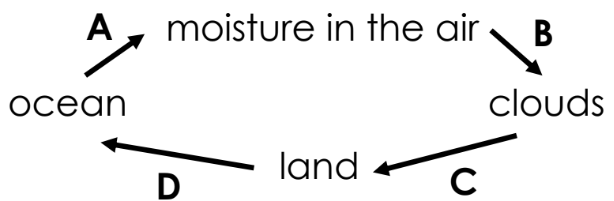
A diagram of the location of water during the water cycle is shown below.
Which arrow best represents the process for which the Sun is the major source of energy?
Arrow C
Arrow B
Arrow A
Arrow D