Log in
Sign up for FREE
arrow_back
Library

Bacteria Test '24

star
star
star
star
star
Last updated 2 days ago
13 questions
Required
1
Required
1
Required
1
Required
7
1
Required
1
Required
2
Required
1
Required
1
Required
1
Required
1
Required
5
Required
1
Question 1
1.

Which of the following is NOT a characteristic of bacterial cells?

Question 2
2.

Which organelle is responsible for protein synthesis in bacteria cells?

Question 3
3.

What is the function of pili in bacteria cells?

Question 4
4.

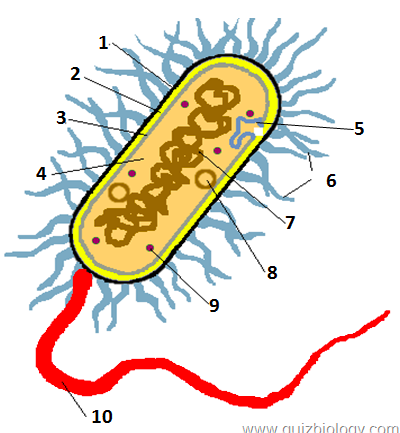
Draggable itemarrow_right_altCorresponding Item
arrow_right_alt
arrow_right_alt
arrow_right_alt
arrow_right_alt
arrow_right_alt
arrow_right_alt
arrow_right_alt
Question 5
5.

What is the primary method of reproduction in bacteria?

Question 6
6.

What is the process of bacterial conjugation used for?

Question 7
7.

Match the definitions to the corresponding bacterial processes.

Draggable itemarrow_right_altCorresponding Item
Cell division producing two identical daughter cells
arrow_right_alt
Binary Fission
Transfer of genetic material through a pili
arrow_right_alt
Conjugation
Question 8
8.

Where does the initial "seeding" (beginning) of your microbiome come from?

Question 9
9.

How does your microbiome help "educate" your immune system?

Question 10
10.

What would be the easiest way to make your gut microbiome function better in making you healthy?

Question 11
11.

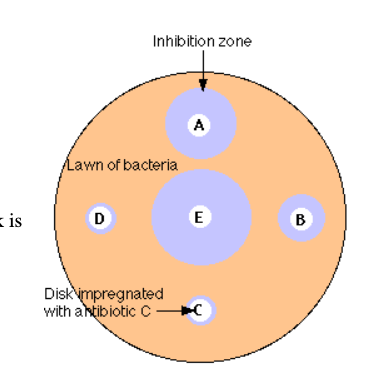
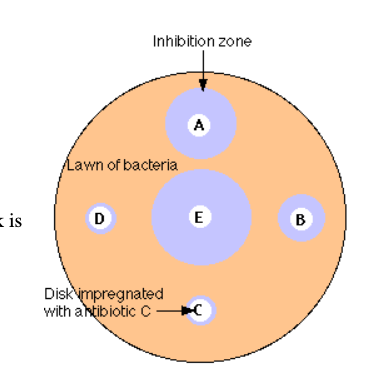
Which antibiotic is most effective at killing this type of bacterium?


Question 12
12.

Imagine as a doctor you have sampled the bacterium making your patient sick and grew the bacterium (the orange color lawn) on a petri dish. You then test 5 antibiotics to see which to prescribe to your patient. From the image that shows the results of your testing below, which antibiotic will you choose to give to your patient? Explain how you made your choice.

Question 13
13.

What is a multi-drug resistant bacteria ("superbug")?

6 (helps bacteria stick to surfaces and do conjugation)
cell wall
7 (majority of bacteria genome)
cell membrane
10
ribosome
2
nucleoid/bacterial chromosome
8 (extra small loop of DNA)
flagellum
1
pilus
9 (makes proteins)
plasmid
by drinking lots of sugary drinks
by eating/drinking more pre-biotics like fruits and vegetables and more pro-biotics like fermented foods
B
C
D
E