Unit 4 Cell Growth & Division Test

Last updated over 1 year ago
20 questions
1

A cell that has 20 chromosomes undergoes mitosis. Which of the following is true?

1

Which statement best describes the events taking place during G2 of interphase?

1

Free Response: A student is observing a cell under a microscope . The cell is growing, but its genetic material has not begun to replicate nor is the cell preparing for division . The student is referencing a model of the cell cycle while observing the cell.
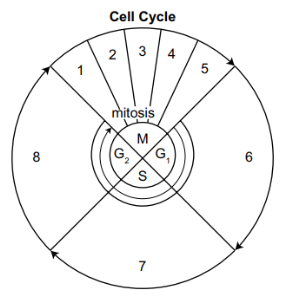

Identify and explain the numbered area of the model that represents the student’s observations.
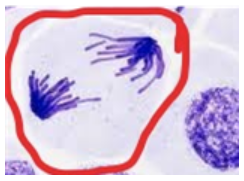
1

What phase is the cell, circled in red, currently in?

1

The nuclear membrane and nucleolus disappear at what stage?

1

A cell containing only one set of chromosomes (half the DNA).

1

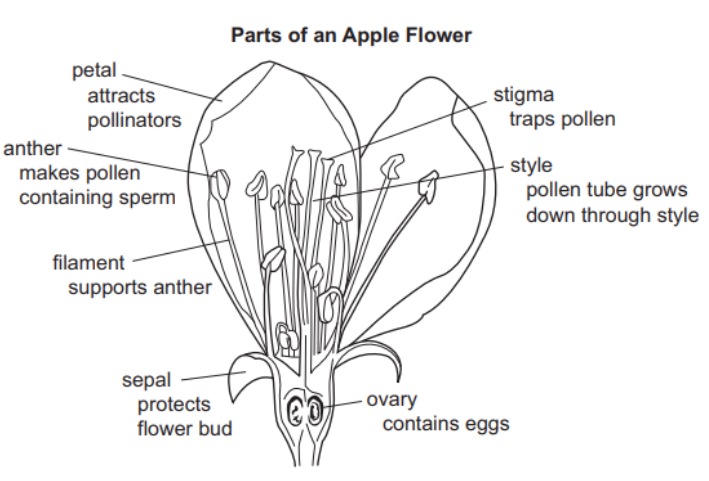
Which part of the apple flower produces cells by meiosis?

1

Meiosis is an essential cell cycle process for

1

An organism's diploid cells contain 62 chromosomes. How many chromosomes would their haploid sex cells have?

1

During meiosis, chromosome numbers ...

1

In sexually reproducing organisms, each parent contributes ___________ of the genes acquired by the offspring.

1

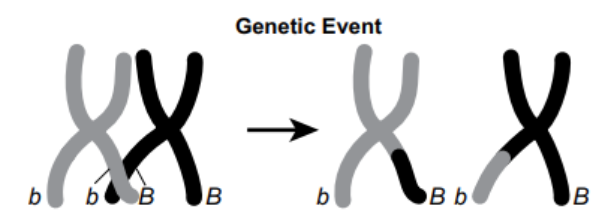
Use the diagram below to answer the question.
The genetic event shown in the diagram can occur during meiosis. Which statement best describes this type of event?

1

Which of the following statements is true about meiosis in humans?

1

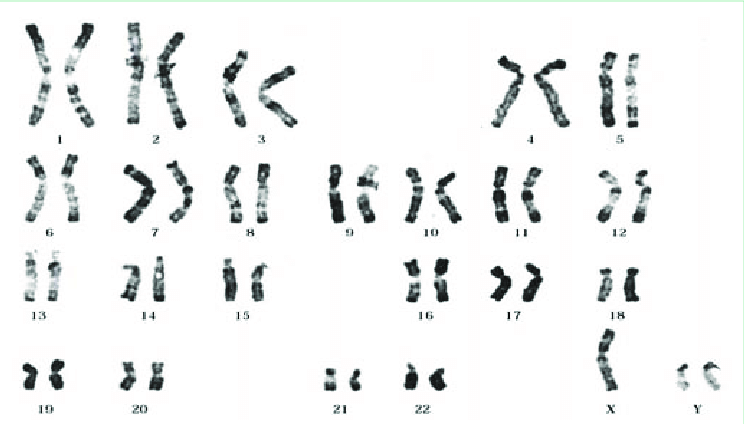
The karyotype below is an example of a

1

What is a likely evolutionary advantage of sexual reproduction over asexual reproduction?

1

Match the following with the correct type of cell division

  • Results in the production of haploid cells
  • Final cell is identical to parent cell
  • Repairs skin following sunburn
  • More complex and contains two divisions
  • Occurs in somatic cells
  • Final cell has only half of the parent's DNA
  • Muscle cells reproduce this way
  • Results in the production of gametes
  • Mitosis
  • Meiosis
1

The main difference between meiosis and mitosis is that ...

1

Select all of the following that are true of meiosis but not true of mitosis in eukaryotic cells?

1

Which statement best describes the outcomes of both meiosis and mitosis?

1

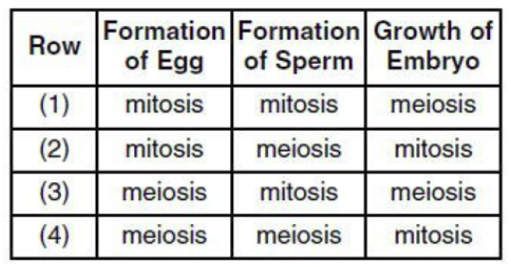
Which row in the chart below indicates the correct process for each event indicated?