U2D6 Solving Log Equations Jan30
star
star
star
star
star
Last updated about 1 year ago
26 Nsɛmmisa
1
1
1
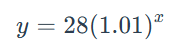
Given the following exponential function, identify whether the change represents growth or decay, and determine the percentage rate of increase or decrease.
Does the change represent growth or decay?
What is the percentage rate?
The change represents a
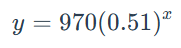
Given the following exponential function, identify whether the change represents growth or decay, and determine the percentage rate of increase or decrease.
Does the change represent growth or decay?
What is the percentage rate?
The change represents a
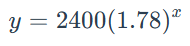
Given the following exponential function, identify whether the change represents growth or decay, and determine the percentage rate of increase or decrease.
Does the change represent growth or decay?
What is the percentage rate?
The change represents a
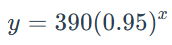
Given the following exponential function, identify whether the change represents growth or decay, and determine the percentage rate of increase or decrease.
Does the change represent growth or decay?
What is the percentage rate?
The change represents a
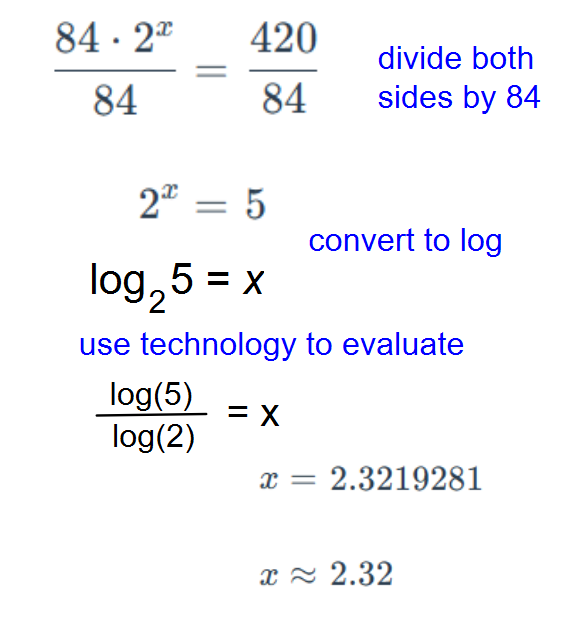
Solving Exponential Functions
Example:
Solve for x, rounding to the nearest hundredth.
Solution:
Solve for x, rounding to the nearest hundredth.
x =
Evaluate each logarithmic expression. (Round your answer to the nearest hundredths.)
Evaluate each logarithmic expression. (Round your answer to the nearest hundredths.)
Evaluate each logarithmic expression. (Round your answer to the nearest hundredths.)
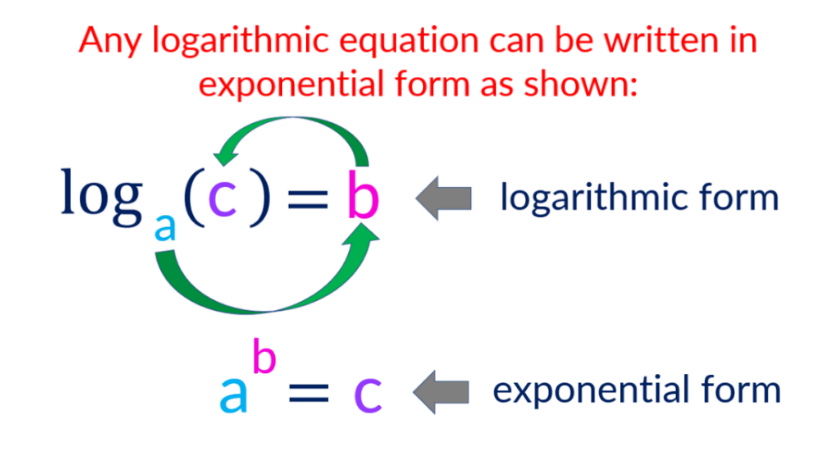
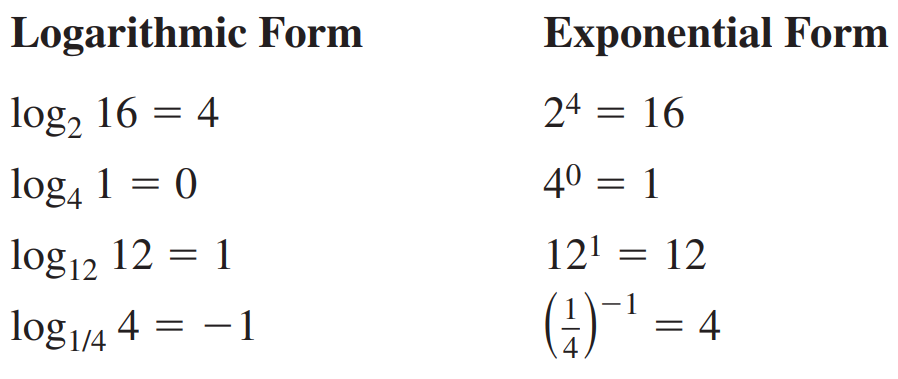
How to we convert from exponent form to logarithm form and back?
Examples:
Write the exponential equation in logarithmic form.
Write the logarithmic equation in exponential form.
Write the logarithmic equation in exponential form.
Write the exponential equation in logarithmic form.
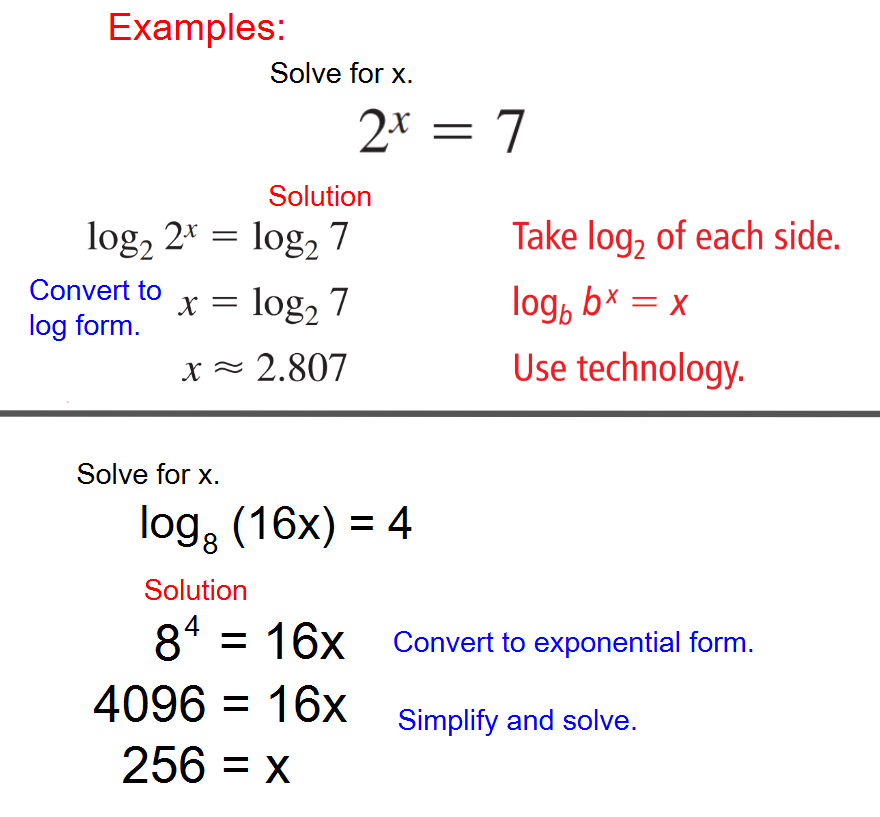
You can use a conversion to help you solve a logarithmic or exponential equation.
Solve each equation by converting.
x =
Solve each equation by converting.
x =
Solve each equation by converting.
x =
Solve each equation by converting.
x =
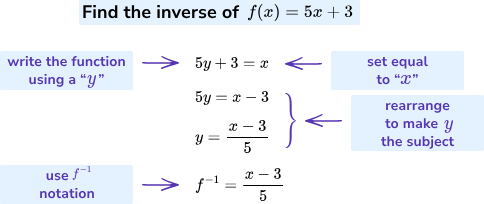
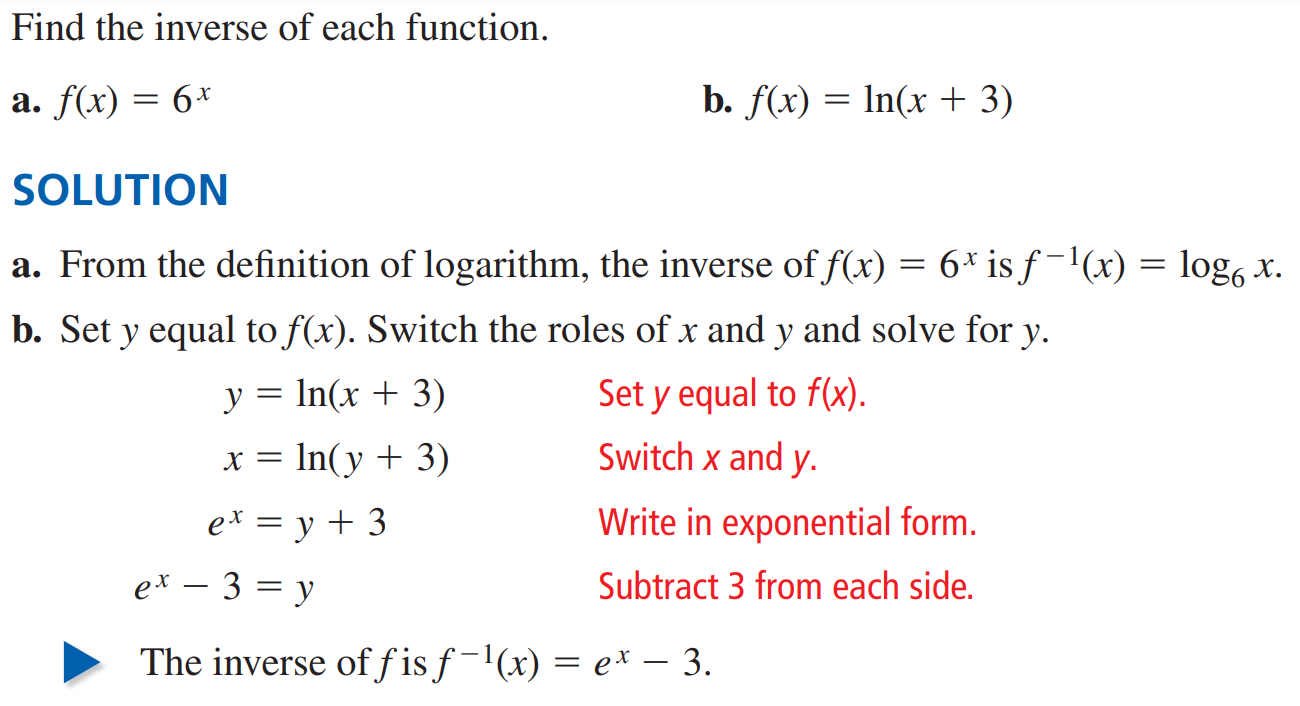
How to find the inverse of function.
We can also use converting to find inverses.
Find the inverse of the function.
f -1(x) =
Find the inverse of the function.
f -1(x) =
Find the inverse of the function.
f -1(x) =
Solve each equation by converting.
x =
Solve each equation by converting.
x =
Solve each equation by converting.
x =