What source of energy keeps water moving between the ocean and the sky?
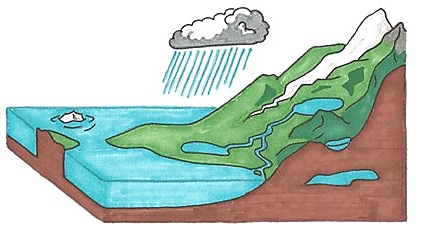
What source of energy keeps water moving between the ocean and the sky?
What source of energy keeps water moving between the ocean and the sky?
The diagram below shows a sequence of events that can occur in the water cycle.
rain falls → water flows to the ocean → water evaporates → clouds form
Which of these events is most likely caused by the Sun?
If a person is describing the daily changes in temperature and precipitation, they are referring to an area's —
Students at an elementary school set up a weather station in 1985. The fifth grade classes have been responsible for measuring and recording the daily temperature, wind speed, wind direction, precipitation, and cloud cover every year. Which characteristic of the area would students be able to describe only after 30 or more years?
This question has two parts. First, answer Part A. Then answer Part B.
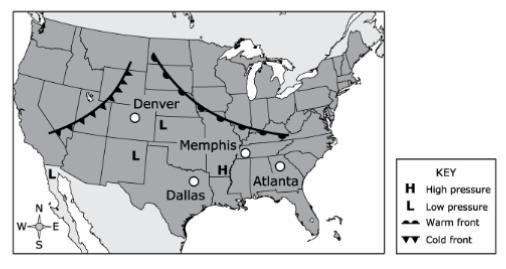
The weather map shown can be used to predict the weather.
Part A
Which city is MOST LIKELY to experience clouds and storms in the next few days?
Part B
Which evidence from the weather map supports the answer to Part A?
A student plans to make a chart that describes each process in the water cycle. Which sentence should the student use to describe the process of condensation?
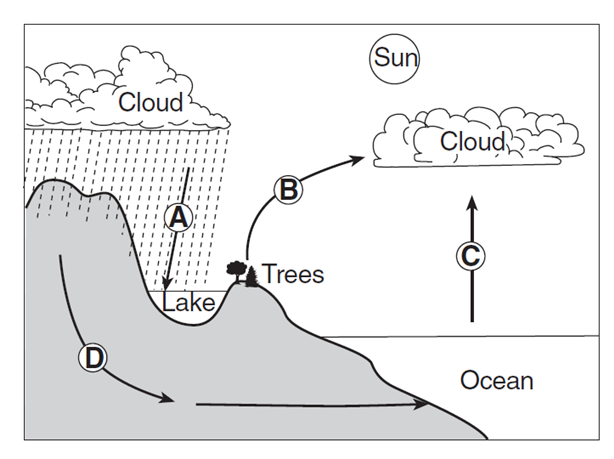
The diagram below shows different processes and objects involved in the water cycle.
In the table, match the correct object or process to its function in the water cycle.
Water Cycle Processes and Functions
| Draggable item | arrow_right_alt | Corresponding Item |
|---|---|---|
The water vapor rises into the atmosphere, cools, and condenses together. | arrow_right_alt | The Sun |
The main source of the water cycle. | arrow_right_alt | C |
The water is heated, becomes a gas, and rises into the air. | arrow_right_alt | A |
Clouds releasing rain over the mountains. | arrow_right_alt | Cloud |
Each winter since 1980, a family measures the snowfall in their yard and records the yearly average. This average is most common when describing what feature of the area?
Which of the following images represents heat energy from the sun being absorbed into the atmosphere?
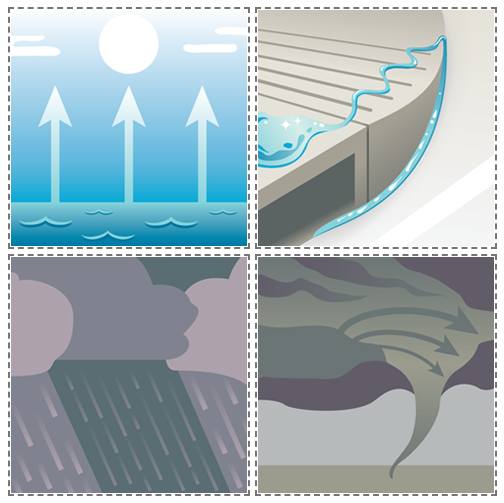
Which table correctly classifies statements about weather and climate?
One stage of the water cycle that is easy to observe is the precipitation of rain, snow, or hail. Another stage that is easy to see is the runoff of water through streams and rivers as it returns to the ocean. Both affect the amount of water an environment receives. – Select three ways an environment is affected by the amount of water it receives through the water cycle.