1
Igneous rock is surrounded by?
Igneous rock is surrounded by?
1
Two hundred million years ago, the Devil's Tower area was covered by a shallow see.
Two hundred million years ago, the Devil's Tower area was covered by a shallow see.
2
1
1
2
Today you will read the Devils Tower. Please complete the following questions in order.
Igneous rock can form inside of a sedimentary rock.
Wind and moving water can break rock into small pieces called sediments.
Sedimentary rock breaks down faster than igneous rock.
Igneous rock cannot break down and weather into sediments
The Devil’s Tower rock formation used to be underwater millions of years ago.
Igneous rock is surrounded by?
Two hundred million years ago, the Devil's Tower area was covered by a shallow see.
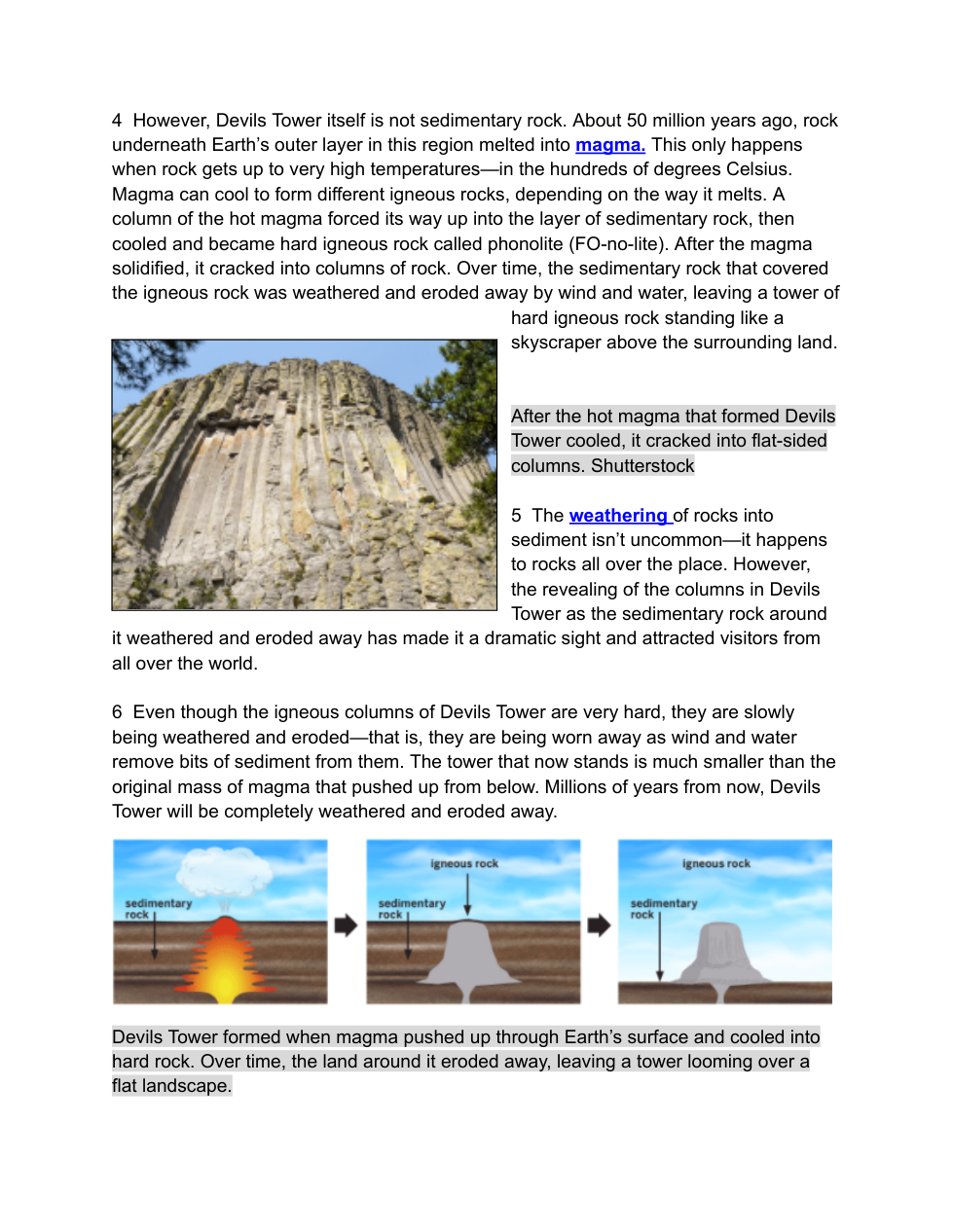
Devils Tower itself is not sedimentary rock.
Magma can cool and form different types of igneous and sedimentary rock.
Blowing ________ and falling ________ weathered nearby rock formations over and over. (Choose two)
weathering caused small pieces of rock to break off and become?
What carries the sediment to the bottom of the sea?
What turns sediment into solid sedimentary rock over millions of years? (Choose all that apply)
A column of the hot magma forces its way up into the layer of what type of rock?
What happened to the sedimentary rock that covered the igneous rock?