Log in
Sign up for FREE
arrow_back
Library

Antibiotic Resistance (Lesson 6 Transfer Task)

star
star
star
star
star
Last updated almost 2 years ago
15 questions
2
1
1
2
2
2
2
Question 5
5.
Predict what will happen over time if the bacterial cells that grew with the antibiotic were given unlimited nutrients by completing the sentence.

If bacteria cells had unlimited nutrients they would__________. The new bacteria would __________
2
1
1
1
1
1
1
4
Question 14
14.

Question 15
15.

Question 1
1.

Question 2
2.

Question 3
3.

Question 4
4.

Question 6
6.

Question 7
7.

Question 8
8.

Question 9
9.

Question 10
10.

Question 11
11.
When exposed to antibiotics the percent of resistance __________
Question 12
12.
When bacteria is NOT exposed to antibiotics the percent of resistance __________
Question 13
13.

Write an explanation using the data evidence to support the claim that antibiotic use causes antibiotic resistance.
You need 2 pieces of evidence from the chart

Scientists developed an antibiotic to fight harmful bacteria that cause infections. After several years of use, the antibiotic became less effective.
Which of the following caused the antibiotic to become less effective?
A. Bacteria that were resistant to the antibiotic survived to produce more resistant bacteria.
B. Bacteria that were not resistant to the antibiotic began to produce resistant bacteria through meiosis.
C. Bacteria that were not resistant to the antibiotic learned how to protect themselves from the antibiotic.
D. Bacteria that were resistant to the antibiotic lost their resistance with repeated exposure to the antibiotic.
Which of the following best explains why bacteria are able to adapt to changing environmental conditions?
A. Bacteria have DNA that rarely mutates in the population.
B. Bacteria reproduce rapidly, allowing mutations to increase in the population.
C. Bacteria reproduce asexually, causing little genetic variation in the population.
D. Bacteria exchange genetic material, which increases the number of chromosomes in the population.
The phenomenon, antibiotic resistance, is the idea that antibiotics that we have used for many years no longer kill the bacteria
A. True
B. False
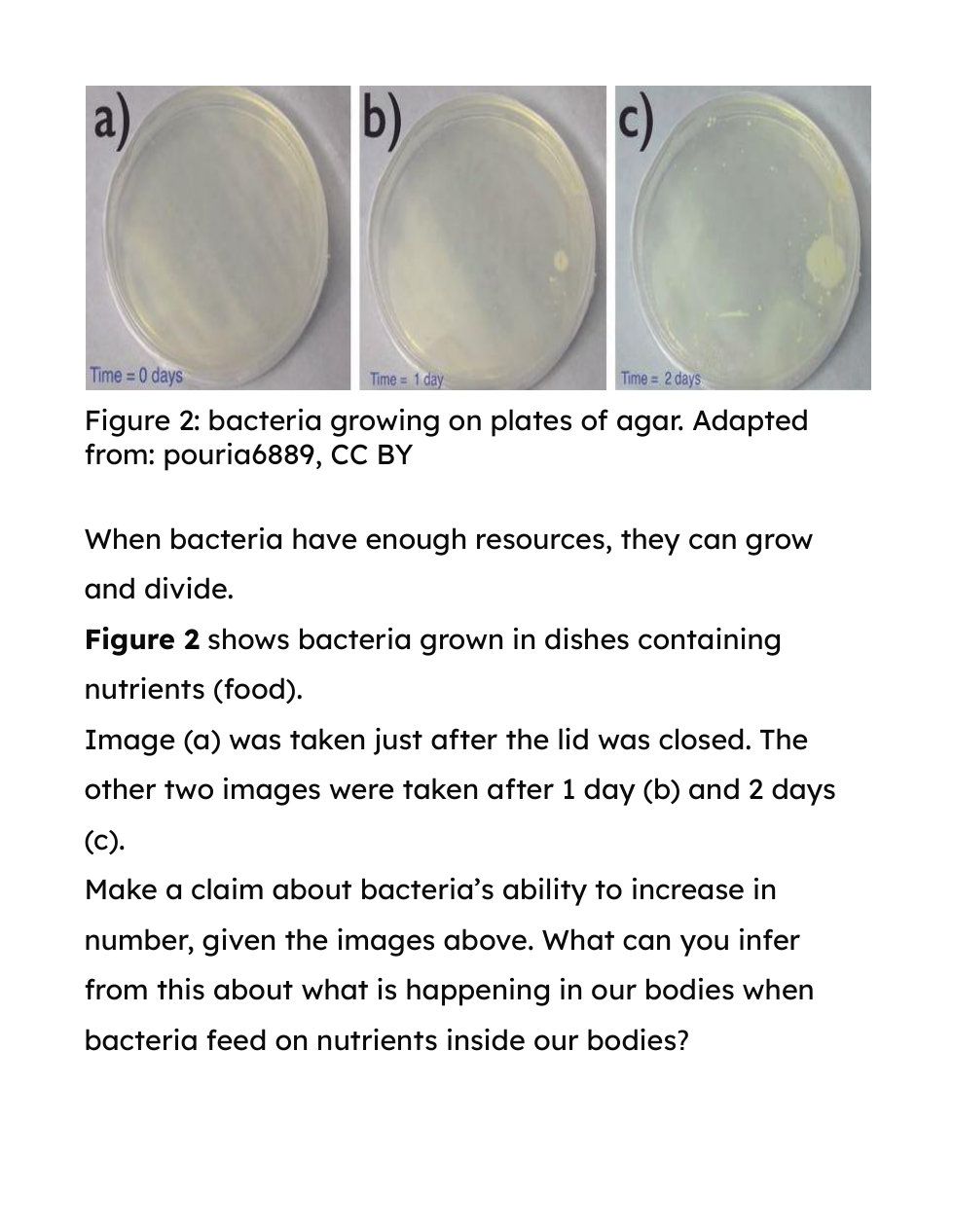
Select a claim about bacteria's ability to increase in number, given the images.
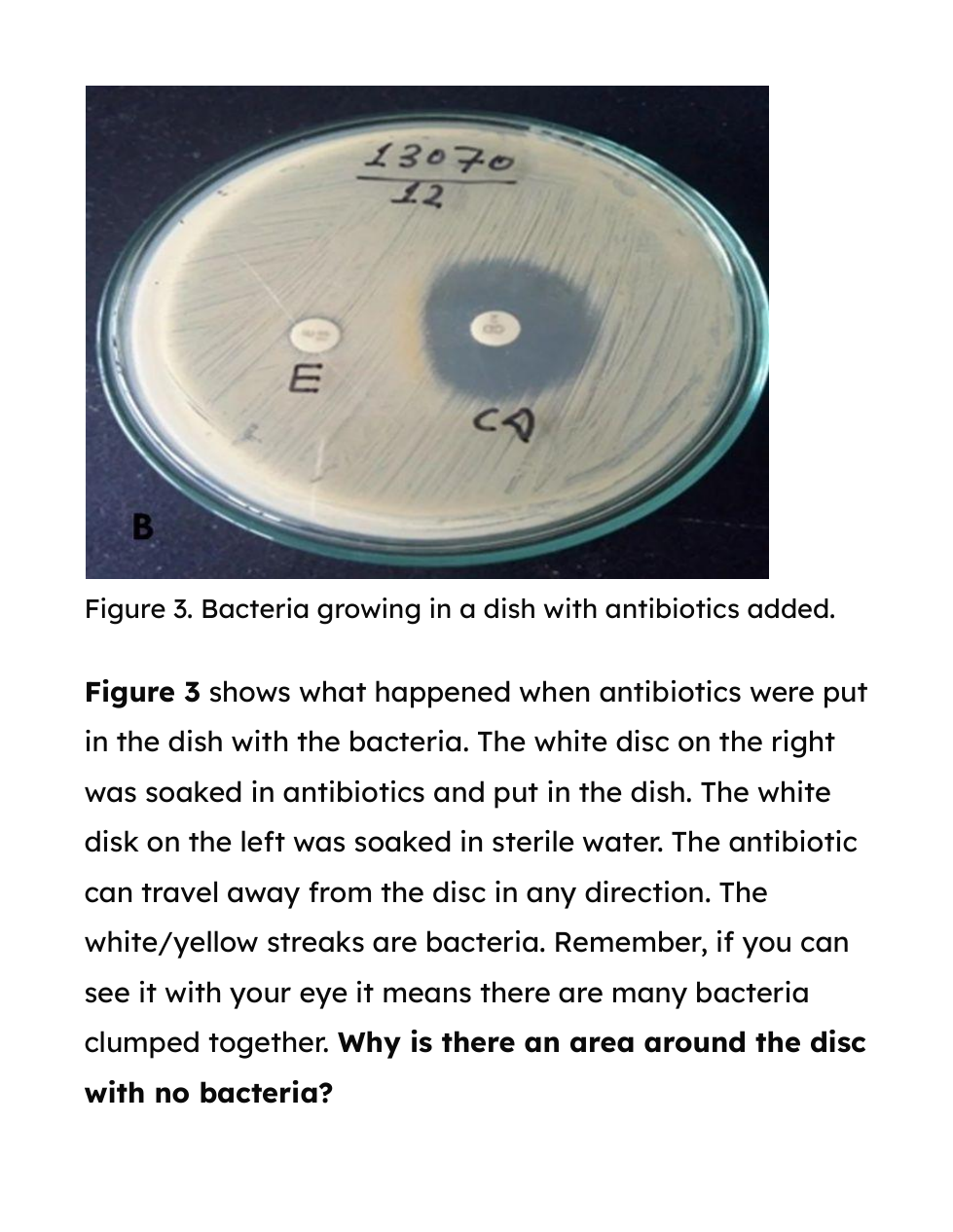
A. If bacteria have enough nutrients, they WILL NOT grow and reproduce
B. If bacteria have enough nutrients, they WILL grow and reproduce
Why is there an area around the disc with no bacteria?
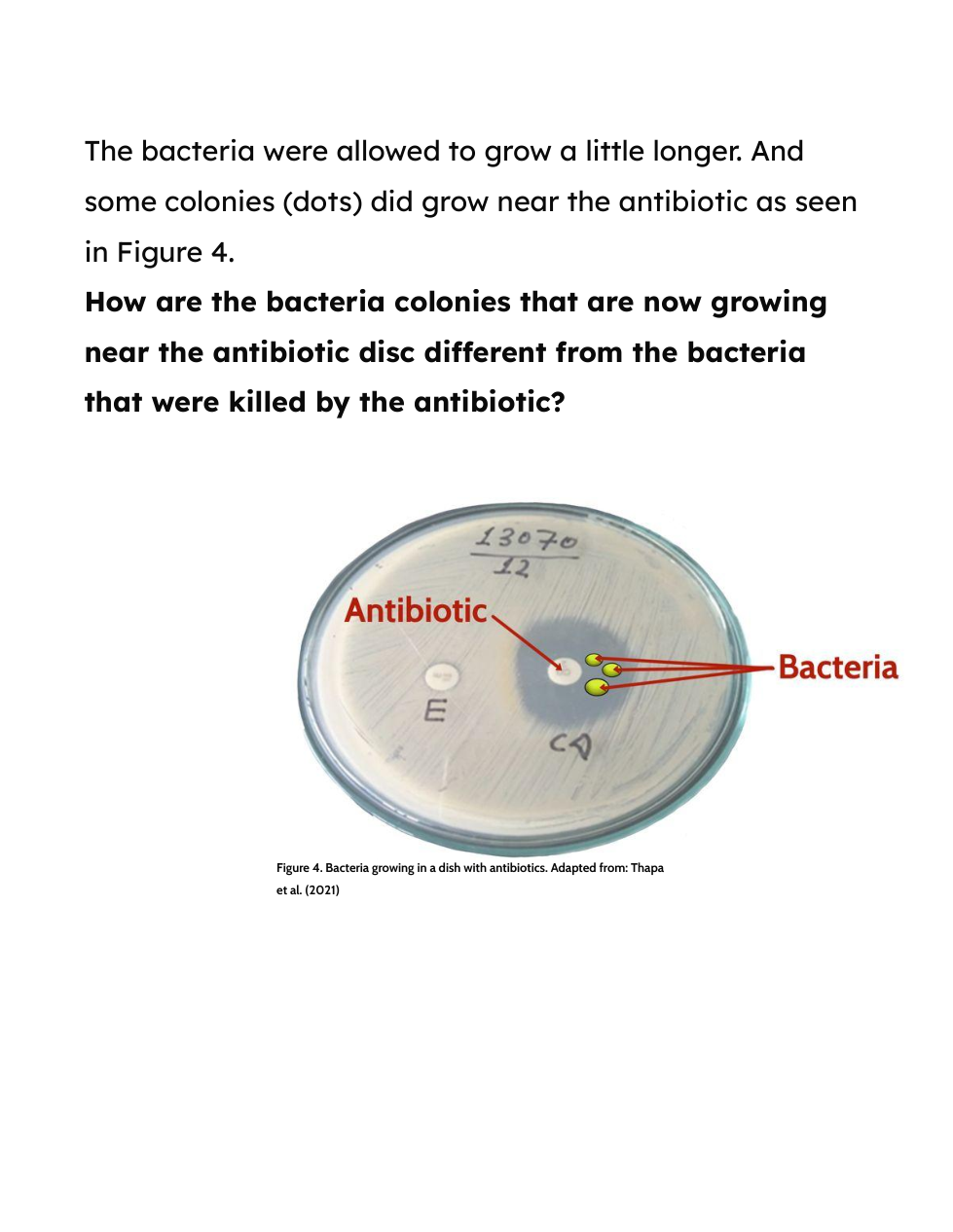
A. The bacteria have not grown on the dish yet in that spot- give them enough time and they will cover that area too
B. Antibiotics kill bacteria and the white disc has antibiotics on it. The antibiotics spread out from the disc and kill the bacteria.
C. When the antibiotic disc was placed in the dish, the bacteria near it all moved away as a physical response. The number of bacteria in the dish is the same as before, the bacteria is just bunched up more in different spaces.
How are the bacteria colonies that are now growing near the antibiotic disc different from the bacteria that were killed by the antibiotic?
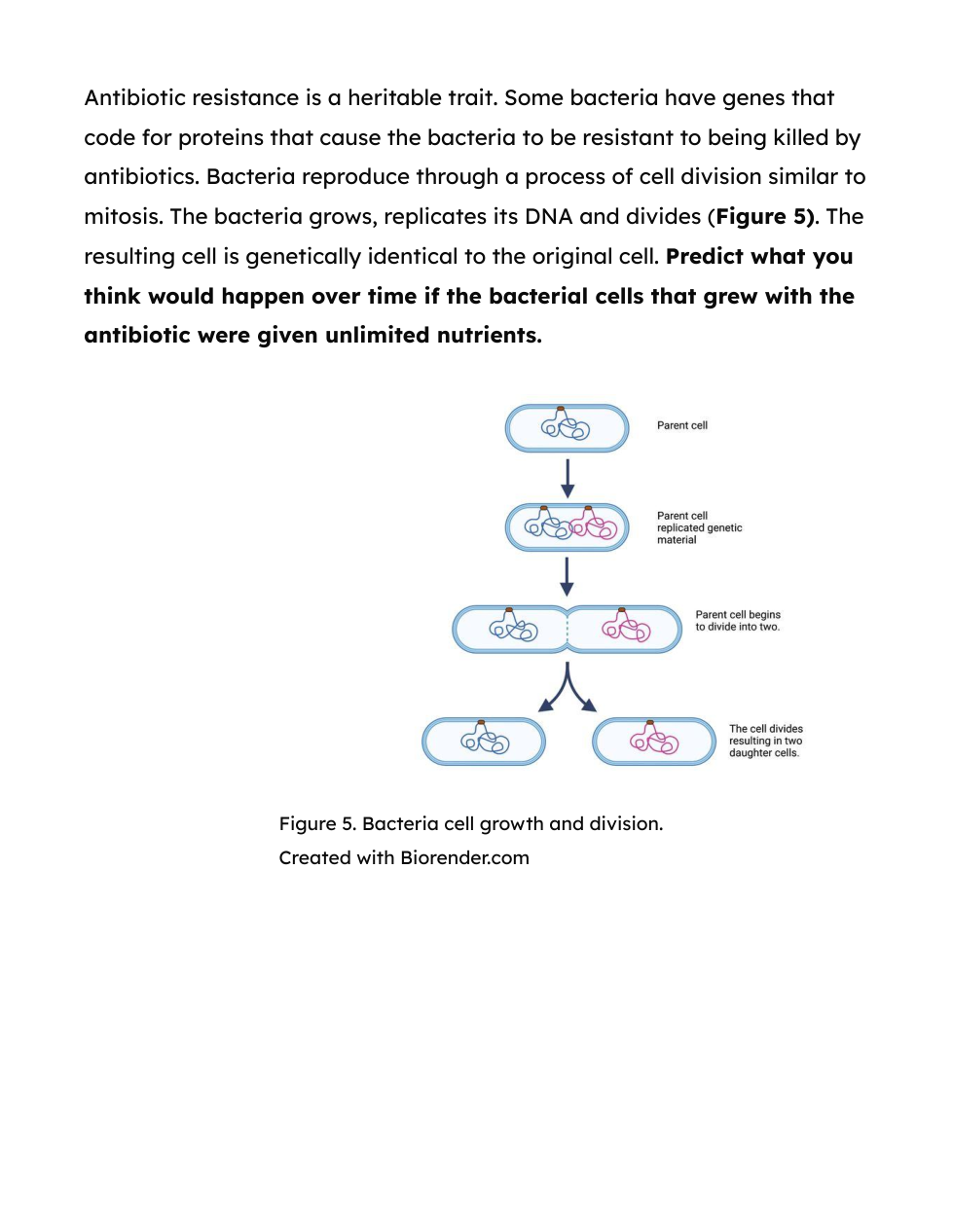
A. The bacteria developed antibiotic resistance when they saw the antibiotics.
B. The bacteria have a trait that keeps the antibiotic from killing them.
C. The bacteria are a different species than the bacteria that were all killed.
D. They are not different from the bacteria that were there originally, they just took more time to grow.
According to the graphs, what is the relationship between antibiotic use and antibiotic resistance.
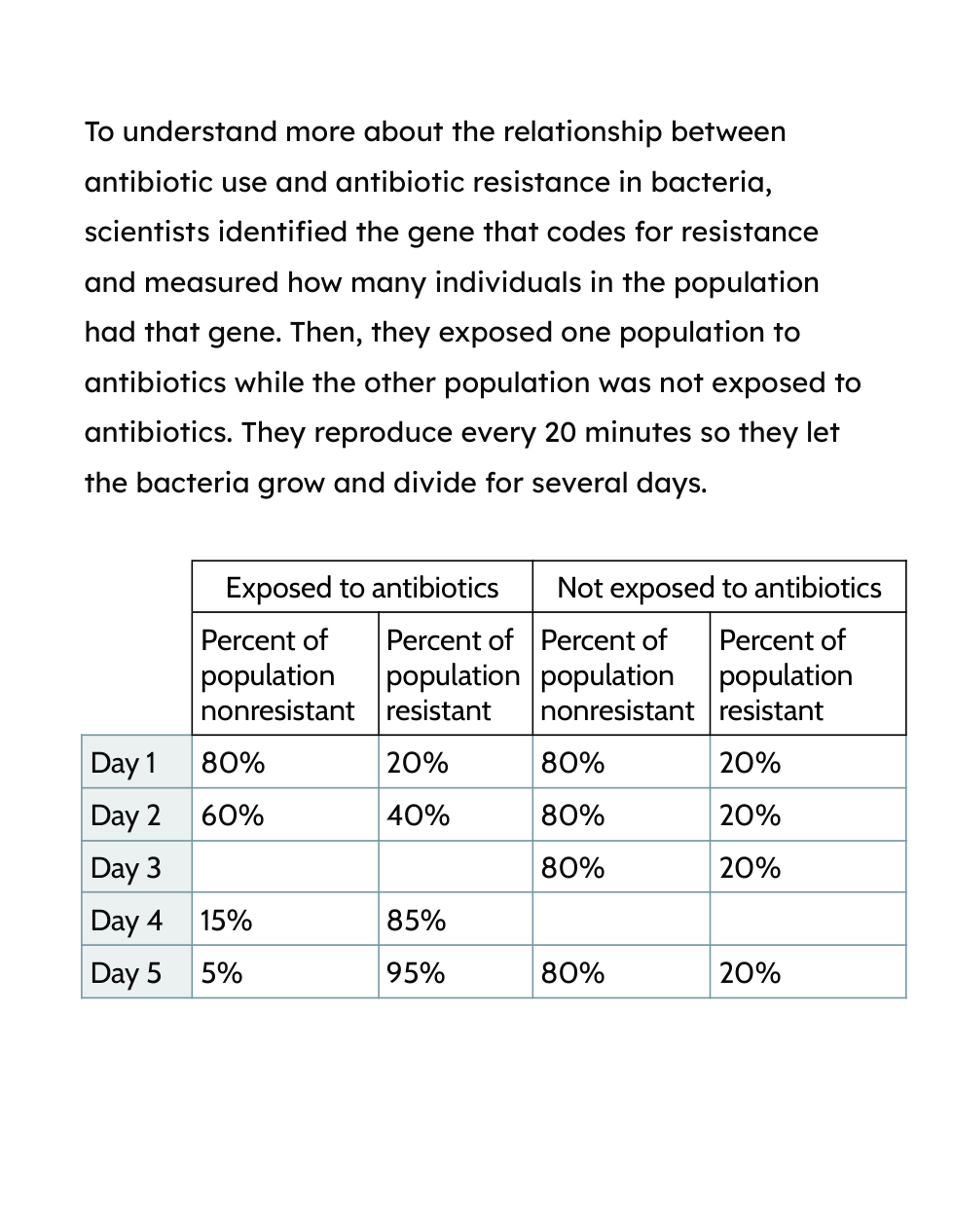
A. Negative Relationship. As antibiotic use increases, antibiotic resistance decreases
B. Positive Relationship. As antibiotic use increases, antibiotic resistances increases
C. There is no relationship between antibiotic resistance and antibiotic use
At Day 3, what do you expect the percent of population non resistant bacteria exposed to antibiotics will be?
A. 90%
B. 60%
C. 40%
D. 15%
At Day 3, what do you expect the percent of population resistant bacteria exposed to antibiotics will be?
A. 15%
B. 35%
C. 60%
D. 95%
At Day 4, what do you expect the percent of population nonresistant bacteria NOT exposed to antibiotics will be?
A. 100%
B. 80%
C. 30%
D. 15%
At Day 4, what do you expect the percent of population resistant bacteria NOT exposed to antibiotics will be?
A. 100%
B. 80%
C. 40%
D. 20%