U2D3 Exponential Growth and Decay Functions Jan27
star
star
star
star
star
Posljednje ažuriranje about 1 year ago
39
Napomena autora:
1
1
1
1
1
1
1
1
1
1
1
1
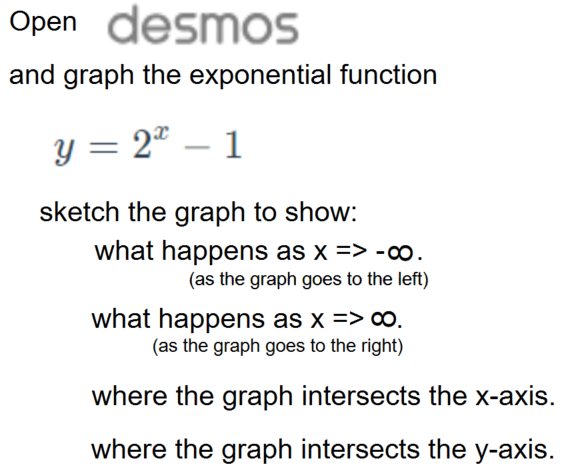
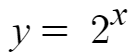
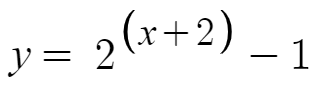
Sketch the graph of:
Don't forget all the important features!
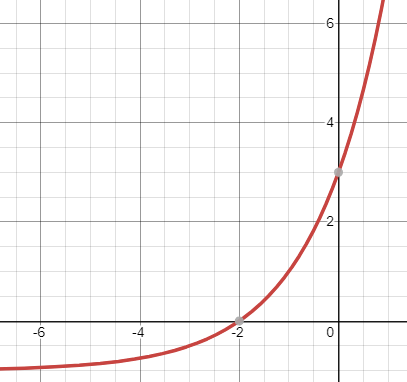
What is the y-intercept for y = 2x - 1?
What is the x-intercept for y = 2x - 1?
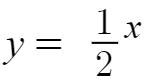
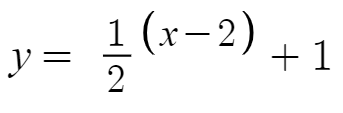
Sketch the graph of:
Don't forget all the important features!
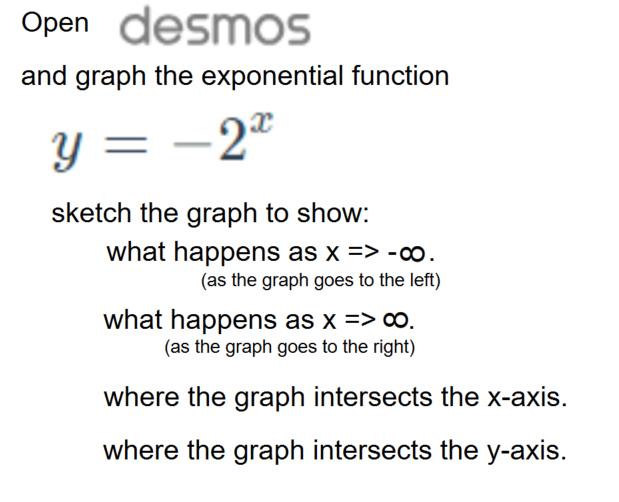
What is the y-intercept for y = -2x ?
What is the x-intercept for y = -2x ?
Sketch the graph of:
Don't forget all the important features!
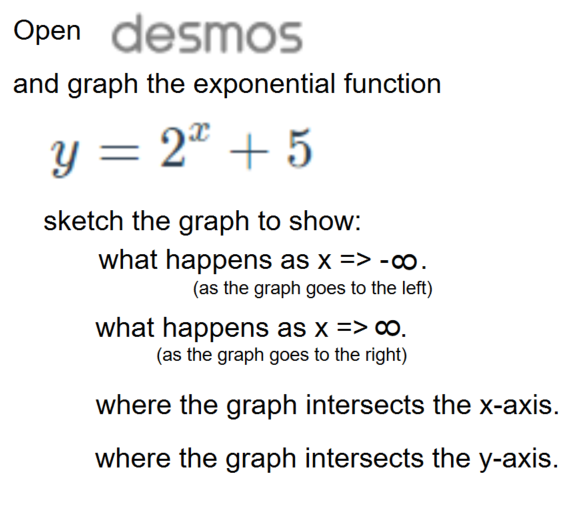
What is the y-intercept for y = 2x + 5 ?
What is the x-intercept for y = 2x + 5 ?
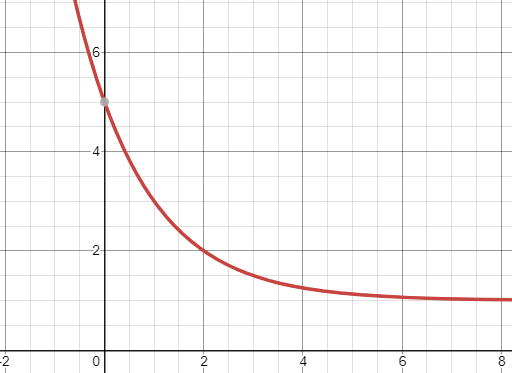
Sketch the graph of:
Don't forget all the important features!
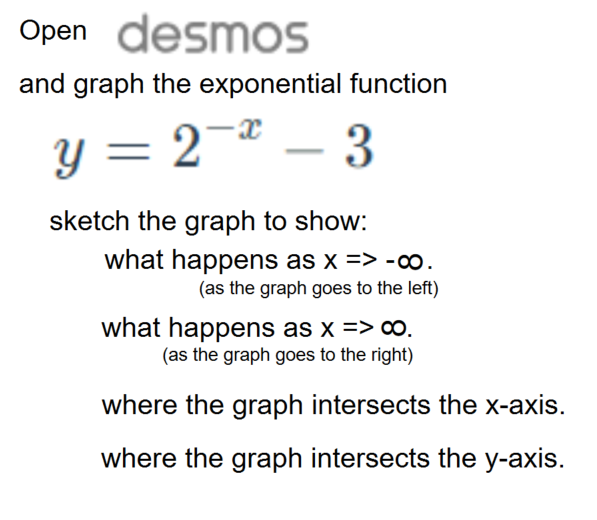
What is the y-intercept for y = 2-x - 3 ?
What is the x-intercept for y = 2-x - 3 ?
| Stavka koja se može prevući | arrow_right_alt | Odgovarajuća stavka |
|---|---|---|
| arrow_right_alt | ||
| arrow_right_alt | ||
| arrow_right_alt | ||
| arrow_right_alt |
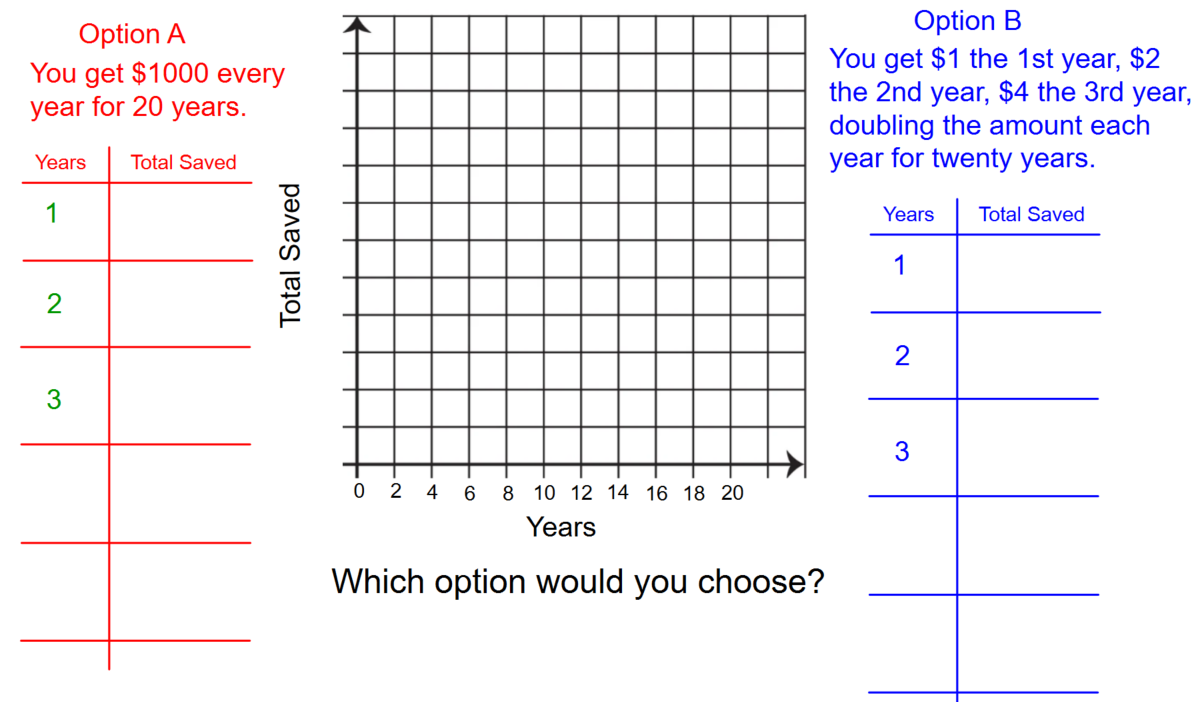
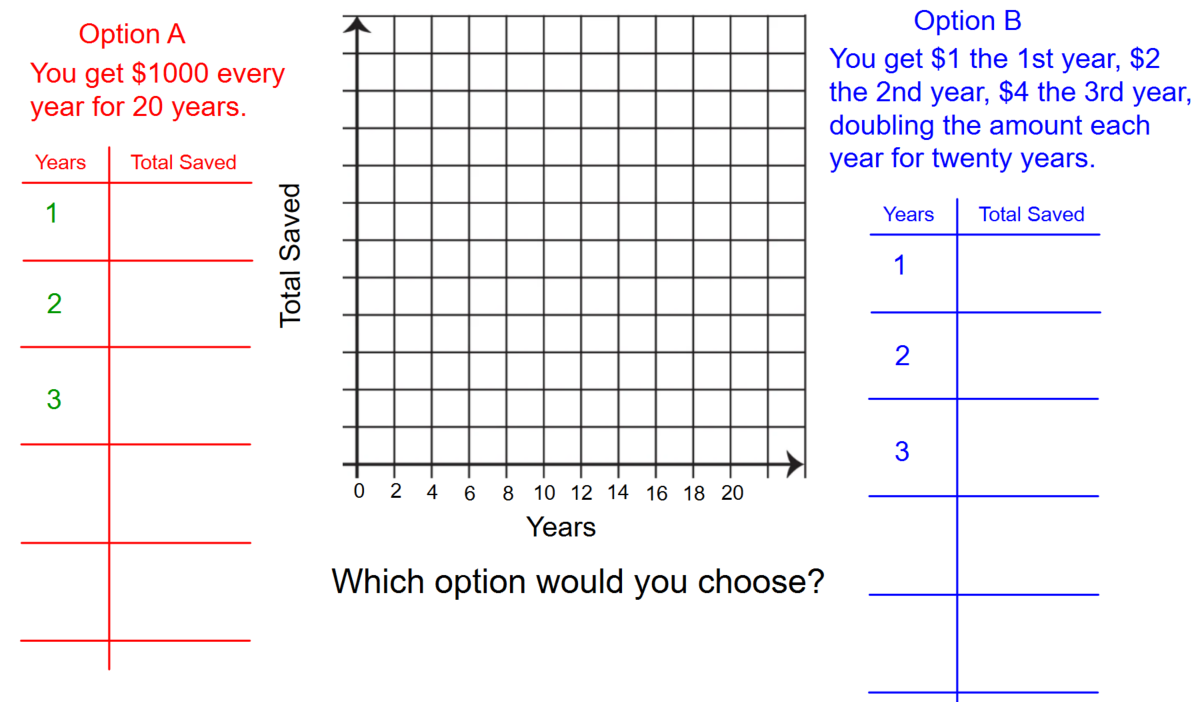
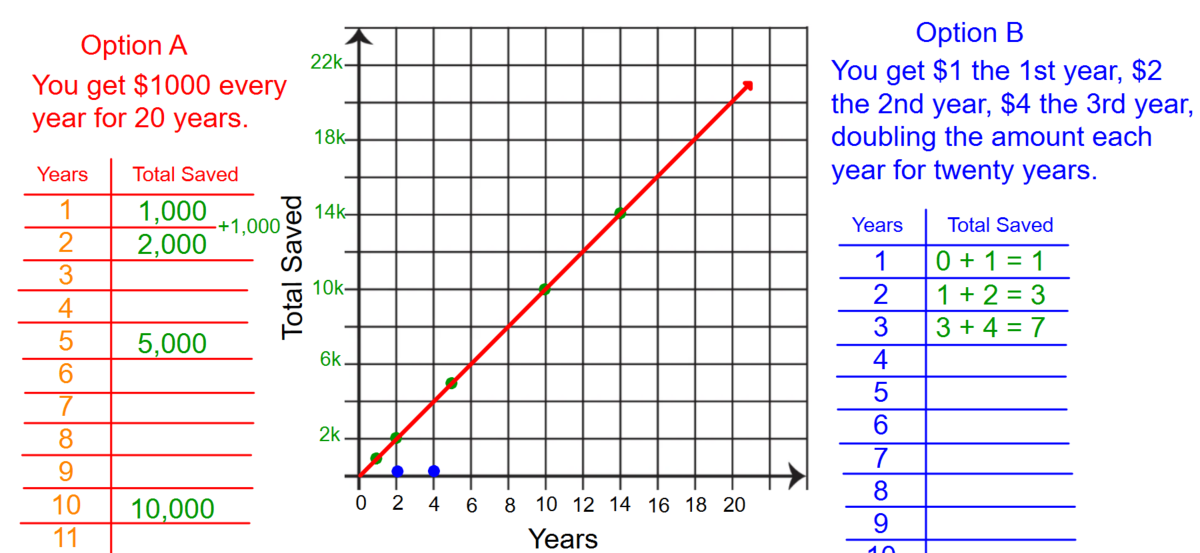
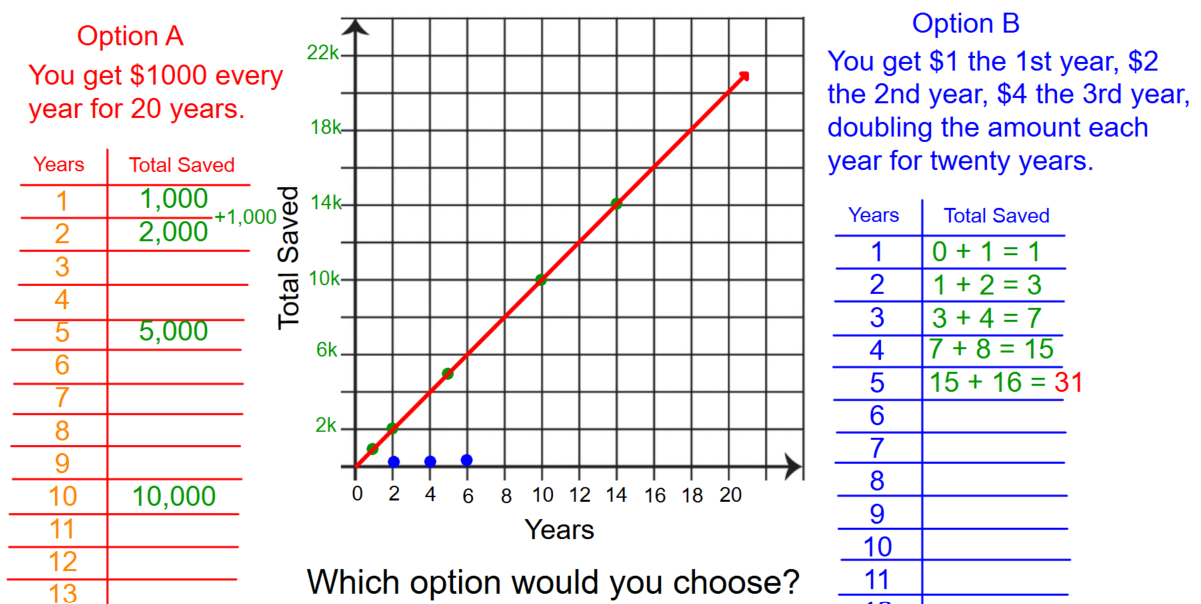
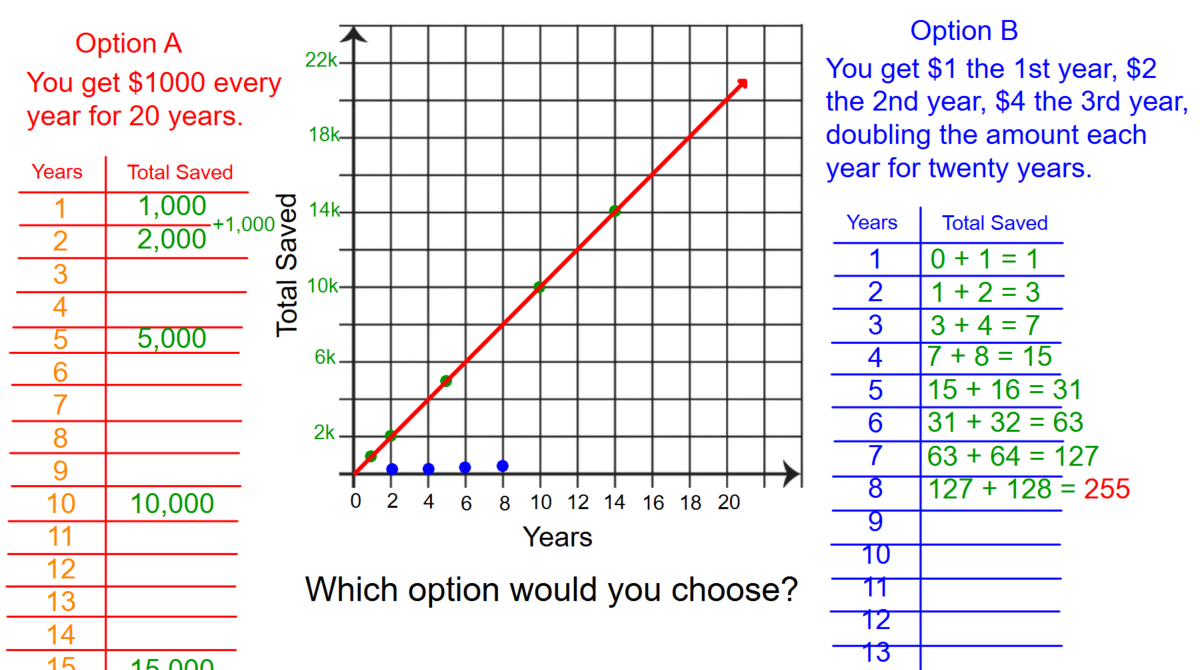
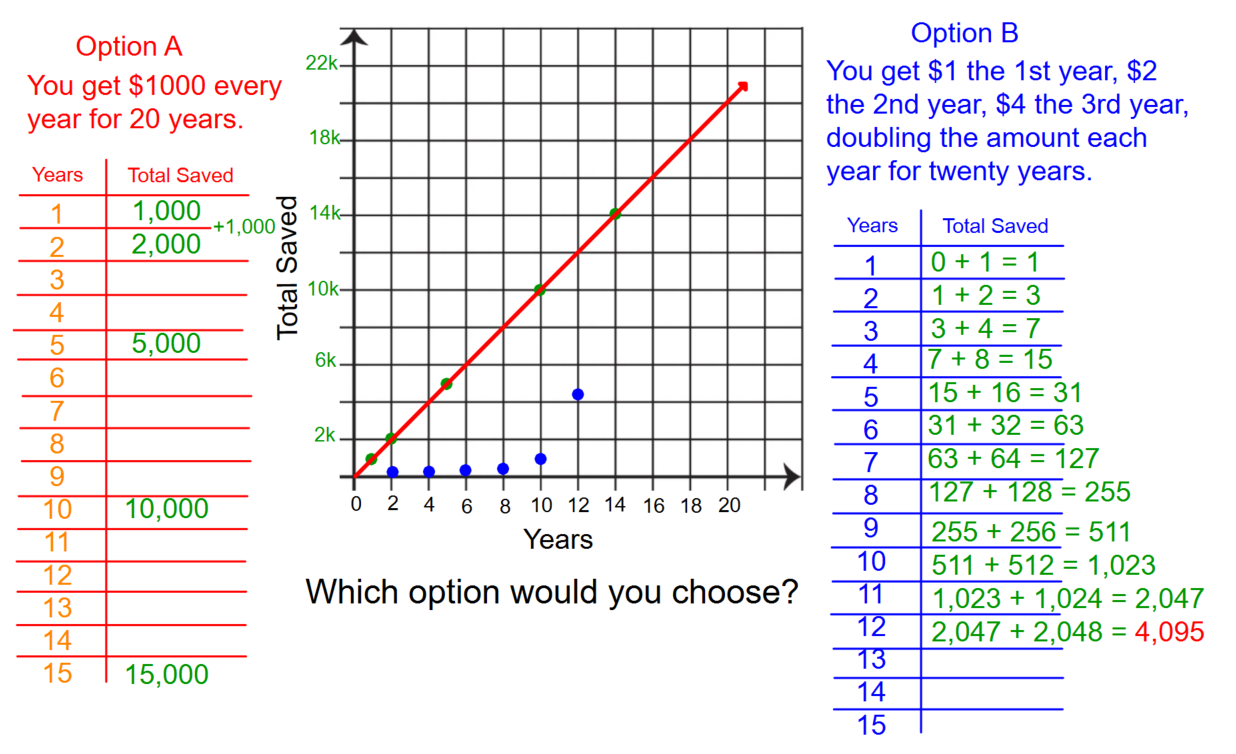
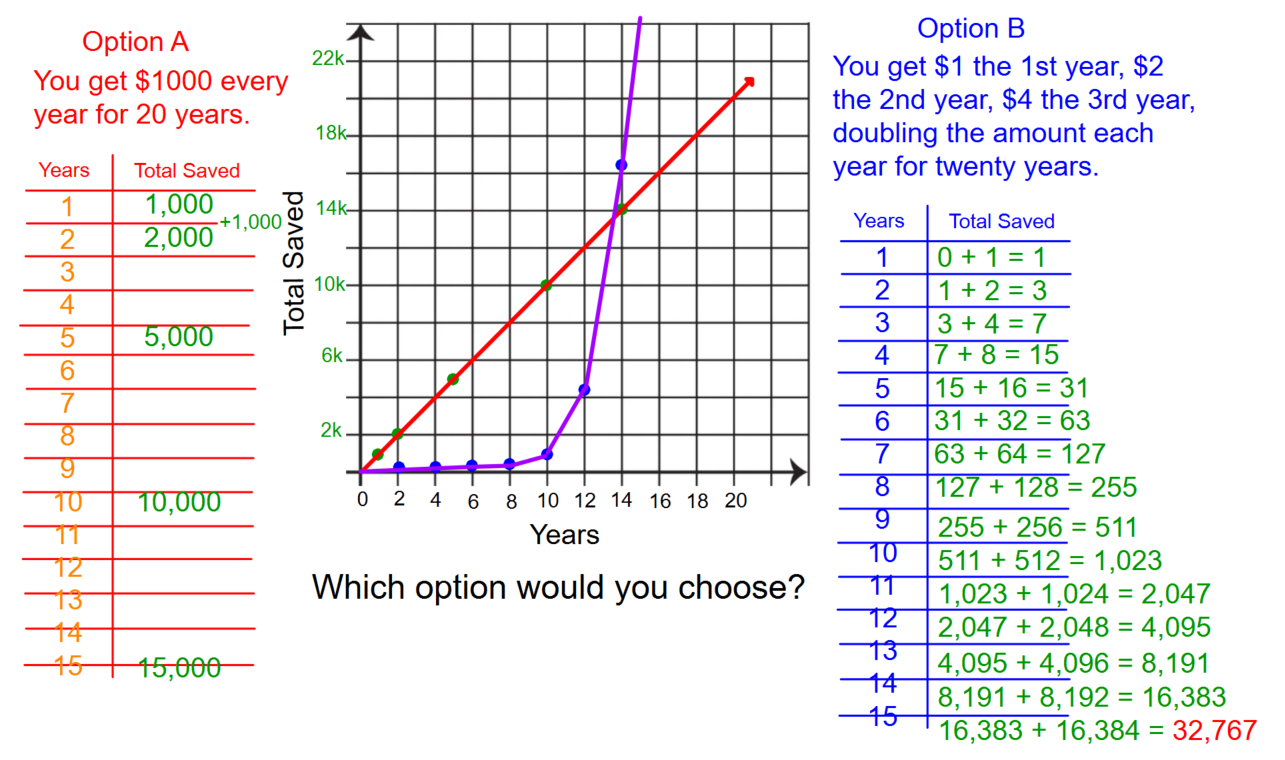
Which option would you choose?
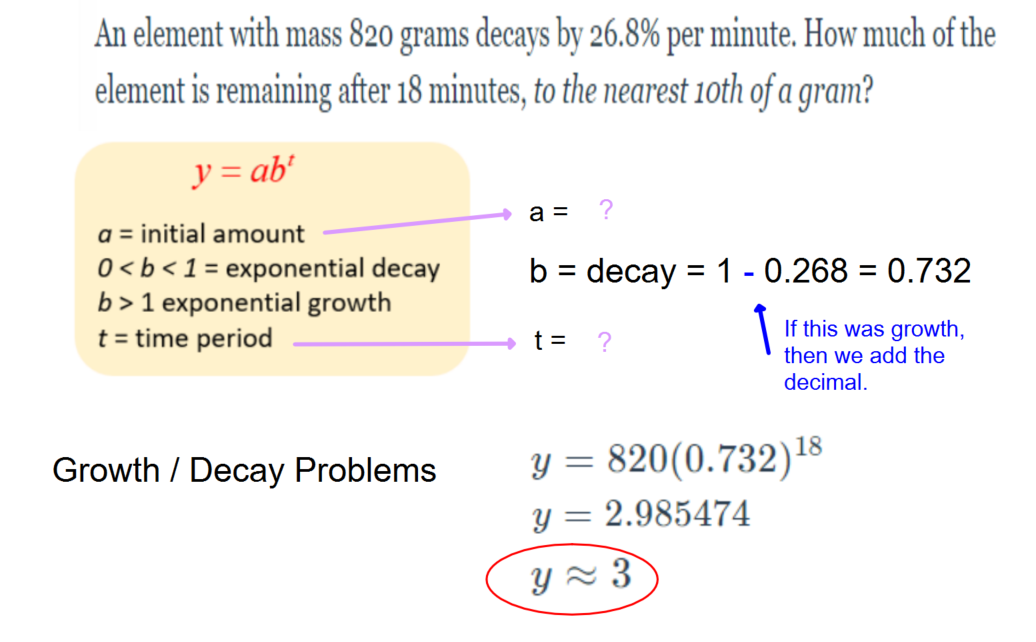
Is this a Growth or Decay Problem?
Example
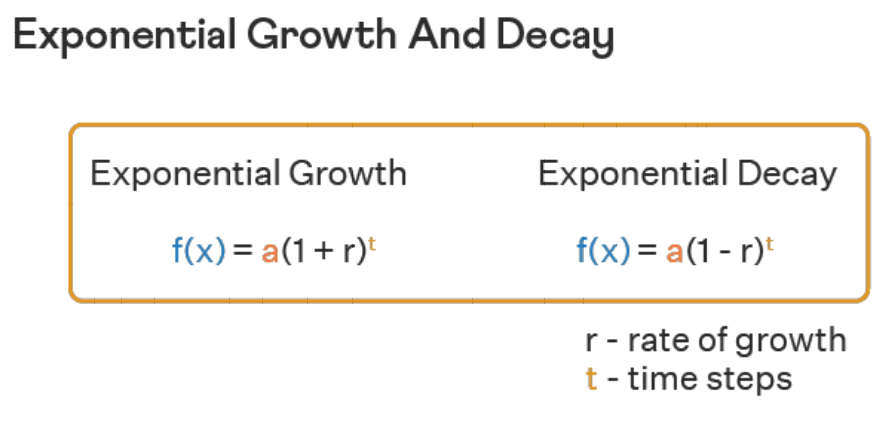
Growth/Decay Problems - Step-By-Step
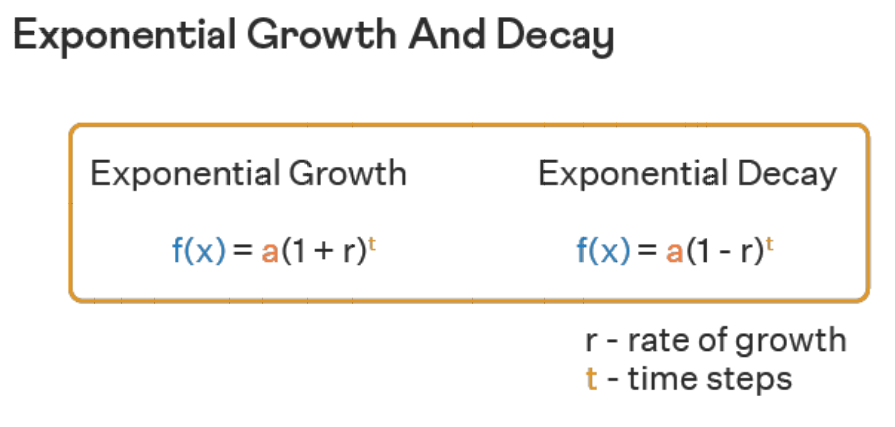
A town has a population of 9000 and grows at 3% every year. What will be the population after 9 years, to the nearest whole number?
a (initial amount) =
b (growth) = 1 + .% =
t (time) =
Write the expression to evaluate.
y =
Growth/Decay Problems - Step-By-Step
A town has a population of 18000 and grows at 2% every year. What will be the population after 11 years, to the nearest whole number?
a (initial amount) =
b (growth) = 1 + .% =
t (time) =
Write the expression to evaluate.
y =
Growth/Decay Problems - Step-By-Step
A new car is purchased for 17900 dollars. The value of the car depreciates at 12.25% per year. What will the value of the car be, to the nearest cent, after 10 years?
a (initial amount) =
b (decay) = 1 - .% =
t (time) =
Write the expression to evaluate.
y =
Write your answers in simplest form.
a. The expression is
b. The expression is
Write your answers in simplest form.
a. The expression is
b. The expression is
Write your answers in simplest form.
a. The expression is
b. The expression is
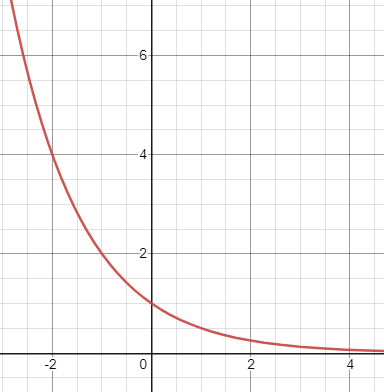
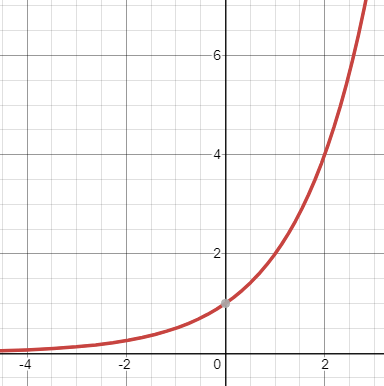
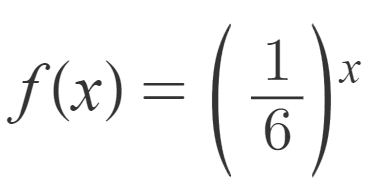
Identify the graph of the function.
What do get when you plug 1 in for x?
Try not to use technology.
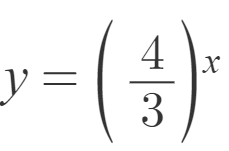
Identify the graph of the function.
What do get when you plug 1 in for x?
Try not to use technology.
Identify the graph of the function.
What do get when you plug 1 in for x?
Try not to use technology.
MODELING REAL LIFE
The population P (in millions) of Peru during a recent decade can be approximated by
where t is the number of years since the beginning of the decade.
Determine whether the model represents exponential growth or exponential decay.
MODELING REAL LIFE
In January of 2012, there were about 6.26 billion cell phone subscribers in the world. During the next 10 years, the number of cell phone subscribers increased by about 4% each year.
Write an exponential model that represents the number of cell phone subscribers y (in billions) in t years after 2012.
y =
Complete the equation above.
Use your model to estimate the number of cell phone subscribers in 2016. Round your answer to two decimal places.
There were about
(Round your answer to the nearest hundredths.)
Use your model to estimate when the number of cell phone subscribers will be about 8 billion.
There will be 8 billion cell phone subscribers approximately
MODELING REAL LIFE
In January 2024, a social media site had 14.3 million members. The number of members is decreasing by about 8% per year.
Write an exponential model that represents the number of social media members y (in millions) in t years after 2024.
y =
Complete the equation above.
Use your model to estimate the number of predicted social media members in 2027.
There will be approximately
(Round your answer to the nearest hundredths.)
Use your model to predict when the number of social media members will be below 10 million.
There will be 10 million or less social media members approximately
MODELING REAL LIFE
When a plant or animal dies, it stops acquiring carbon-14 from the atmosphere.
The amount y (in grams) of carbon-14 in the body of an organism t years after the organism dies is
where a is the initial amount (in grams).
What percent of the carbon-14 is released each year? Round your answer to the nearest tenth.
About
MODELING REAL LIFE
The number y of Salmonella cells on an egg after t minutes can be modeled by the equation:
where a is the initial number of cells.
By what percent does the number of Salmonella cells increase each minute?
According to the equation, Salmonella increases by
If we started with 20 Salmonella cells, how many would we have after 1 hour?
According to the model, we would have approximately
(Round your answer to the nearest tenth.)
Identify the annual percent increase or decrease in population.
Based on the function, Peru had a
Use the function to estimate the population of Peru 15 years from the beginning of the decade.
The population of Peru was approximately