Insect Sexual and Asexual Reproduction (2024)
star
star
star
star
star
Last updated over 2 years ago
19 Nsɛmmisa
1
1
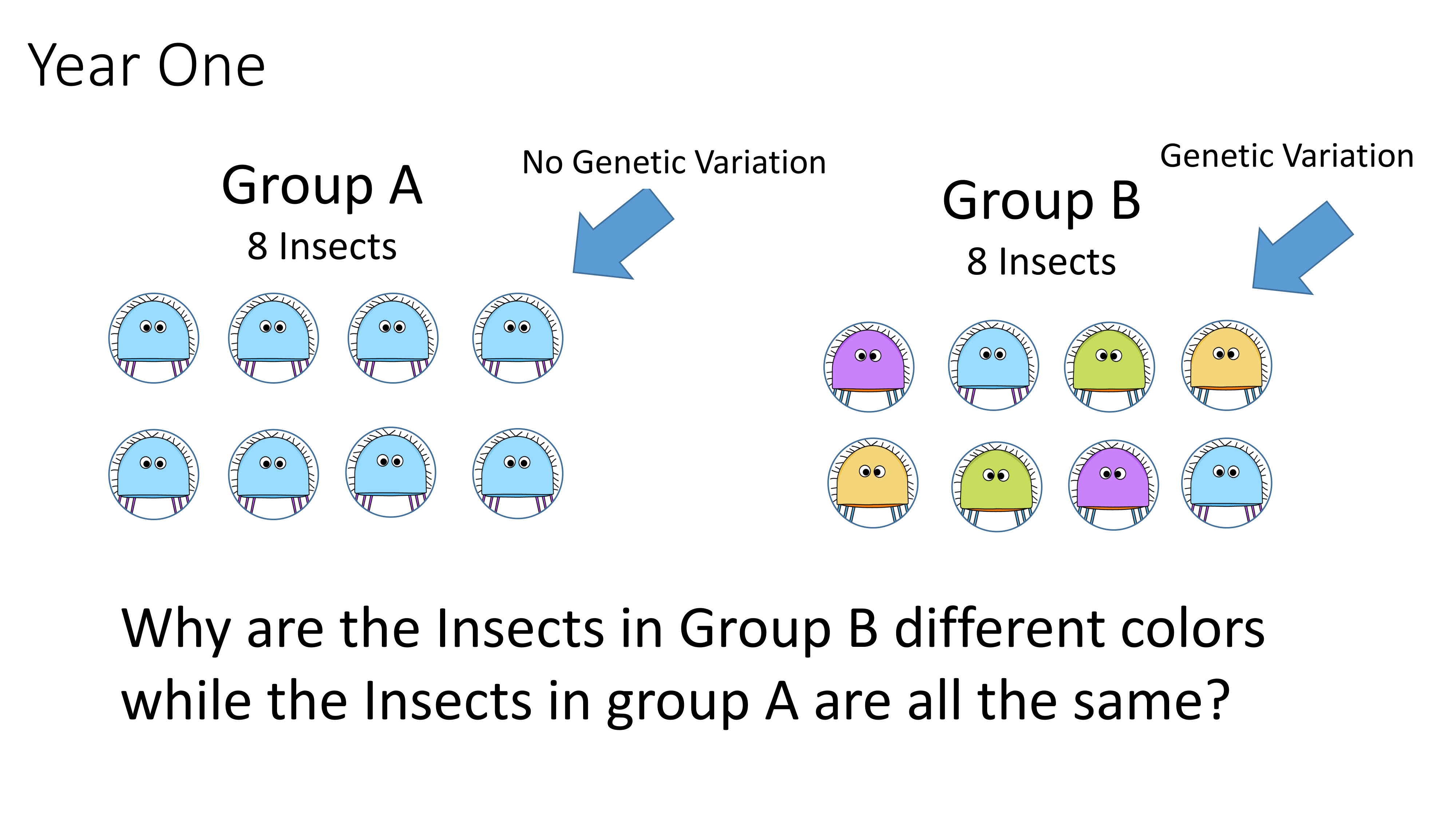
What is the total number of insects in group A and B at the start (Year 1)?
Why are insects in group B different colors?
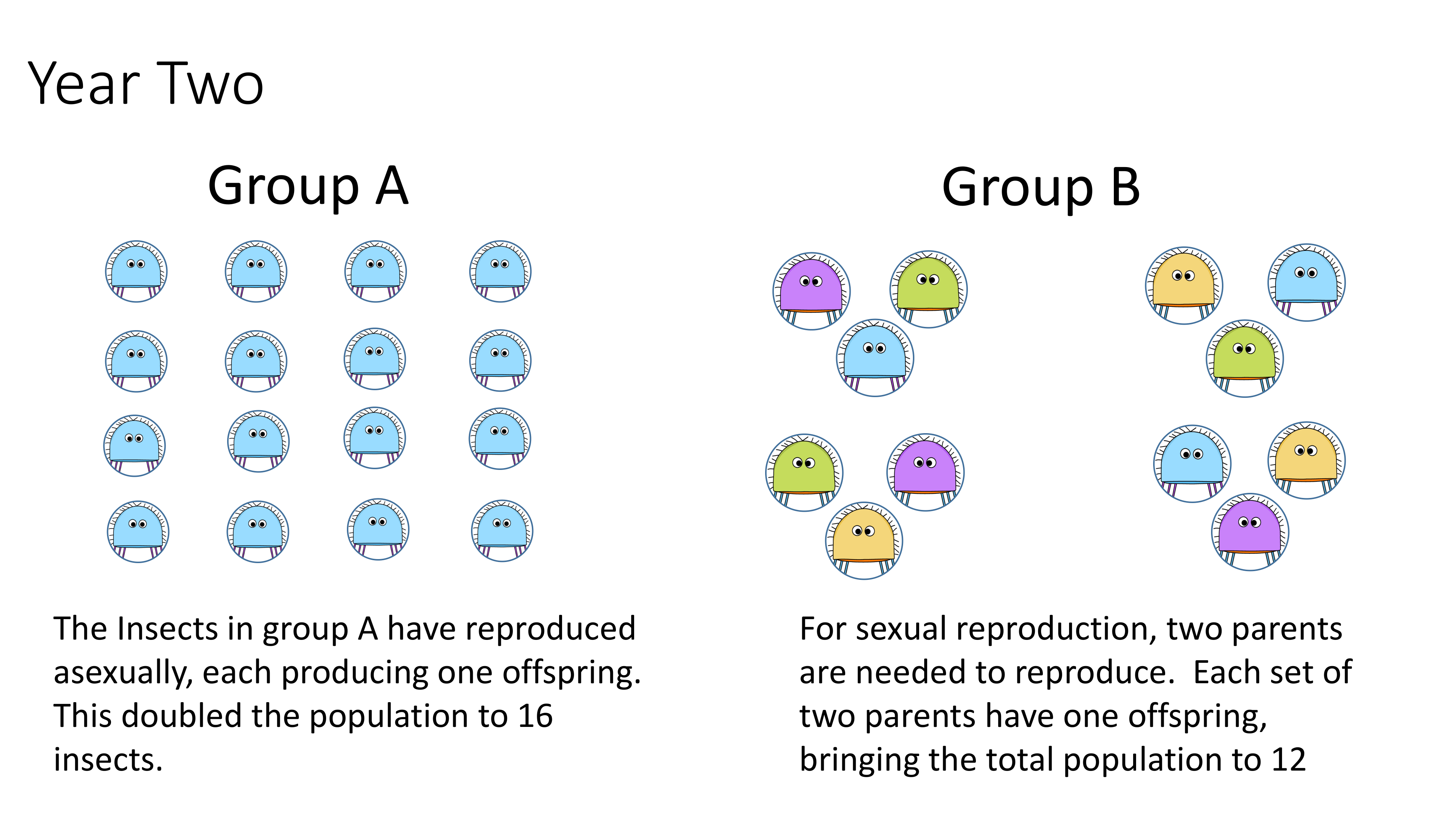
Group A started with 8 insects, in year 2 how many insects are there in group A?
At the end of year 2, how many insects are there in the group B population?
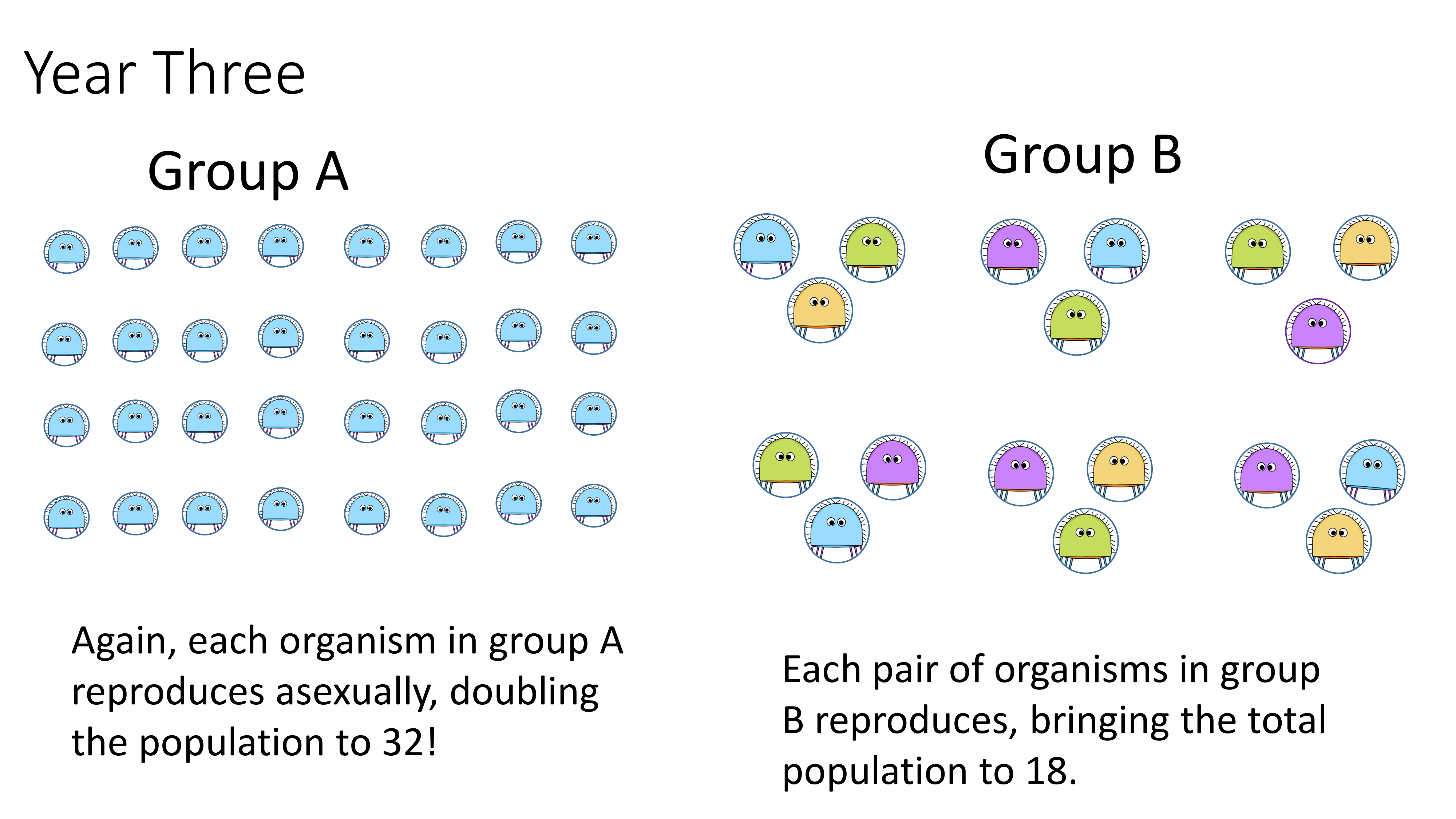
What is the population of group A at year 3?
What is the population of group B at year 3?
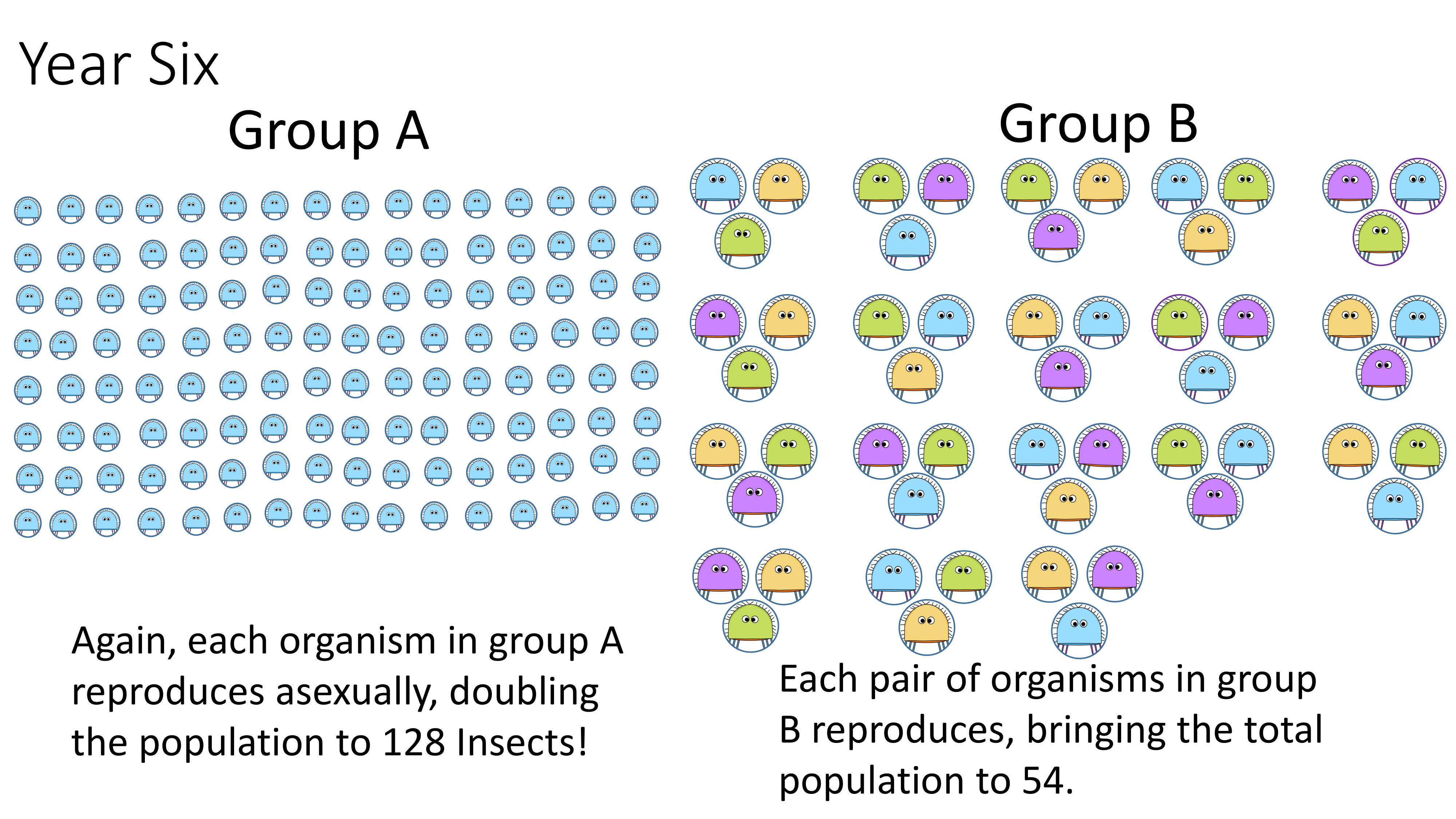
At year 6, how many insects are in the population for group A?
At year 6, how many insects are in the population for group B?
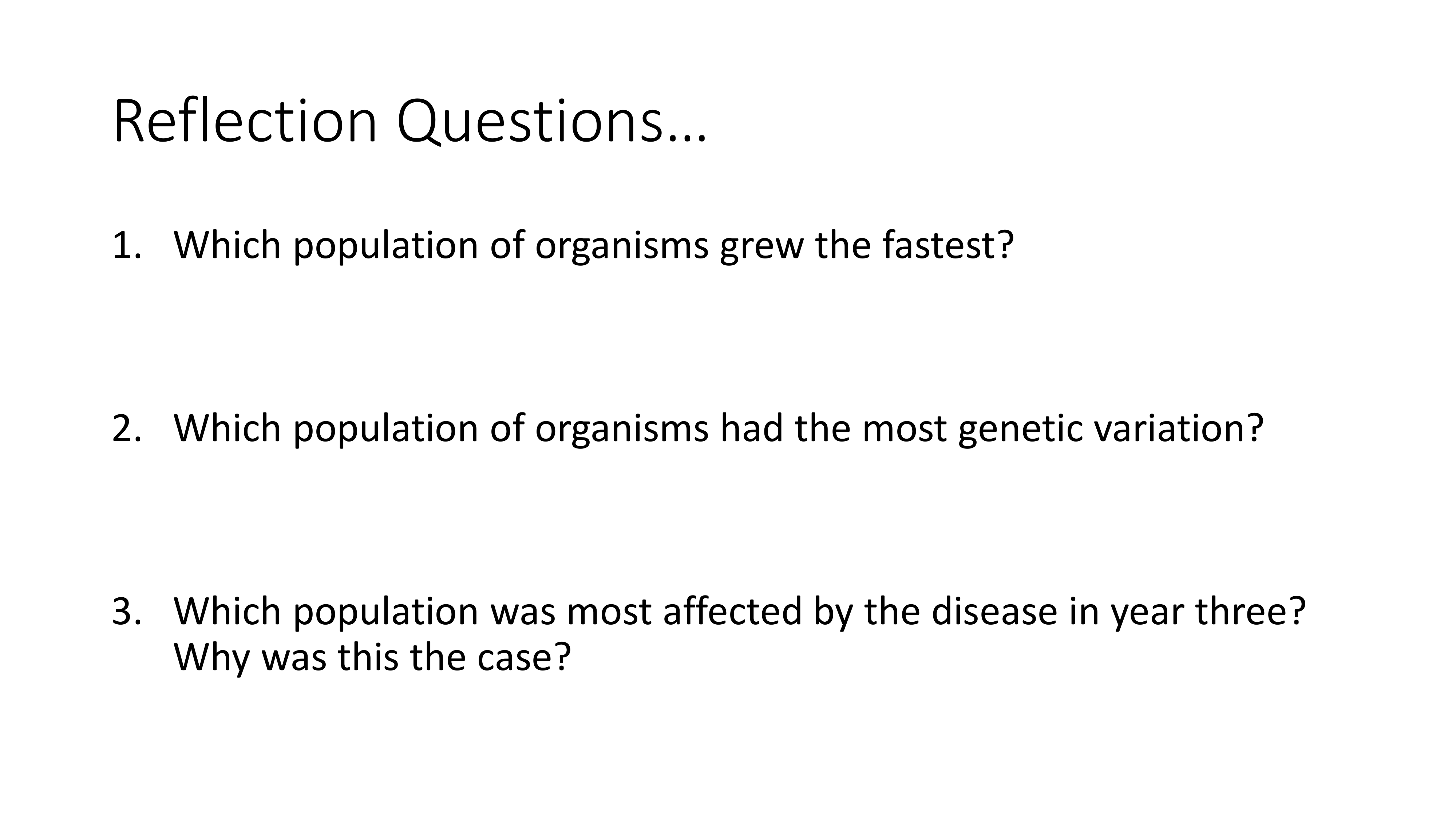
Which population grew the fastest?
Which population had the most genetic variation?
Which is an advantage of asexual reproduction?
Which is an disadvantage of sexual reproduction?
Group A is reproducing
The insects in group B are reproducing
In group B how many individuals are needed to produce an offspring?
Group B started with 8 individuals or 4 breeding pairs. How many new offspring were born during year 2?
Group B started with 12 individuals. How many new offspring were born during year 3?
Group B started with 18 breeding pairs. How many new offspring were born during year 6?
Which population was most affected by the disease in year 3? Explain why.