Earth rotates on its axis once approximately every –
1 point
1
Question 2
2.
A person standing in Alabama notices the sun is rising. At the same moment, a person in Japan sees that the sun has just set. Which statement correctly describes how it can be sunrise and sunset at the same moment?
1 point
1
Question 3
3.
Earth's rotation causes the day and night cycle. It also causes –
1 point
1
Question 4
4.
Which statement correctly describes the sun's apparent movement across the sky?
1 point
1
Question 5
5.
A student notices the sun in the eastern part of the sky. What time of day could it be when the student makes this observation?
Select TWO correct answers.
2 points
2
Question 6
6.
This question has two parts. First, answer Part A. Then answer Part B.
Part A
A student looks outside and observes the sun in the western sky. Which of the following times could it be? __________
Part B
Which statement provides evidence to support the answer to Part A? __________
1 point
1
Question 7
7.
Earth revolves around the sun, but it also makes a complete rotation. How long does it take Earth to make one complete rotation on its axis?
_______ hours
1 point
1
Question 8
8.
In an activity, students make a la human sundial. The sundial uses the sun to tell the approximate time of day.
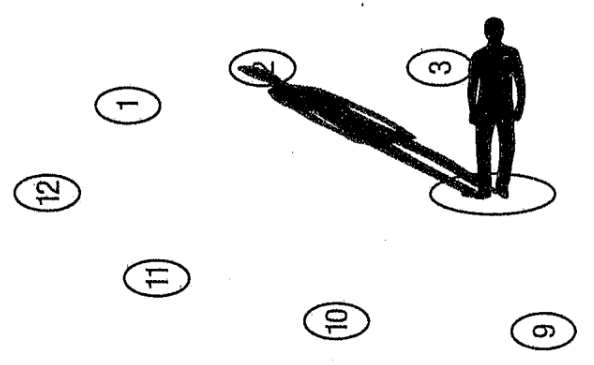
How is it possible?
1 point
1
Question 9
9.
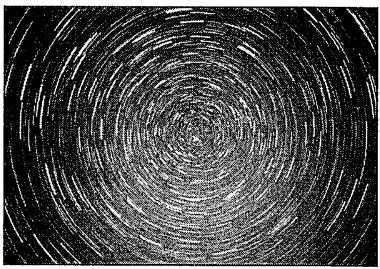
This photograph shows the night sky over a period of many hours.
Why does the night sky appear to move in a circular pattern?
1 point
1
Question 10
10.
Students are asked to draw a diagram to show the process that causes day and night. Which of the following student diagrams correctly shows the process that causes the day/ night cycle?
