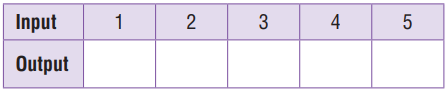
Multiply the number of cans by 3 to find the number of tennis balls.

When cans = 3, balls =
Multiply the number of cans by 3 to find the number of tennis balls.
When cans = 3, balls =
Multiply the number of cans by 3 to find the number of tennis balls.
Select all the ordered pairs to match the table above.
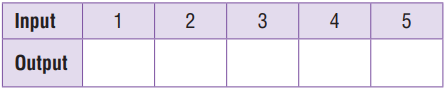
Add 2 to the input.
When input = 1, output =

An architect makes a drawing of a building. One inch in the drawing equals 10 feet in actual measurement. Use the table and the coordinate grid to show the pattern.
When Drawing = 1, Actual Measurement =
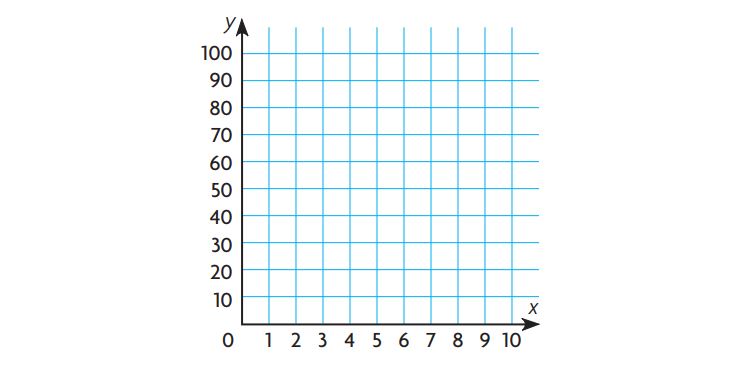
An architect makes a drawing of a building. One inch in the drawing equals 10 feet in actual measurement. Use the table and the coordinate grid to show the pattern.
What is the actual measurement if the length in the graph drawing is 7 inches?
Actual Measurement =
Multiply the number of cans by 3 to find the number of tennis balls.
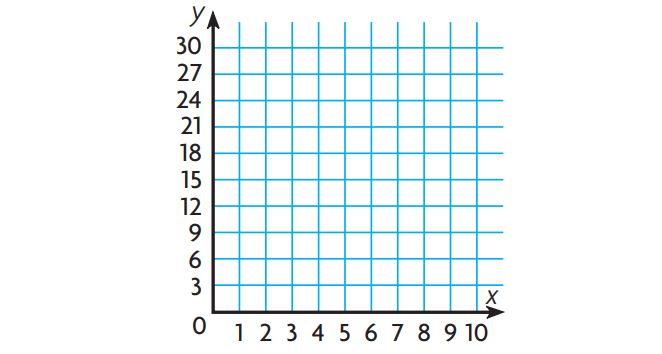
Graph the ordered pairs from the previous question.
Add 2 to the input.
Select all the ordered pairs to match the table above.
Add 2 to the input.
Graph the ordered pairs from the previous question.
An architect makes a drawing of a building. One inch in the drawing equals 10 feet in actual measurement. Use the table and the coordinate grid to show the pattern.
Select all the ordered pairs to match the table above.