Tuesday 1/28 - TES Mid Unit Test Mod
star
star
star
star
star
Last updated about 1 month ago
9 Nsɛmmisa
2
2
2
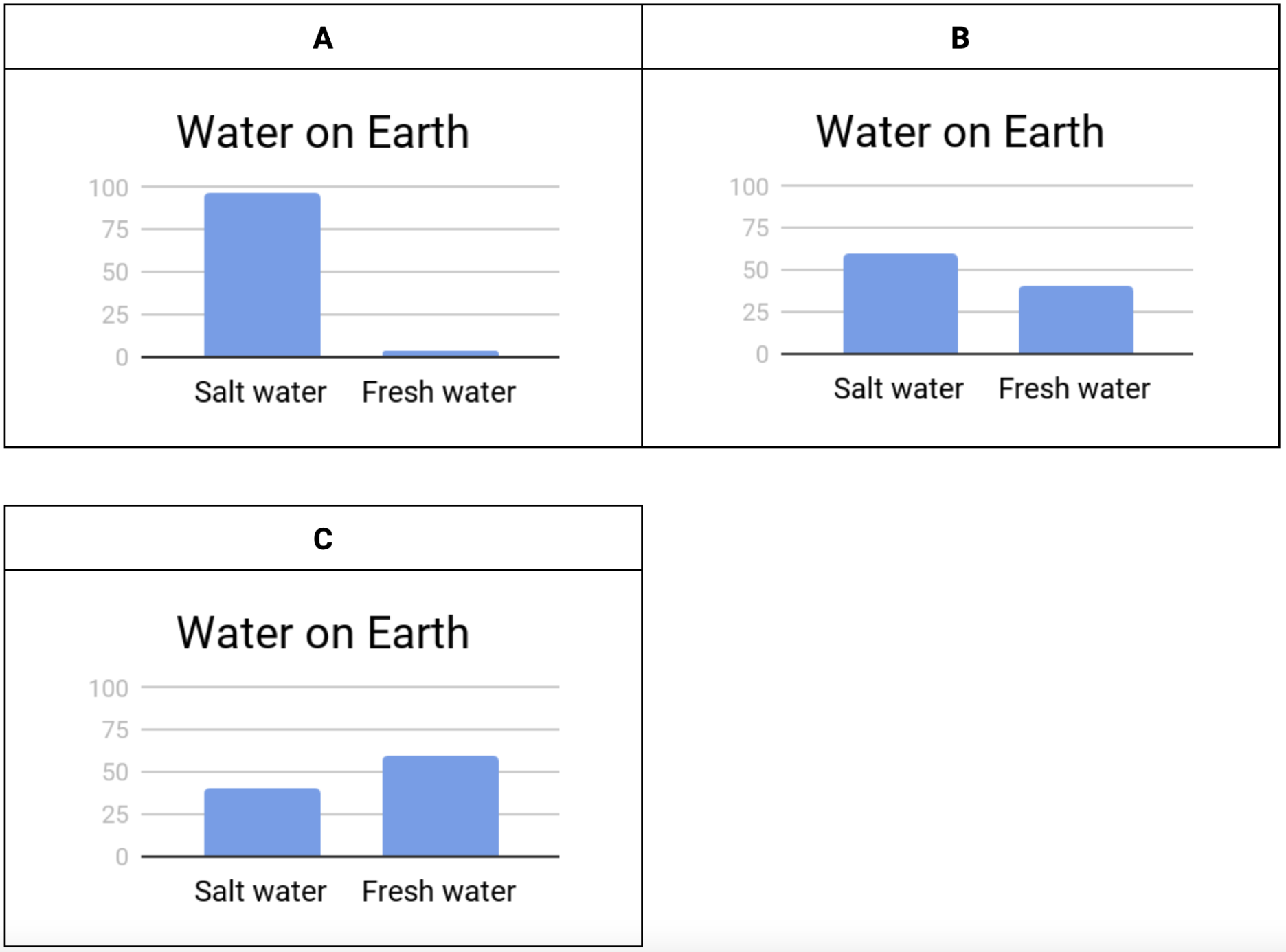
Which of the following graphs best shows the amount of salt water vs fresh water on the Earth? (2 pts)
There are many locations on Earth where freshwater can be found. Where is the majority of Earth’s freshwater located? (2 pts)
A) The oceans
B) Lakes and ponds
C) Glaciers and groundwater
Use the information in this box to answer questions
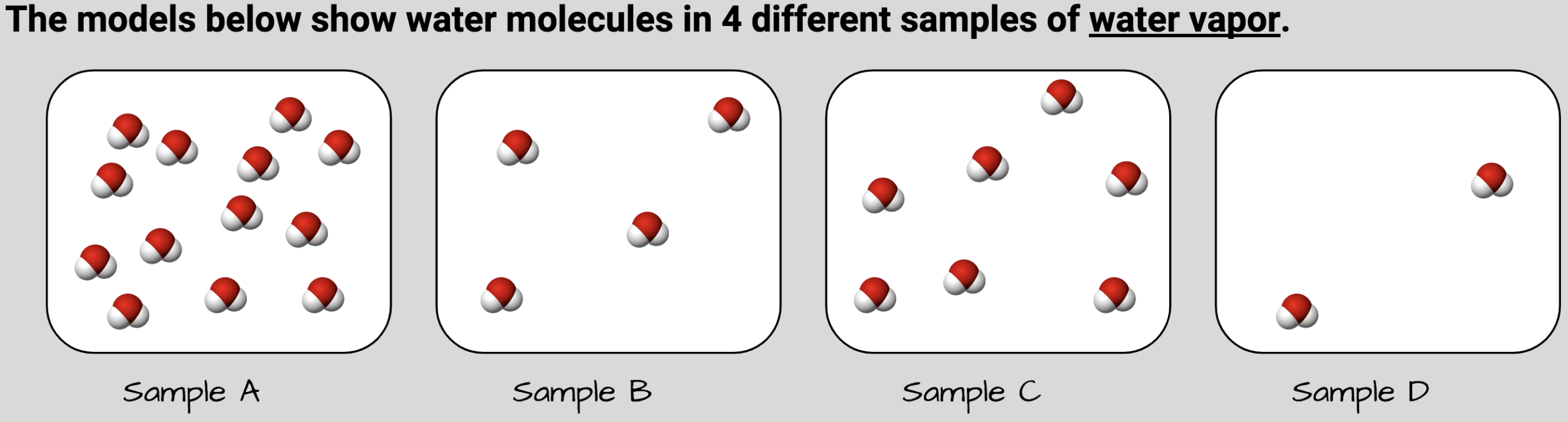
The models below show water molecules in 4 different samples of water vapor.
Which sample most likely has the lowest temperature? (2 pts)
A) Sample A
B) Sample B
C) Sample C
Use the information in this box to answer questions 6 - 8
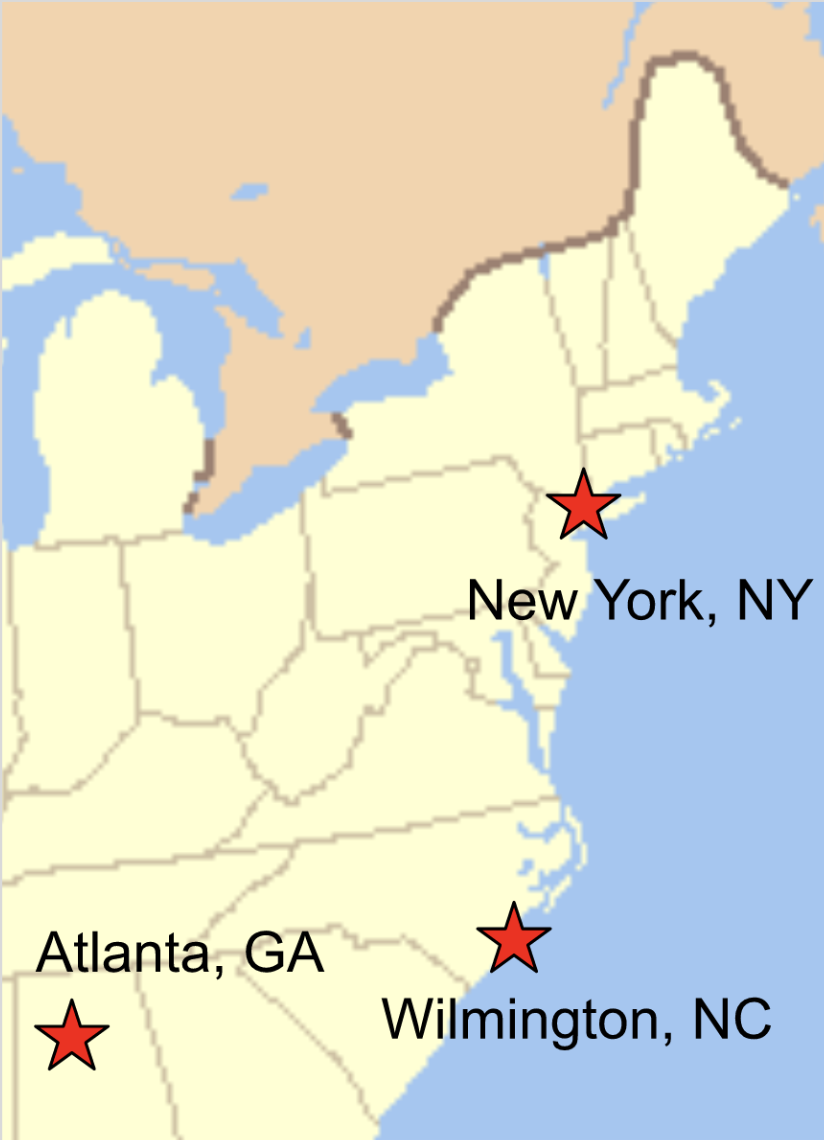
Alejandro is studying weather. He gets weather data from 3 cities. A map of the 3 cities is shown below. Use the weather data and the map to answer the questions that follow.
Criteria For Success:
Think:
Determine which city is near a body of water
Identify the temperature of that city
Determine if that city would have the most water moving into the atmosphere.
Write:
Claim: Identify the city that would have the most water moving into the atmosphere during the day
Evidence: Use evidence from BOTH the weather data and the map to support your claim.
Reasoning: Name AND Explain the phase change and temperature that causes water to move into the atmosphere.
In which city (Atlanta, New York, or Wilmington) would you expect to see the most liquid water moving into the atmosphere during the day? Why? (5 pts)
Claim: The city that would have the most liquid water moving during the day is ________________.
Evidence:
In the weather data, it shows ______________
On the map, it shows _______________
Reasoning:
________________ City would have the most liquid water in the atmosphere during the day because ________________
What process causes water to move from the land or the ocean into the atmosphere?
A) Evaporation
B) Condensation
C) Precipitation
The next week the temperature in New York, NY rises (increased) to 85° F. Would you expect more or less water to move into the atmosphere in New York? Why?
A) More water would evaporate because lower temperatures cause more evaporation
B) More water would evaporate because higher temperatures cause more evaporation
C) Less water would evaporate because lower temperatures cause less evaporation
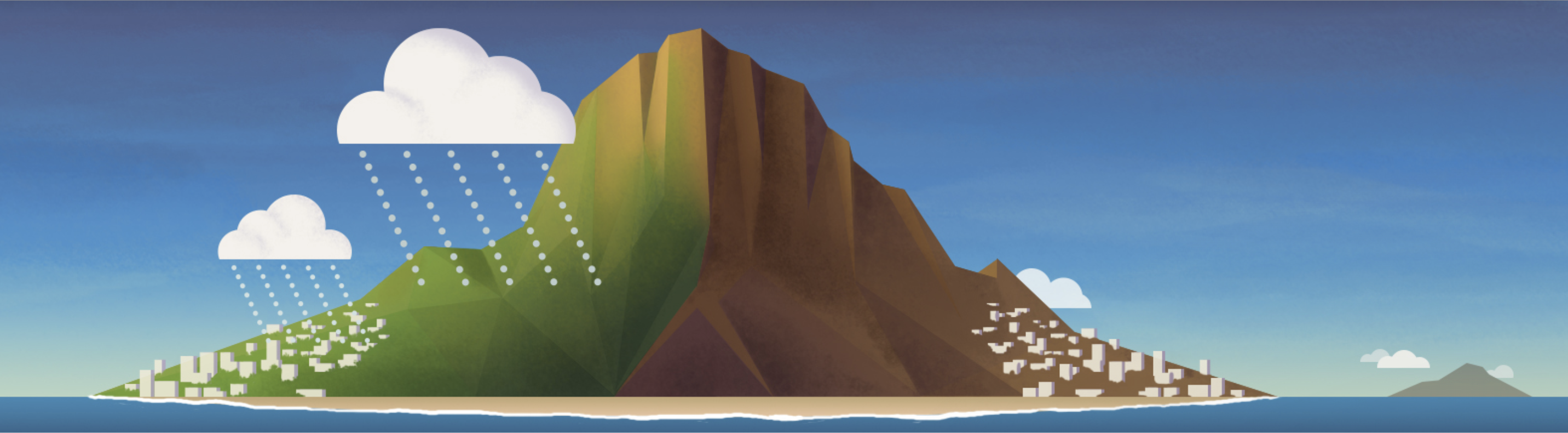
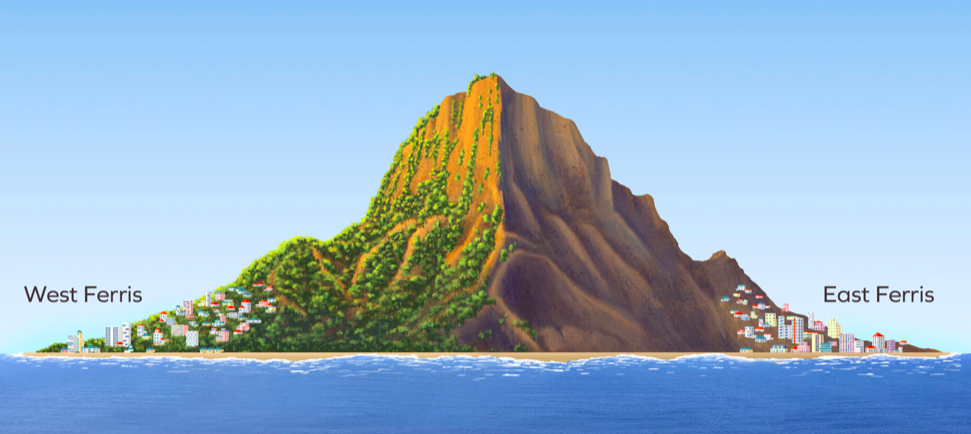
Jesse is looking at a picture of Ferris Island. He is wondering why it rains a lot in West Ferris. Using what you have learned about how water travels, explain to Jesse why West Ferris gets more rain. (8 pts)
Criteria For Success:
Claim - Identify the amount of water vapor on West Ferris and what happens to the water vapor.
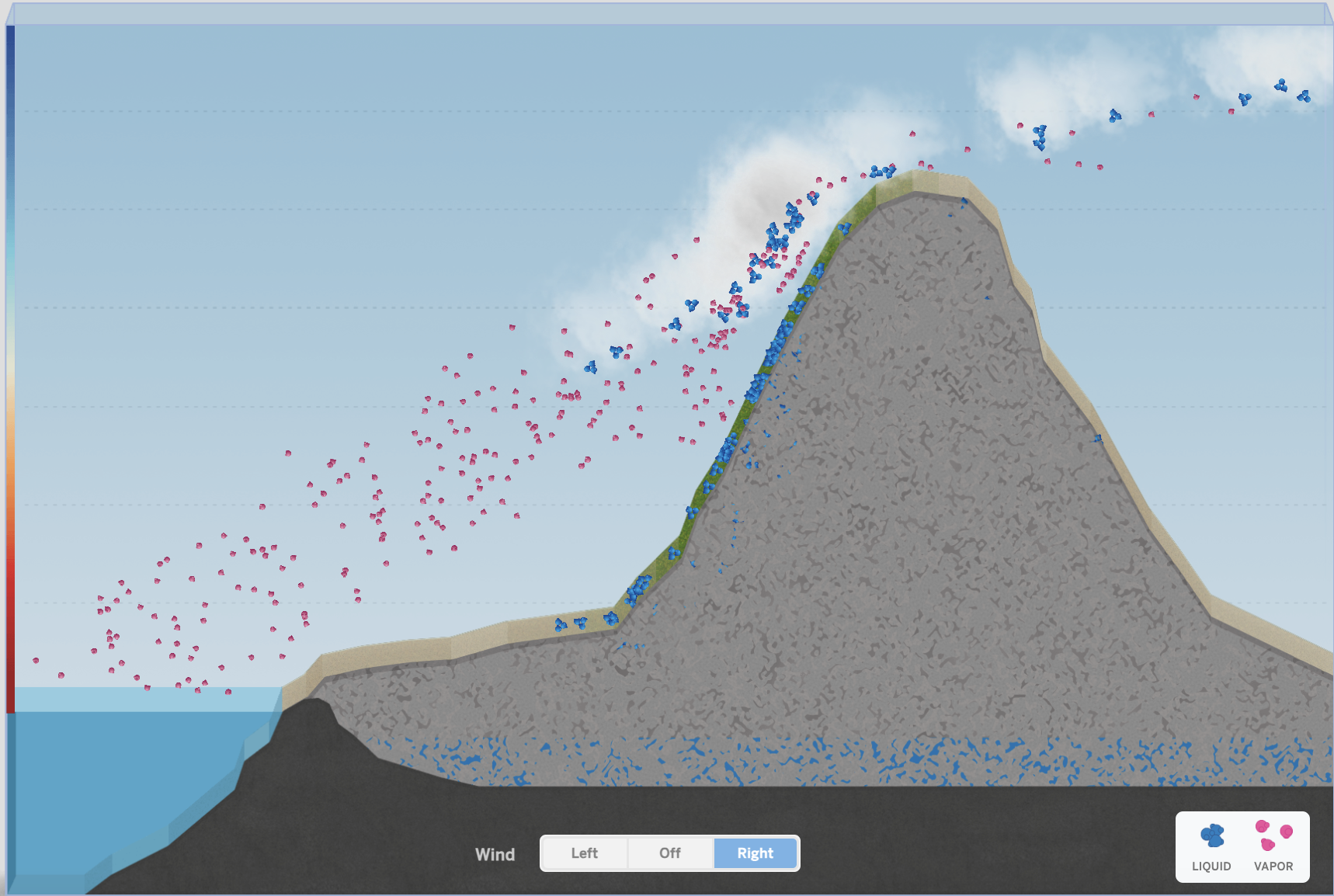
Evidence - Use evidence from the simulation to explain what happens to the water vapor that causes more rain.
Reasoning:
Explain the phase change that forms raindrops
Explain how raindrops form
Identify where the water for raindrops comes from
Identify the amount needed
Identify the temperature
Identify the phase change that forms raindrops
Link to simulation - https://learning.amplify.com/earthsystem/
Jesse is looking at a picture of Ferris Island. He is wondering why it rains a lot in West Ferris. Using what you have learned about how water travels, explain to Jesse why West Ferris gets more rain. (8 pts)
Claim: West Ferris gets more rain because ___________
Evidence: In the sim, it shows ___________
Reasoning:
(Explain the PHASE CHANGE that forms raindrops).
________ is ________.
Raindrops form when ________
A student takes Sample B and adds heat. Which model best shows the particles in the sample after it has been heated? (2 pts)
B) Sample B
C) Sample C
D) Sample D
What could a student do to get one of these samples to change into a liquid? (2 pts)
A) Raise (increase) its temperature so it evaporates
C) Lower its temperature so it evaporates
D) Lower its temperature so it condenses