Files Test
star
star
star
star
star
Last updated over 2 years ago
20 Nsɛmmisa
1
1
1
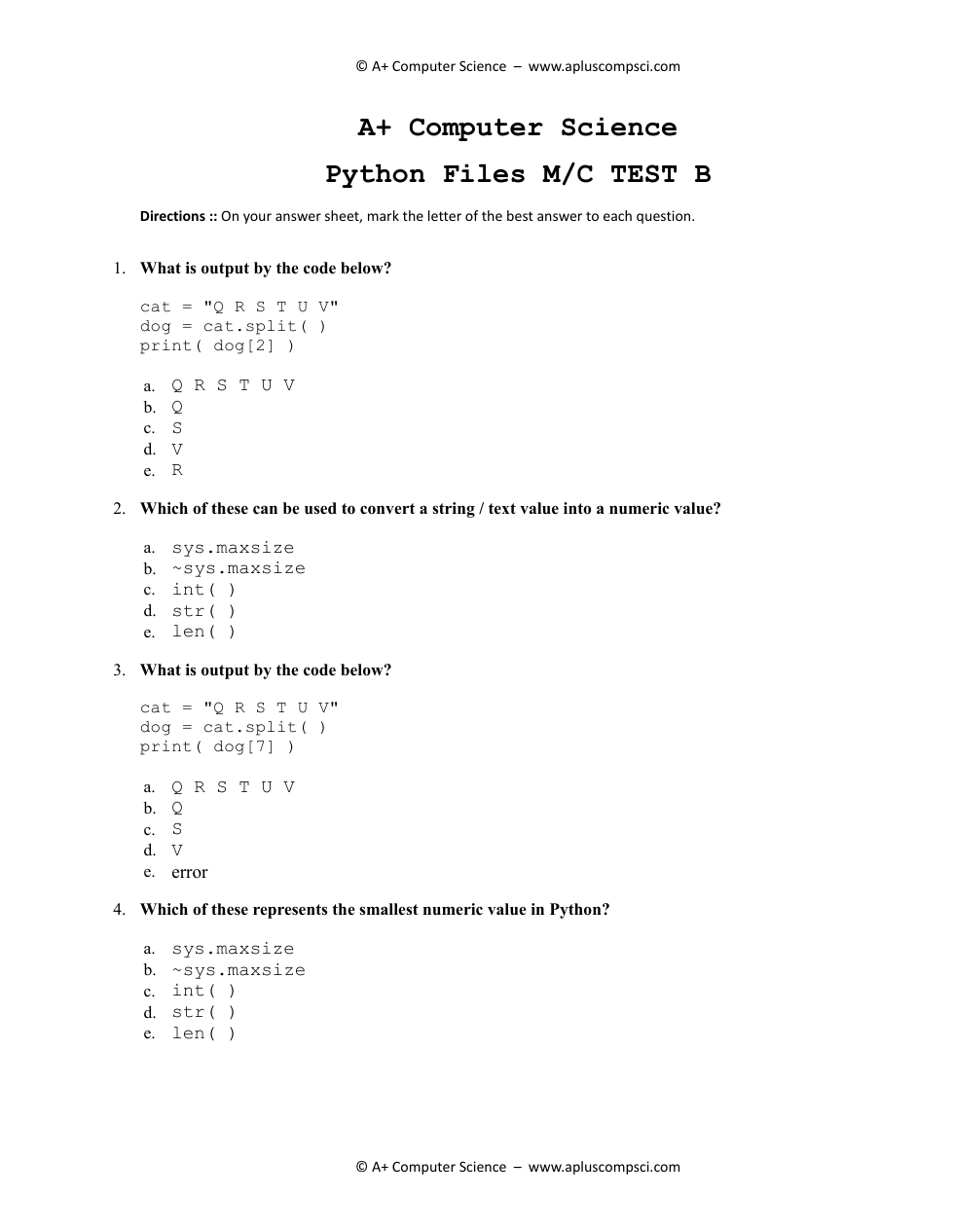
What is output by the code below? cat = "Q R S T U V" dog = cat.split() print(dog[2])
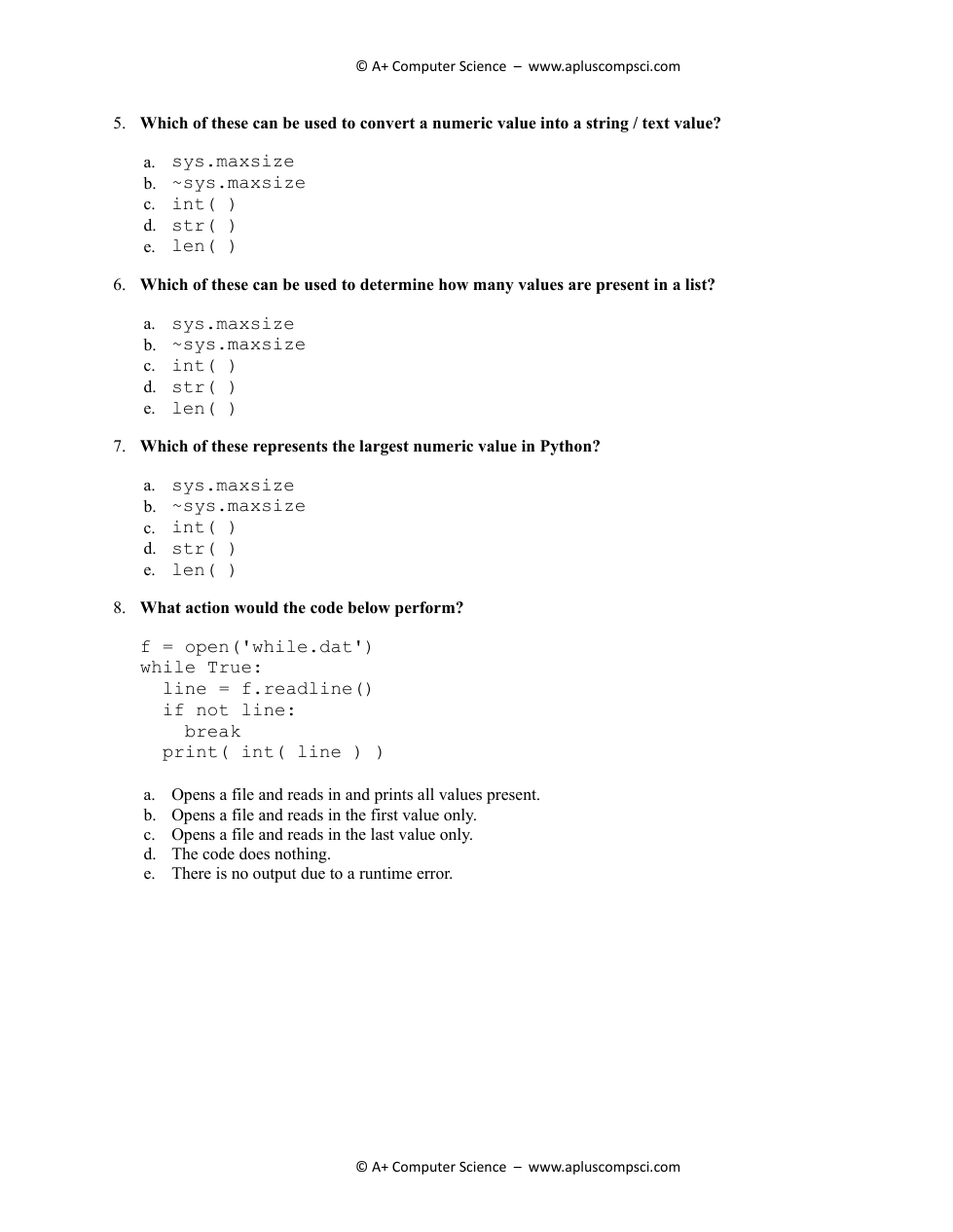
Question 5: Which of these can be used to convert a numeric value into a string / text value?
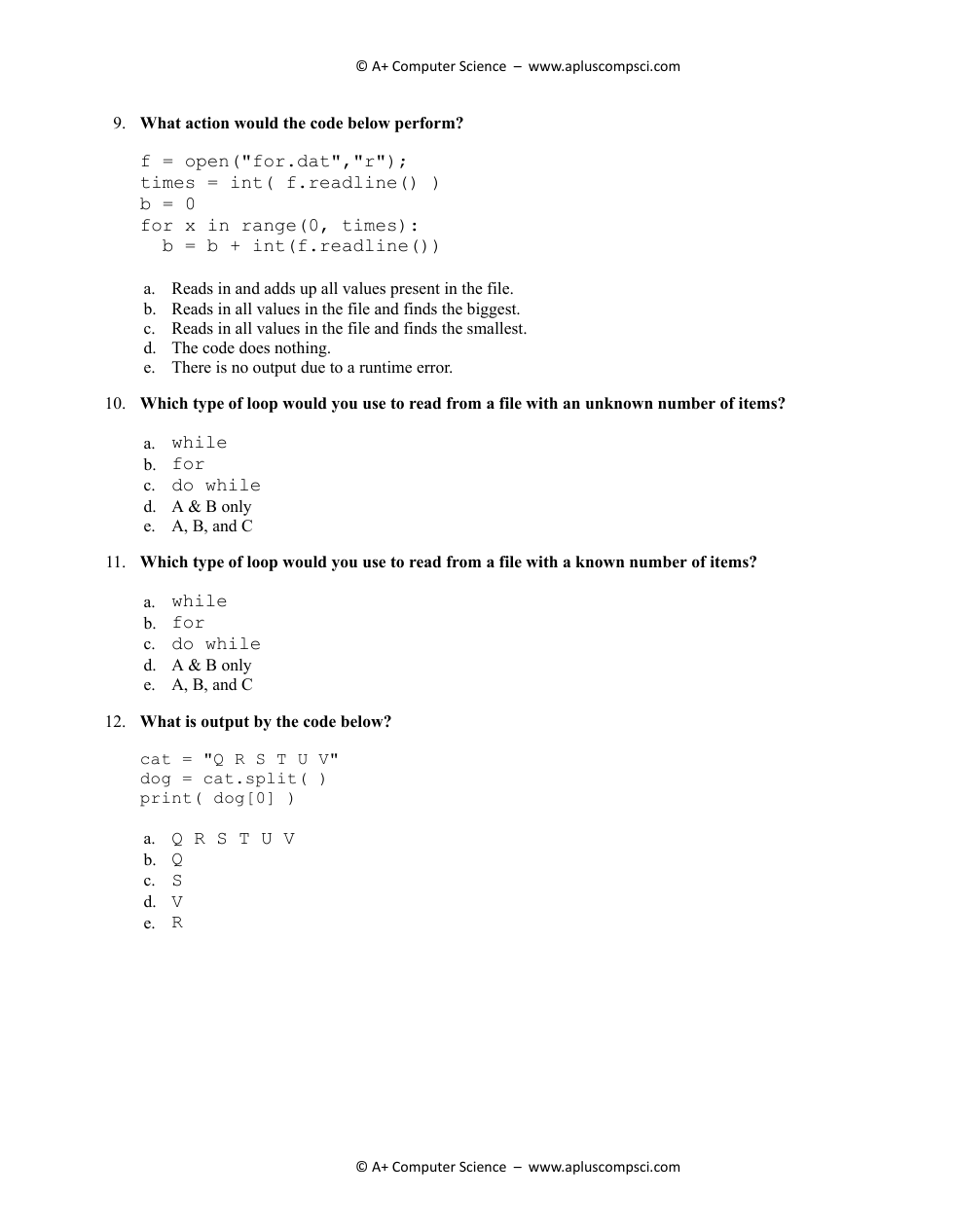
What action would the code below perform? f = open("for.dat","r"); times = int( f.readline() ) b = 0 for x in range(0, times): b = b + int(f.readline())
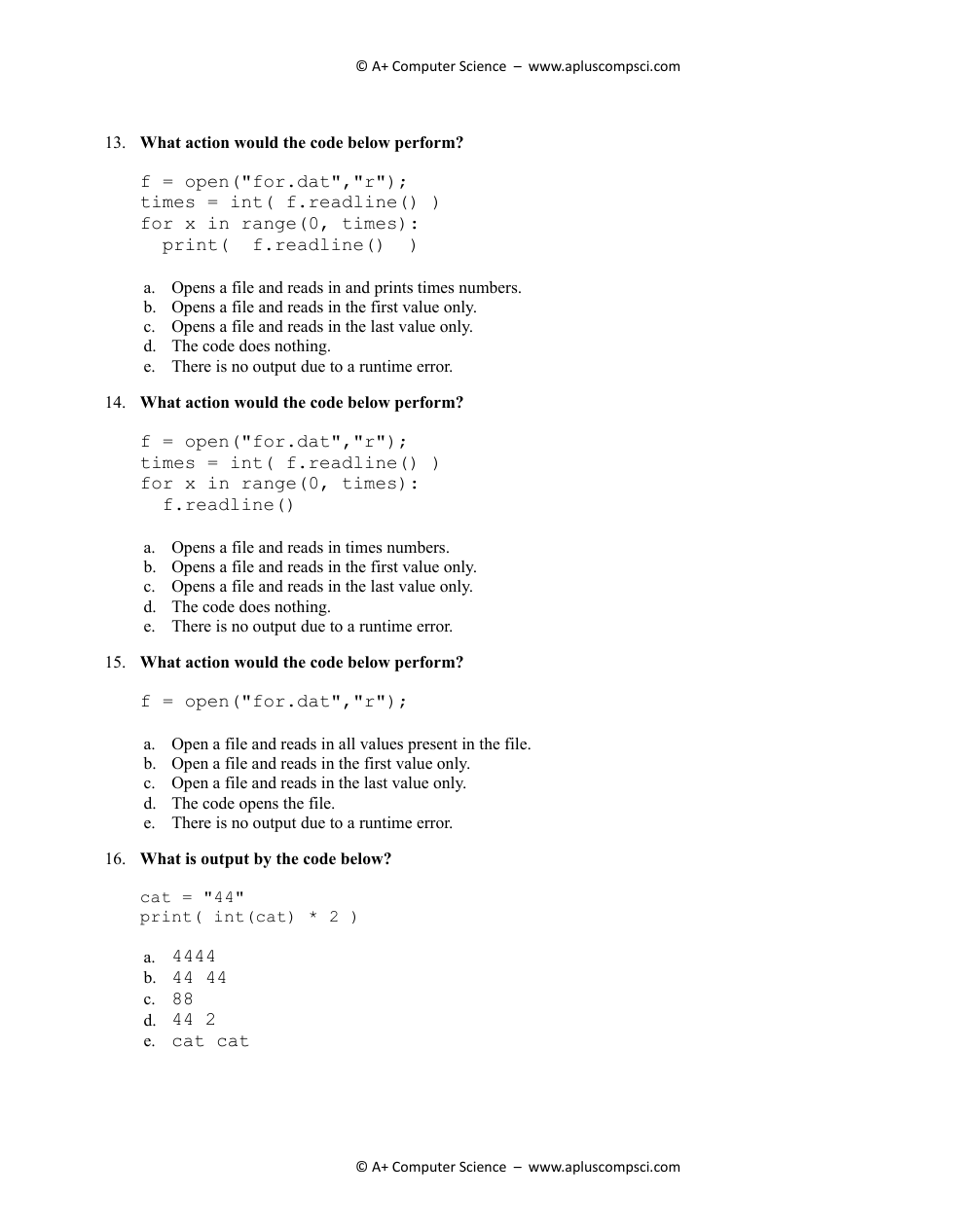
What action would the code below perform?
f = open("for.dat","r");
times = int( f.readline() )
for x in range(0, times):
print( f.readline() )
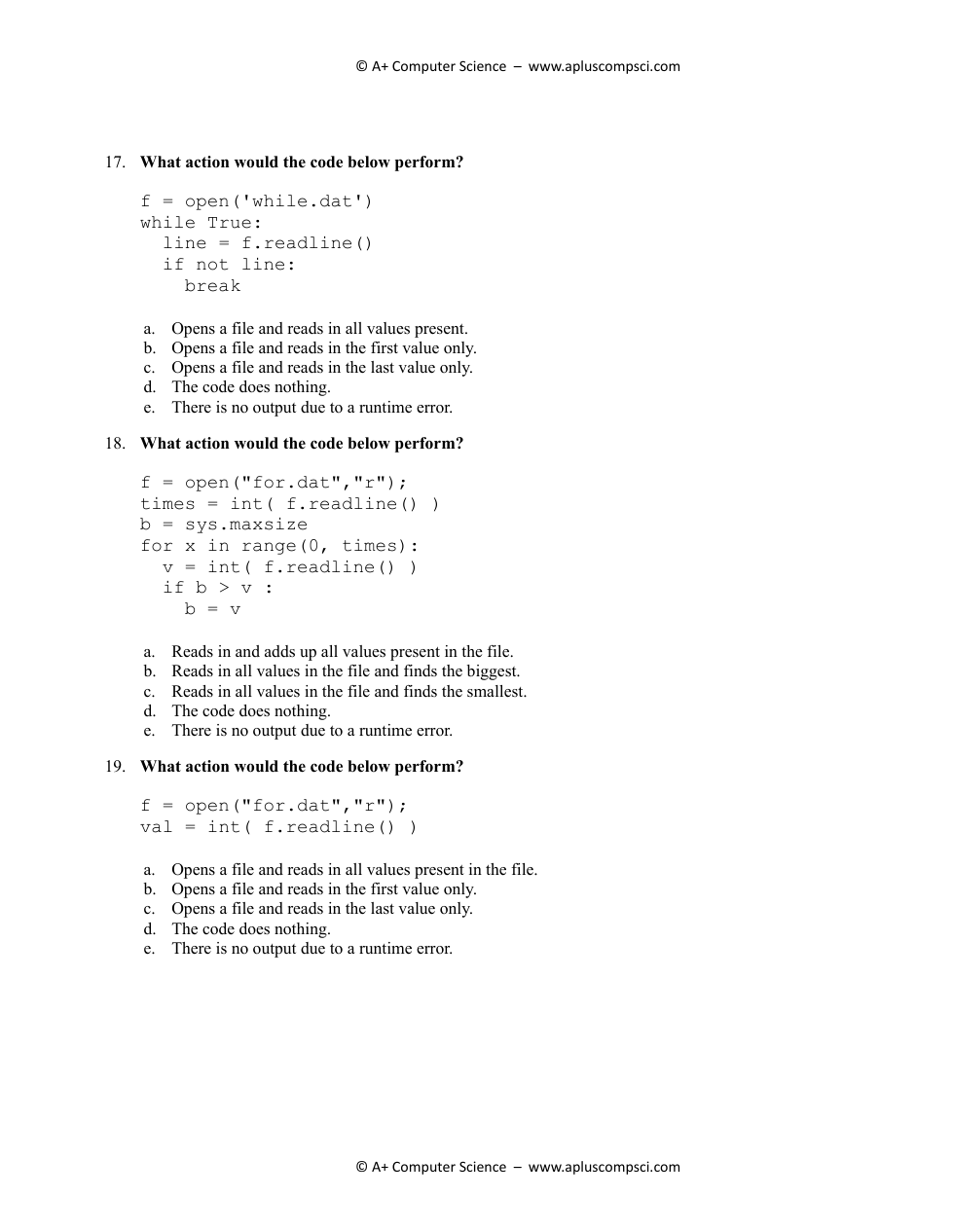
What action would the code below perform? f = open('while.dat') while True: line = f.readline() if not line: break
What action would the code below perform? f = open("for.dat","r"); times = int( f.readline() ) b = sys.maxsize for x in range(0, times): v = int( f.readline() ) if b > v : b = v
What action would the code below perform? f = open("for.dat","r"); val = int( f.readline() )
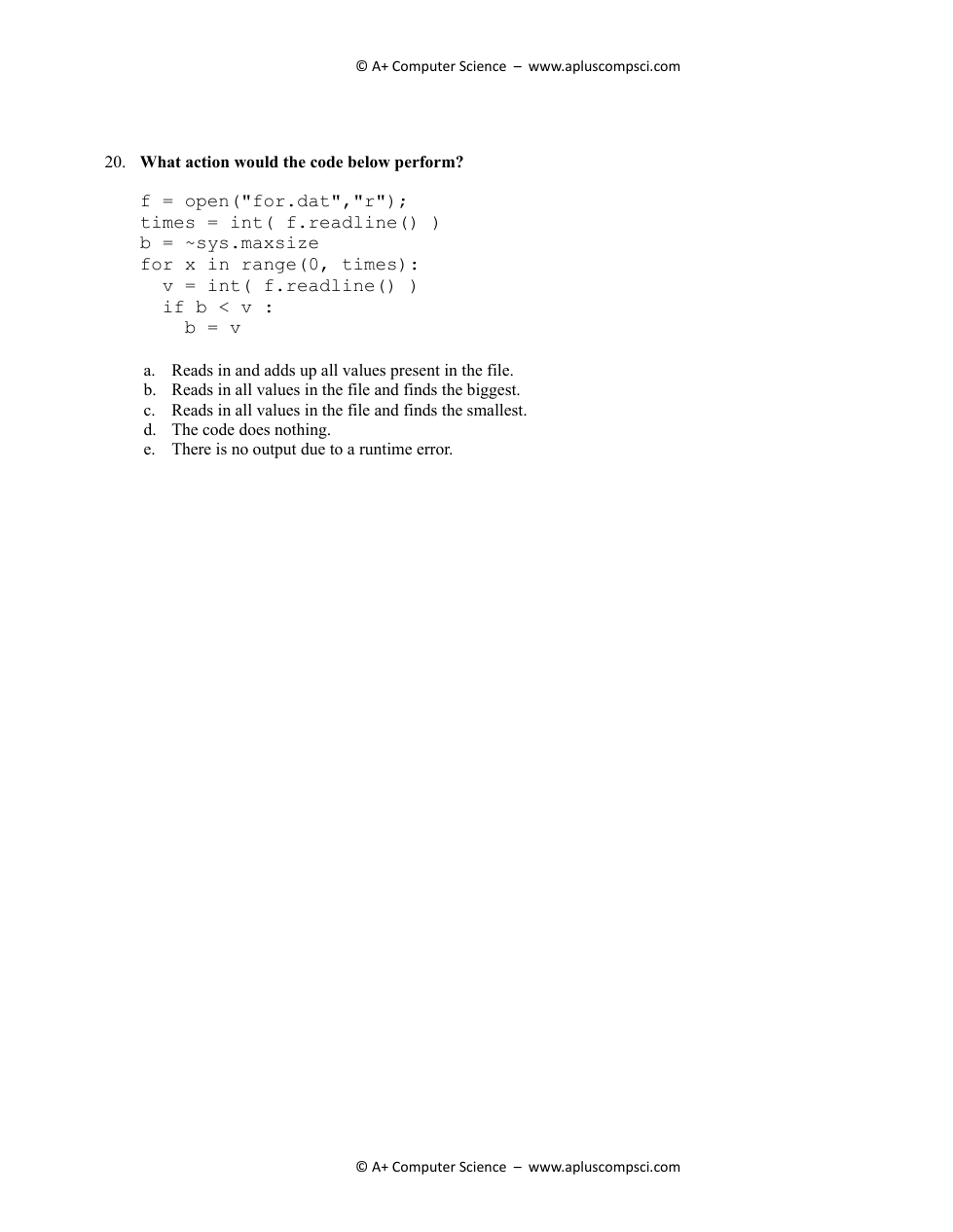
Question 20: What action would the code below perform? python f = open("for.dat","r"); times = int(f.readline()) b = ~sys.maxsize for x in range(0, times): v = int(f.readline()) if b < v : b = v
Which of these can be used to convert a string / text value into a numeric value?
What is output by the code below? cat = "Q R S T U V" dog = cat.split() print(dog[7])
Which of these represents the smallest numeric value in Python?
Question 6: Which of these can be used to determine how many values are present in a list?
Question 7: Which of these represents the largest numeric value in Python?
Question 8: What action would the code below perform? f = open('while.dat') while True: line = f.readline() if not line: break print( int( line ) )
Which type of loop would you use to read from a file with an unknown number of items?
Which type of loop would you use to read from a file with a known number of items?
What is output by the code below? cat = "Q R S T U V" dog = cat.split( ) print( dog[0] )
What action would the code below perform?
f = open("for.dat","r");
times = int( f.readline() )
for x in range(0, times):
f.readline()
What action would the code below perform?
f = open("for.dat","r");
What is output by the code below?
cat = "44"
print( int(cat) * 2 )