3
5.8.D
3
5.8.D
3
5.8.D
3
5.8.D
3
5.8.D
3
5.8.D
Fill in the table.
Sun | Earth | Moon | |
|---|---|---|---|
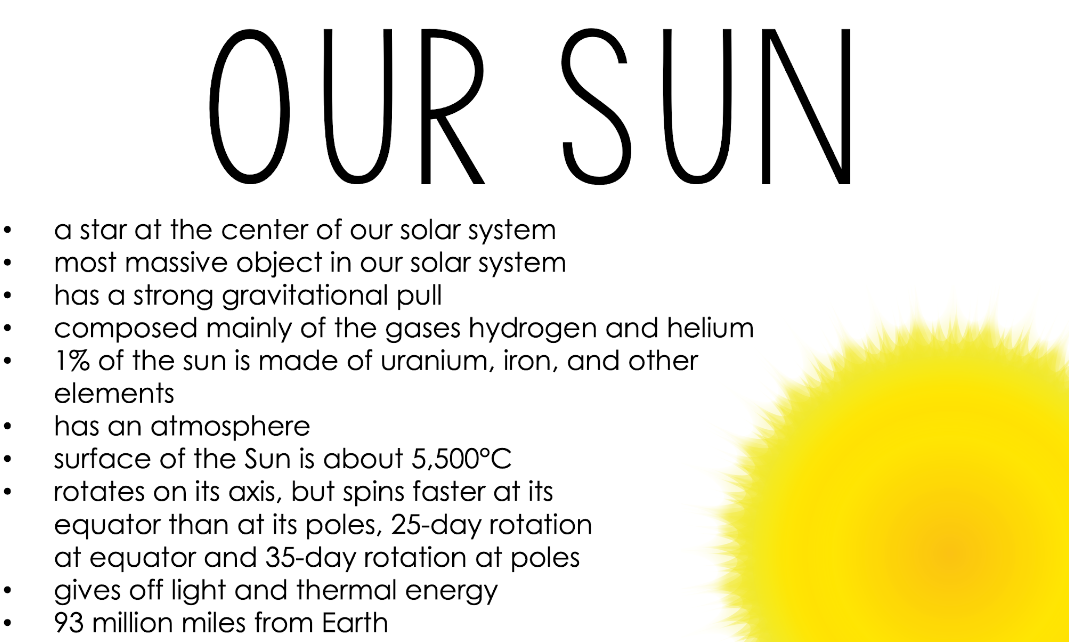
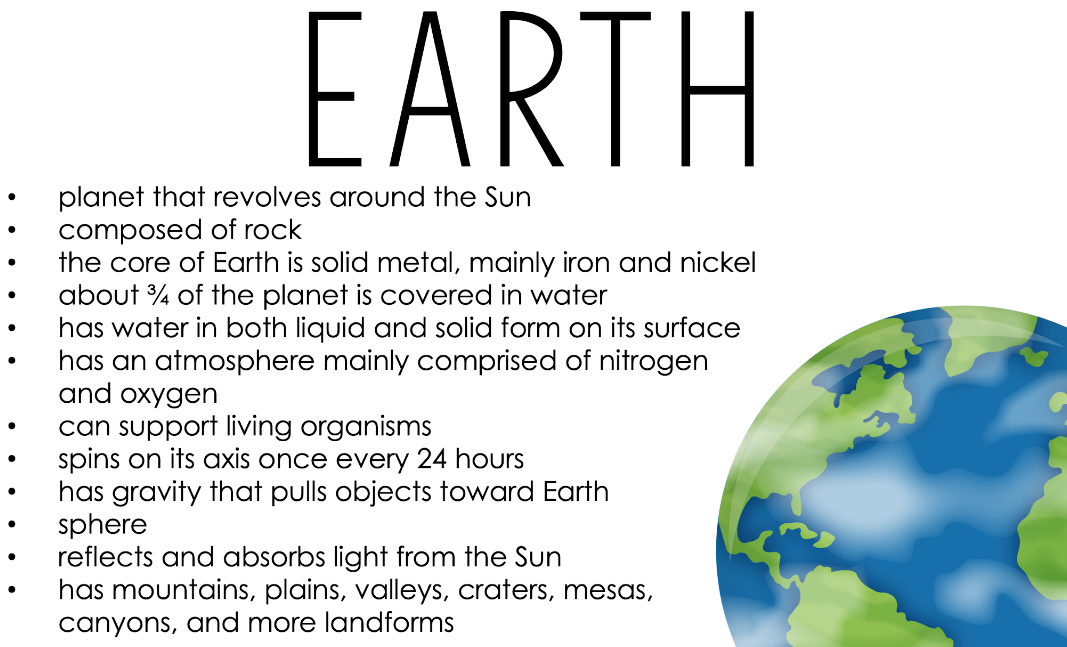
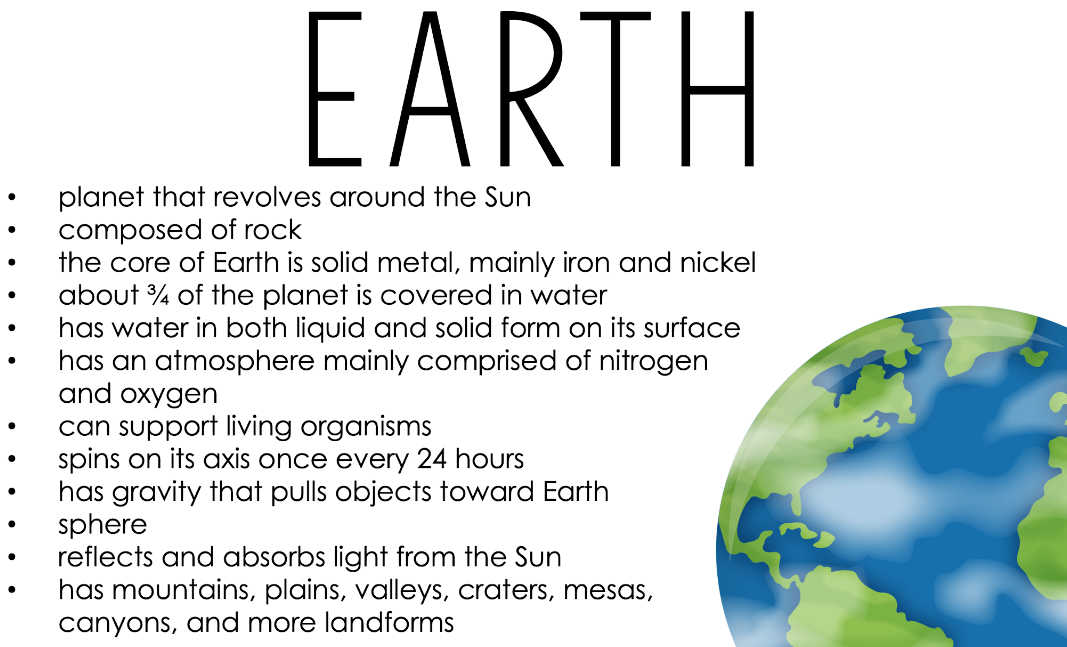
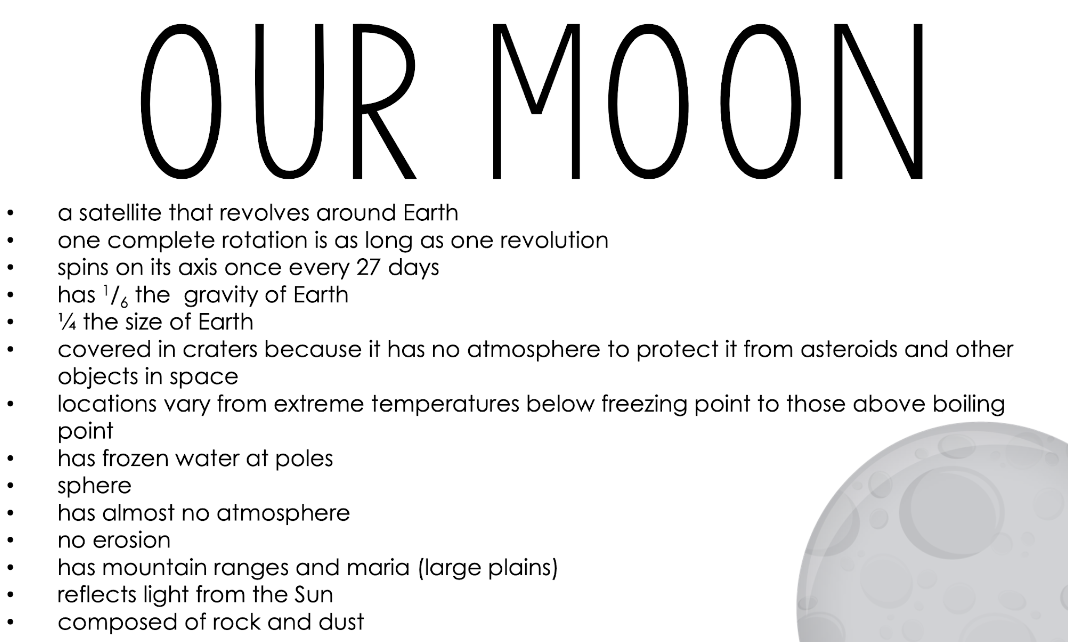
Can support living organisms | |||
Has water | |||
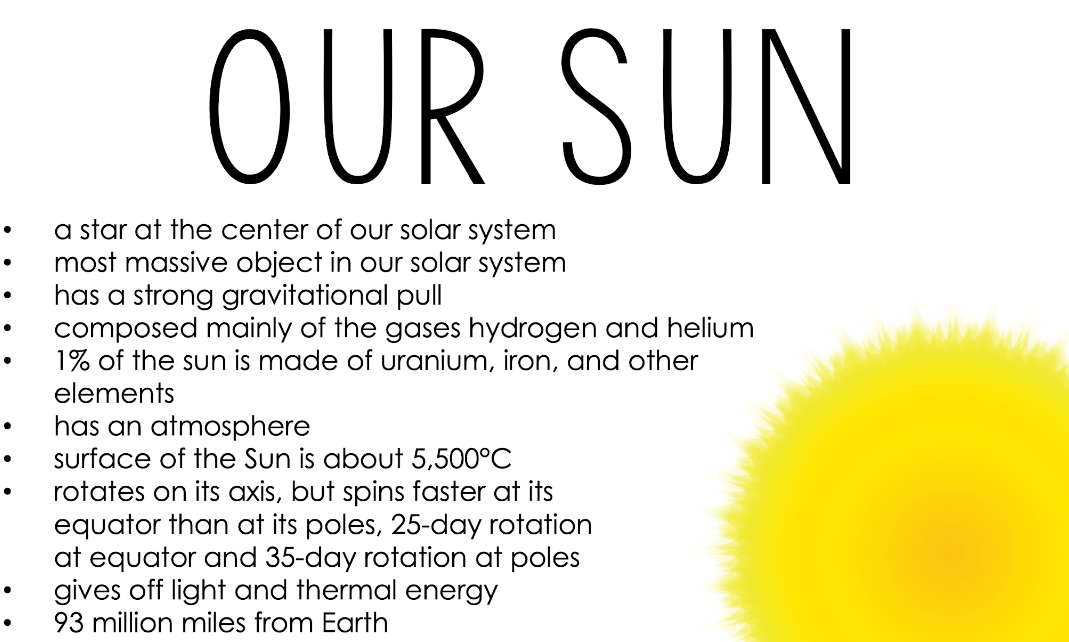
Produces light | |||
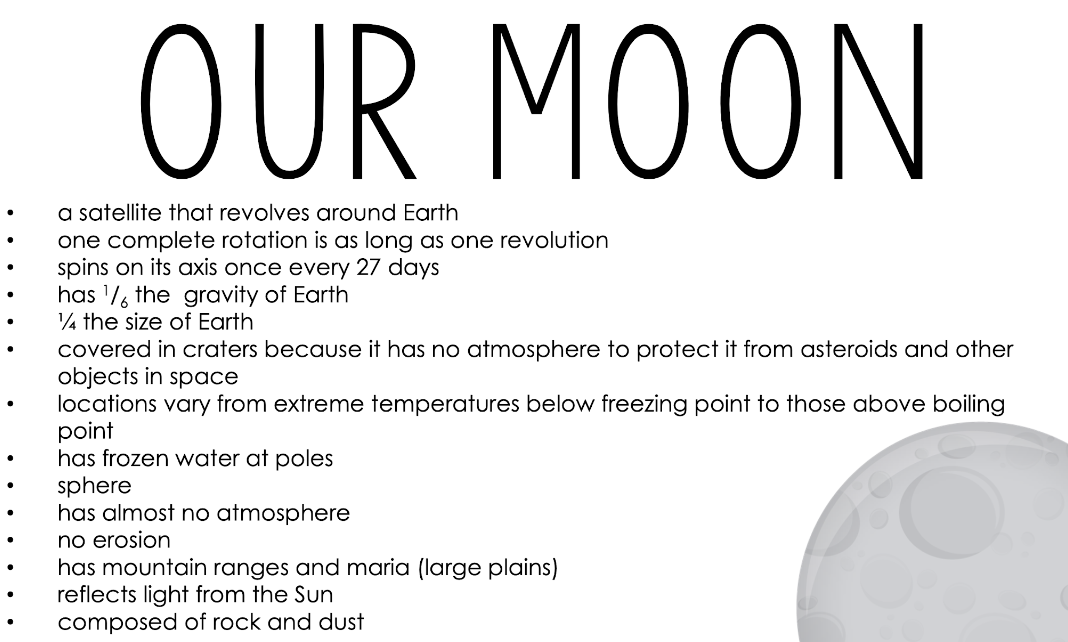
Reflects light | |||
Absorbs and reflects light |
Drag each physical characteristic to either the Sun, Earth, or Moon.
satellite
planet
star
Sun
Earth
Moon
Drag each type of atmosphere to either the Sun, Earth, or Moon.
mostly nitrogen and oxygen
mainly hydrogen & helium
almost no atmosphere
Sun
Earth
Moon
Drag each type of landform to either the Sun, Earth, or Moon.
mountain ranges and maria (large plains)
none
mountains, valleys, plains, canyons and more
Sun
Earth
Moon
Drag each type of gravity to either the Sun, Earth, or Moon.
strong gravitational pull
gravity that pulls objects towards Earth
Sun
Earth
Moon
Drag each type of core composition to either the Sun, Earth, or Moon.
mostly hydrogen and helium gases but also uranium and iron
mostly solid metal (iron and nickel)
rock and dust
Sun
Earth
Moon
Drag each type of rotation to either the Sun, Earth, or Moon.
spins on axis once every 24 hours
spins on axis once every 27 days
rotates on axis, but spins fastest at it equator
Sun
Earth
Moon