Ɛhia
1
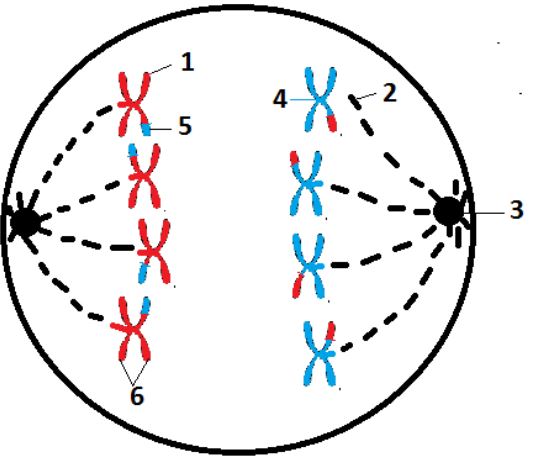
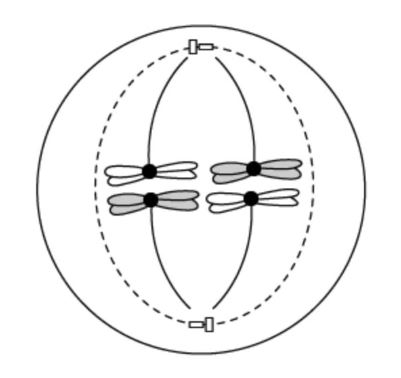
Identify the phase in the image alongside.
Identify the phase in the image alongside.
Ɛhia
1
Identify the phase in the image alongside.
One of these events does not take place during meiosis-
The meiotic division forms-
A cell undergoes Meiosis I with no crossing over between homologous chromosomes. Which outcome is most likely?
Name the event wherein the paternal and maternal chromosomes change their material or exchange the parts with each other in cell division. Which phase does it happen?
Drag and drop the description to the category that it belongs to.
Four daughter cells with haploid number of chromosomes is formed.
Crossing over occurs here.
Centrioles move towards the poles.
Followed by Cytokinesis
Two daughter cells with haploid number of chromosomes is formed.
Homologous chromosomes align at the equator.
The sister chromatids of recombinant chromosomes move apart
Nucleolus and nuclear membrane disappear.
Meiosis-I
Meiosis-II
Both Meiosis-I and Meiosis-II
A student claims that crossing over is unnecessary because independent assortment alone creates genetic diversity. Which statement best evaluates this claim?
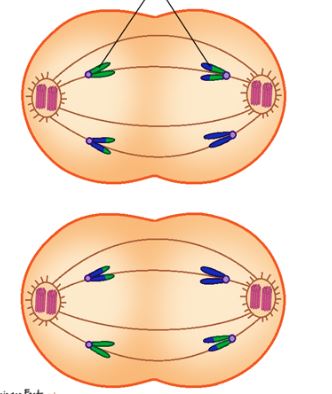
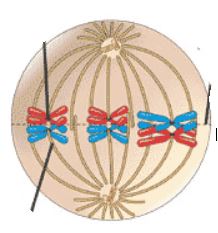
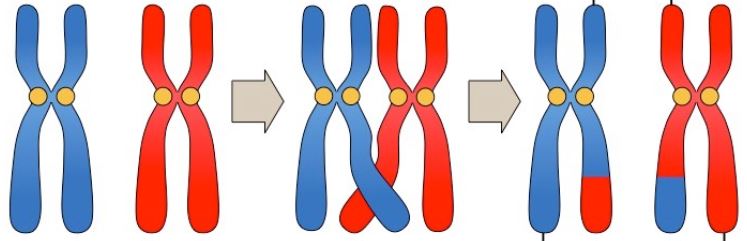
Match the image with the correct phase name-
Anaphase-I | Anaphase-II | Metaphase-I | Crossing Over | |
|---|---|---|---|---|
| ||||
| ||||
| ||||
|
The number of chromosomes in muscle cells of a coyote are 78. What will be the number of chromosomes in its sperms.
Haploid gametes have ......# of chromosomes whereas Diploid cells have .....# of chromosomes
Which of the following best describes Non disjunction?
The risk of non disjunction increase with-
One difference between Autosomes and sex chromosomes humans is-
How does independent assortment affect genetic variation?
What purpose does a karyotype serve in genetics?
Which statements correctly describe chromosomes during metaphase II? (Check all that apply)
If nondisjunction occurs during anaphase II of one daughter cell, which outcomes are possible in the resulting gametes? (Check all that apply)
What are the similarities between meiosis I and meiosis II?
Rearrange the events in Meiosis-I in the correct order
The nucleolus and the nuclear membrane reappears.
The homologous chromosomes exchange their parts.
The recombinant chromosomes move apart.
The Homologous pairs of chromosomes line up at the equator/middle.
Synapsis occurs.
The two haploid daughter cells completely divides and is ready to go next.
Categorize the following description to correct category
Contains two set of chromosomes
Contains single set of chromosomes
Example is a Liver cell
Example is a sperm
Somatic cell
Gamete
Haploid
Diploid
The reason for the choice of your answer in previous question is-