What are the products of a combustion reaction involving glucose and oxygen?
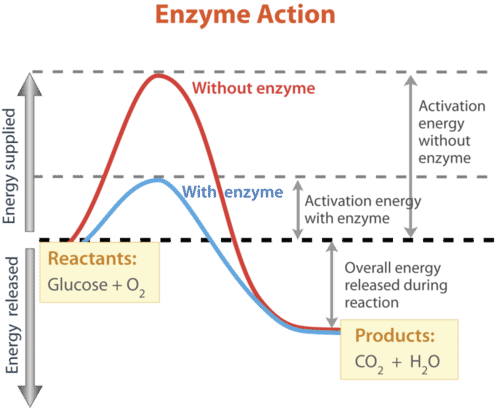
What are the products of a combustion reaction involving glucose and oxygen?
What happens in an exothermic reaction?
What is the general chemical equation for an exothermic reaction?
What is an example of an exothermic reaction?
What is a chemical reaction that absorbs energy called?
What is the general chemical equation for an endothermic reaction?
Why does a chemical cold pack cool down?
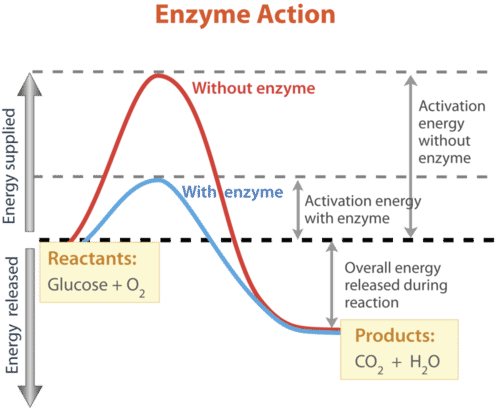
What is activation energy in a chemical reaction?
What is activation energy similar to?
Does a chemical reaction continue needing activation energy after it has started?
What term describes the sum of all biochemical reactions in an organism?
Where do biochemical reactions occur in living organisms?
Which two fields of study are needed to fully understand biochemical reactions?
Which biochemical reaction breaks down molecules into smaller units?
What type of reaction is the joining of amino acids to form a protein?
Which type of reaction releases energy?
What type of reaction occurs when your body digests food? Hint: Glucose.
What are biological catalysts in organisms called?
Why must the rate of most biochemical reactions be increased by a catalyst?
What is the main role of enzymes in biochemical reactions?
Are enzymes used up in the reactions they control?
How are enzymes different from other catalysts?
What is the efficiency of enzymes in catalyzing reactions?
What role do enzymes play in biochemical reactions?
What is activation energy in the context of biochemical reactions?
Which phrase best describes a catalyst?
What are the products of a combustion reaction involving glucose and oxygen?
What happens to the activation energy in the presence of an enzyme?
What is the role of enzymes in a chemical reaction?
What is released during a combustion reaction of glucose and oxygen?
What is the role of enzymes in a biological reaction?
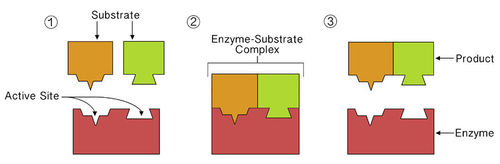
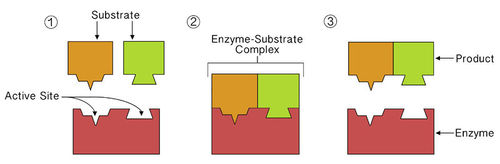
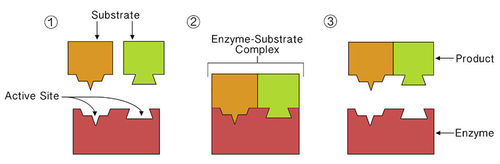
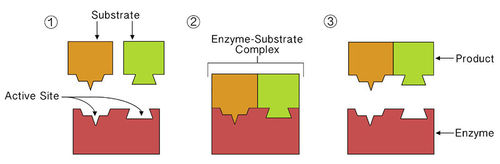
What is the name given to the reactant molecules enzymes bind?
Where do enzymes bind reactant molecules?
How do enzymes position reactants for a reaction?
What is the term for the molecule that binds an enzyme at its active site?
What occurs when an enzyme and substrate form a complex?
What happens to the products after a biochemical reaction on the enzyme's active site?
What factors can influence the activities of enzymes?
Which enzyme functions best in the acidic environment of the stomach?
What is the optimal pH for the activity of pepsin?
Trypsin operates optimally in which part of the digestive system?
What happens to most enzymes at temperatures higher than 98.6˚F?
Chemical reactions do not necessarily involve energy.
An endothermic reaction is one that absorbs energy.
The activation energy is the energy used to end a chemical reaction.
Exothermic reactions absorb energy from surroundings.
Biochemical reactions are chemical reactions that take place inside the cells of organisms.
All chemical reactions in an organism need enzymes to take place.
Biological catalysts that speed up biochemical reactions are known as enzymes.
Enzymes increase the activation energy required to start biochemical reactions.
Enzymes are unaffected by changes in temperature, ionic conditions or pH.
The function of an enzyme is not dependent on its surrounding environment.
Enzymes can help to accelerate biochemical reactions.