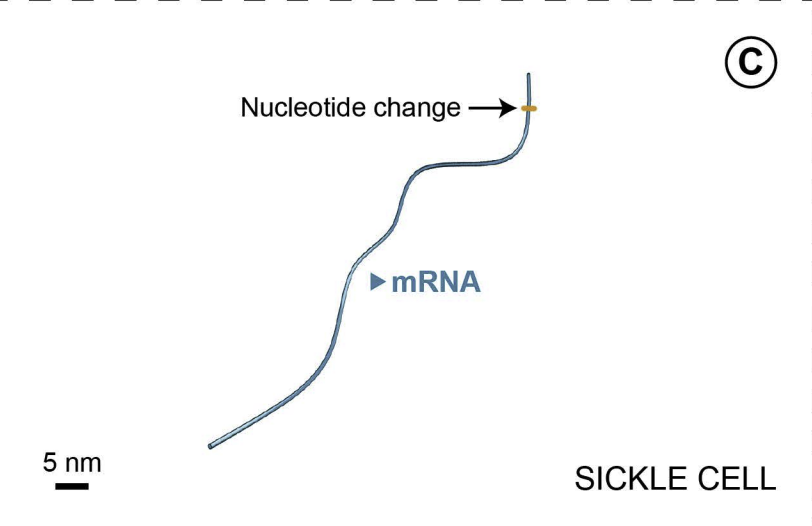
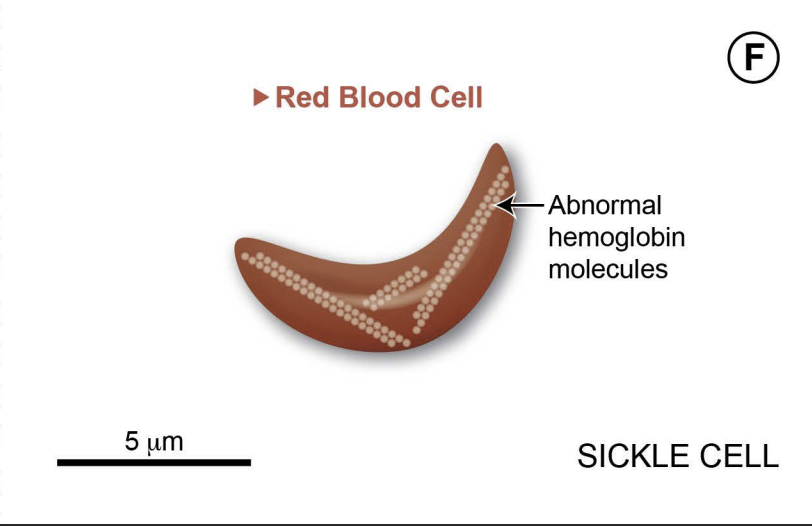
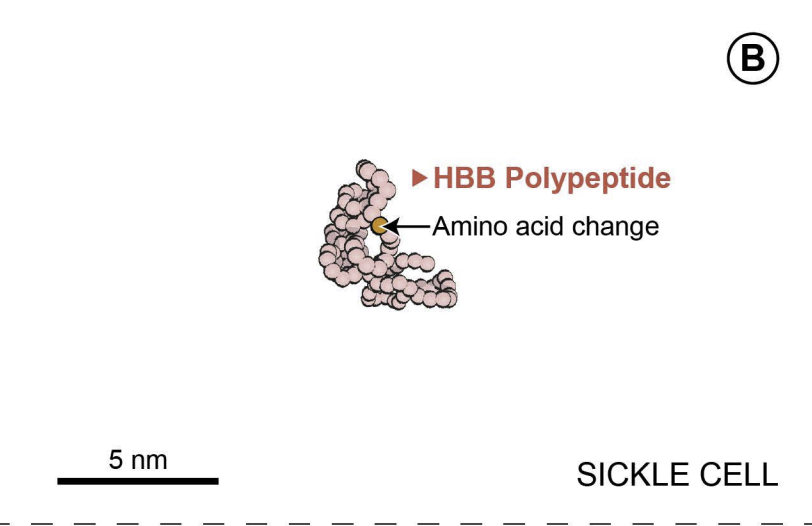
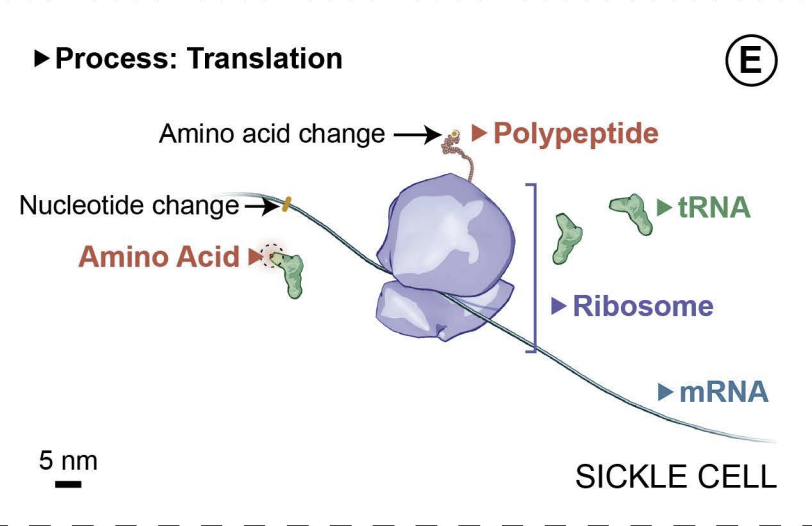
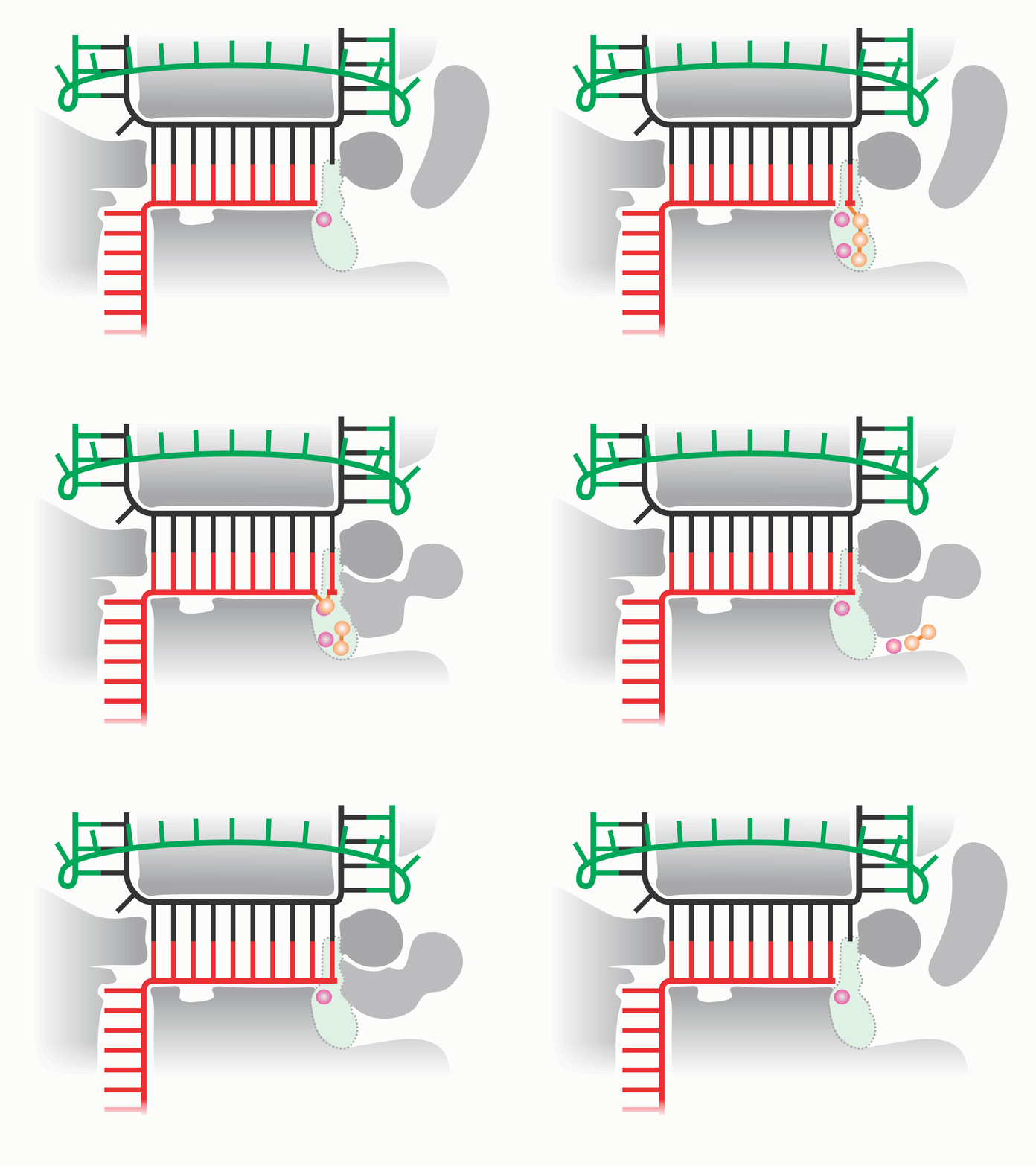
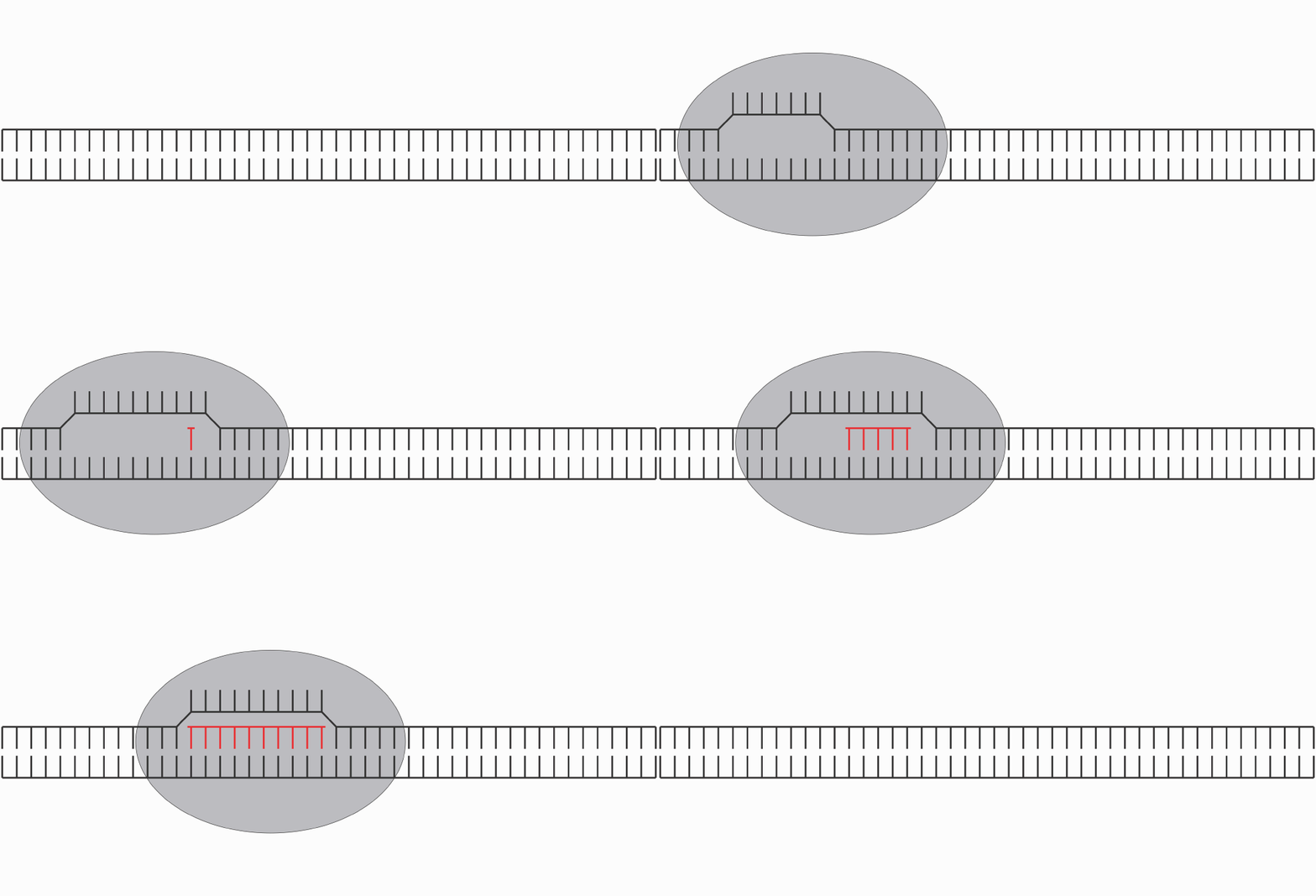
meant to accompany HHMI resources and cards. Not finalized; extensive WIP.
Whole Class-Intro with Video
The video does not require notes but it does require attention. It is your anchoring phenomenon or concept for the activity.
3 points
3
Question 1
1.
Write QUESTIONS about this video. You may also write CONNECTIONS you have to this concept in life or media.
The video mentions that Ceniya had a blood test right after she was born. Babies in the United States usually have blood tests and other exams to check for health issues.
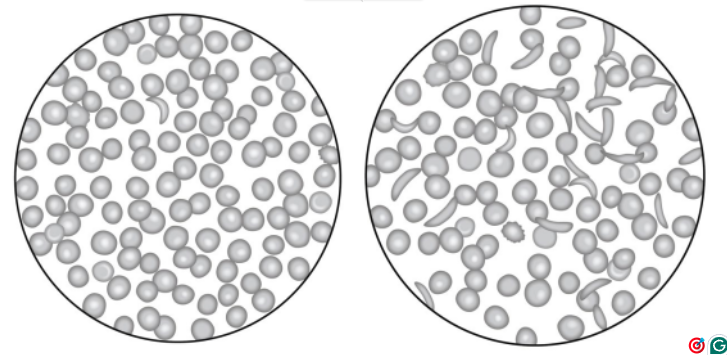
One type of blood test is a blood smear, which shows a person’s blood cells. Figure 1 shows blood smear results from individuals like Ceniya and Ingrid.
Figure 1. Illustrations of blood smears from individuals like (left) Ceniya and (right) Ingrid.
4 points
4
Question 2
2.
DESCRIBE Figure 1, in detail.
1 point
1
Question 3
3.
Propose RESEARCH QUESTIONS about Figure 1.
(If you cannot come up with a research question; something that could be investigated scientifically and not just with Google, propose any questions you have about the images.
1 point
1
Question 4
4.
Suggest INFORMATION that you think you need to start investigating these questions.
1 point
1
Question 5
5.
Do the cells in figure 1 (Ceniya vs Ingrid) all function the same way? Why or why not?
Independent/Partner Investigation
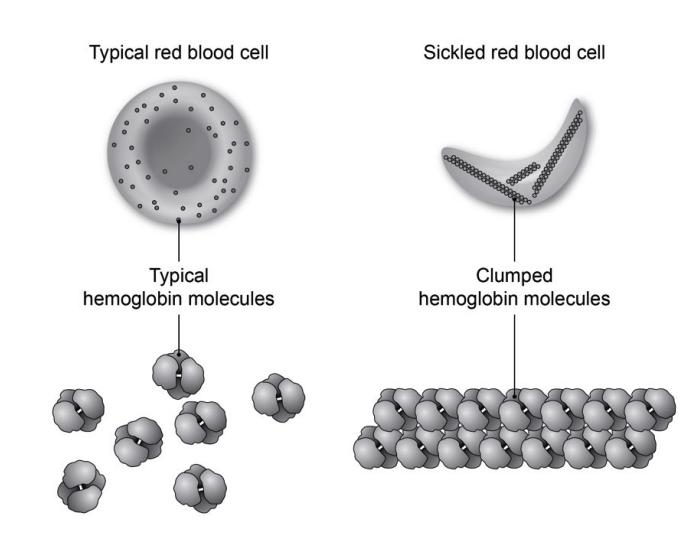
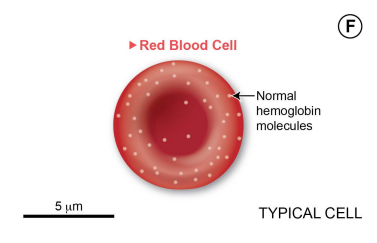
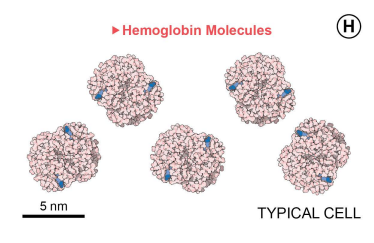
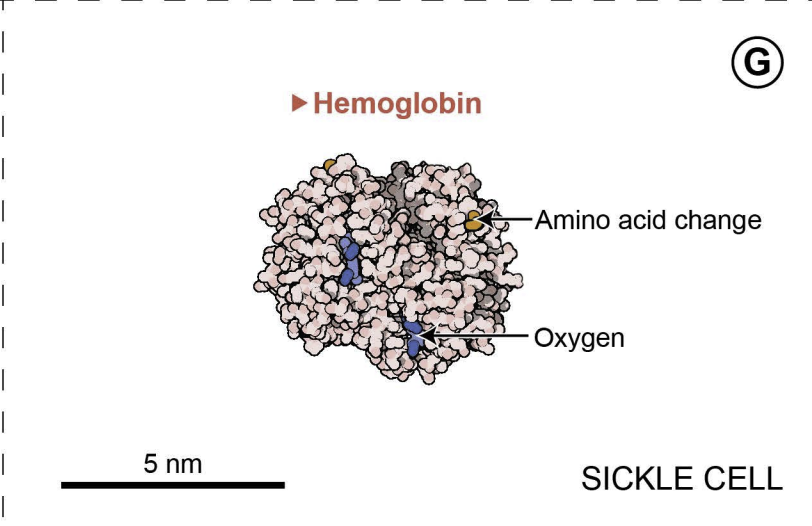
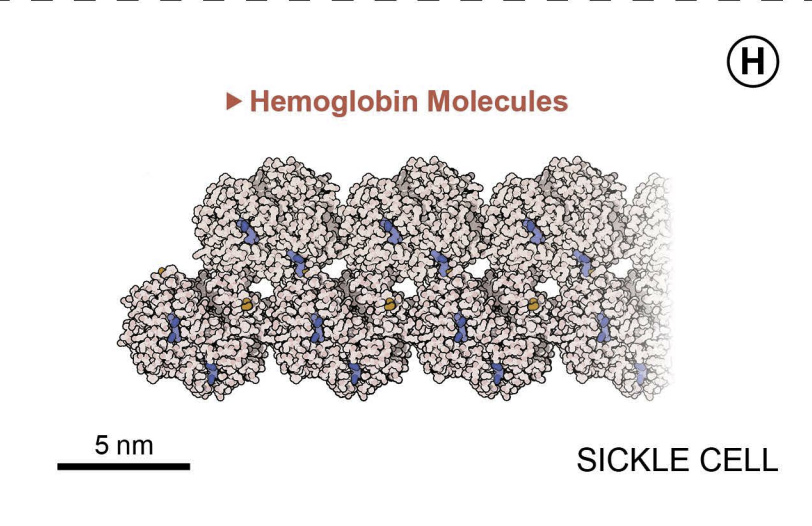
Figure 2 shows typical and sickled red blood cells, as well as the hemoglobin molecules found in each cell type.
Use the image at left to support these answers.
1.5 points
1.5
Question 6
6.
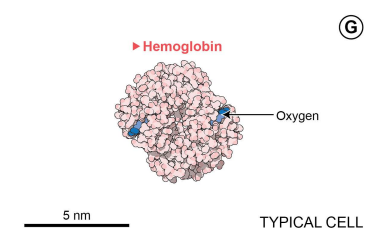
One type of blood cell, the __________ blood cell, contains a __________ called hemoglobin, which it uses to carry __________ to other cells.
Red blood cells travel throughout the body via a large network of blood vessels: narrow tubes like veins, arteries, and capillaries that transport blood.
1 point
1
Question 7
7.
FRESHMEN, SKIP.
Quick Review: While this is not the main subject of this study, this is a relevant concept from the first six weeks.
The width of a tube varies depending on its proximity to the heart; close to the heart, the tubes are wide arteries. At the extremities like the fingertips, the tubes are narrow capillaries.
These capillaries have an increased _______ ratio compared to the arteries. This means that while blood doesn't flow quickly 'along' the hose, it is very easy for it to _______ (move passively along a concentration gradient) out to oxygenate the cells.
4 points
4
Question 8
8.
COMPARE and CONTRAST the typical and sickled red blood cells and their associated hemoglobin molecules.
7 points
7
Question 9
9.
Using information from the above questions and introduction video, summarize what you understand so far.
25 words is not enough, 50 words is probably there, 75 words is almost certainly there, 200 words is too many.
2.5 points
2.5
Question 10
10.
The purpose of the _______ blood cell (RBC) is to transport gaseous _______ from the lungs to all other organs and tissues in the body.
A typical erythrocyte (RBC) is _______ -shaped, and flexible.
A disorder called sickle-cell anemia leads to RBCs that stack up and _______ vessels.
This prevents effective _______ transfer to the body.
Creating a Sequence for the Central Dogma
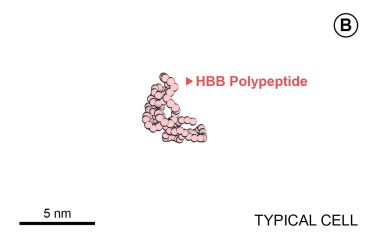
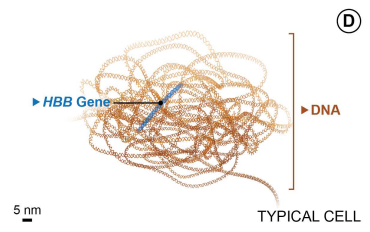
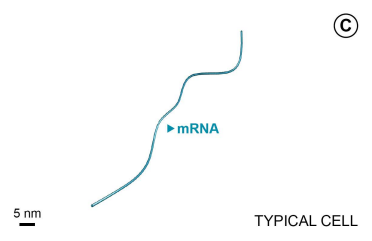
You are highly encouraged to use the physical cards first and then the digital sort so that you have color images and a reference to write form.
4 points
4
Question 11
11.
You will not have a check-answer button.
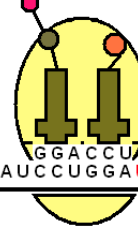
Sequence the typical cell cards, discussing with a partner why you have placed them where you have.
As you work through this part of the activity, keep this driving question in mind:
Where is the origin of the change that results in clumped hemoglobin molecules and sickled red blood cells?
5 points
5
Question 12
12.
Provide reasoning for this specific sequence. Your reasoning should not be 'I know the steps of the central dogma'; it should be derived from the card sort, including vocabulary and hints of sequence from the image layouts. See the hint for alternate phrasing for how to write this answer.
4 points
4
Question 13
13.
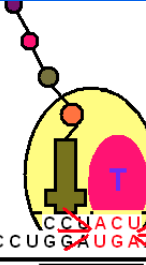
Sequence the sickle cells. As before, you won't have a check answer.
6 points
6
Question 14
14.
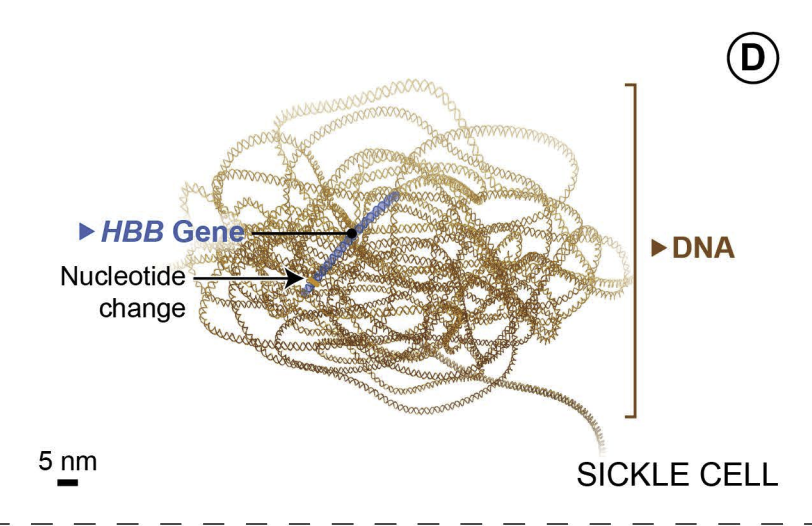
Compare and contrast; what changed during sickle cell anemia?
Central Dogma Explainer
Go here, and choose "Central Dogma" section at the top.
Work through the tabs under the section. This is your chance to get the order correct; you should return to questions 11 and 13 and edit them, paying attention to what you got wrong the first time. Then, you can add information to question 12- you should show that it is added from the explainer, either by bolding or changing the color or writing in all CAPS.
https://learn.genetics.utah.edu/content/basics/transcribe/ will also help; the visual models aren't as directly aligned, but if you pay attention to what is happening in the pictures you will see the similarities.
Now, you can ask to have your sequences checked visually, or you can do so here by typing the sequence of letters for the cards in the question below and calling it out to me that you're ready for a check.
1 point
1
Question 15
15.
The correct card sequence is: _______ (enter letters only, no spaces, commas).
Remember: Use the interactive to help you adjust this and check your work. You are welcome to ask me for feedback; if I see a minor error I'll certainly correct it for you, but if it's all out of order I'll ask you to reference your two activities again.
Transcription vs Translation
If you did a good job on questions 11-15, these should be easy. If these are tough or you think you couldn't do them without the provided word bank and hints, you need to stop and go back to using the HHMI explainer to help.
Each of these vocabulary words, their general structure, and function, is required knowledge for the test.
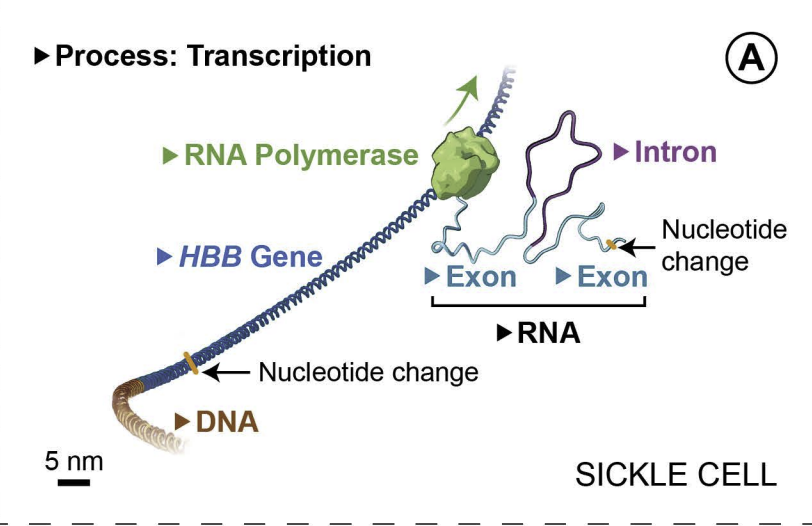
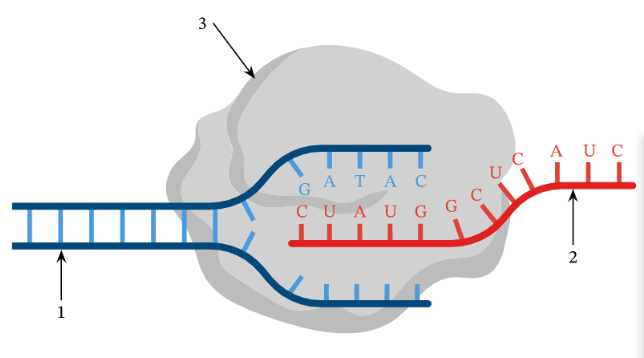
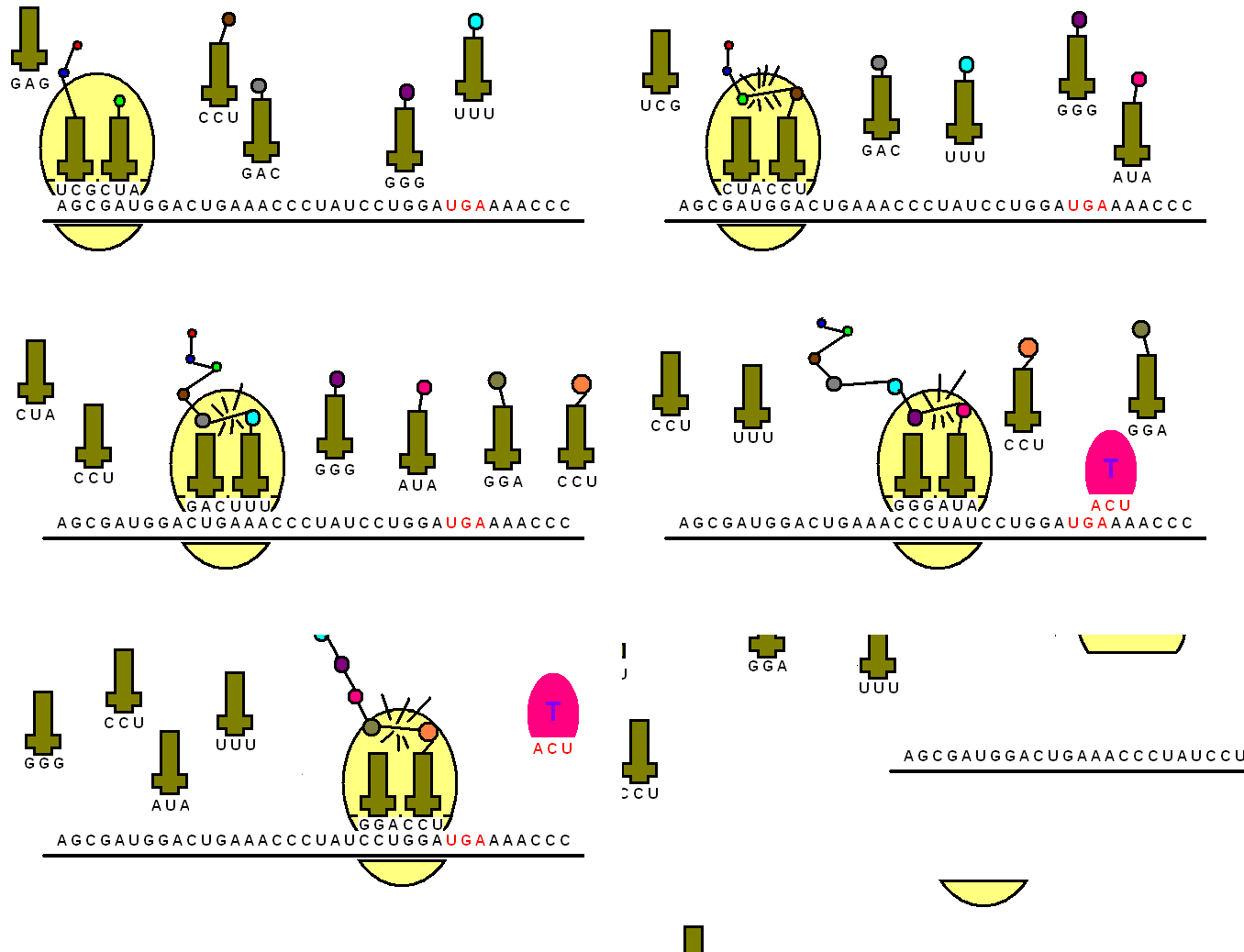
The next few questions will expand on this model.
Other Answer Choices:
DNA
DNA polymerase
RNA polymerase
RNA
3 points
3
Question 17
17.
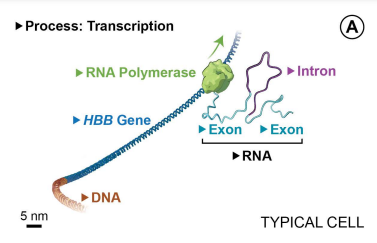
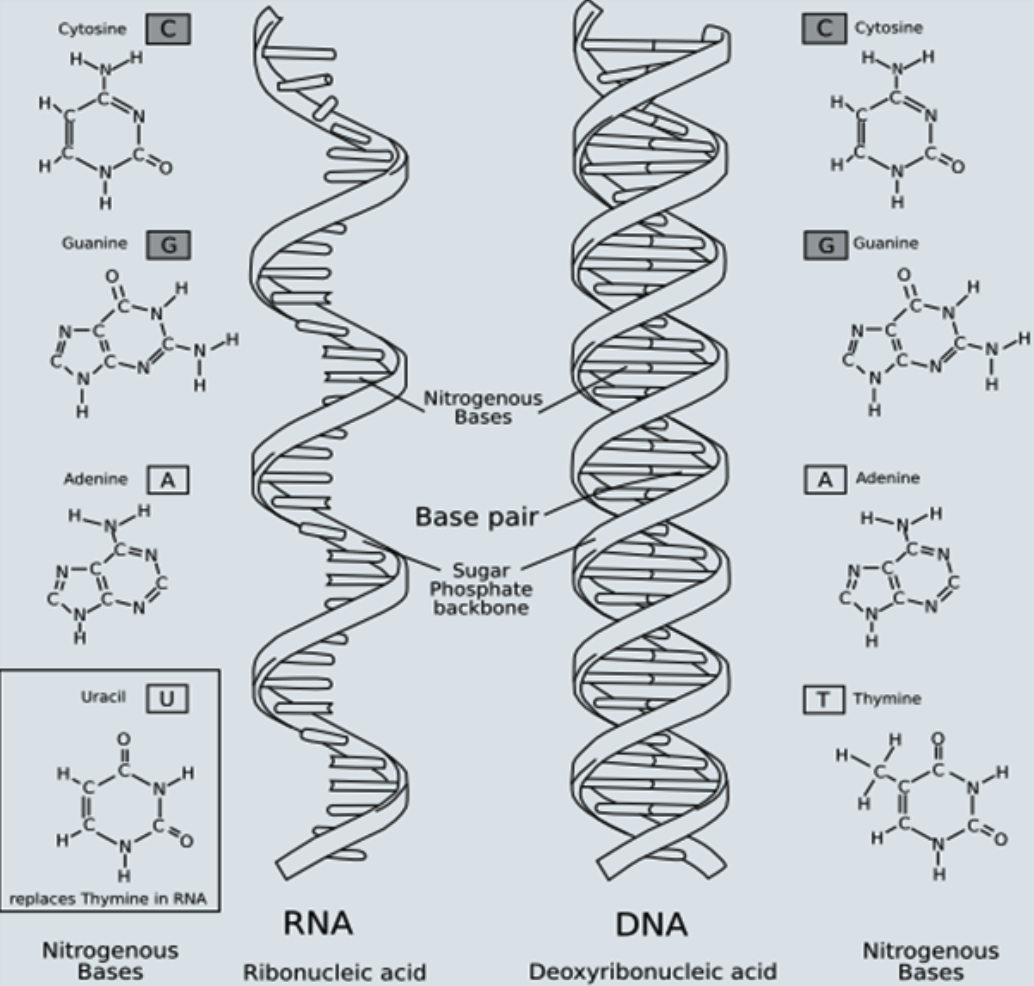
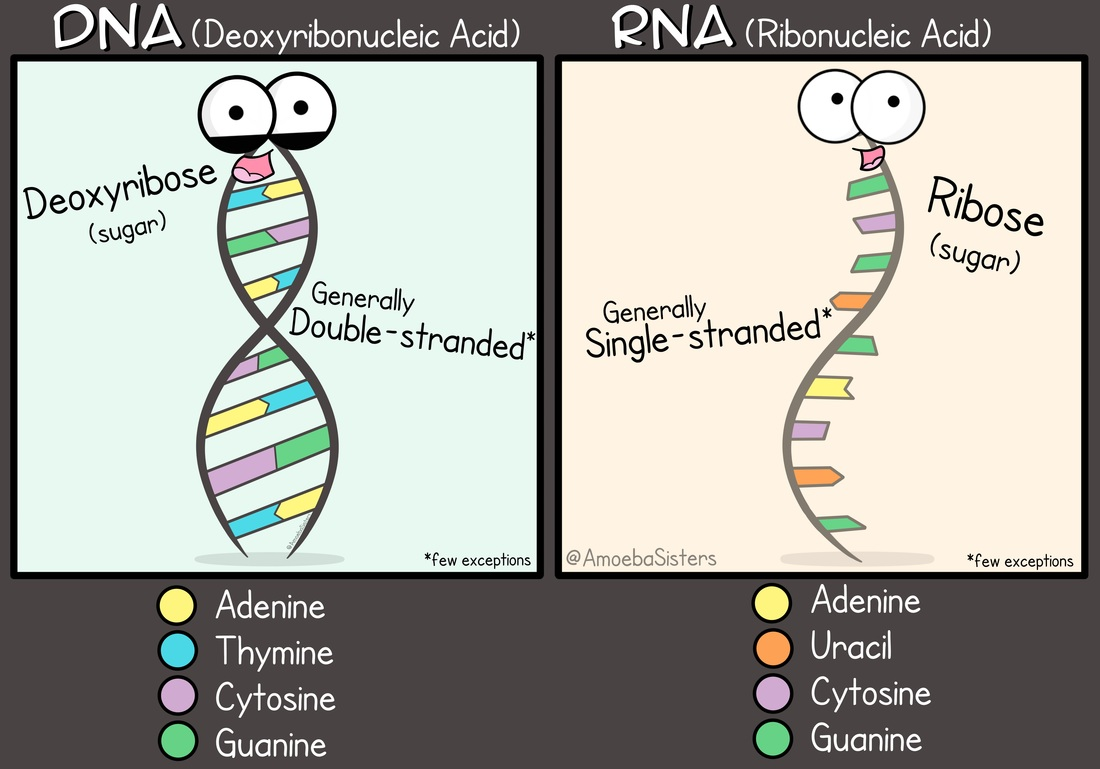
According to the model above, the double-stranded _______ is unzipped, exposing its nitrogenous _______ . _______ polymerase, a type of_______ which is like all types of proteins made of _______ acids, then constructs a new single-stranded _______ . This newly produced molecule will be the messenger.
6 points
6
Question 18
18.
FRESHMEN, SKIP!
Compare and contrast a previous molecule (DNA polymerase) with a new molecule we are learning about (RNA polymerase)
forms covalent bonds between monomers
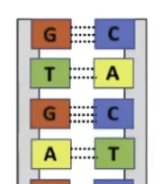
relies on chargaff's rule
produces a polymer
links ribonucleotides to one another
links deoxyribonucleotides to one another
replication
enzyme
transcription
DNA polymerase (previous work)
RNA polymerase (current)
5 points
5
Question 19
19.
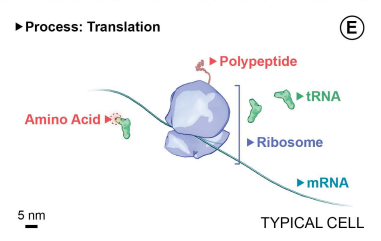
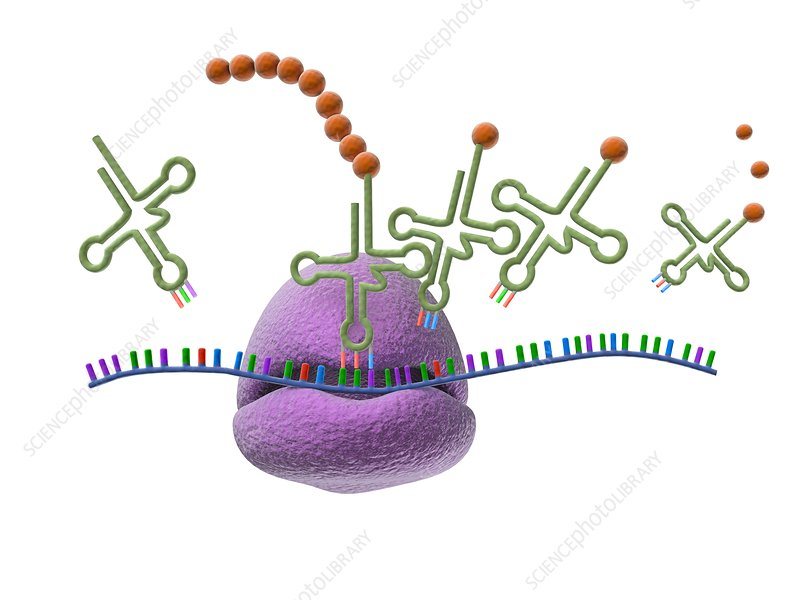
Label the process of translation.
Each of these vocabulary words, their general structure, and function, is required knowledge for the test.
The next few questions will expand on this model.
Other Answer Choices:
polypeptide
ribose
ribosome
tRNA
DNA
amino acid
mRNA
3 points
3
Question 20
20.
According to the model above, the _______ is the site of translation. At this subcellular component (made of protein and ribosomal RNA), the different 'machinery' of protein synthesis come together.
The _______ , a single-stranded molecule formed from ribonucleotides, is passed through the ribosome. Chargaff's rule is followed, and _______ , a single-stranded molecule also formed from ribonucleotides but 'bent' into a unique shape, brings specific _______ acids to the ribosome.
The message carried in mRNA is thus _______ into a sequence of amino acids called a _______ , which will become the protein.
Remember, use my email (teneal.metcalf@fwisd.org) and the password (metcalf) to login to avoid ads!
5 points
5
Question 21
21.
Record what you have learned from the game that was not already covered in this Formative. Best suggestion: Keep a running list of terms or brief doodles, then at the END, without directly copying, write what you recall those things mean. You could even copy-paste your sequence writing from 12 to help here.
If you struggle to write, play it again. The point is to KNOW the material, not just be able to copy down the answers from the source.
Freshmen in 7th & 8th: Time allotted during class, required.
Seniors in 6th: Will be addressed on Thursday in class
0 points
0
Question 23
23.
Anything you learned from the short that you need to record here?
Feedback
0 points
0
Question 24
24.
I am feeling
0 points
0
Question 25
25.
I felt respected during this class by my peers
0 points
0
Question 26
26.
Share about your experience and comfort in today's class (optional)
0 points
0
Question 27
27.
Tell me about your experience with Formative.
0 points
0
Question 28
28.
My struggle during today's class was
0 points
0
Question 29
29.
My support from teacher today was
0 points
0
Question 30
30.
Process your learning: Write and/or draw and upload or draw on here what you have learned so far.
This can be a catch-all place for notes or screenshots.
Freshmen Required, Seniors Optional
Freshmen required, senior optional
1 point
1
Question 31
31.
Optional: Notes Space
This is a discovery-based activity. The exact answers are important, but I have other ways for you to get to the exact answers. Trust in the process and use the sequencing and active attention to lay a strong foundation for your later understanding of how genes influence our phenotypes.
If working whole class, at start of class each partner-pair has a stack of cards; one set is labeled 'typical cell' and the other is labeled 'sickle cell'. Investigate these cards; you may sort them (keep them in the typical and sickle cell piles), discuss the vocabulary and what you think you recognize or wonder, etc.